Titanium finishing
Titanium anodising is not dye. The colour comes from an oxide layer whose thickness is set by voltage, so the same voltage on a different surface can produce a different colour — and the same colour on two batches can drift without anyone changing the recipe.
Quick answer
Colour is set by voltage, but it is read through the surface finish. Agree the finish first, anodise a coupon at the target voltage, and approve it under the lighting your customer will use. If the part is cosmetic, never approve a colour from a photo alone.
How titanium anodising works
Titanium anodising is an electrochemical process. The part is the anode in a bath, and the voltage drives oxygen into the surface to grow a thin oxide layer. The layer is only nanometres thick, but it interferes with light: the colour you see is the result of interference, not a pigment.
That is why the process is different from aluminium anodising. Aluminium anodising grows a porous layer that accepts dye; titanium anodising grows a transparent oxide whose thickness sets the colour. There is no dye pot to match, and no pigment to mix. There is a voltage, a bath and a surface.
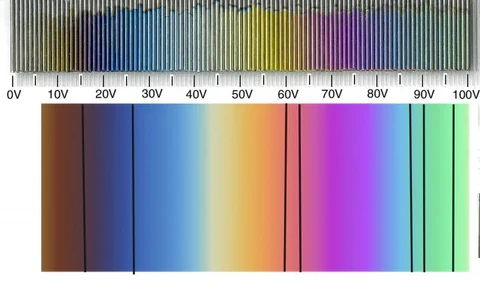
The chart and the table are the same story in two forms: voltage sets the oxide thickness, and the thickness sets the colour.
| Voltage (V) | Typical colour | Notes |
|---|---|---|
| 10–15 | Bronze / brown | Often used for a “raw” look |
| 20–30 | Purple / violet | Sensitive to surface finish |
| 30–45 | Blue | One of the more repeatable ranges |
| 45–60 | Light blue / cyan | Can look pale on a blasted surface |
| 60–75 | Gold / yellow | Warm; shifts with alloy |
| 75–90 | Pink / magenta | Less common; check the coupon |
| 90–110 | Green | Harder to hold consistently |
Approximate. The colour depends on alloy, surface finish, bath chemistry and voltage. Always approve a coupon.
The table is a starting point, not a specification. Two shops can use the same voltage and produce different colours because their baths, racks and surface preparation differ. A colour specification should name the voltage, the finish and the reference sample, not just “blue”.
What anodised titanium actually looks like
The colours below are oxide interference colours, not paint or dye. The same alloy can produce the full range; the surface finish and the voltage decide how it reads.
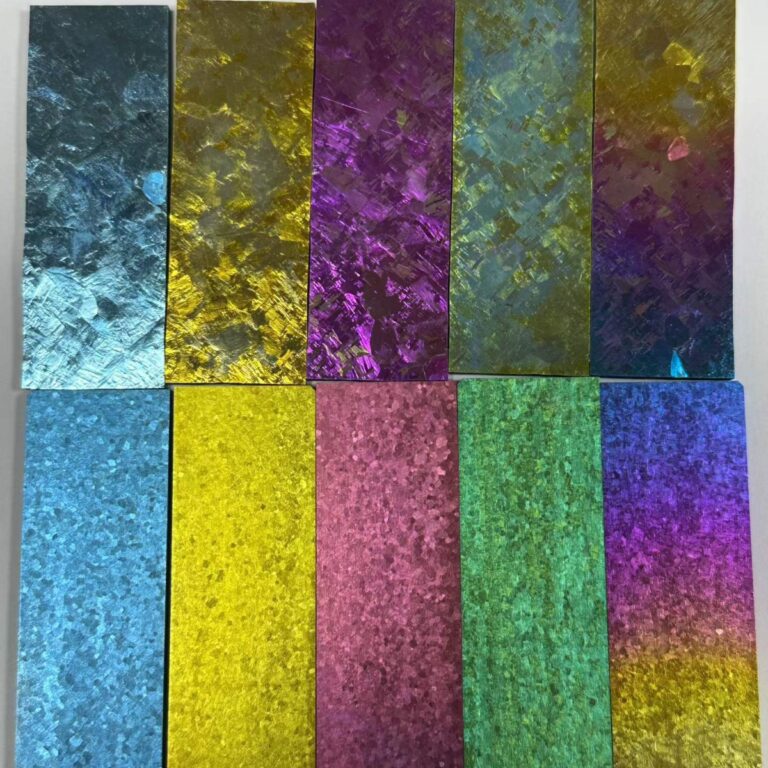
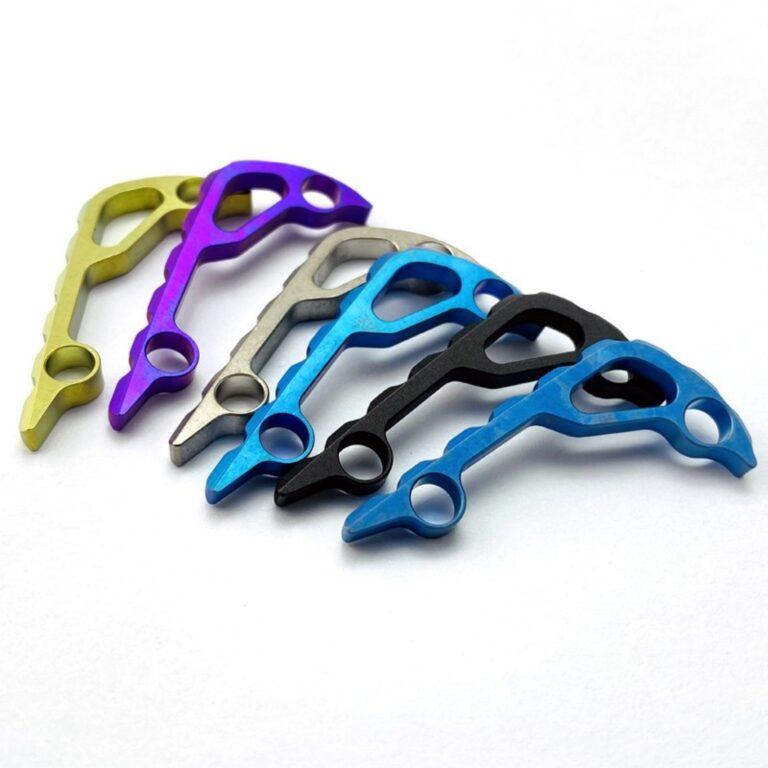
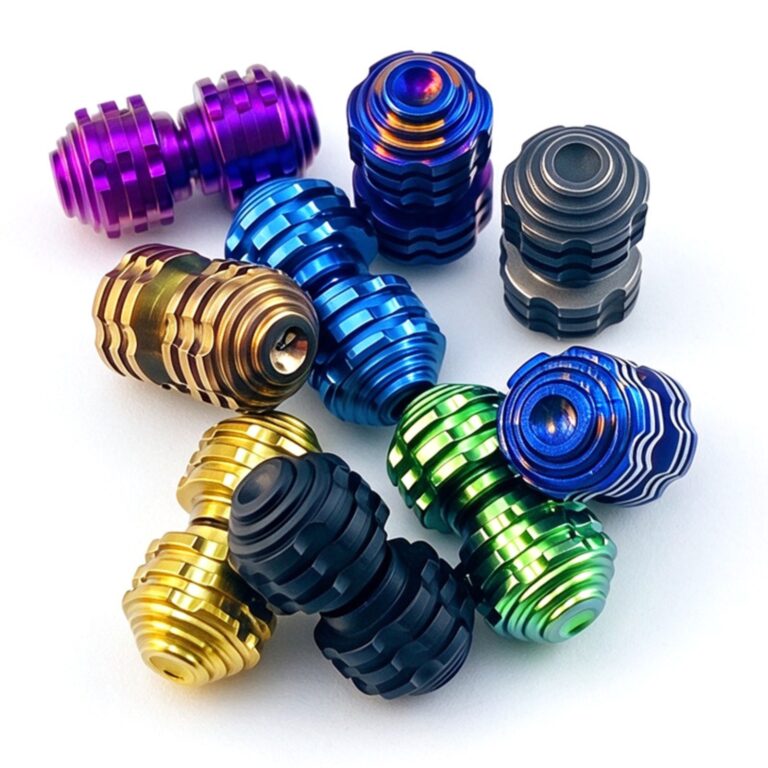
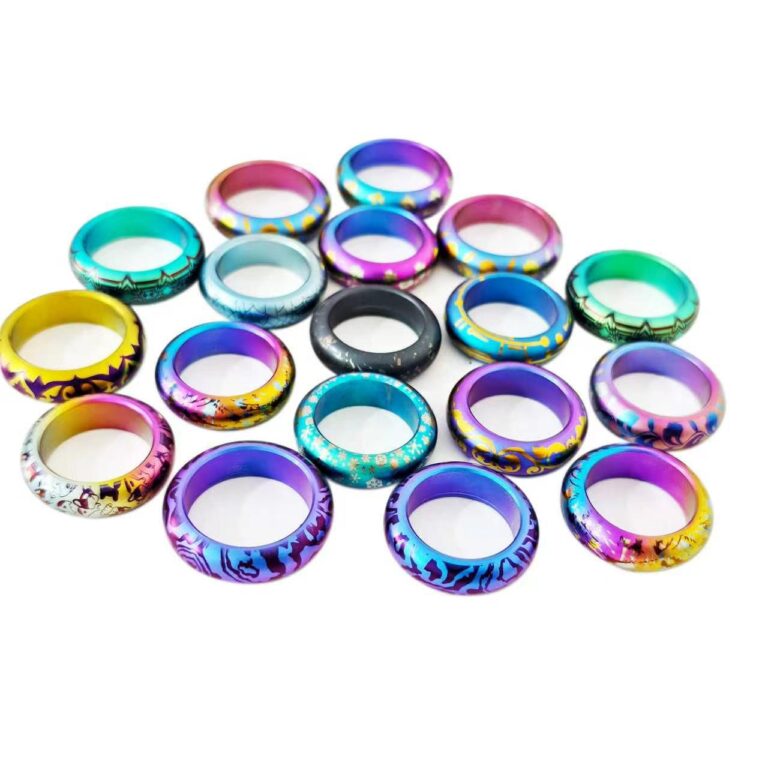
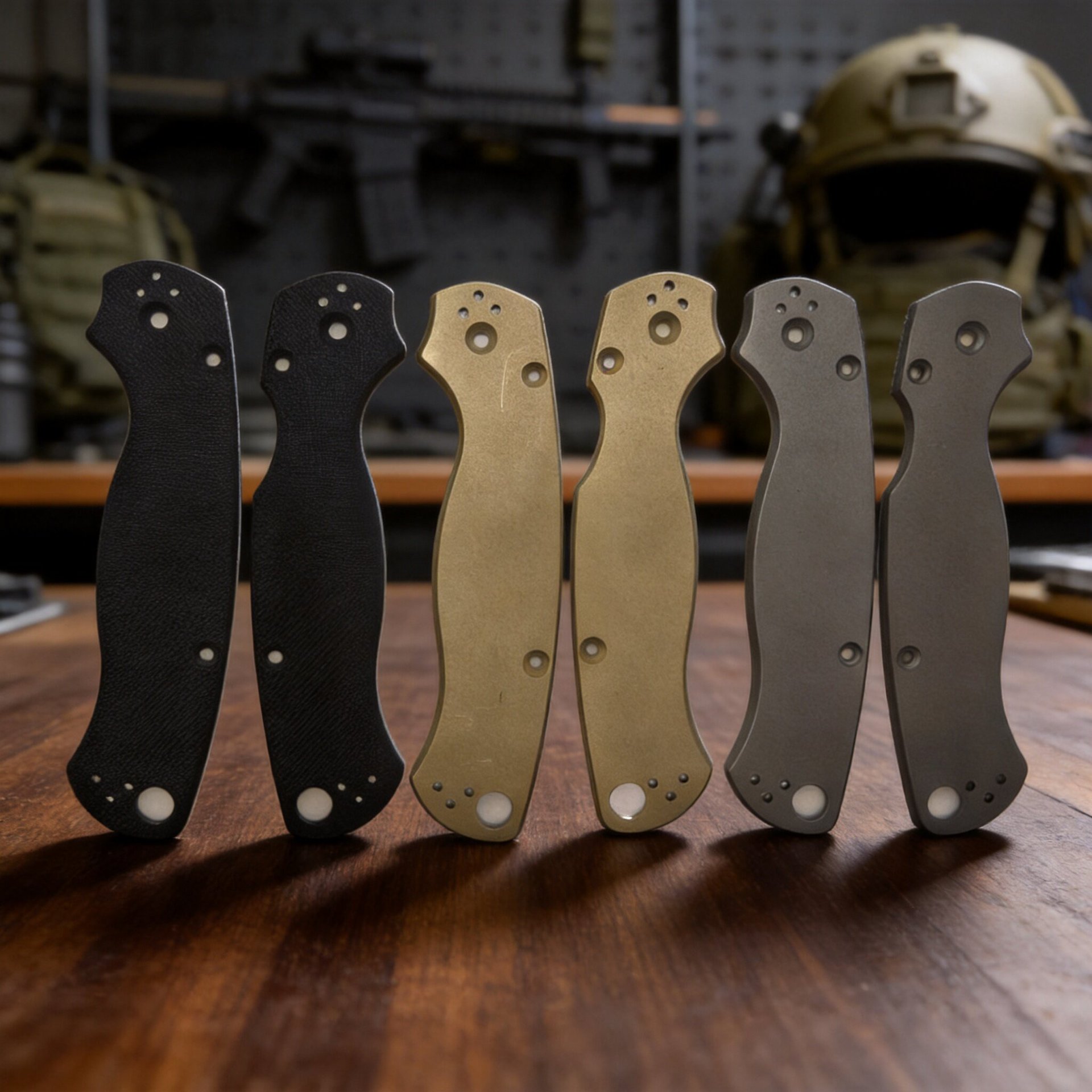
Two practical notes. A machined surface, a bead-blasted surface and a stone-washed surface will not produce the same colour at the same voltage. And a photo is not a colour reference: the light, the camera and the screen all change it. Approve a coupon in the finish that will ship.
Anodising vs dyeing vs PVD
“Colour on titanium” can mean three different processes, and they are not interchangeable. The table below is the short version; the choice depends on the colour, the wear duty and the substrate.
| Process | How the colour is made | Durability | Best for |
|---|---|---|---|
| Titanium anodising | Oxide thickness set by voltage; interference colour | Integral oxide; hard to chip, can be scratched | Titanium parts, colour plus wear resistance |
| Dyeing | Pigment absorbed into porous anodise (usually aluminium) | Can fade or scratch; depends on sealing | Wide colour range on aluminium |
| PVD | Vacuum-deposited thin coating | Very durable, thin, metallic colours | Wear parts, tools, premium hardware |
| Powder coating | Polymer powder melted on the surface | Thick, impact-resistant, wide colour | Steel or aluminium, outdoor products |
Titanium anodising is the process in this article: the colour comes from the oxide, not from a dye pot. PVD is a coating on top and can be more wear-resistant, but it is a different supplier and a different cost. Powder coating is thicker and not the right finish for a precision titanium part with threads or fits.
What actually changes the colour
Surface finish. A mirror-polished surface and a bead-blasted surface at the same voltage look different. The blasted surface scatters light, so the colour reads lighter and less saturated. This is the most common reason a “matching” batch does not match.
Alloy. Grade 5 (Ti-6Al-4V) and Grade 2 (commercially pure) anodise to slightly different tones. Grade 2 is often brighter and more even; Grade 5 can be more muted. Mixing the two in one batch is a colour-matching problem before the anodiser starts.
Pre-finish. Stone-washing, tumbling and brushing change the surface before anodising. A stone-washed part has a different colour response from a machined part at the same voltage — and the stone-wash itself varies with media, time and orientation.
Geometry. Deep pockets, holes and edges can anodise differently because the current distribution is not uniform. A part with a large flat face and a deep pocket may show a colour difference between them.
Lighting. Titanium colours are interference colours, so they change with the angle and colour temperature of the light. A photo taken under warm light will not match a part seen under cool daylight. Approve under the light the customer will use.
What drives the cost and lead time
Anodising is priced by surface area, colour and handling, with a batch minimum. On a small order, the rack minimum and the colour change can cost more than the anodising itself.
| Driver | Why it matters |
|---|---|
| Surface area | More area, more current and time |
| Colour/voltage change | A new colour may need a new bath or rack |
| Masking | Threads, bores and contacts add labour |
| Alloy | Grade 2 and Grade 5 read differently |
| Batch size | Rack minimum and line time |
| Coupon/first article | Approval before the batch |
A colour change on a small batch can add days, because the finisher waits for a rack or a bath change. If the colour is critical, book the slot at the quote stage, not after machining.
How to specify a colour that repeats
- Choose the finish first. Polished, bead-blasted, brushed or stone-washed. The colour is applied to that surface, not to the idea of a surface.
- Anodise a coupon. A small test piece in the same alloy, same finish and same rack as the production parts. Approve the coupon, not a photo.
- Record the voltage and the bath. The anodiser should write the voltage on the coupon and keep it with the order.
- Keep one alloy per batch. Do not mix Grade 2 and Grade 5 if the colour has to match.
- State the lighting. “Match under D65 daylight” is a specification; “match the sample” is not, unless the sample is present.
- Protect the fits. Mask threads, bores and sealing faces if the oxide layer or the handling could change the fit. Titanium anodising is thin, but the masking decision still belongs on the drawing.
Pain points we see on titanium jobs
“Match this photo.” A photo carries the light, the camera and the screen. It cannot carry a voltage or a surface finish. Send the physical sample or approve a coupon.
A colour change after stone-washing. The customer approves a machined coupon, then asks for a stone-washed finish. The surface changes, so the colour changes. Approve the coupon in the finish that will ship.
Mixed alloys in one batch. The anodiser racks Grade 2 and Grade 5 together and the colours diverge. Separate the alloys, or accept that the batch will not be uniform.
Voltage drift on a long run. The bath heats up and the voltage is adjusted by eye. A recorded voltage and a coupon at the start and end of the run catch the drift before the batch ships.
Anodising after assembly. Parts that are pressed, bonded or threaded together cannot be anodised as an assembly without masking every interface. Plan the sequence before the parts are made.
What GY does
We machine titanium in Grade 2 and Grade 5, including knife scales, clips, frames, standoffs and EDC parts. Anodising is handled by a finishing partner we have used for years, quoted as one finished part and one invoice. For cosmetic work we send a coupon in the production finish and the target voltage before the batch is anodised.
If the colour is critical, tell us at the quote stage. The finish, the alloy and the masking plan all affect the price, and changing them after machining is more expensive than deciding them before.
Three colour problems we solved
Mixed alloys in one batch. A customer sent Grade 2 and Grade 5 parts in the same order and expected one blue. The anodiser racked them together; the Grade 5 parts came out slightly more muted. The fix was to separate the alloys and run two coupons at the target voltage. The lesson: if the colour has to match, one alloy per batch.
The coupon was approved in the wrong finish. A machined coupon was approved at 45 V, then the customer asked for a stone-washed finish. The stone-wash changed the surface, so the same voltage produced a lighter, less saturated blue. The fix was to approve the coupon in the finish that would ship. A colour approval is only valid for the surface it was approved on.
Voltage drift on a long run. A batch of 300 titanium scales was anodised over two days. The bath heated up, the voltage was adjusted by eye, and the last rack was visibly different from the first. The fix was to record the voltage at the start and end of each rack and run a coupon with each rack. The drift is normal; the surprise is not.
None of these was a “bad anodiser”. They were specification gaps: no alloy control, no finish control, no voltage record. Once the gaps were closed, the colour repeated.
How to approve a colour
- Choose the finish first: machined, bead-blasted, brushed or stone-washed.
- Anodise a coupon in the production alloy and the production finish, at the target voltage.
- Approve the coupon under the lighting the customer will use; a photo is not a specification.
- Record the voltage and the bath on the coupon and keep it with the order.
- Mask threads, bores and sealing faces before anodising; the finish is not the only thing that changes a fit.
What to send for a colour quote
- Alloy and grade: Grade 2 and Grade 5 anodise differently.
- Finish before anodising: machined, bead-blasted, brushed or stone-washed.
- Target voltage or a physical colour sample; a photo is not enough.
- Masking plan for threads, bores, sealing faces and contacts.
- Quantity and the required date.
- Whether the colour is cosmetic or functional.
Send the sample or coupon with the RFQ. It is the only way the finisher can match the colour and the surface in one pass.
Bottom line
Titanium anodising is a voltage-controlled interference colour, read through the surface finish. The same voltage on a different finish or alloy will not match. Approve a coupon in the shipping finish, keep one alloy per batch, and record the voltage. If the colour is critical, tell us at the quote stage — changing it after machining is more expensive than deciding it before.
A colour troubleshooting table
| Symptom | Likely cause | Fix |
|---|---|---|
| Blue came out purple | Voltage high, bath temperature drift, or a different surface finish | Record voltage; run a coupon in the production finish |
| Batch looks lighter than the sample | Bead-blasted or stone-washed surface scatters light | Approve the coupon in the shipping finish |
| Grade 2 and Grade 5 parts do not match | Different alloys in one rack | Separate the alloys; run two coupons |
| Colour changes across a long run | Bath heating, voltage adjusted by eye | Record voltage at the start and end of each rack |
| Edges look darker | Current concentration at edges | Break the edge; accept the natural edge effect or mask |
| Threads will not start after anodising | Coating on the flanks | Mask the thread or use an allowance |
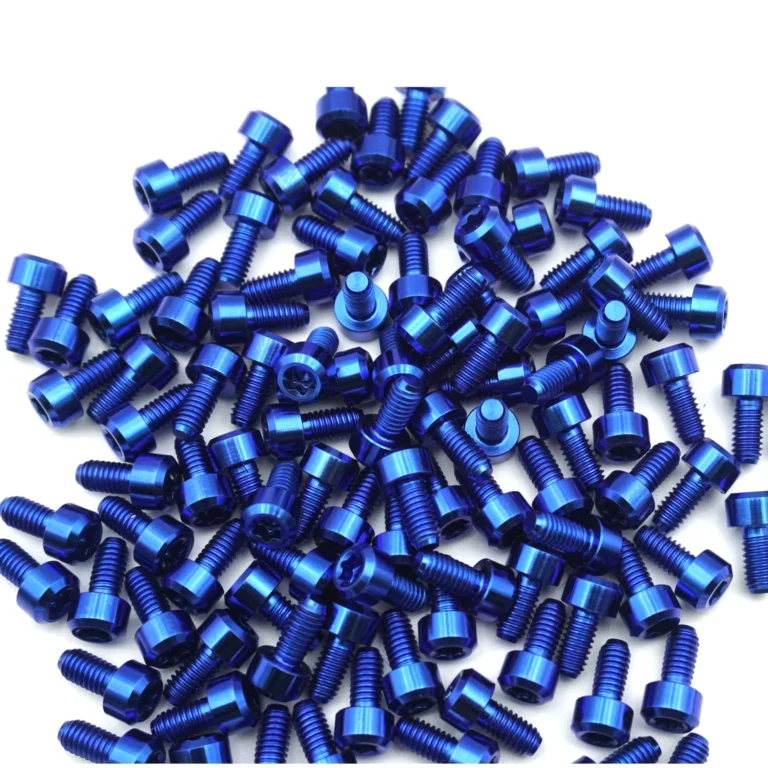
The photo below is a batch, not a single coupon. The colour has to hold across every part in the rack, which is why voltage, bath temperature and surface finish are recorded for each run.
A colour approval workflow
- Fix the alloy and the finish: machined, bead-blasted, brushed or stone-washed.
- Anodise a coupon at the target voltage in the production alloy and finish.
- Approve the coupon under the light the customer will use, not a photo.
- Record the voltage, the bath and the coupon with the order.
- Run a coupon with each rack on a long batch; compare it with the approved sample.
- Mask threads, bores and sealing faces before anodising.
- Inspect the first production part before the rest of the batch is packed.
What we see at GY on titanium anodising
A photo approved as a colour. The customer sends a photo from a previous batch; the light and the camera make it look different from the part in hand. We ask for a physical sample or send a coupon.
Mixed alloys in one order. Grade 2 and Grade 5 parts are racked together and the colours diverge. We separate the alloys and run two coupons.
The finish changes after approval. A machined coupon is approved, then the customer asks for a stone-wash. The surface changes and the colour shifts. The coupon must be in the shipping finish.
Voltage drift on a long run. The bath heats up and the voltage is adjusted by eye. The last rack is visibly different. A voltage record and a coupon per rack catch it.
Anodising after assembly. Threads and pressed parts trap solution and change fit. Anodise the components before assembly.
Before you send titanium parts for anodising
- Alloy and grade, one alloy per batch if colour matters.
- Finish: machined, blasted, brushed or stone-washed.
- Target voltage and approved coupon.
- Masking plan for threads, bores and sealing faces.
- Lighting for approval.
- Whether the colour is cosmetic or functional.
Common titanium anodising mistakes
- Approving a colour from a photo. The light, the camera and the screen change the colour. Approve a physical coupon.
- Mixing alloys in one batch. Grade 2 and Grade 5 anodise to different tones. If the colour must match, keep one alloy per batch.
- Approving a coupon in the wrong finish. A machined coupon is not a stone-washed coupon. The surface changes the colour.
- Ignoring voltage drift. A long run heats the bath; record the voltage at the start and end of each rack and run a coupon with each rack.
- Anodising an assembly. Threads, bores and pressed parts need masking, and the assembly can trap solution. Anodise the components first.
Before you approve a colour
- Alloy and grade.
- Finish: machined, blasted, brushed or stone-washed.
- Target voltage and bath record.
- Coupon in the production finish, under the customer’s light.
- Masking plan for threads, bores and sealing faces.
- Whether the colour is cosmetic or functional.
What does a colour match cost?
A colour match is not a paint code. It is an alloy, a finish, a voltage, a bath and a light source. Matching a previous batch can require a coupon, a separate rack and a voltage record, which adds cost and lead time.
If the part is cosmetic, budget for a coupon and a first-article approval. If the colour is functional, a standard dark grey/black is cheaper. Mixing alloys in one batch to save a rack can cost more in rejects than it saves.
Before you ask for a colour match
- Alloy and grade.
- Finish: machined, blasted, brushed or stone-washed.
- Voltage and bath record from the previous batch.
- Physical sample or coupon.
- Lighting for approval.
- Whether the colour is cosmetic or functional.
A colour approval checklist
- Alloy and grade, one alloy per batch if colour matters.
- Finish: machined, blasted, brushed or stone-washed.
- Target voltage and bath record.
- Physical coupon in the production finish.
- Lighting for approval.
- Masking plan for threads, bores and sealing faces.
- Whether the colour is cosmetic or functional.
- First production part checked before the batch is packed.
FAQ
Is titanium anodising the same as aluminium anodising?
No. Aluminium anodising grows a porous layer that accepts dye. Titanium anodising grows a thin oxide whose thickness sets an interference colour. The processes, the colours and the masking rules are different.
Can you match a specific Pantone colour?
Not exactly. Titanium anodising produces interference colours, not pigment colours. We can match a physical sample or a coupon closely, but a Pantone reference alone is not a specification.
Does anodising change the dimensions?
The oxide is very thin, but the handling and the masking can affect fits. If a bore or thread is critical, say so and we will mask it or account for the finish.
Why did my blue parts come out purple?
Voltage, surface finish, alloy or bath chemistry changed. A coupon at the target voltage, in the production finish, is the only reliable way to catch it before the batch.
Can you anodise assembled parts?
Usually no. Interfaces, threads and pressed parts need masking, and the assembly may trap solution. Anodise the components before assembly.