
Materials We Machine
Most material decisions are made for the wrong reason — a grade copied from an old drawing, or a stainless specified for a part that never sees water. The material sets what the part can survive, how long it takes to cut and what it can be finished with, so it is worth five minutes. This page is how to choose, and what each family costs you at the machine.
Six questions that settle it
What does it have to survive?
Load, wear, impact, pressure. This sets the strength floor and rules out most of the field before appearance is even discussed.
Where does it live?
Indoors and dry, outdoors, salt water, washdown, or inside a machine full of coolant. Corrosion is the most common reason a correct part fails in service.
How hot does it get?
Plastics are the whole conversation here. A part that is fine at 60 °C can be scrap at 120 °C, and the grade that survives it costs several times more.
Does it conduct, or must it not?
Electrical and thermal conductivity pull in opposite directions from strength. Copper conducts, stainless does not, and anodised aluminium is an insulator on the surface.
How many, and how fast?
Machinability is a real cost. 6061 cuts several times faster than 316L, so on a production batch the material choice can move the price more than any feature on the drawing.
What will it be finished with?
Anodising needs aluminium. Passivation needs stainless. Black oxide needs steel. Choosing a finish first and a material second is how drawings end up asking for something impossible. Finish selector →
Metal grades we machine most
Machinability below is relative, not a standard index: how the grade behaves on our machines compared with 6061, which is the easiest common metal to cut and the yardstick everyone in the shop uses.
| Grade | Best at | Machinability | Usual finishes | Watch out for |
|---|---|---|---|---|
| 6061-T6 aluminium | The default for machined parts — good strength, light, cheap, cuts fast | Excellent | Anodise, bead blast, brush, powder coat | Not as strong as 7075; not for marine service without anodising |
| 7075-T6 aluminium | High strength where weight matters — brackets, mounts, structural parts | Very good | Anodise, bead blast | Poorer corrosion resistance than 6061 and more prone to stress-corrosion; more expensive |
| 5052 aluminium | Sheet and formed parts, better corrosion resistance | Good, gummy in thin sections | Anodise, powder coat | A sheet alloy rather than a billet alloy — not ideal for heavy milling |
| 304 / 304L stainless | General corrosion resistance at sensible cost | Moderate — work hardens if you rub it | Passivate, bead blast, brush, polish | Work hardening punishes light cuts and worn tools; not for chlorides |
| 316 / 316L stainless | Marine, chemical and medical environments | Moderate, slower than 304 | Passivate, electropolish, bead blast | Slow to cut, which shows in the price on a production batch |
| 303 stainless | Free-machining parts in quantity — fittings, shafts, fasteners | Good for a stainless | Passivate, bead blast | Sulphur content makes it easier to cut and slightly less corrosion resistant; not for welding |
| 17-4 PH stainless | High strength plus corrosion resistance, heat treatable | Moderate, harder after ageing | Passivate, black oxide | Machine before final ageing where possible; harder condition costs cycle time |
| 1018 / 1045 carbon steel | Cheap structural parts, shafts, plates | Good | Zinc plate, black oxide, powder coat | Rusts quickly bare — plan the finish from the start |
| 4140 alloy steel | Shafts, tooling and parts that need toughness | Moderate | Black oxide, zinc or nickel plate | Usually supplied pre-hardened; harder stock means slower cutting |
| A2 / D2 tool steel | Punches, dies, wear parts, fixturing | Hard work — often finished by EDM | Black oxide | Machine soft, harden, then grind or EDM to size |
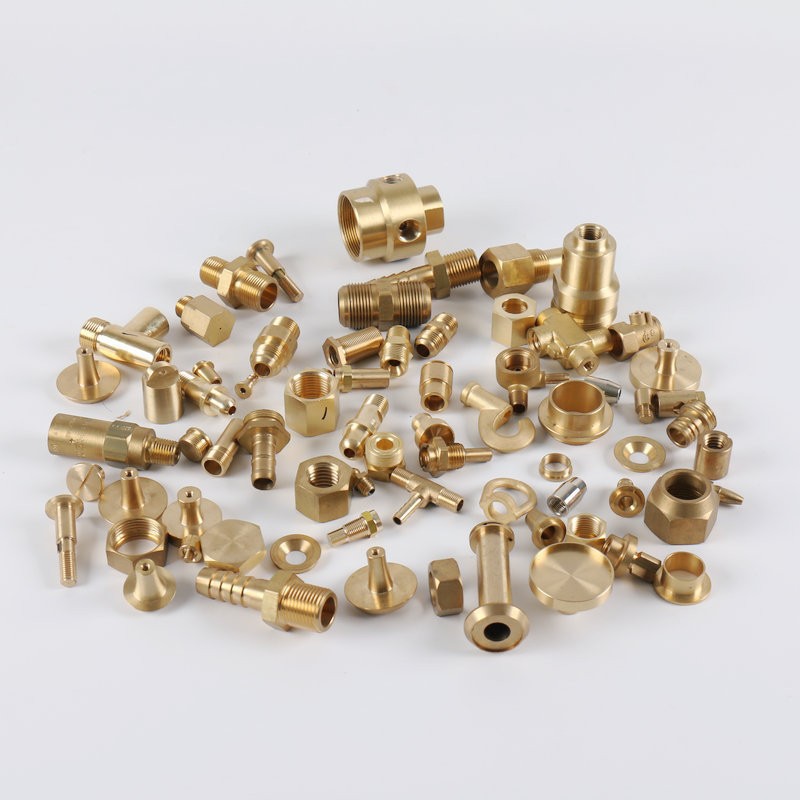
| C360 brass | Fittings, valve bodies, electrical hardware, decorative parts | The best of any metal here | Polish, brush, plate, lacquer | Soft and easy to mark; needs care in handling rather than in cutting |
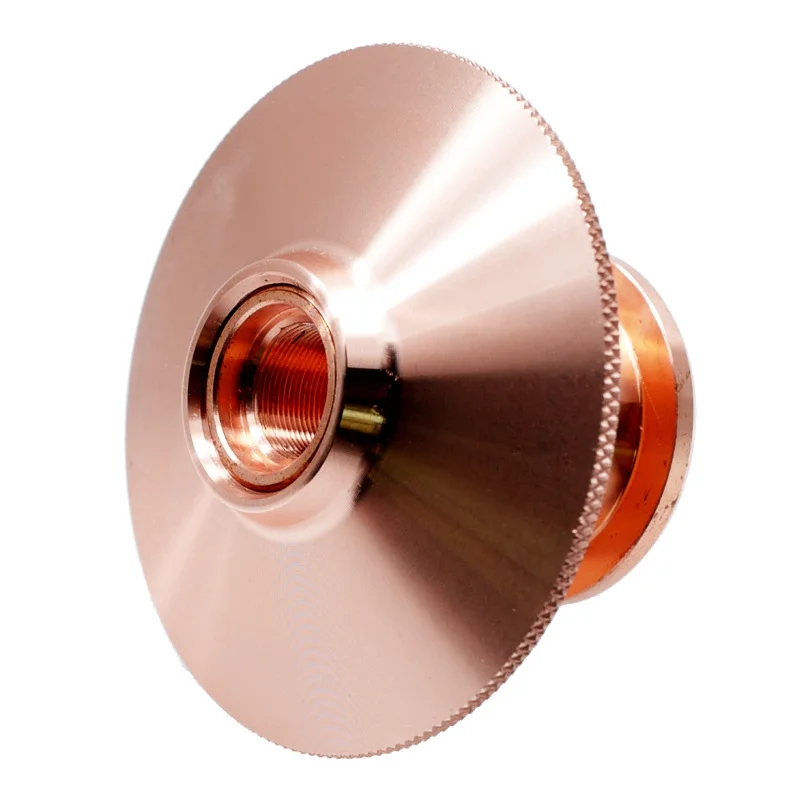
| C110 copper | Electrical and thermal conduction — bus bars, heat sinks | Gummy and awkward, needs sharp tooling | Plate, passivate, lacquer | Smears rather than chips; surface finish takes work |
| Ti-6Al-4V titanium | Strength-to-weight, biocompatibility, corrosion resistance | Difficult — slow speeds, dedicated tooling | Anodise (oxide colour), blast, stone-wash | Low conductivity cooks the cutting edge; plan for finishing passes. Why it marks → |
Engineering plastics we machine
Plastics are chosen on temperature and chemistry far more than on strength. The two mistakes we see most are a grade that cannot hold its shape at the service temperature, and a tolerance written as if the part were metal — plastics move with heat and humidity, and a ±0.01 mm on a nylon part is not a real requirement.
| Material | Best at | Typical service temperature | Watch out for |
|---|---|---|---|
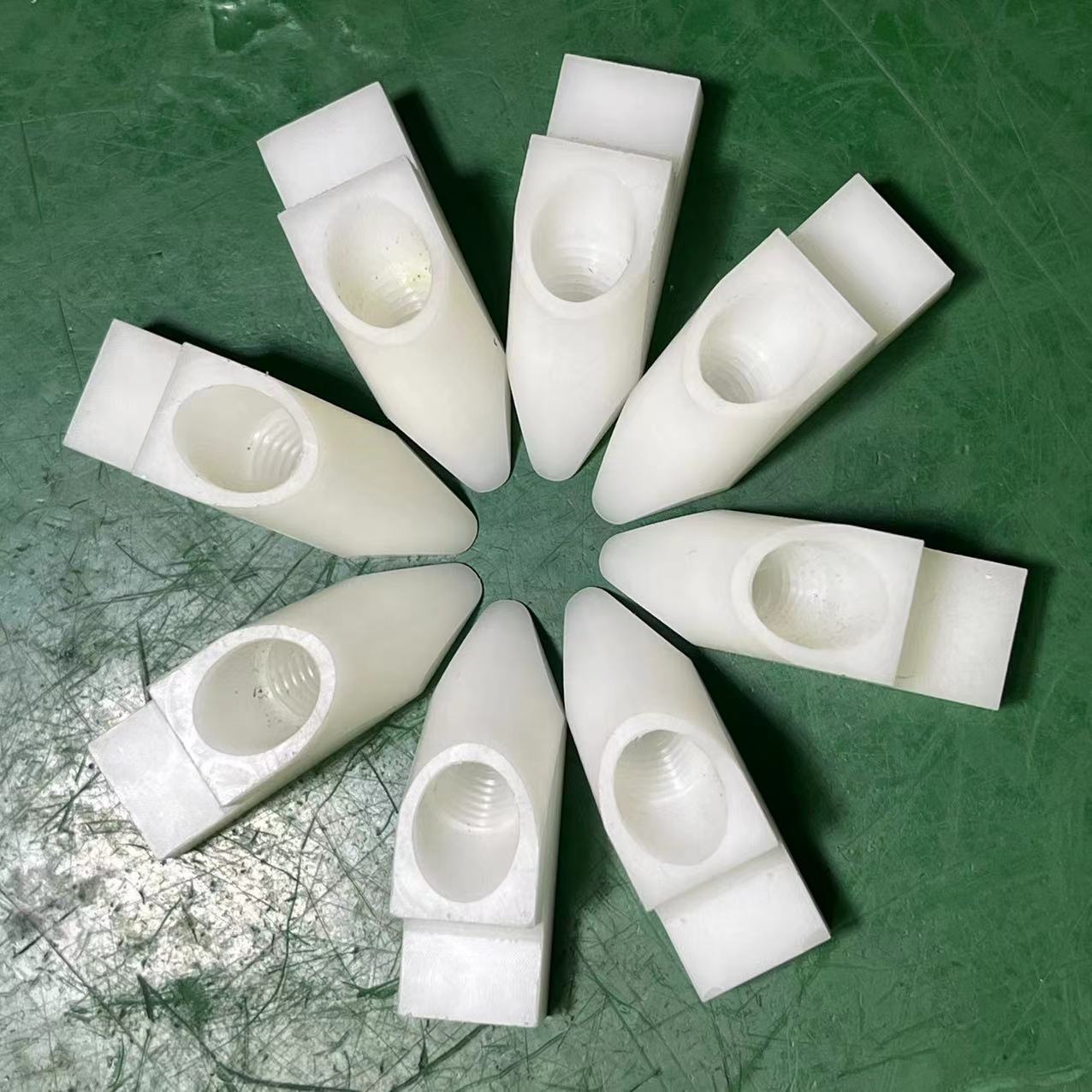
| Acetal / POM (Delrin) | The default machining plastic — stiff, stable, cuts beautifully | Around 80–100 °C | Poor with strong acids; cannot be glued easily |
| Nylon | Wear parts, bushings, gears, low-friction components | Around 80–100 °C | Absorbs moisture and grows — dimensions move after machining |
| PEEK | High temperature, chemical resistance, medical and semiconductor parts | Around 250 °C continuous | By far the most expensive plastic here; price the stock before designing |
| PTFE | Chemical inertness, seals, very low friction | Around 250 °C | Soft and creeps under load; hard to hold a tight tolerance |
| PPS | Hot, chemically aggressive environments; dimensionally stable | Around 200 °C | Brittle compared with PEEK; sharp tooling needed |
| Polycarbonate | Transparent parts that must not shatter — guards, windows, covers | Around 115 °C | Cracks at stress concentrations; avoid sharp internal corners |
| Acrylic / PMMA | Clear parts where optical clarity beats toughness | Around 80 °C | Brittle and chips at edges; vapour polishing for clarity |
| ABS | Prototype housings and low-cost enclosures | Around 80 °C | Low stiffness; not for structural or outdoor use |
| G10 / Garolite | Electrical insulation, knife scales, structural laminate | Around 130 °C | Glass fibre is abrasive — it eats cutters and the dust needs controlling. See it being cut → |
| Polyurethane | Rollers, pads, bumpers, anything that must absorb impact | Varies widely by hardness | Machining is dictated by hardness; soft grades deflect under the cutter |
Service temperatures above are the general ranges these materials are used in, not a specification for your part. Continuous load, chemical exposure and the grade you buy all move them, and if the temperature is critical the material datasheet governs, not this table.
Material is a lead-time and price decision, not only an engineering one
Cutting speed is real money
6061 cuts several times faster than 316L, and titanium slower again. On a single prototype the difference disappears into the setup. On five hundred pieces it is one of the largest numbers in the quote. If the drawing says stainless for appearance rather than corrosion, anodised aluminium often does the same job for much less.
Stock availability is lead time
Common grades and sections are quick. A grade we do not hold has to be bought in, and nothing starts until it lands — no amount of urgency at our end changes that. Telling us which grades you can accept, not only which you prefer, often removes days. More on lead time →
Near-net stock beats a big block
You pay for the material we buy, including everything cut away and sold as scrap. A part machined from a plate close to its finished size costs less than the same part cut out of an oversized billet, and takes less spindle time too.
Certificates, when you need them
Mill certificates to EN 10204 3.1 are available on request. We check incoming material against the certificate before it reaches a machine. How we inspect →
Read about a material in detail

Ready for a quote?
Send the drawing — price and lead time within 16 hours. STEP, IGES, X_T, DWG, DXF or PDF.
No minimum order.