
Surface Finishing for Machined Parts
The finish is the only part of your component the end user ever touches, and it is where most of the arguments happen — a colour that does not match the last batch, a thread that will not start after plating, a bore that is 20 µm tight because nobody accounted for the coating. This page is how to choose a finish, what each one does to your dimensions, and exactly how we handle it.
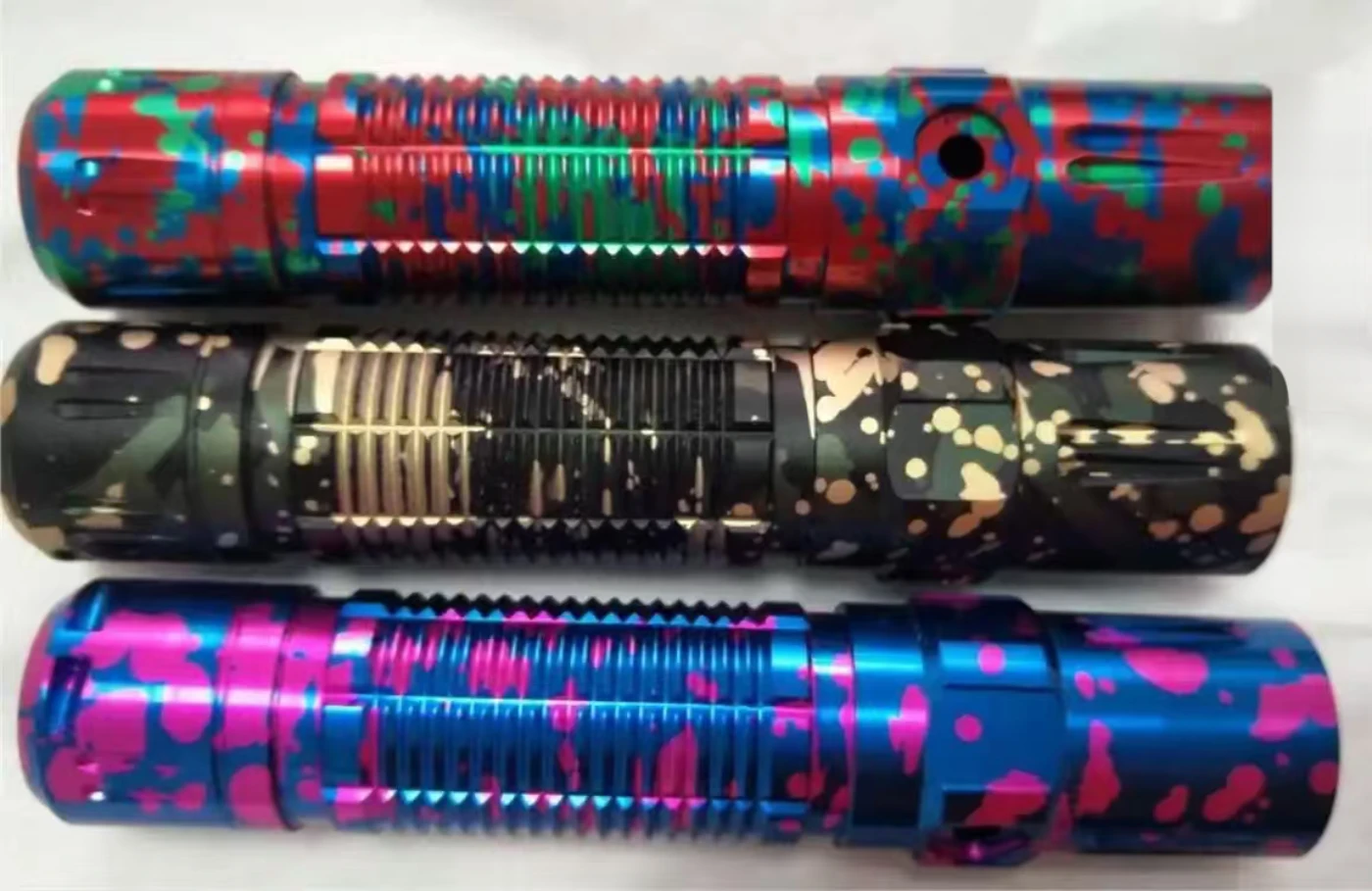
We machine in house. We do not plate in house.And neither do most machine shops.
Anodising, plating, powder coating and heat treatment are chemical processes with their own tanks, their own waste handling and their own licences. A 36-person machine shop that claimed to run all of them on site would be telling you something untrue. What we do instead is manage them, and that is a real job with real failure modes.
We write the specification, and we check what comes back
Standard, class, thickness, colour reference, gloss level, and which features are masked. “Black anodise” and nothing else is how you get a different black each time. When the parts come back we check them against the approved sample, measure coating thickness where the drawing asks for it, and re-check every masked thread and bore. Wrong parts go back to the finisher, not to you.
Long-term partners, not the cheapest quote that week
The same anodising and plating shops in the Dongguan area, job after job, because a finisher who knows your part gets it right the second time without being told.
Your drawing does not leave the building
The finisher receives parts and a written finish specification. They do not need your model or your drawing, so they do not get it. How we handle your files →
The lead time is the honest catch: a finisher runs to their own queue, and on a tight schedule the finish is usually the block worth simplifying rather than the machining. More on what actually moves a lead time →
Choose by what the finish has to do, not by what it is called
Every row below is a finish we supply. The column that costs people money is the fourth one — what it does to your dimensions. A coating is material added to the surface, and on a part with a fit, a thread or a bore, that is a dimension change you have to design for.
| Finish | What it is for | Materials | Effect on dimensions | Watch out for |
|---|---|---|---|---|
| Anodising, Type II | Corrosion resistance and colour on aluminium; the standard decorative finish | Aluminium (and titanium) | Typically 5–25 µm of coating, roughly half of which grows outward from the original surface | Colour varies with alloy and between batches — 6061 and 6063 will not match. Mask threads and bores |
| Hard anodising, Type IIIMost underused | Wear resistance on sliding and load-bearing aluminium surfaces — the finish that lets an aluminium part do a steel part’s job | Aluminium | Thicker, commonly 25–50 µm, so the outward growth is significant and must be on the drawing | Sharp edges chip the coating; a small radius is worth adding. Colours are limited and come out dark |
| Bead and sand blasting | A uniform matte texture that hides machining marks and tool paths | Almost anything | Removes very little, but it raises Ra and rounds very fine detail | Will not remove a periodic tool-mark pattern — that has to be machined or sanded out first |
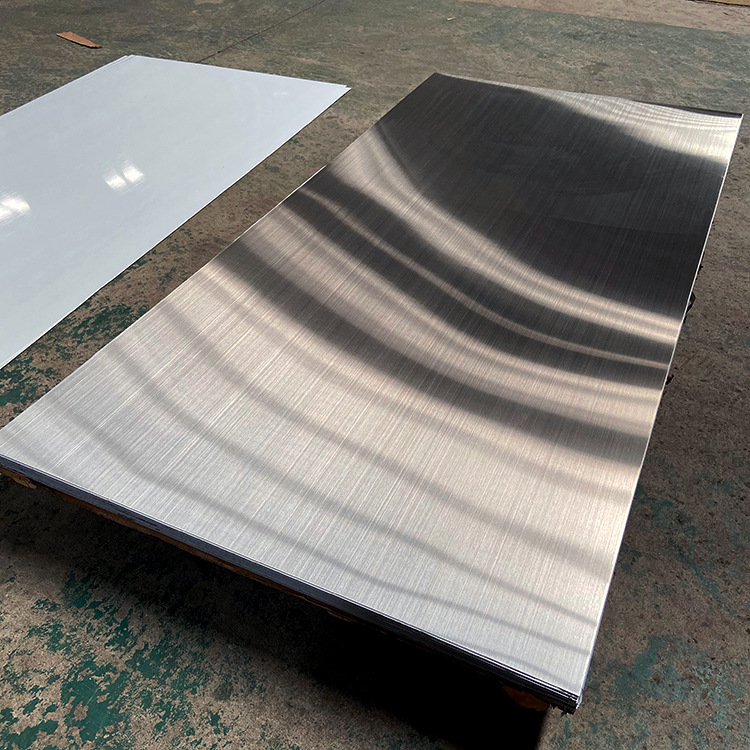
| Brushing | A directional satin grain, usually before anodising | Aluminium, stainless, brass | A few microns removed | The grain direction must be stated on the drawing, or you will get a different one each batch |
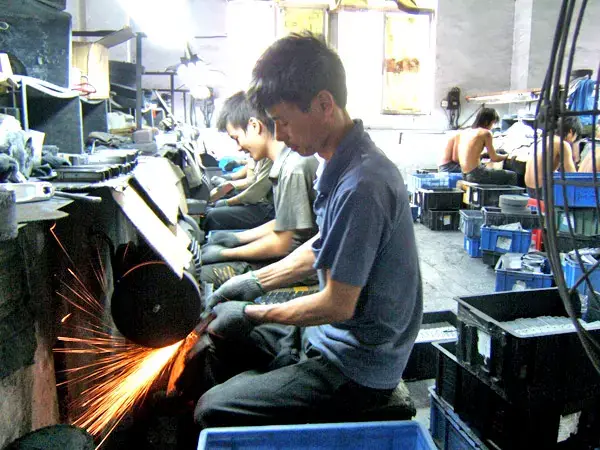
| Buff polishing | A bright, near-mirror surface | Stainless, brass, aluminium | Removes material and softens edges and sharp corners | Manual work, so it is the least repeatable finish here. Not for parts with tight edge definition |
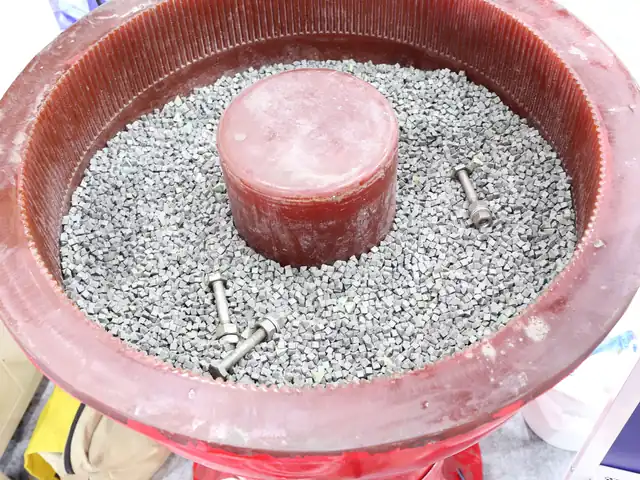
| Tumbling and vibratory | Deburring and edge-breaking in bulk, plus a soft even surface | Metals and some plastics | Rounds edges by a few hundredths of a millimetre — usually helpful, occasionally not | Parts can nest or hit each other; thin parts can bend. Not for delicate geometry |
| Electroplating (zinc, nickel, chrome) | Corrosion and wear protection; bright decorative finishes | Steel, stainless, brass, copper | Adds thickness, commonly 5–25 µm, and builds up unevenly on edges and corners | Thin in deep bores and blind holes. Threads usually need a plating allowance |
| Electroless nickel | Even protection on complex parts, including inside bores | Steel, stainless, aluminium, copper | Deposits at the same thickness everywhere, typically 5–50 µm — that evenness is the whole point | More expensive than electroplating; worth it when the part has internal features |
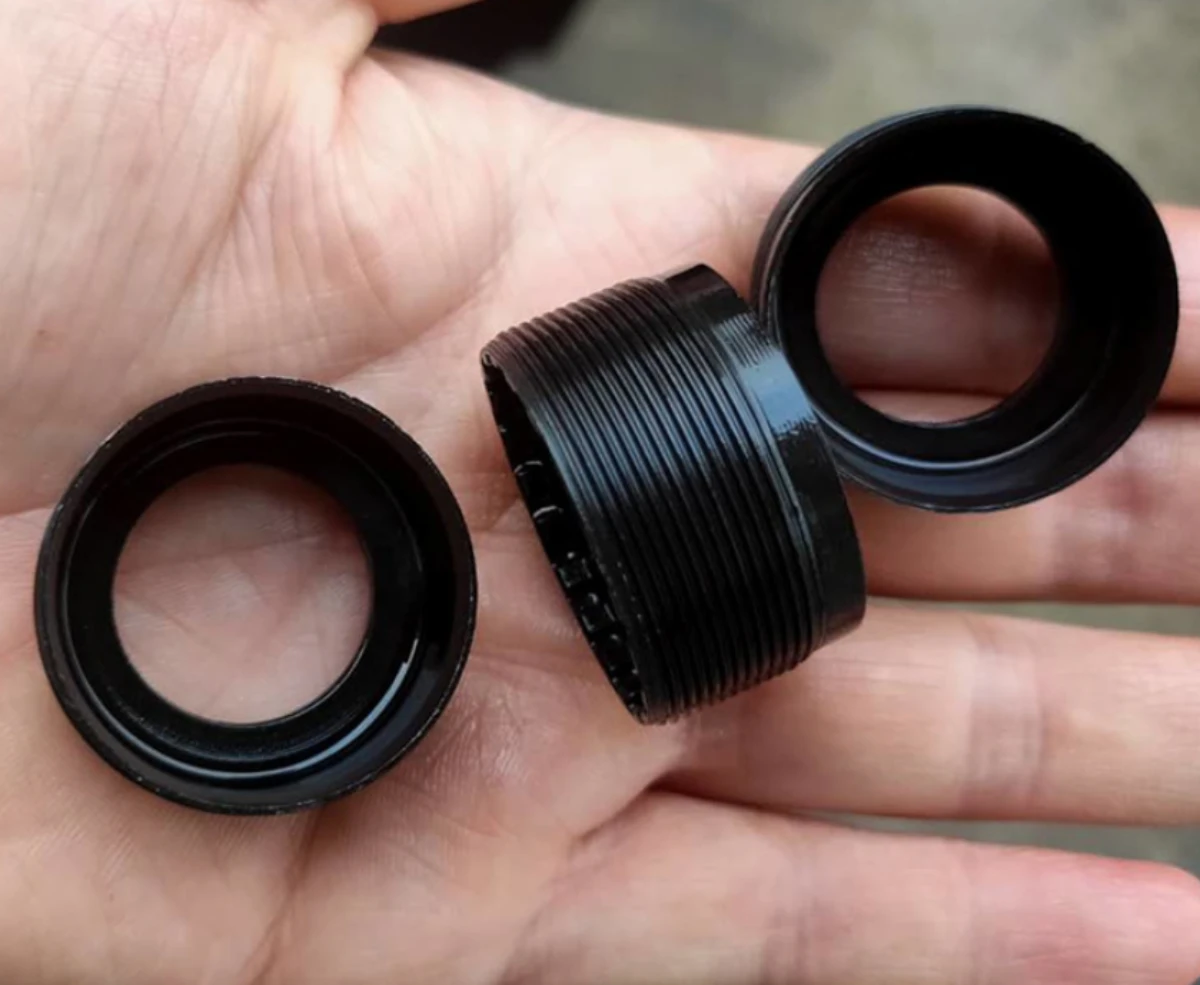
| Black oxide | A matt black conversion coating for tool steel and fasteners | Steel and stainless | Around a micron — effectively no dimensional change, which is why tooling uses it | It is not much corrosion protection on its own; it needs oil or wax to be useful |
| Passivation | Restoring the corrosion resistance of stainless after machining | Stainless only | None — nothing is added and nothing measurable is removed | Not a visible change, so a customer who expects to see something will think it was skipped |
| Powder coating | A tough coloured coating for housings, frames and brackets | Steel, aluminium | Thick: commonly 60–120 µm. Not for close fits, threads or datum faces without masking | Poor at holding fine detail and sharp edges. Needs generous masking and hanging points |
| Laser marking | Logos, part numbers, serial numbers and orientation marks | Metals and most plastics | None | Contrast depends on material; on anodised aluminium it usually means marking after anodising |
Thickness figures are the ranges we normally work in and the values our finishers quote against. What your part gets is written on the finish specification that goes with the order, and if the drawing calls out a class or a thickness we hold that instead.
Which finish goes on which material
Half the finishing problems we see start here: a finish specified for a material it does not work on. Anodising is an aluminium process. Passivation is a stainless process. Black oxide belongs on steel. A drawing that asks for the wrong pairing has to be resolved before the order, not after.
| Material | Works well | Does not apply |
|---|---|---|
| Aluminium | Anodising Type II and Type III, bead blasting, brushing, tumbling, powder coating, electroless nickel, laser marking | Passivation, black oxide |
| Stainless steel | Passivation, bead blasting, brushing, polishing, electropolishing, black oxide, tumbling | Anodising |
| Steel and tool steel | Zinc and nickel plating, black oxide, powder coating, electroless nickel, heat treatment | Anodising, passivation |
| Brass and copper | Polishing, brushing, nickel and chrome plating, tumbling, clear lacquer | Anodising, passivation |
| Titanium | Anodising (colour by oxide thickness, not dye), bead blasting, tumbling, stone-wash | Conventional aluminium dye anodising, passivation |
| Plastics | Vapour polishing on some grades, painting, printing, laser marking | Anodising, plating, passivation, black oxide |
Four things that decide whether a finish comes back right
Colour, batch to batch
Anodised colour depends on the alloy, the thickness of the oxide and the age of the dye bath. Two batches of the same drawing, finished months apart, can be visibly different side by side — and your customer will put them side by side. The fix is a physical approved sample kept at the finisher and at us, and a written note on the order that the batch is matched to it. Ask for that on any coloured part you will reorder.
Masking, or the lack of it
Threads that will not start, bores that a bearing no longer fits, and earth points that no longer conduct are all the same mistake: a feature that needed masking and did not get it. Tell us which features are functional, or mark them on the drawing, and they get masked and then checked when the parts come back.
Dimensions after coating
A drawing toleranced to ±0.002 mm and then hard anodised is asking for two things that contradict each other. Either the tolerance applies before coating and the drawing says so, or we machine undersize by the expected growth. Both work. What does not work is discovering it at first article.
The finisher’s queue, and your date
Finishers have queues, and a colour match or a masked part adds days on top. If your date is tight, say so at quotation — sometimes the answer is a standard clear or black instead of a match, and that decision is worth more days than anything we can do at the machine.
Read about a finish in detail
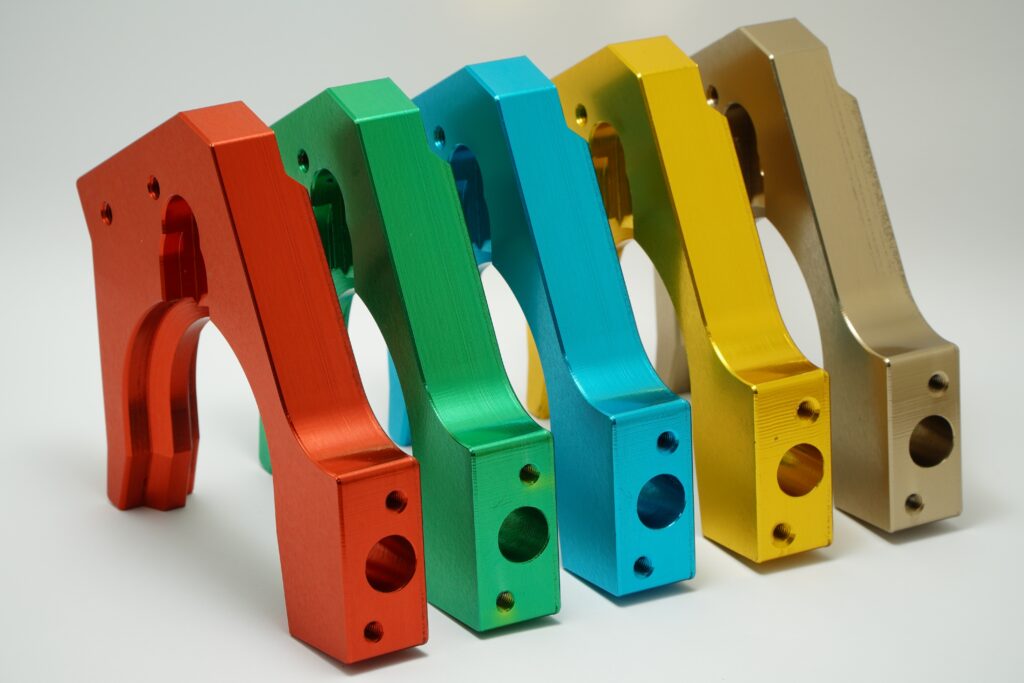
Anodizing
Type II and Type III on aluminium — colours, thickness, and what it does to a fit
See more →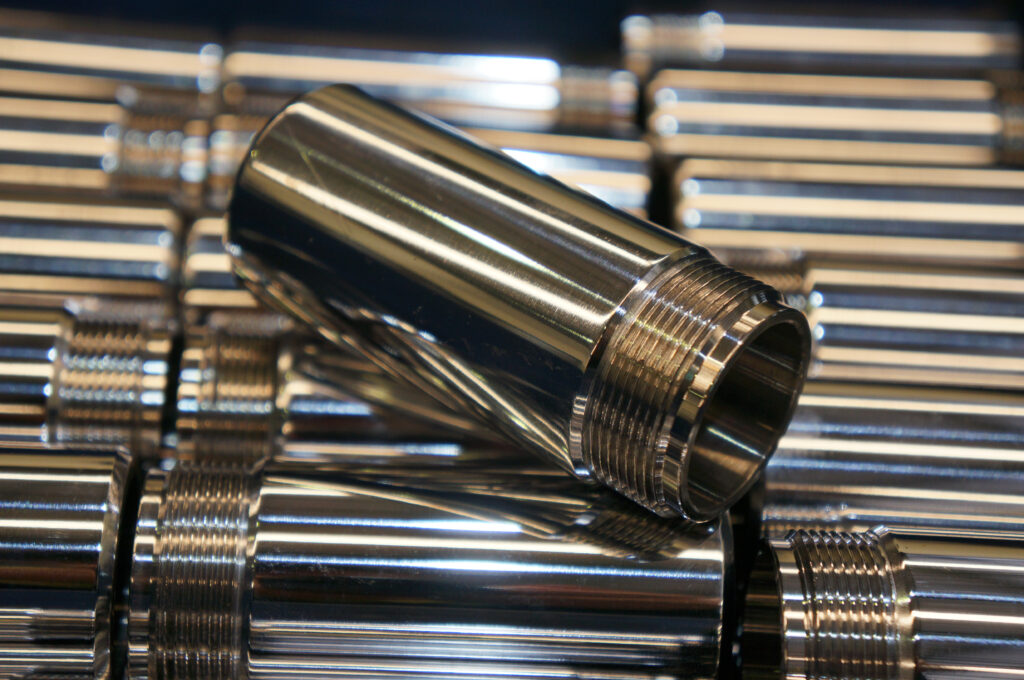
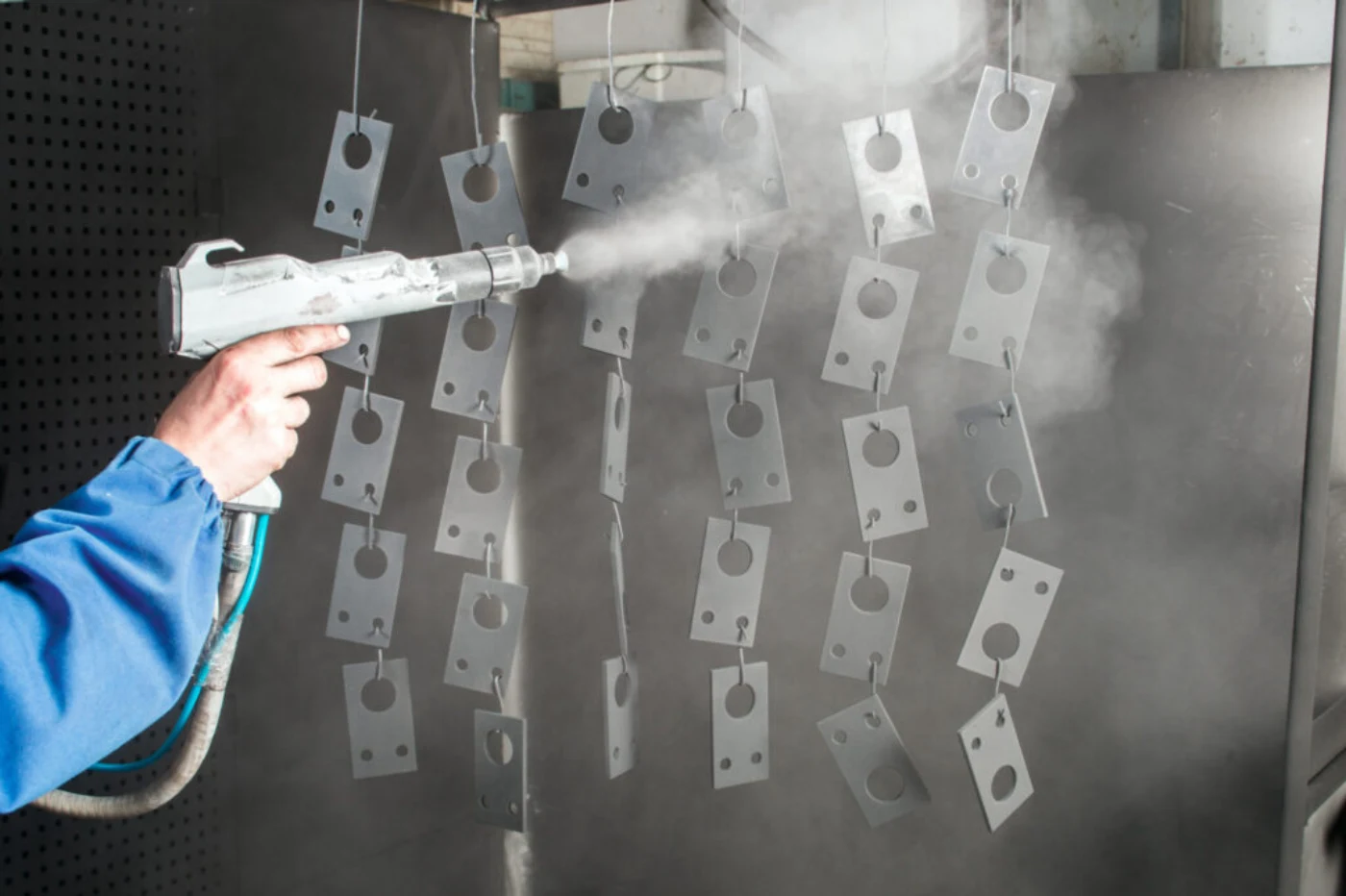
Powder Coating
A tough coloured film for housings and frames, and why it is not for tight tolerances
See more →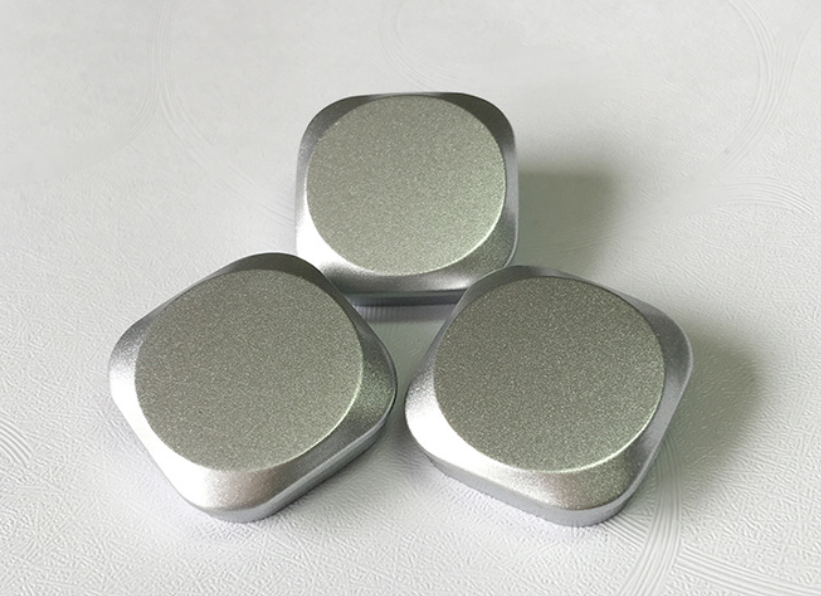
What buyers ask about finishing
Can you match a colour we already have?
Usually, if you send us a physical sample of what you are matching to. A Pantone or RAL reference is a starting point but anodised colour on metal will never sit exactly on a printed reference. We keep the approved sample and match future batches to it rather than to a number.
Do the finishing costs appear on the quote?
Yes, as their own line. A price that excludes finishing is not a lower price, it is a later invoice. How a machined price is built →
What do you need from us to quote a finish?
The finish name, any standard or class the drawing calls for, a colour and gloss if it is decorative, a thickness if it is functional, and which features must be masked. If you are not sure, tell us what the part has to survive and we will propose something.
Can you ship parts unfinished?
Yes, and on a tight schedule it is sometimes the right answer — machined parts to you now, finishing on the next batch. Just say so at quotation so we do not build the finishing days into the date.
Who is liable if a finish comes back wrong?
We are. The finisher is our supplier, not yours. Parts that fail our incoming check go back to them and you are not asked to accept them.
Tell us what the part has to survive
Send the drawing with the finish you have in mind, or with no finish at all and a sentence about where the part lives — outdoors, in a hand, against a seal, inside a machine. You will get a price, a lead time, and a note on anything in the finish that will fight the tolerances.