
CNC Machining Titanium
Titanium buys you strength close to steel at about half the weight, plus corrosion resistance that survives sea water and the human body. It is also the most demanding material in the shop: it springs back under the cutter, it will not carry heat away, and it reacts with tooling at cutting temperature. None of that is a reason to avoid it — it is a reason to plan the job properly.
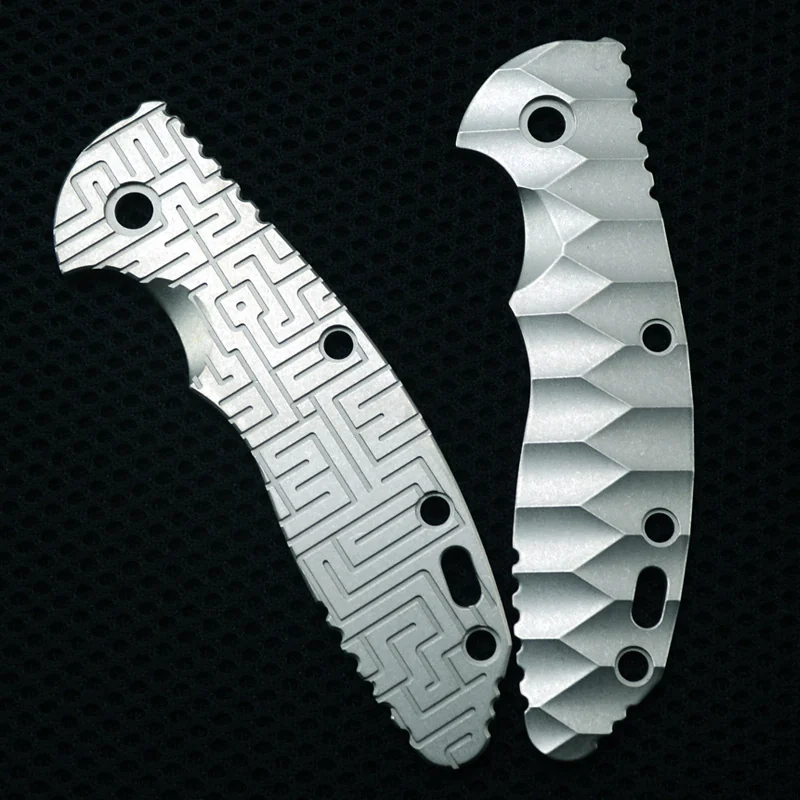
Twelve years on titanium, and a fifth of everything we export
Titanium is not something we take on occasionally. We have been cutting it for twelve years, and it now accounts for around 20 per cent of what we export each year — a large share of that EDC hardware, the rest turned fittings, fasteners and milled parts.
We keep titanium on the shelf rather than buying it job by job: TA1 and TA2 (commercially pure, Grade 1 and Grade 2), TC4 (Ti-6Al-4V, Grade 5), and titanium damascus for patterned work. On titanium, material procurement is usually the least predictable part of the schedule — holding stock takes that item out of it.
The work we are asked for most is the work the material makes difficult: thin walls that want to push away from the cutter, deep holes, and profiled parts that will not come off in a single setup. Cosmetic titanium gets a dedicated finishing cutter, never the one that did the roughing, so the surface comes off the machine ready for anodising rather than needing rescue.
Grades we machine
Almost all machined titanium work is Ti-6Al-4V. Commercially pure grades turn up where formability or corrosion matters more than strength.
| Grade | Best for | Notes |
|---|---|---|
| Ti-6Al-4V (Grade 5) | Structural parts, medical components, knife and EDC hardware, aerospace-style brackets | The workhorse alloy — high strength, heat treatable, biocompatible |
| Ti-6Al-4V ELI (Grade 23) | Implant-grade and cryogenic applications | Extra low interstitial version of Grade 5, tougher and more ductile |
| CP Titanium Grade 2 | Chemical and marine parts, anywhere corrosion beats strength | Softer, more formable, easier to cut than Grade 5 |
| CP Titanium Grade 1 | Highly formed parts | The softest and most ductile of the commercially pure grades |
Three properties that decide how titanium is cut
It springs back. Titanium’s elastic modulus is roughly half that of steel, so at light finishing depths the material deflects away from the edge and relaxes behind it. Cut too lightly and the tool stops cutting and starts rubbing, which work-hardens the surface and makes the next pass worse.
It does not carry heat away. Thermal conductivity is about a thirtieth of aluminium’s. The heat stays in the chip and the cutting edge, so the tool wears much faster than the part surface suggests. Speeds stay low, coolant pressure stays high.
It sticks to tooling. At temperature, titanium is chemically reactive with most tool materials: chips weld to the edge, build up, and tear away with a piece of coating. Every one of those events leaves a mark on the part — which is why cosmetic titanium parts get a dedicated finishing cutter, never the one that did the roughing. The full write-up →
| At a glance | |
|---|---|
| Typical tolerance | ±0.002 mm (±0.0001 in) on machined features |
| Cutting speed | Low — a small fraction of aluminium |
| Finishing | Separate roughing and finishing tools, always, on cosmetic parts |
| Standard finishes | Anodising (colour from oxide thickness, no dye), bead blast, tumble, stone-wash |
| Certificates | EN 10204 3.1 on request |
What makes a titanium part cheaper
Leave generous internal radii
Small radii force small cutters, and small cutters in titanium mean very light passes and long cycles. This is the single biggest cost lever on most titanium parts.
Separate cosmetic faces from functional ones
If only one face is seen, say so. Finishing every surface to a cosmetic standard in titanium is expensive and usually unnecessary.
Avoid deep, narrow pockets
Depth over about four times the cutter diameter is slow in aluminium and punishing in titanium. A redesign that opens the pocket often pays for itself on the first batch.
Decide the finish early
Titanium anodising produces colour from oxide thickness rather than dye, so the palette is fixed and the repeatability depends on tight process control. If colour matters, plan an approved sample.
CNC machined titanium parts
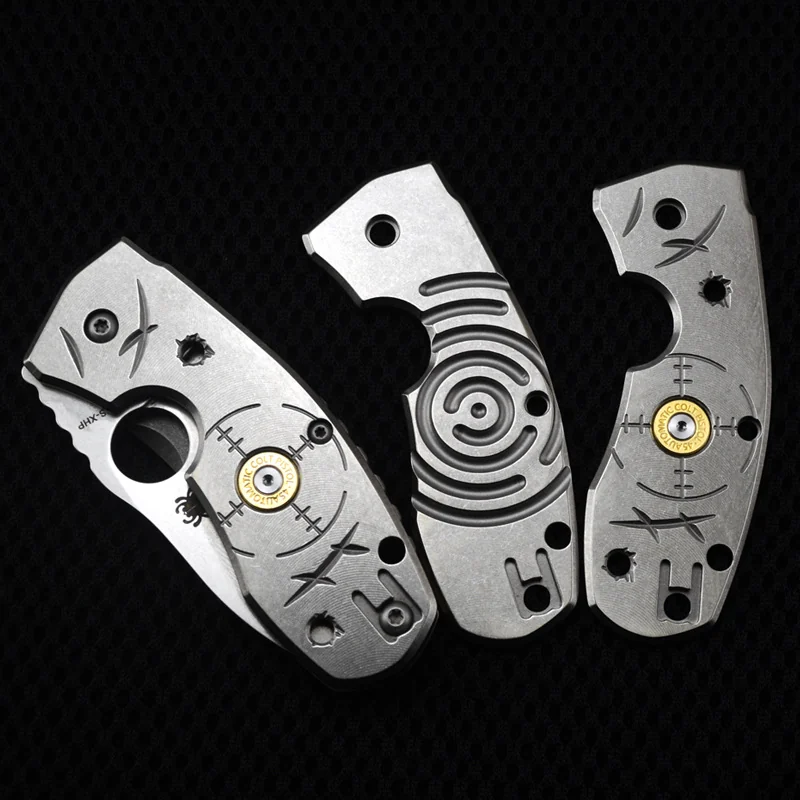
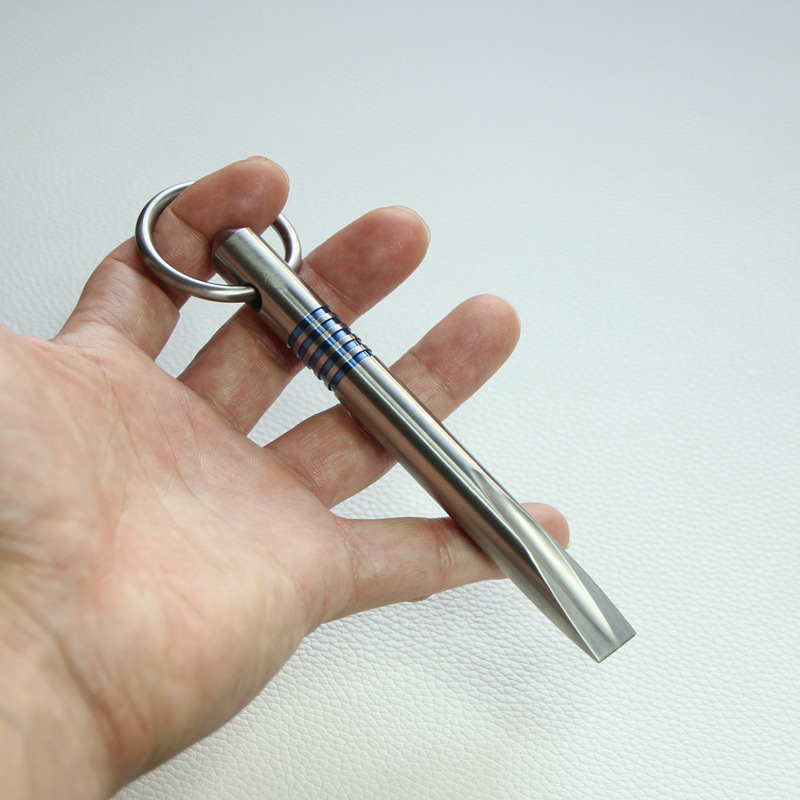
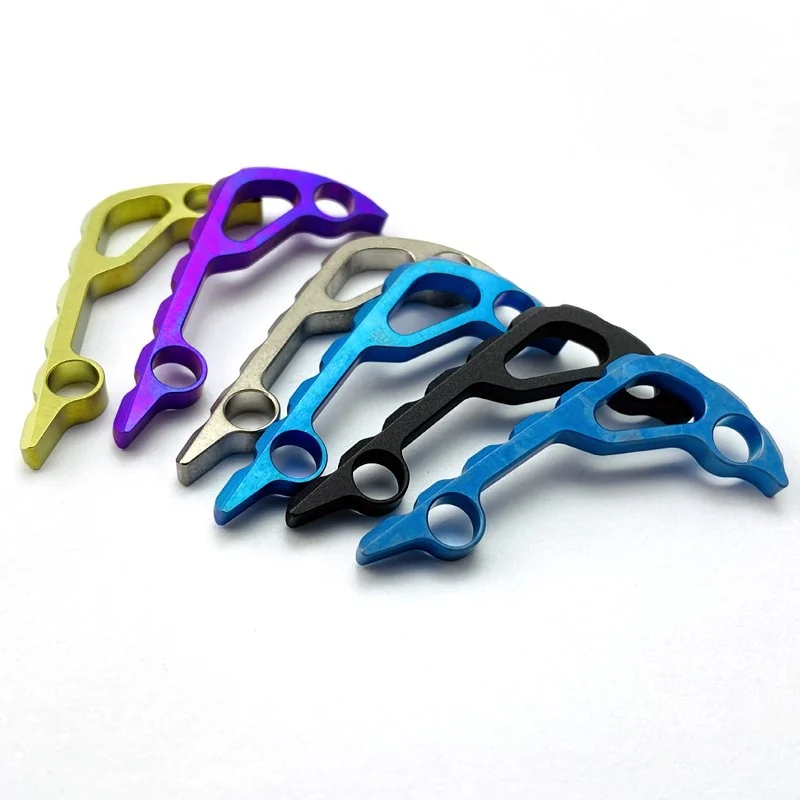
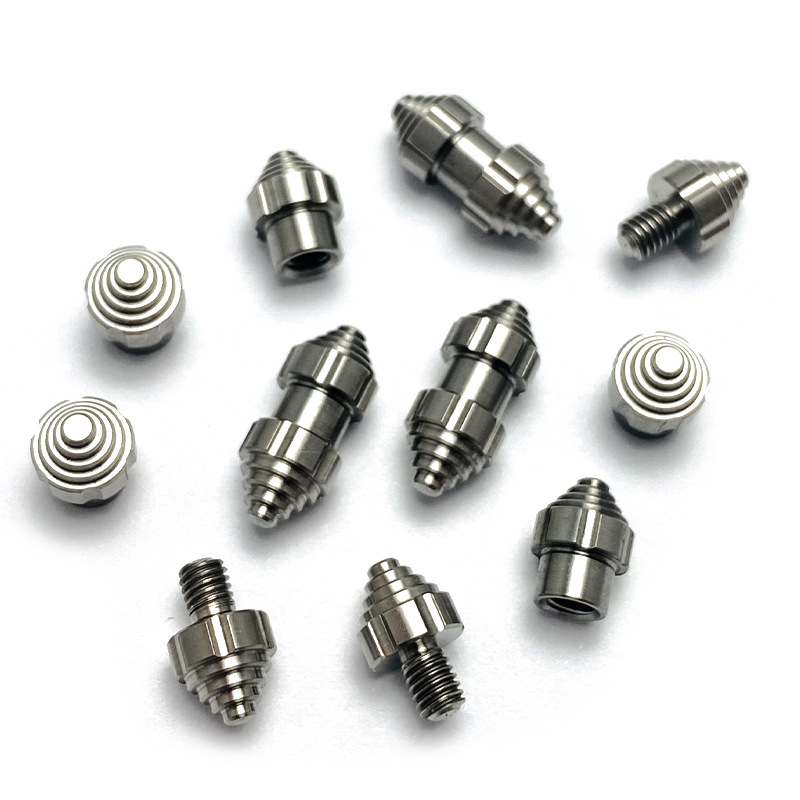
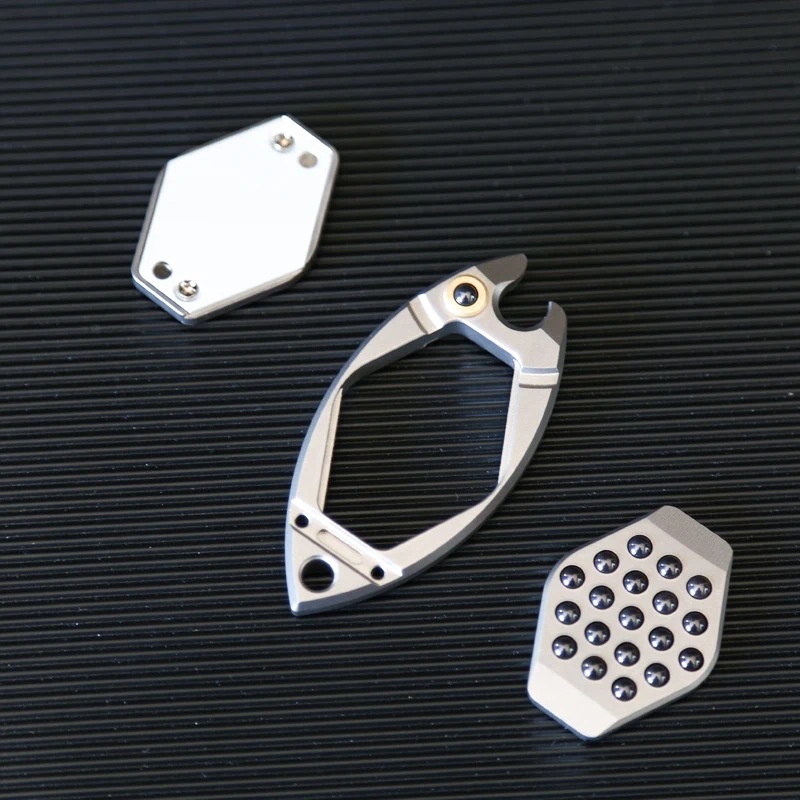
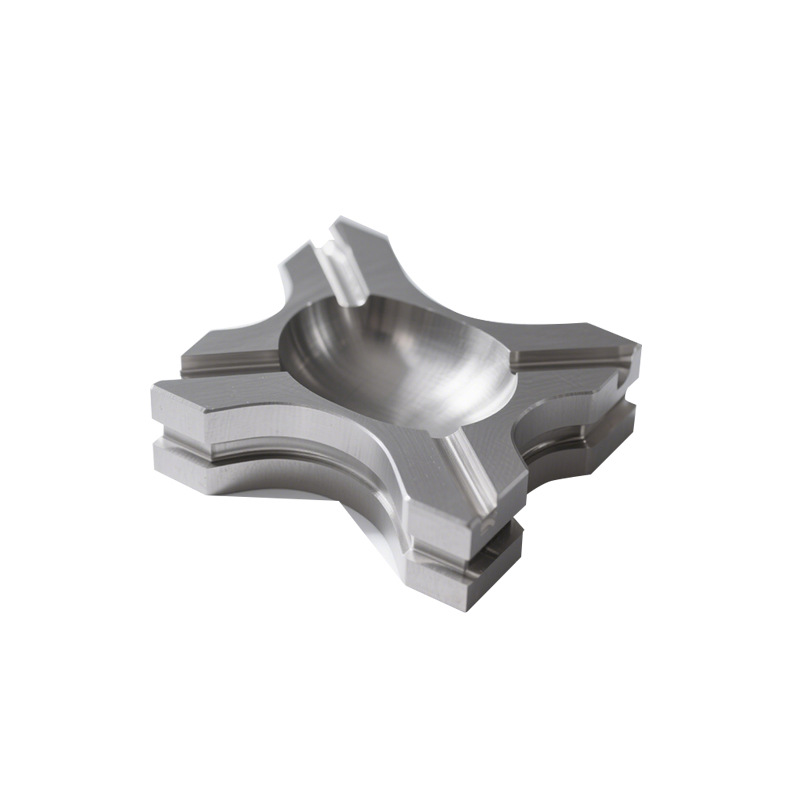
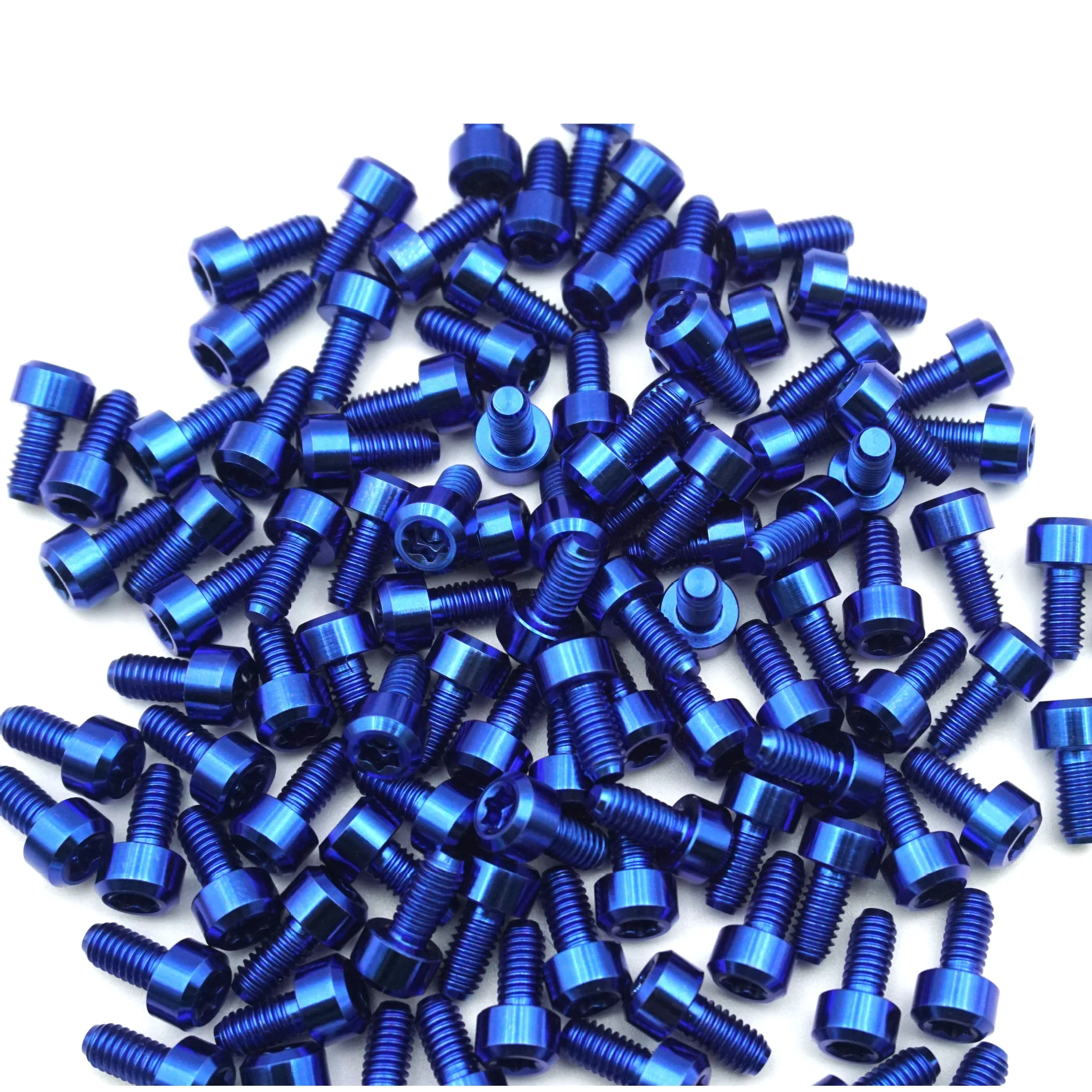
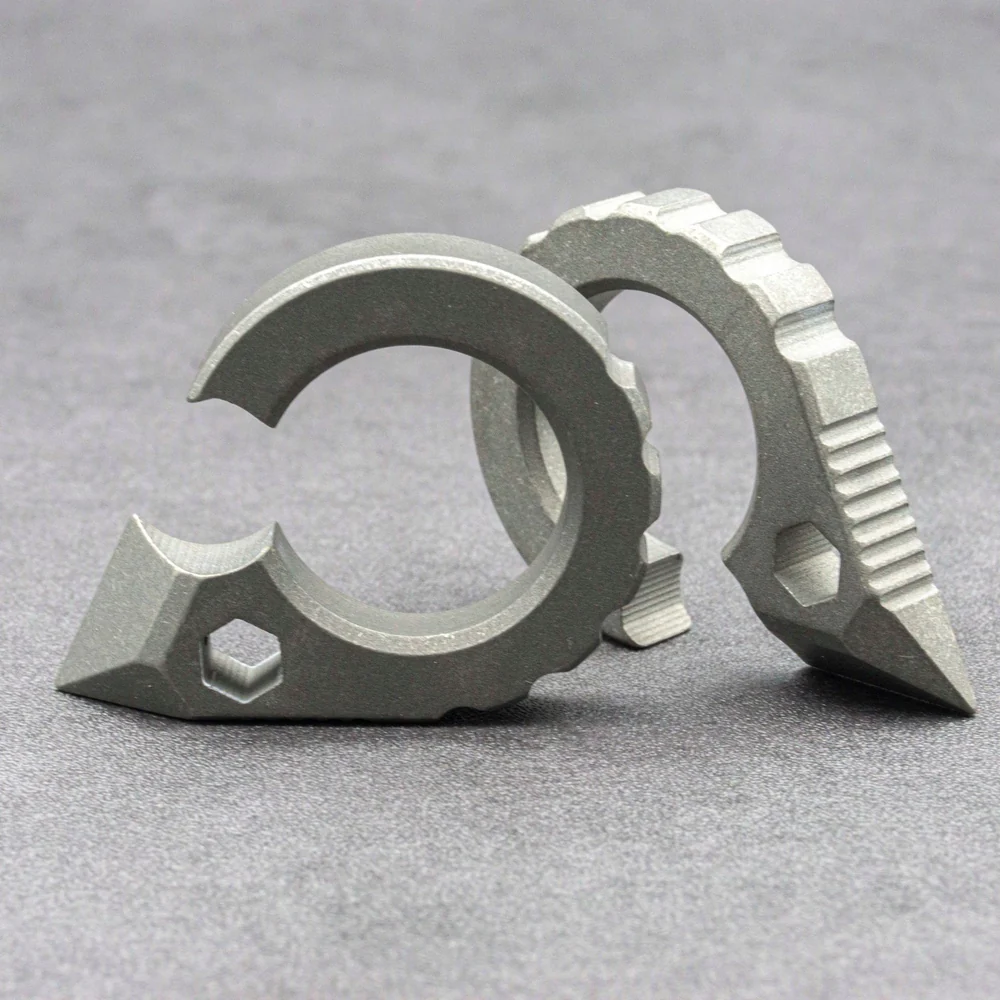
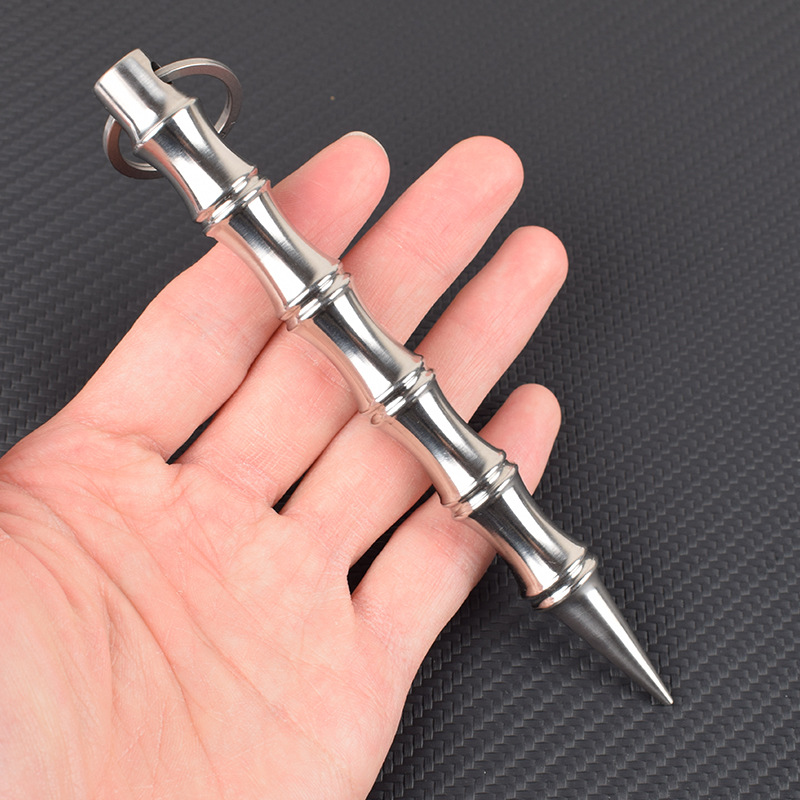
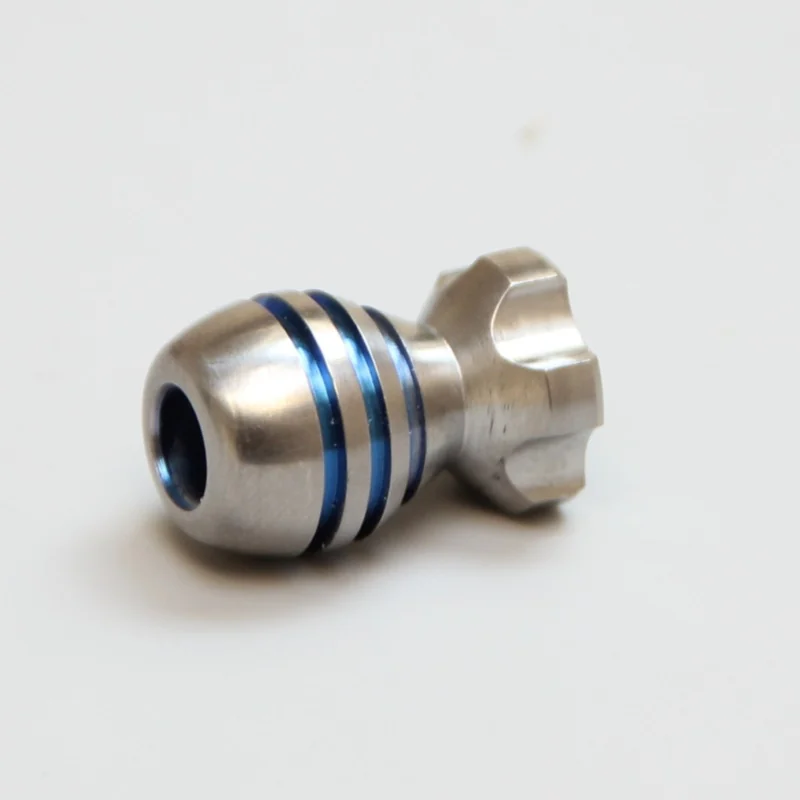
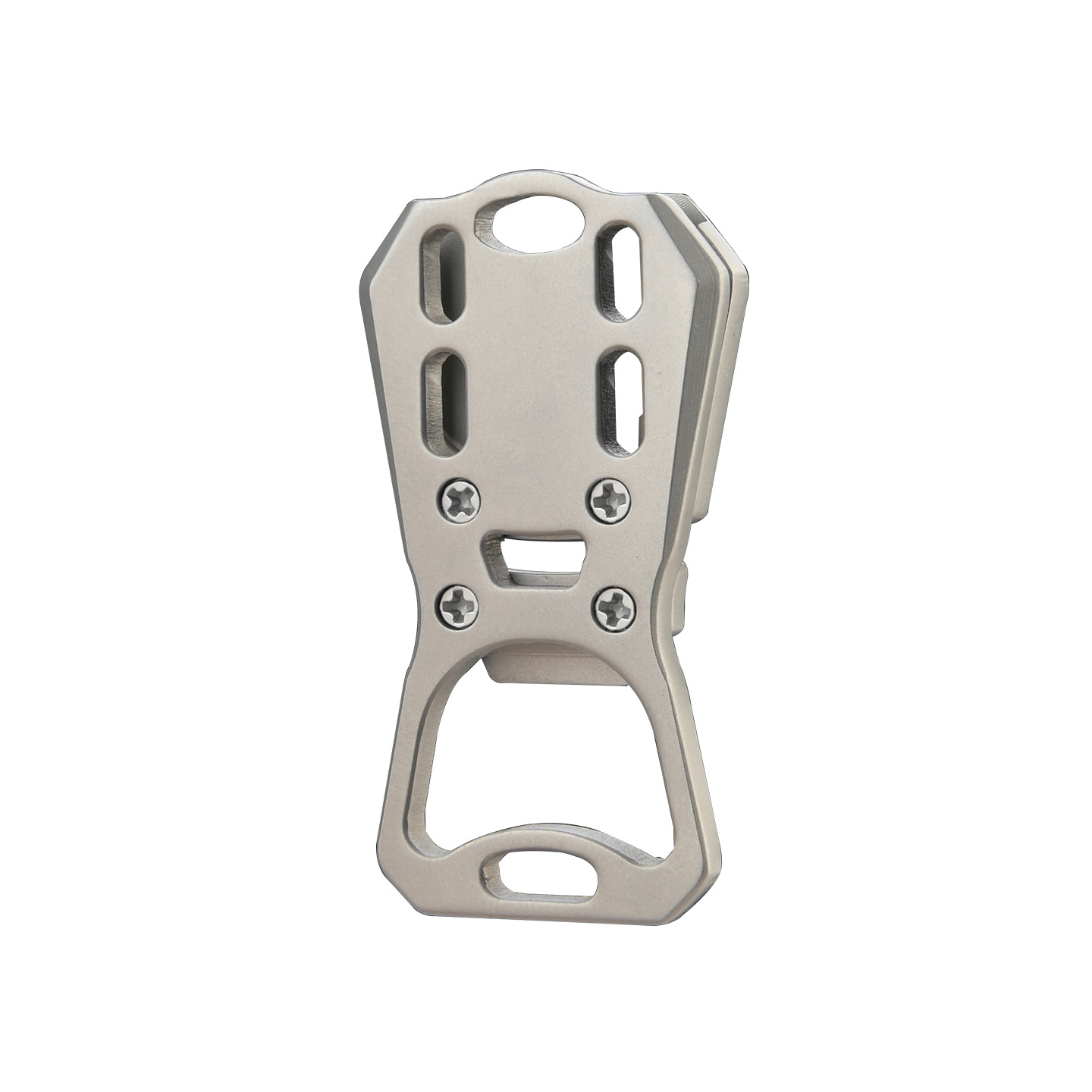
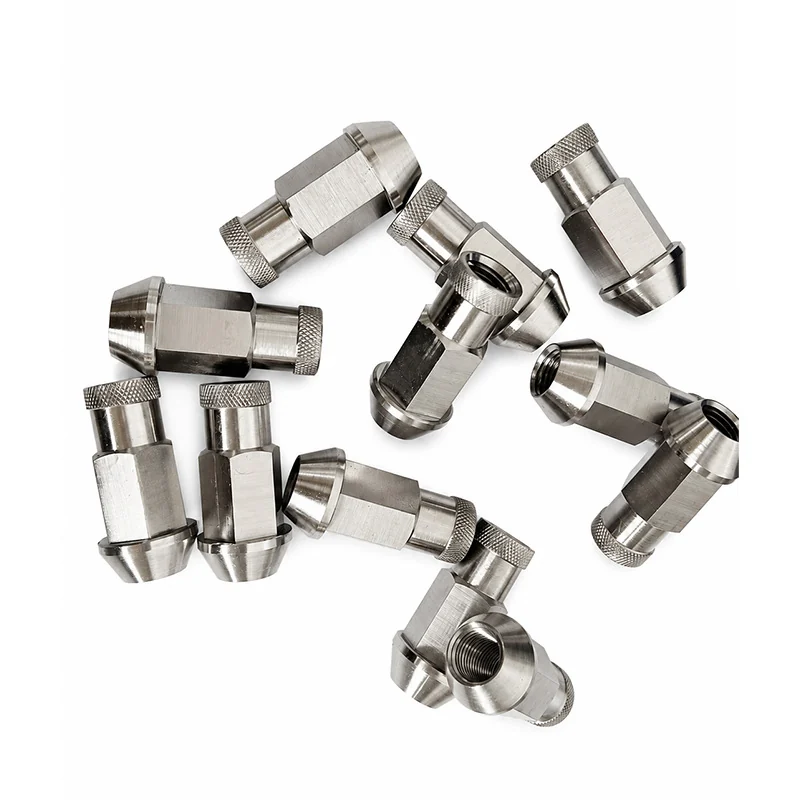
A large share of our titanium work is EDC hardware — openers, clips, keychain tools, fasteners and rings — alongside turned fittings and milled brackets. Most of it is Ti-6Al-4V, cut here, then anodised at a partner plant to a colour matched against a sample you have approved.
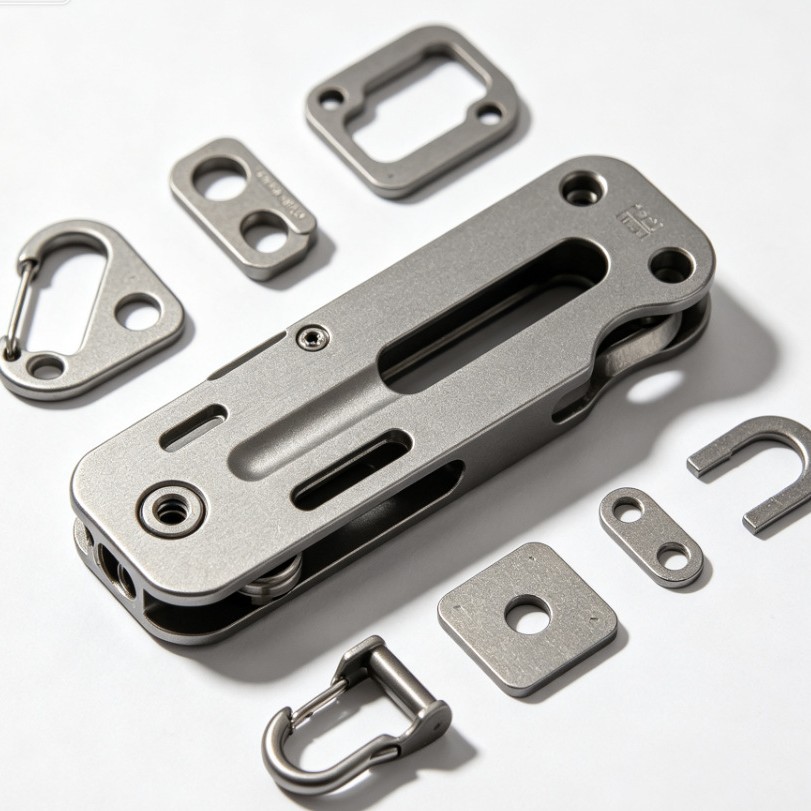
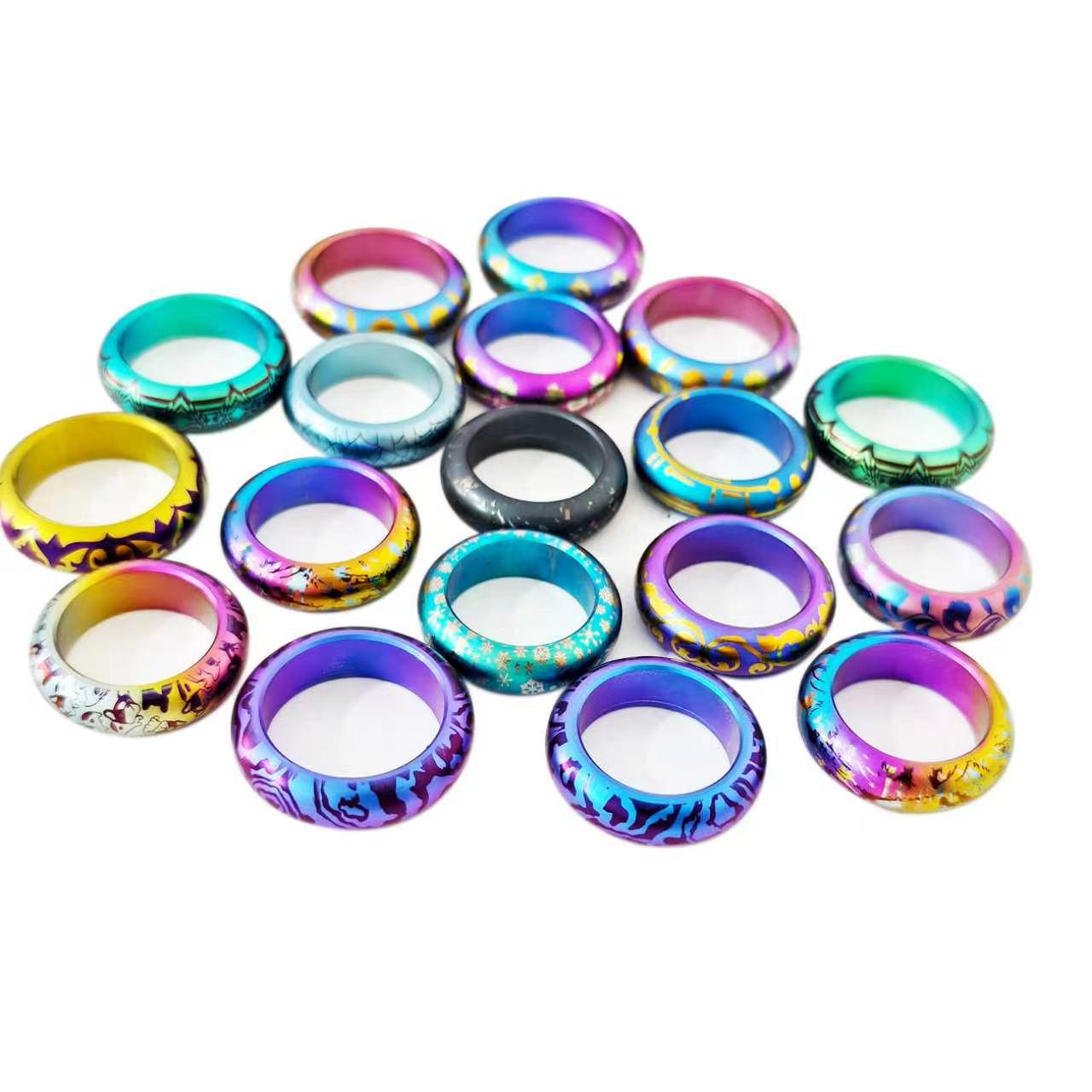
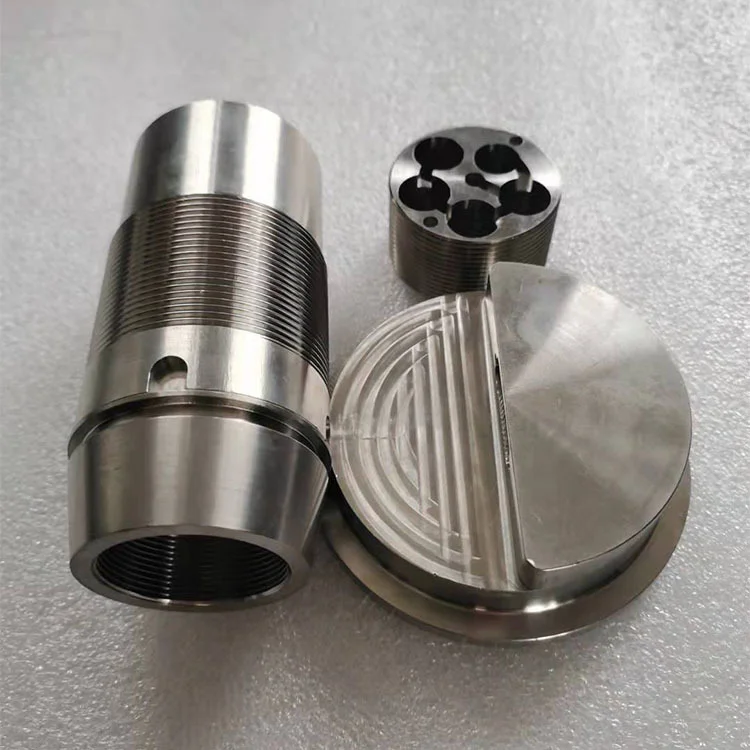
Finishes that work on titanium
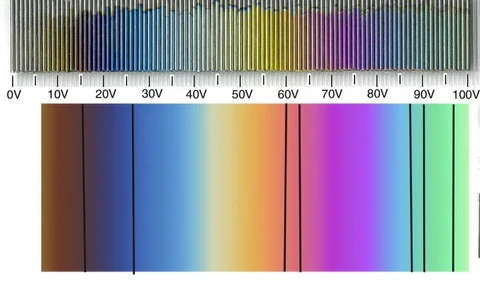
Titanium anodises without dye — the colour comes from the thickness of the oxide layer and the voltage that grows it.
The colour follows the voltage
Anodising grows a thin, clear layer of titanium oxide on the part. Light reflects off the top of that layer and off the metal underneath, and the two reflections interfere — so the colour you see is set by how thick the layer is. The thickness is set by the voltage: raise the voltage and the oxide grows thicker, and the colour steps through the sequence below.
- 10–20 VBronze to deep purple-blue
- 25–35 VBlue
- 40–45 VPale blue into light gold
- 50–60 VGold and yellow, then rose
- 65–80 VMagenta and purple
- 85–100 VTeal to green
No dye is involved, so the colour does not fade in sunlight. The layer is only a fraction of a micron thick, though, so it can be scratched through on a wear surface. The voltages are a guide rather than a recipe: the exact shade also moves with the alloy (commercially pure grades colour more vividly than Ti-6Al-4V), the surface finish before anodising and the bath itself.
Matching an anodised colour across batches needs a physical sample
The shade is set by oxide thickness, which is set by voltage, and it also moves with how the surface was prepared before the bath. Within one batch the parts match each other. Across batches, a colour name or a screen grab is not enough — send back a part you have approved and we match to that.
| Finish | What it does | Worth knowing |
|---|---|---|
| Colour anodising | Blue, purple, bronze, gold — no dye involved | Very thin, so it does not change the size. Match to an approved sample |
| Bead blast | Even matt grey | The usual base before anodising. Changes how the colour reads |
| Stonewash | Worn, slightly mottled surface that hides use marks | Rounds the edges a little as it goes |
| Tumbled | Deburrs and evens the edges | Rounds sharp edges |
| Bright polishing | Mirror-bright surface, built up in stages — smoothed first, then polished | The last stage is done by hand. Titanium runs hot enough under the wheel to be uncomfortable to hold, so it is slow work and priced accordingly |
Custom anodising
The colour on an anodised titanium part is grown, not painted on. The bath builds an oxide film a fraction of a micron thick, and what you see is light interfering through that film — voltage sets the thickness, thickness sets the colour. There is no dye and no pigment anywhere in the process.
Three things follow from that, and they are the three questions buyers actually ask:
- It does not change your dimensions. The film is thin enough that a slip fit which worked on the bare part still works anodised. This is the opposite of aluminium anodising, where you have to allow for growth on a tight bore.
- It will not fade, and it cannot flake. No dye means no UV fade, and the oxide is grown into the surface rather than laid on top, so it does not lift in sheets the way a coating does. It can still wear through on a high-contact edge — what wears there is the oxide itself, and it shows as bare metal underneath.
- The surface underneath decides the look. The same voltage over a bead-blasted part, a polished part and a brushed part gives a matte colour, a bright colour, and a colour with grain running through it. Tell us the finish you want under the colour, not just the colour.
We can mask areas to leave them bare, run two tones on one part, and match to a physical sample you send rather than to a colour name. If the shade matters, ask for a trial piece before the batch goes in — it costs far less than re-running the order.
Anodising, blasting and passivation are done at partner plants we have used for years. The parts come back here and are checked before they ship.
Ready for a quote?
Send the drawing — price and lead time within 16 hours. STEP, IGES, X_T, DWG, DXF or PDF.
No minimum order.