
CNC Machining Engineering Plastics
Machined plastic is not moulded plastic. There is no tooling to pay for, so one part costs roughly what one part should cost, and any grade you can buy as stock you can have as a part. What changes is the engineering: plastics move with temperature and humidity, they creep under load, and a tolerance copied from a metal drawing is usually not achievable and not necessary.
The grades we machine, ranked by what decides the choice
Plastic selection is a temperature and chemistry decision far more than a strength one. Find the row that survives your environment first, then worry about stiffness and cost.
| Material | Best at | Service temperature | Watch out for |
|---|---|---|---|
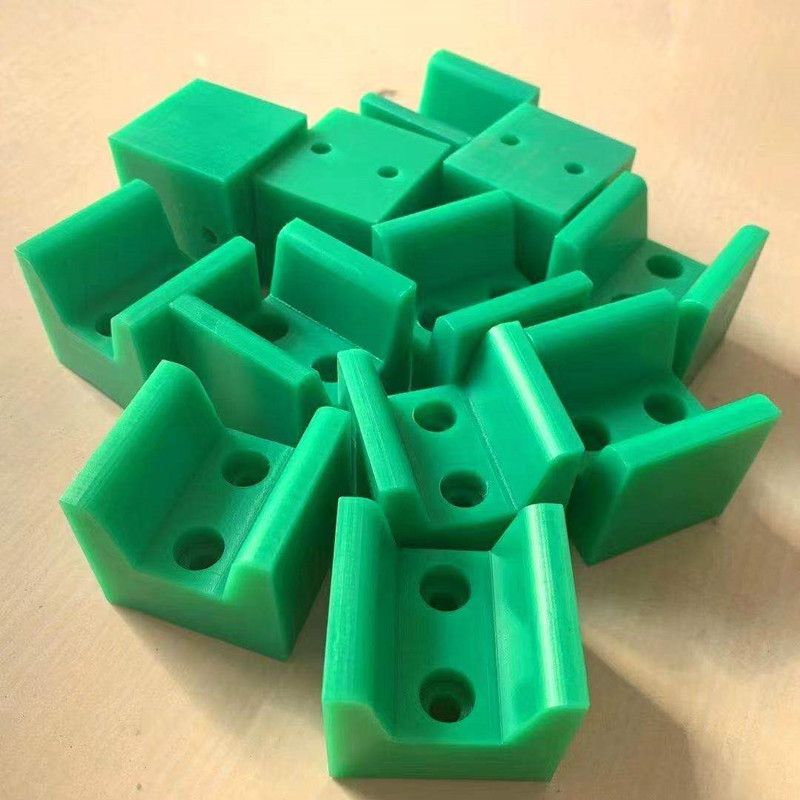
| Acetal / POM | The default machining plastic — stiff, dimensionally stable, cuts cleanly | Around 80–100 °C | Attacked by strong acids; very hard to bond |
| Nylon | Bushings, gears, wear parts, low friction against metal | Around 80–100 °C | Absorbs moisture and grows — parts move after machining |
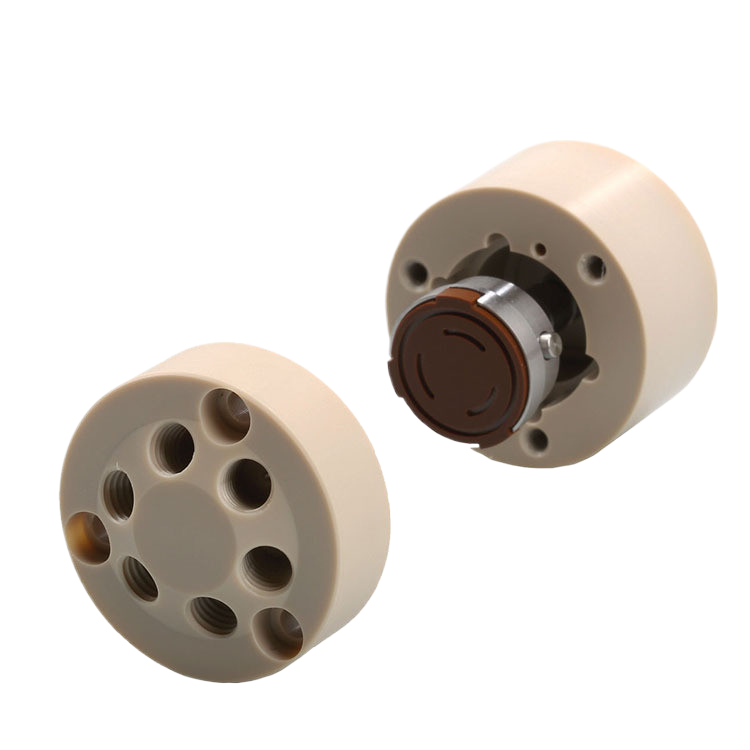
| PEEK | High temperature, chemicals, medical and semiconductor parts | Around 250 °C continuous | By far the most expensive material on this site; price the stock first |
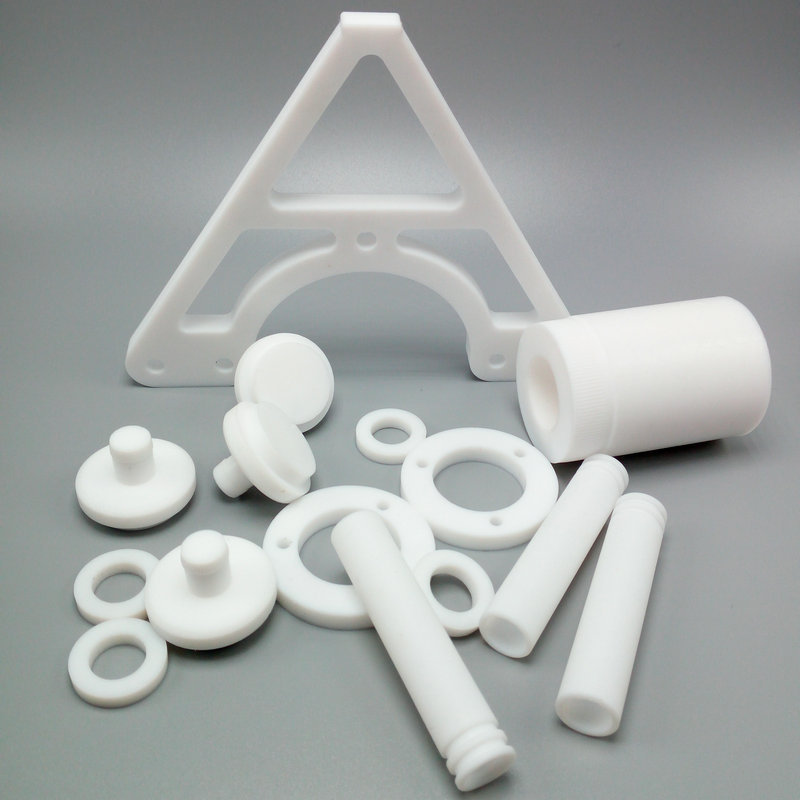
| PTFE | Chemical inertness, seals, the lowest friction available | Around 250 °C | Soft and creeps under load; tight tolerances are difficult to hold |
| PPS | Hot and chemically aggressive environments, dimensionally stable | Around 200 °C | More brittle than PEEK; needs sharp tooling |
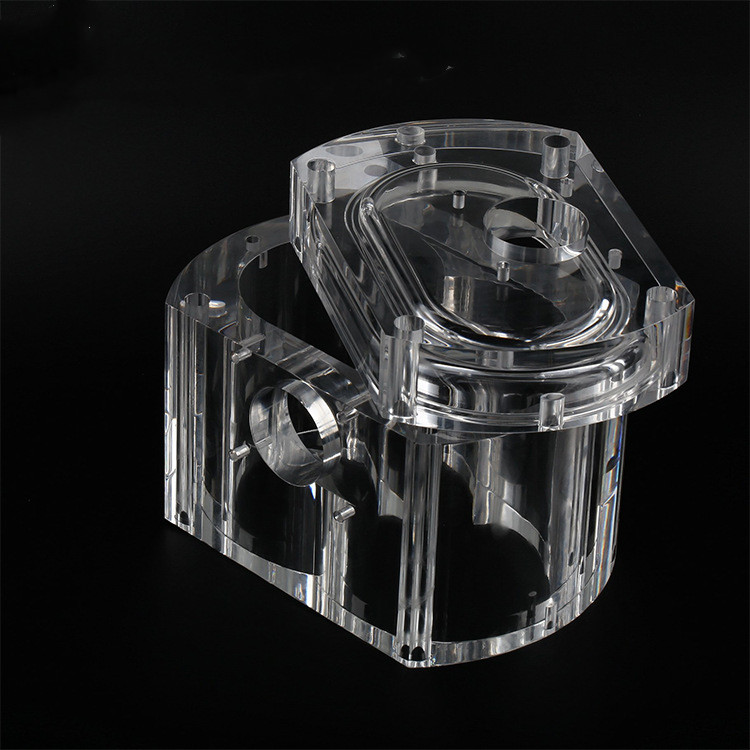
| Polycarbonate | Transparent parts that must not shatter — guards, covers, windows | Around 115 °C | Cracks from stress concentrations; avoid sharp internal corners |
| Acrylic / PMMA | Clear parts where optical quality matters more than toughness | Around 80 °C | Brittle, chips at edges, cracks around fasteners |
| ABS | Prototype housings, low-cost enclosures, fit checks | Around 80 °C | Low stiffness, poor outdoors, not structural |
| G10 / Garolite | Electrical insulation, knife scales, structural laminate | Around 130 °C | Glass fibre is abrasive and the dust needs controlling |
| Polyurethane | Rollers, pads, bumpers, impact absorption | Varies with hardness | Soft grades deflect under the cutter; machining depends on durometer |
What makes machined plastic different from machined metal
Heat has nowhere to go. Plastics conduct heat poorly, so the heat of cutting stays at the tool and softens the material rather than being carried away in the chip. That means sharp tooling, high spindle speeds, real feed rates and air or coolant to clear chips. A dull cutter does not just leave a bad finish in plastic — it melts the surface.
Parts move after machining. Internal stress from extrusion or casting relaxes when material is removed, so a plastic part can be in tolerance at the machine and out of it the next morning. On anything tightly toleranced we rough, let the part relax, then finish — the same sequence that works for thin aluminium.
Humidity is a dimension. Nylon in particular absorbs water from the air and grows measurably. If the part is inspected in a dry room and used in a wet one, the two measurements will differ, and that is the material behaving normally rather than a machining fault.
Tolerances are wider, and that is fine. A realistic general tolerance on machined plastic is several times what the same drawing would carry in aluminium. Asking for ±0.01 mm on a nylon part is asking for something that will not still be true when it arrives.
| At a glance | |
|---|---|
| Typical tolerance | Wider than metal — grade and section dependent; tell us which dimensions are functional |
| Cutting | Sharp, polished, high-rake tooling; high speed, real feed |
| Stability | Rough, relax, then finish on tightly toleranced parts |
| Finishes | Vapour polishing on some clear grades, painting, printing, laser marking |
| Not applicable | Anodising, plating, passivation and black oxide are metal processes |
Four things that make a plastic part work
Tell us the service temperature and the chemicals
This decides the material more than anything else on the drawing. A grade that is comfortable at 60 °C can be scrap at 120 °C, and the grade that survives it can cost several times more.
Do not copy a metal tolerance
Mark which dimensions are actually functional. We will hold those tightly and let the rest sit at a sensible general tolerance, which is cheaper and more honest than pretending every dimension is critical.
Avoid sharp internal corners on brittle grades
Polycarbonate and acrylic crack from stress concentrations. A radius in the corner is free at the machine and removes a failure mode in service.
Think about how it is held
Plastics deflect under clamping far more than metal. Large thin parts often need a vacuum plate or a support fixture, which is worth knowing at quotation rather than at first article.
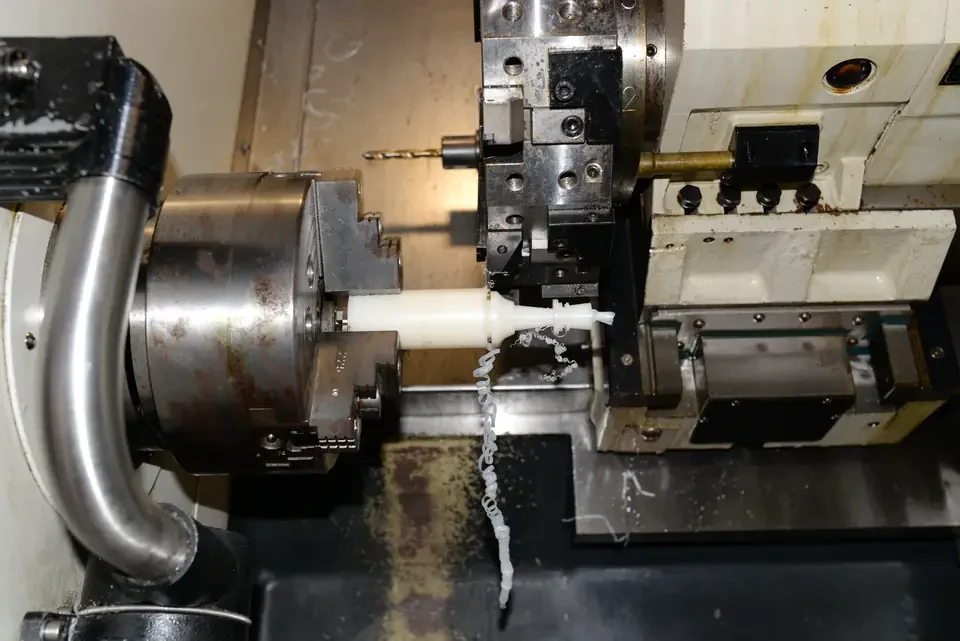
Turning a plastic bar on the lathe. Two things separate this from metal: the chip has to be cleared before the heat welds it back onto the part, and the part grows and shrinks with temperature — so we measure it after it has cooled, not straight off the machine.
Finishes that work on plastics
Most machined plastics are used as machined. The finishing that does apply is about clarity, colour or marking rather than corrosion.
Ready for a quote?
Send the drawing — price and lead time within 16 hours. STEP, IGES, X_T, DWG, DXF or PDF.
No minimum order.