
Black Oxide for Steel Parts
Black oxide is the finish to reach for when a steel part has to be black and cannot afford to change size. The coating is about a micron thick — effectively nothing — which is exactly why tooling, jigs, fasteners and gauge components use it. What it is not is corrosion protection on its own.
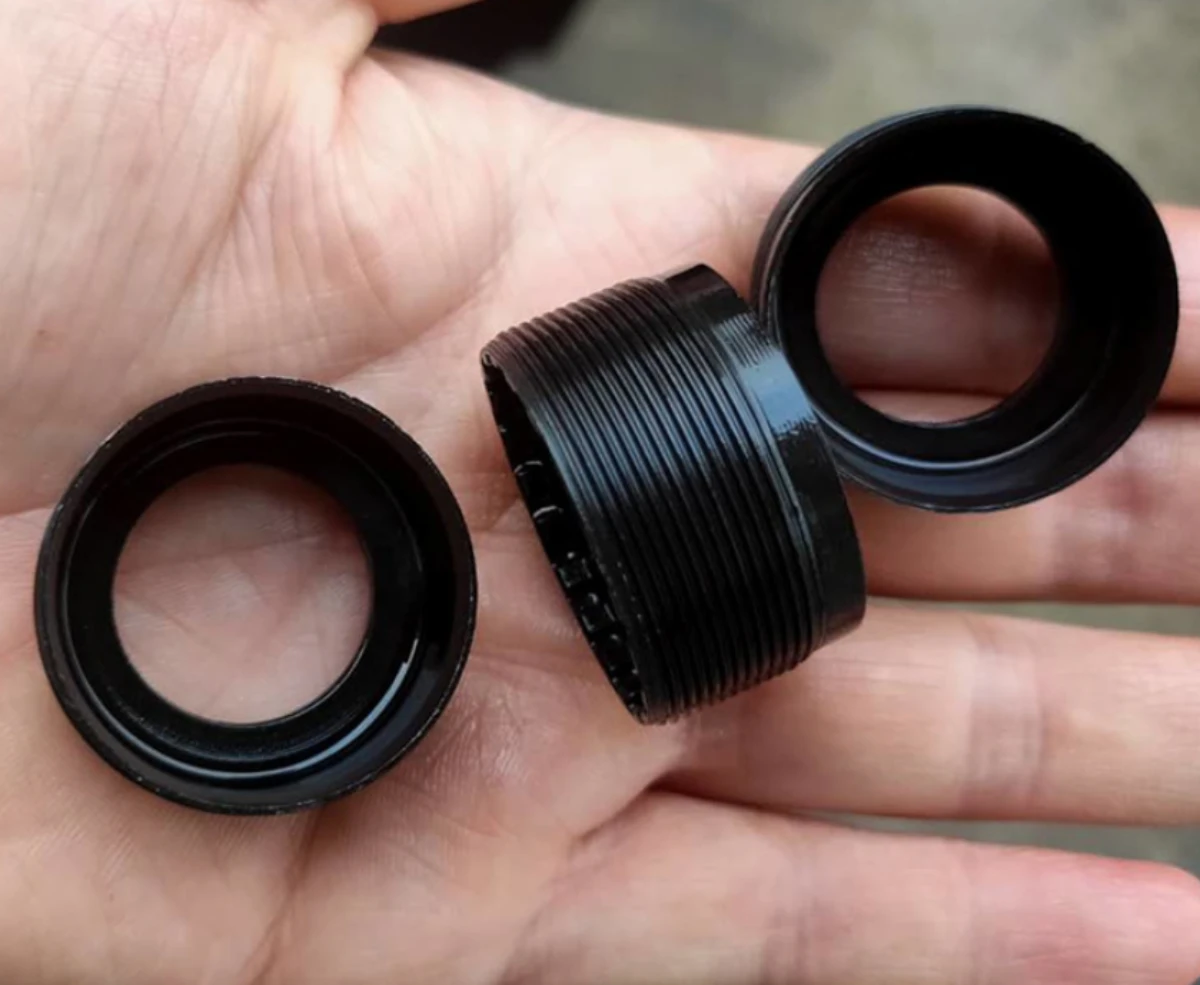
A conversion coating, not a layer on top
The part is immersed in a hot alkaline salt solution that converts the surface iron into black magnetite. Nothing is deposited on top: the black is the steel itself, chemically changed. That is why the dimensional effect is negligible and why it cannot chip, flake or peel.
It is the standard finish on tool steel components, punches, dies, fixture hardware and fasteners, where a part has been ground to size and cannot tolerate a plating thickness. It also kills reflection, which is useful on optical and camera hardware.
The honest limitation: bare black oxide offers only mild corrosion resistance. It is always finished with oil, wax or a light lacquer, and it is that layer doing most of the protecting. A black oxide part stored unoiled in a humid workshop will rust. If the part lives outdoors, zinc plating or powder coating is the right answer instead.
| At a glance | |
|---|---|
| Process type | Chemical conversion coating (hot alkaline black oxide) |
| Materials | Steel, tool steel, stainless (a different process, giving a slightly different black) |
| Typical thickness | Around 1 µm |
| Effect on dimensions | Negligible — the reason ground and gauge parts use it |
| Corrosion resistance | Mild, and dependent on the oil or wax applied afterwards |
| Appearance | Matt to semi-gloss black, non-reflective |
| Typical parts | Punches and dies, fixture hardware, fasteners, tooling, optical mounts |
When it is the right finish, and when it is not
Choose it when
- —A ground or close-toleranced steel part has to be black
- —Reflection has to be killed without adding thickness
- —Cost matters and the part lives indoors
- —Threads must still gauge correctly after finishing
Choose something else when
- —The part lives outdoors or in a wet environment
- —You need real corrosion protection without maintenance
- —The material is aluminium or brass
- —A specific colour other than black is wanted
What we need on the drawing
Black oxide is the simplest finish here to specify, with two things worth stating.
Steel or stainless
They are different processes and give a slightly different black. If the assembly mixes both, expect a visible difference and decide in advance whether that is acceptable.
The post-treatment
Oil, wax, or a dry-to-touch lacquer. This is what actually protects the part, and it also changes how the part feels in the hand.
Any masked features
Rare on black oxide because of the thickness, but sealing faces and electrical contacts are sometimes worth keeping bare.
Colour match
The depth of black depends on the steel grade and on the surface underneath: a blasted face comes out matt, a machined face semi-gloss. If the parts must match an earlier batch or another component, say so and send a reference piece if you have one.
Send the tooling drawing
Send the drawing with the finish you have in mind, or with none at all and a sentence about where the part lives. You get a price, a lead time, and a note on anything in the finish that will fight your tolerances.