
CNC Machining Polypropylene
Polypropylene is the plastic for anything that lives in chemicals. It resists acids and alkalis that would attack metals and most other plastics, absorbs no water, can be welded, and costs little. We machine it for plating-line gears and barrel parts, lab and chemical equipment, tank fittings and pump components. It is soft and it creeps, so the design has to allow for that.
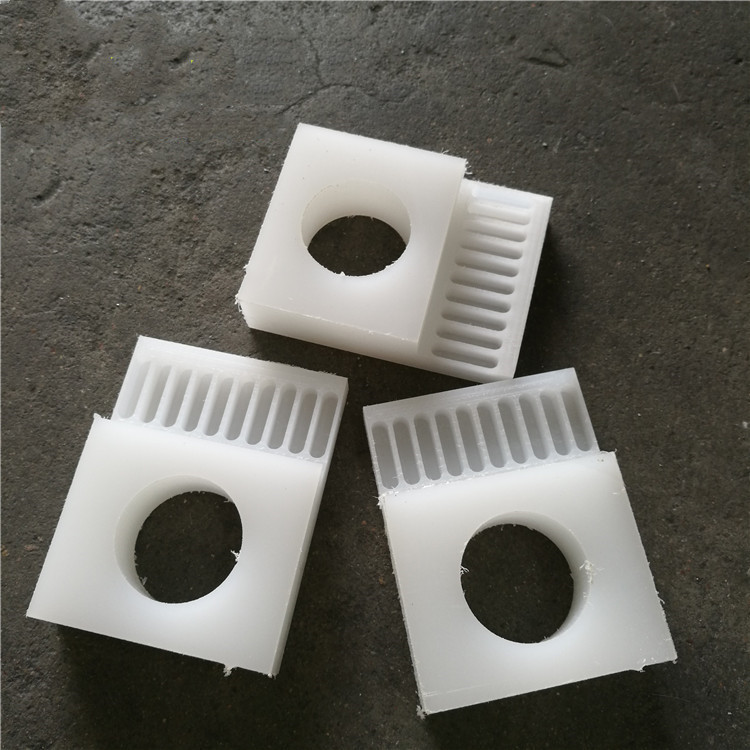
Grades and forms
Homopolymer for stiffness and machinability, copolymer for toughness in the cold. Say which if the part sees low temperatures or impact.
| Form / grade | Best for | Notes |
|---|---|---|
| PP-H homopolymer | Most machined parts, chemical equipment, tank fittings | Stiffer and machines more cleanly; brittle below about 0 °C |
| PP-C copolymer | Parts that see impact or cold | Tougher at low temperature, slightly softer and more flexible |
| PP natural / grey / white | General | Natural is translucent white; grey (RAL 7032) sheet is the standard for tank and hood construction |
| Glass-filled PP | Stiffer structural parts | Better creep resistance and stiffness; abrasive to tooling, rougher finish |
| Sheet / rod | Sheet for plates and fittings, rod for turned parts | Sheet is weldable to itself, so machined parts can be joined into larger tanks and hoods |
Easy to cut, easy to clamp out of shape
Polypropylene machines like a slightly stiffer polyethylene: sharp tools, high speed, positive feed, no tendency to crack. The chips are continuous and stringy, so chip control matters more than cutting force. Edges pick up a small burr that is removed by hand or by tumbling.
Holding is the challenge. PP is soft and deforms under clamping, then springs back when released, so flat parts are held lightly or on vacuum and finished in a second, lighter pass. It also has high thermal expansion, so a dimension checked warm off the machine will read differently after the part has cooled.
PP can be welded — hot-gas or extrusion welding — which is how machined fittings become part of a tank or a fume hood. If a machined part is going to be welded, tell us: the joint faces need to be left clean and unfinished.
| At a glance | |
|---|---|
| Service temperature | Around 100 °C continuous |
| Chemical resistance | Excellent against acids and alkalis; swells in some hydrocarbons and chlorinated solvents |
| Moisture absorption | Practically none |
| Weakness | Soft, creeps under sustained load, brittle in the cold (homopolymer), poor UV resistance, cannot be glued |
| Typical parts | Plating and anodising line gears and barrels, tank fittings, lab and chemical equipment, pump parts, cutting fixtures, food equipment |
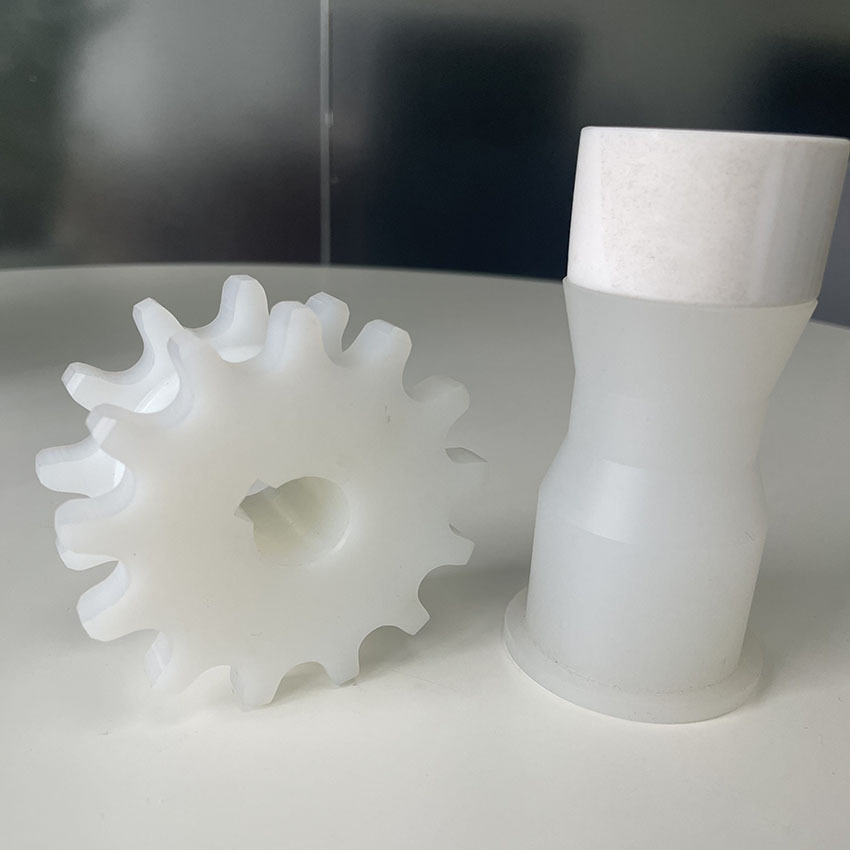
CNC machined polypropylene (PP) parts
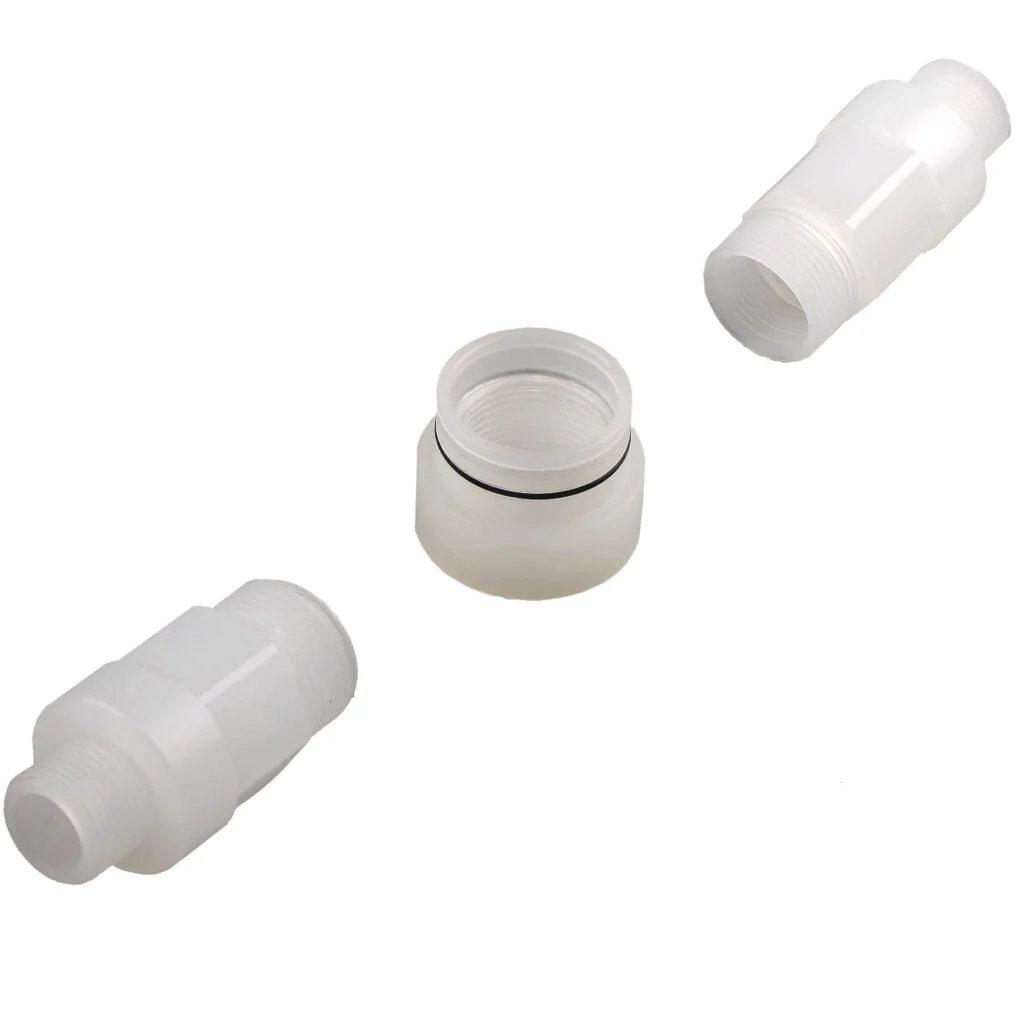
Tank fittings, chemical-handling parts, spacers and plating-line hardware — machined from PP sheet and rod. It shrugs off chemicals but moves dimensionally, so mark the fits that matter and leave the rest generous.
Four rules for a polypropylene part that works
Do not rely on PP to carry a sustained load
It creeps. A bolted PP flange loses clamp force over weeks; a PP gear under constant torque slowly deforms. Add metal washers, inserts or a stiffer material where load is continuous.
Design for mechanical joints or welding, not adhesive
Nothing sticks to polypropylene. Use threads with inserts, snap-fits, or plan to weld the machined part to the rest of the assembly.
Radius the corners and keep walls thick
Sharp internal corners and thin walls are where a soft part warps or, in the cold, cracks. 3 mm minimum wall, R1 or larger in corners.
Name the chemical, not just “chemical resistance”
Polypropylene is usually chosen for what it has to survive. Give us the fluid, the concentration and the temperature — PP is excellent with most acids and alkalis and poor with strong oxidisers.
Ready for a quote?
Send the drawing — price and lead time within 16 hours. STEP, IGES, X_T, DWG, DXF or PDF.
No minimum order.