
CNC Machining Ultem (PEI)
Ultem is the amber, glass-clear polyetherimide that combines high strength and stiffness with a 170 °C service temperature, inherent flame resistance and a stable dielectric. It survives repeated steam sterilisation, which is why it appears in reusable medical instruments and trays, and it holds tolerances that most plastics cannot. It costs accordingly, and it rewards a drawing that uses its strengths.

Grades and forms
Unfilled Ultem 1000 does most of the work. Glass-filled grades add stiffness at the cost of machinability and finish.
| Form / grade | Best for | Notes |
|---|---|---|
| Ultem 1000 (unfilled) | Medical, electrical, food equipment, structural parts | Transparent amber, strongest unfilled grade, machines to a fine finish; FDA and USP Class VI grades available |
| Ultem 2100 / 2200 (10 – 20% glass) | Stiffer structural parts | Higher modulus and lower thermal expansion; opaque, abrasive to tooling |
| Ultem 2300 (30% glass) | Semiconductor test sockets, aerospace brackets, high-load parts | Stiffest and most dimensionally stable; rough machined finish, carbide tools only |
| Rod, plate, tube | Turned parts from rod, plates and housings from plate | Thick sections benefit from annealing before finish machining |
Machines like a hard polycarbonate, and holds what you cut
Ultem cuts cleanly with sharp carbide at moderate speeds and gives a crisp, glassy edge. It is stiffer than polycarbonate and less inclined to smear, so fine features, thin walls and tight bores come out well. Glass-filled grades are abrasive: tool life drops and the surface is matte rather than clear.
Internal stress is the thing to manage. Extruded stock carries stress from manufacture; heavy machining releases it and the part moves. For thick sections and tolerances below about ±0.05 mm we rough, anneal, and then finish, and we can anneal again after machining if the part will see heat in service.
Solvent stress cracking is Ultem’s one weakness. Chlorinated solvents and some cleaners craze machined surfaces. Tell us how the part will be cleaned and we will note it on the quote; a post-machining anneal also helps.
| At a glance | |
|---|---|
| Service temperature | Around 170 °C continuous; heat deflection about 200 °C |
| Sterilisation | Steam autoclave, EtO and gamma — repeated cycles |
| Flammability | Inherently UL94 V-0, low smoke |
| Weakness | Sensitive to chlorinated solvents and some strong alkalis; expensive; notch-sensitive at sharp corners |
| Typical parts | Sterilisation trays and instrument handles, connector housings and insulators, semiconductor test sockets, aerospace interior brackets, food equipment parts, manifolds |
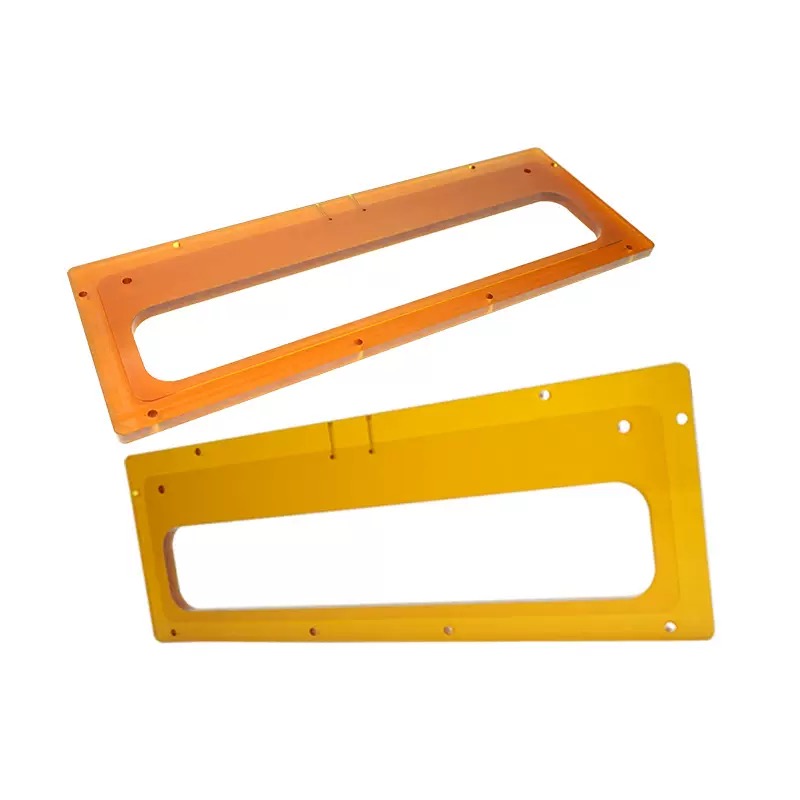
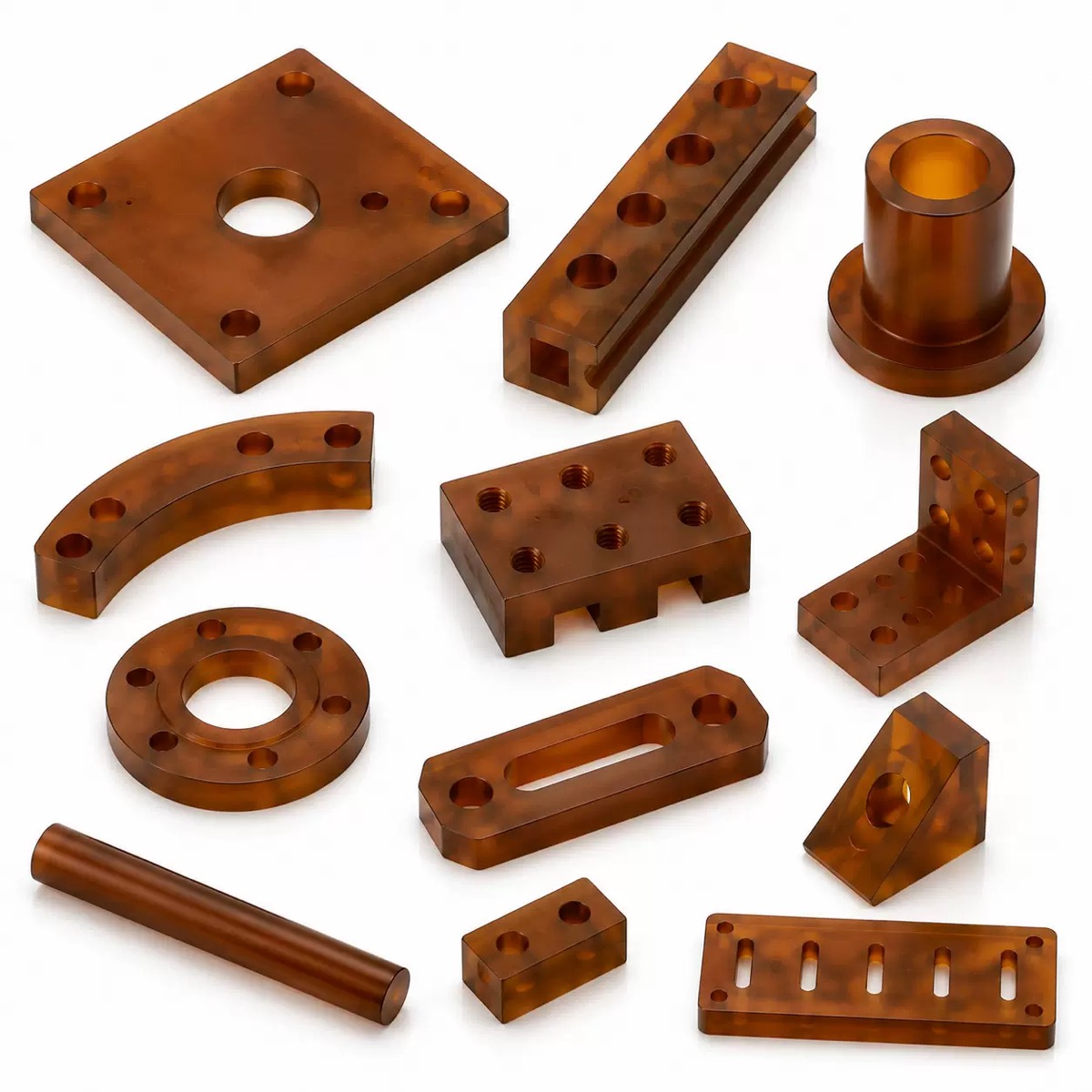
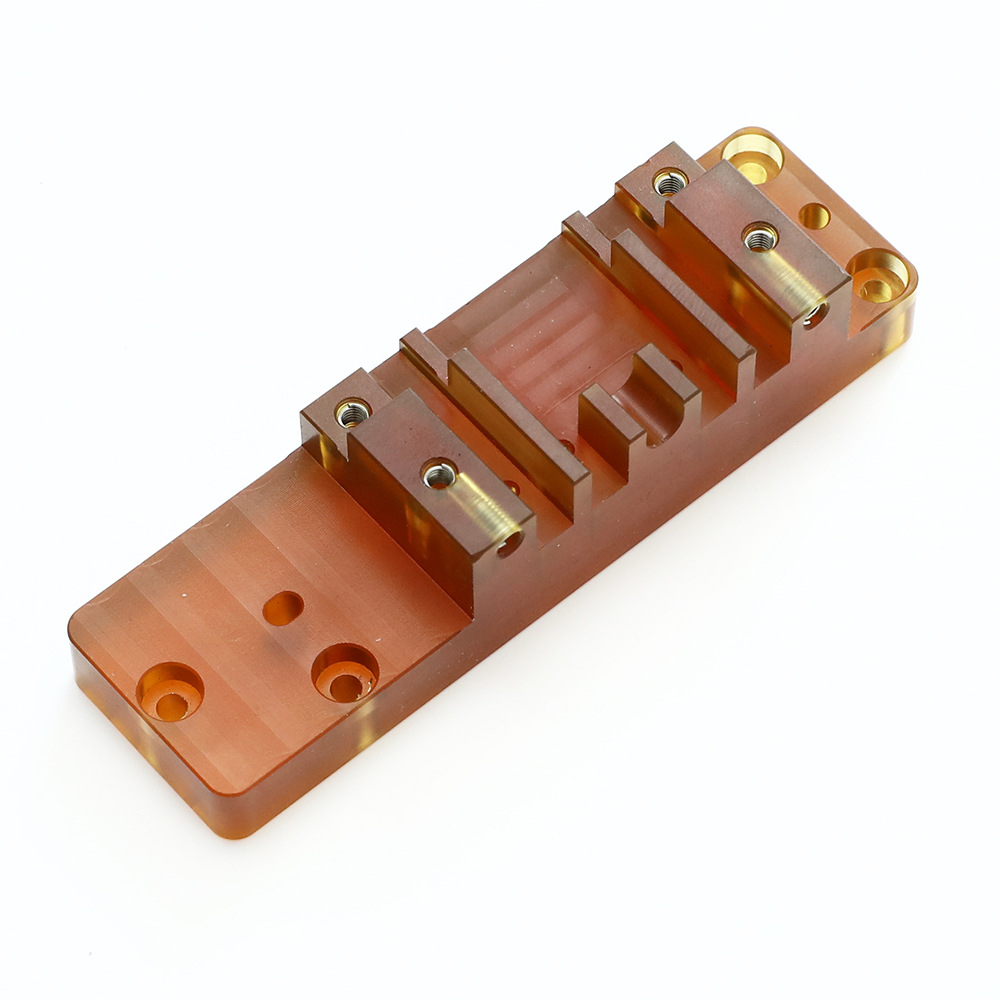
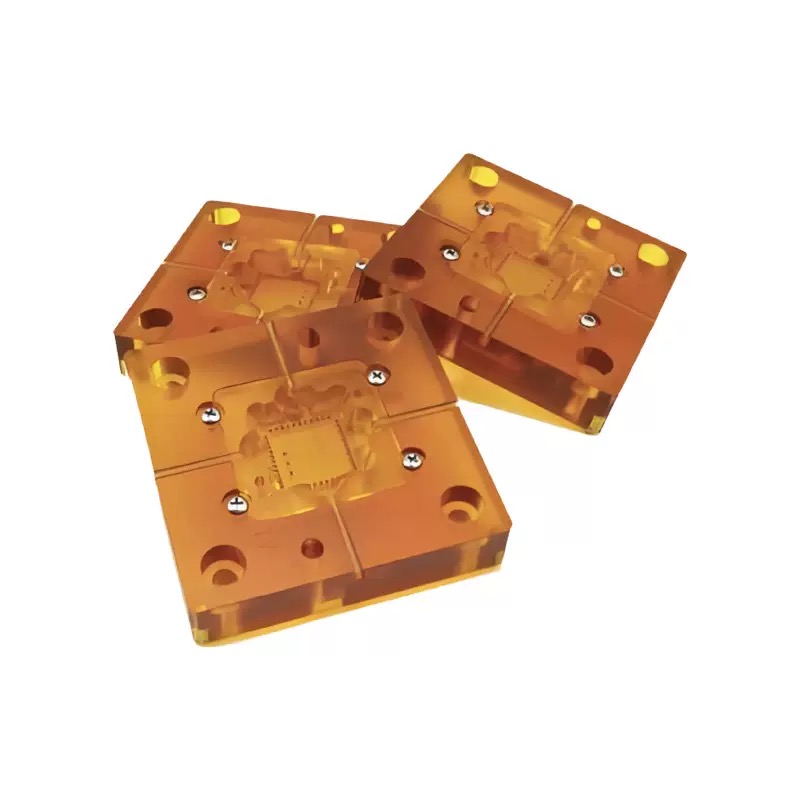
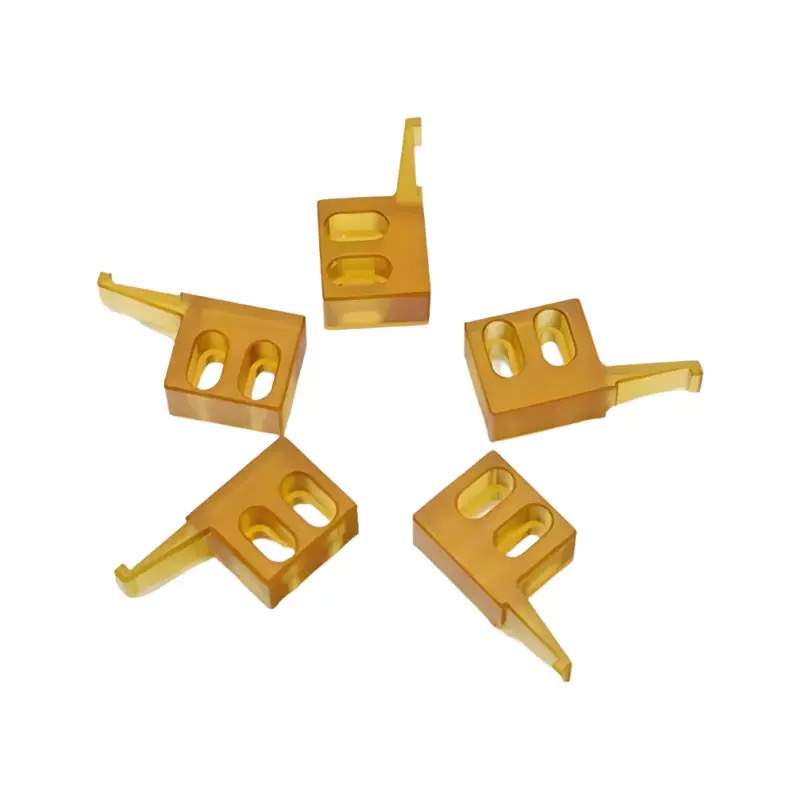
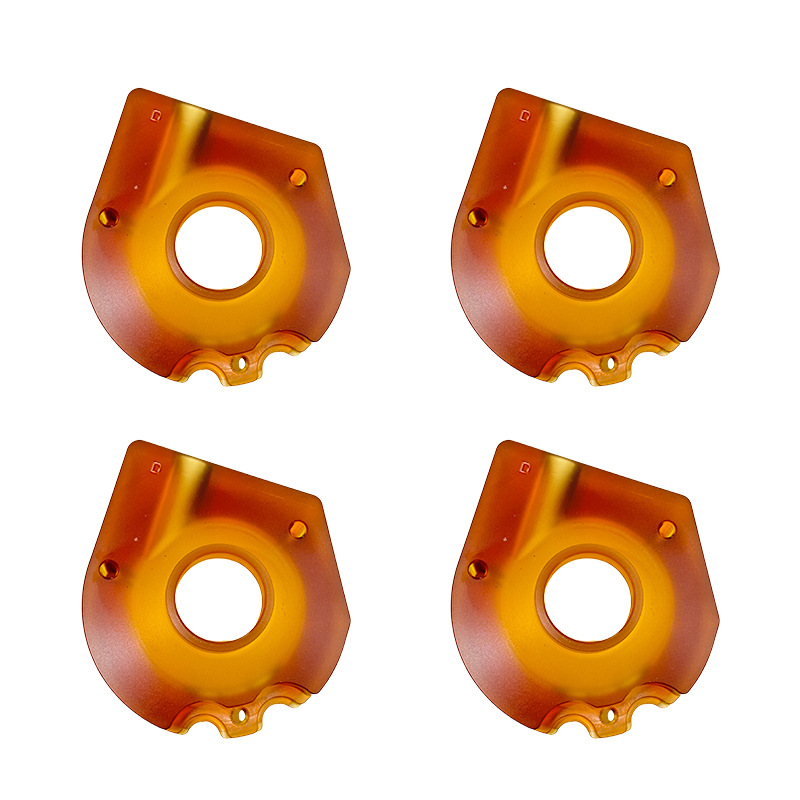
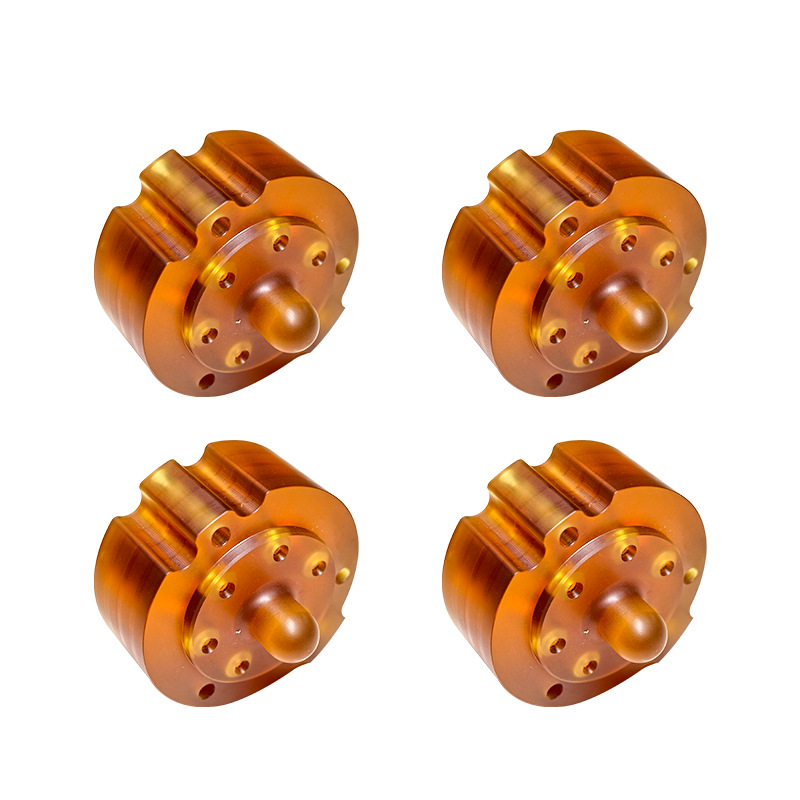
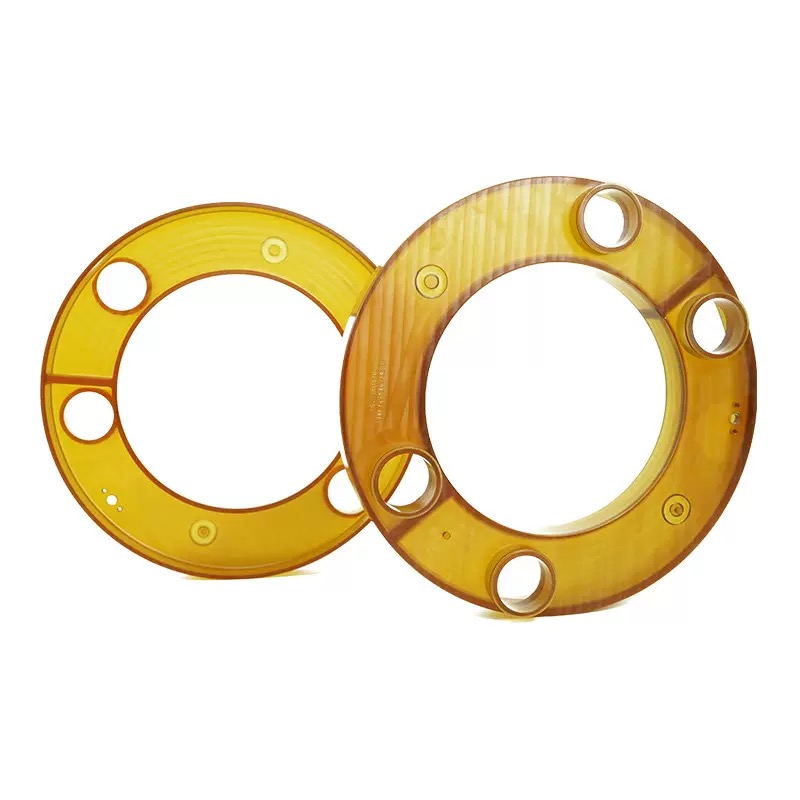
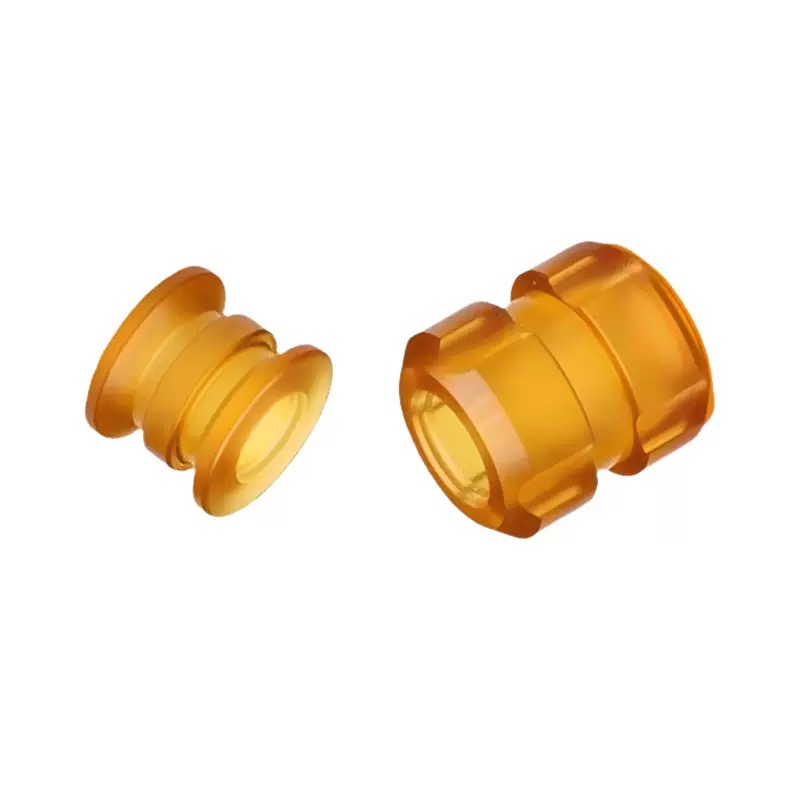
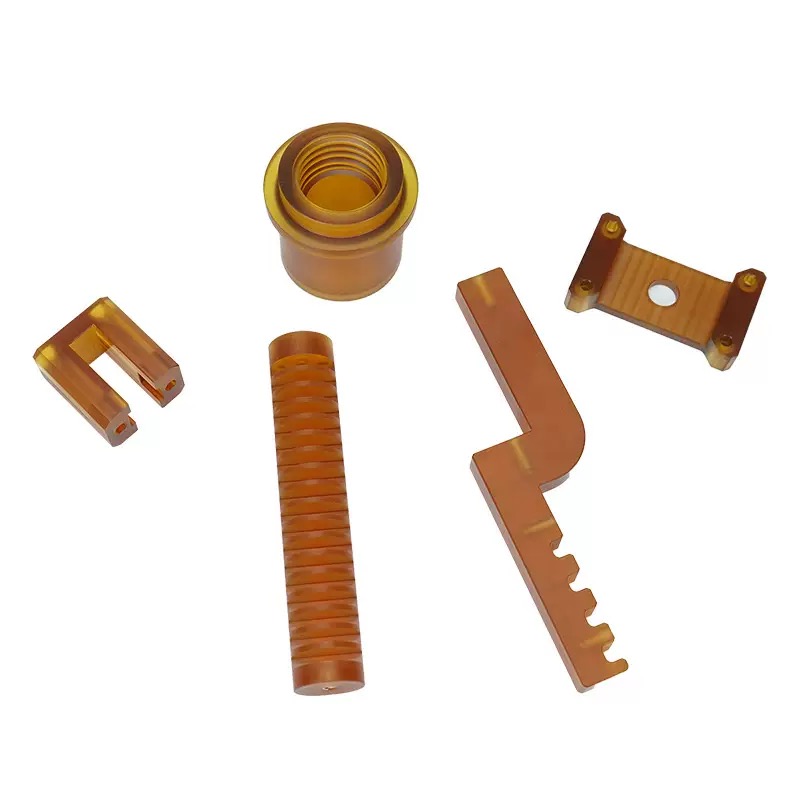
CNC machined Ultem (PEI) parts
Insulators, fixture blocks, sterilisable housings and electrical standoffs — machined from Ultem (PEI) plate and rod. It is stiffer and more heat-tolerant than polycarbonate, and it will stress-crack if the wrong coolant or solvent touches it.

Four rules for an Ultem part worth its price
Radius internal corners
Ultem is notch-sensitive. R0.5 or larger in every internal corner turns a possible crack into a reliable part.
Call out annealing when tolerances are tight
If the drawing has bores or lengths below ±0.05 mm, or the part sees heat, say so; we will build a stress-relief cycle into the routing rather than discover movement at inspection.
Say what it will meet
Sterilisation method, cleaning chemicals, continuous temperature. These decide the grade and whether a glass-filled grade is worth the rougher finish.
Check every chemical it will meet, not only the service fluid
Ultem stress-cracks with partially chlorinated solvents and some cleaners. Most Ultem failures start at a degreasing or adhesive step, not in the application itself.
Ready for a quote?
Send the drawing — price and lead time within 16 hours. STEP, IGES, X_T, DWG, DXF or PDF.
No minimum order.