
CNC Machining Nylon
Nylon is the wear plastic: bushings, gears, rollers and guides that run against metal without lubrication and stay quiet doing it. It is tough, it resists impact, and it has one property that catches out every engineer who meets it for the first time — it absorbs water from the air, and it grows.
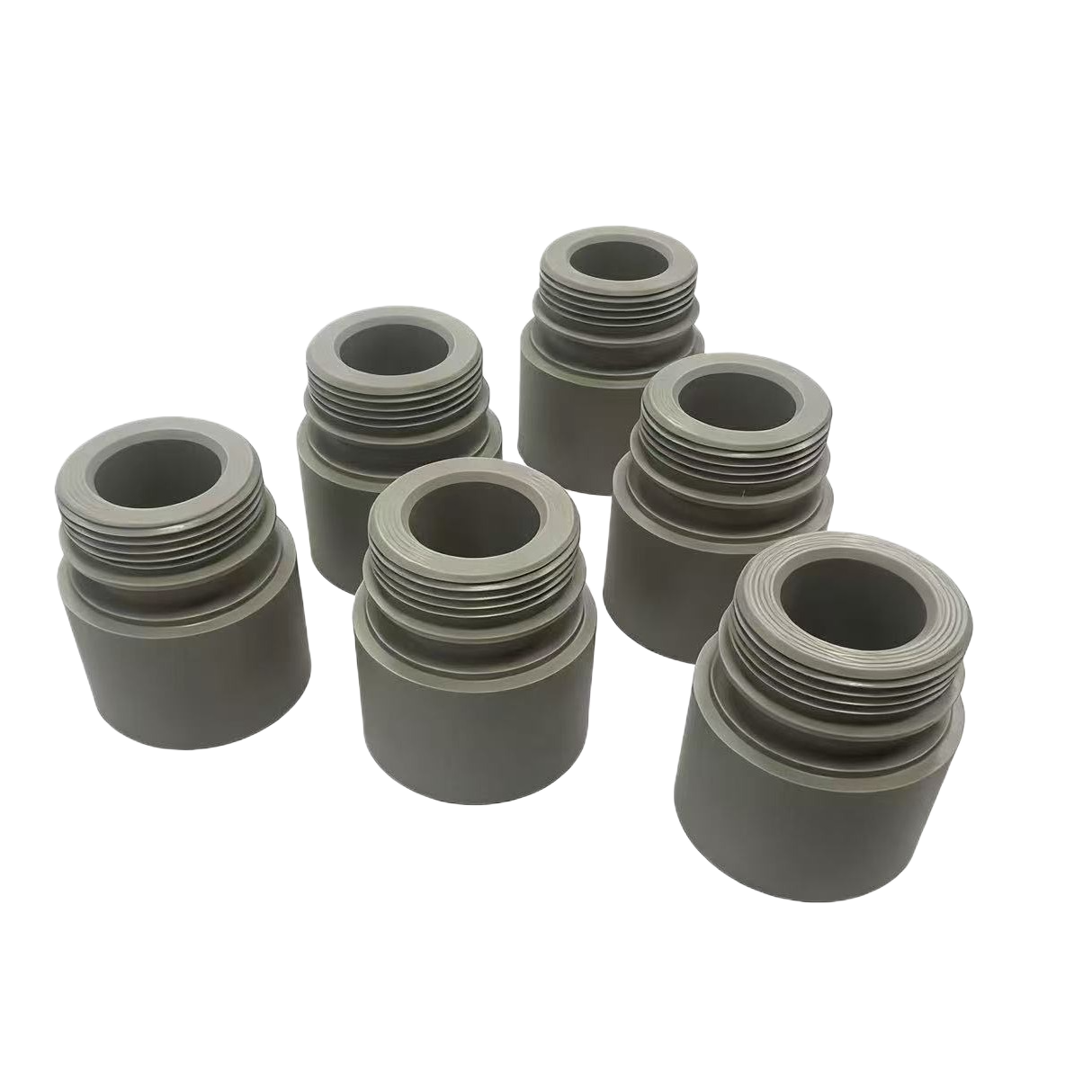
Grades we machine
Cast and extruded nylon behave differently enough that the distinction belongs on the drawing for anything large or tightly toleranced.
| Grade | Best for | Notes |
|---|---|---|
| Nylon 6 (cast) | Large parts, thick sections, wear components | Cast stock has lower internal stress than extruded, so big parts move less after machining |
| Nylon 6/6 (extruded) | General purpose parts, bar stock components | Stiffer and harder than nylon 6, more readily available in small sections |
| Oil-filled nylon | Self-lubricating bushings and gears | Internal lubricant makes it run cooler and quieter against steel |
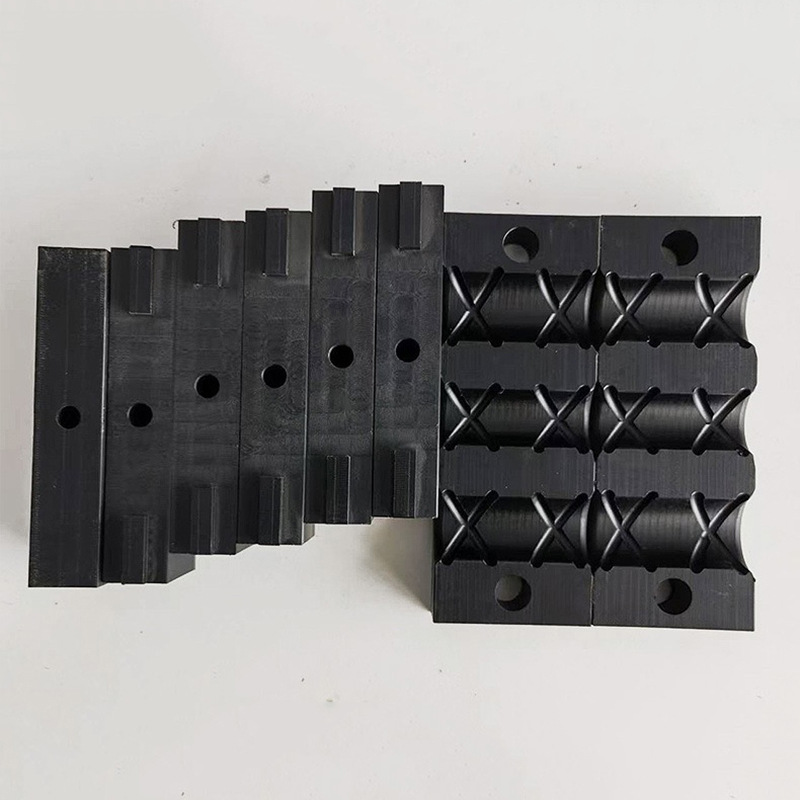
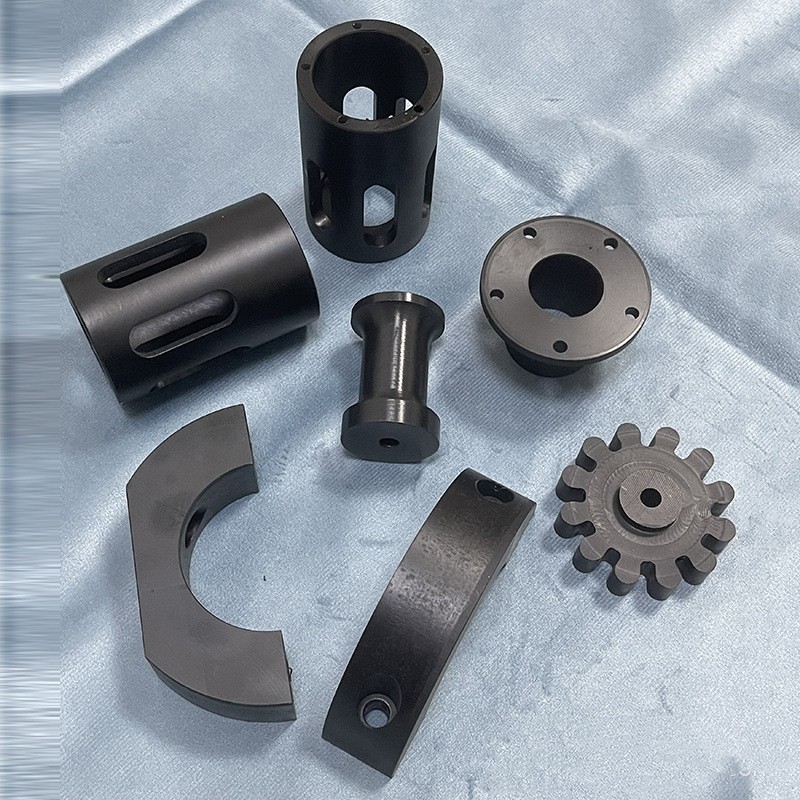
| MoS2-filled (molybdenum disulphide) | Higher load bearing surfaces | Black, slightly stiffer, better under load than unfilled |
| Glass-filled nylon | Stiffness and dimensional stability | Abrasive on tooling; less tough than unfilled |
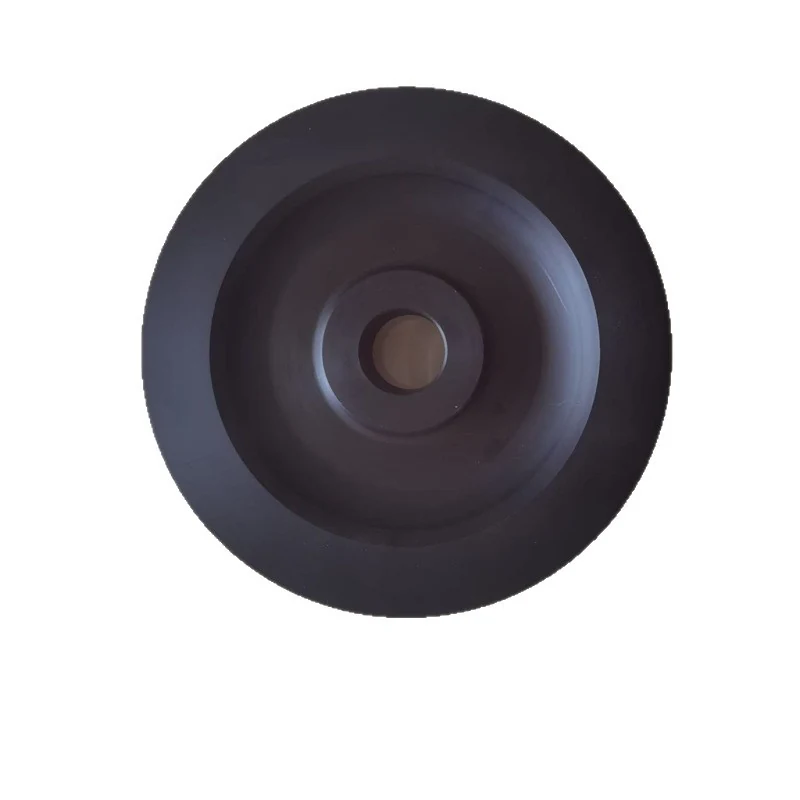
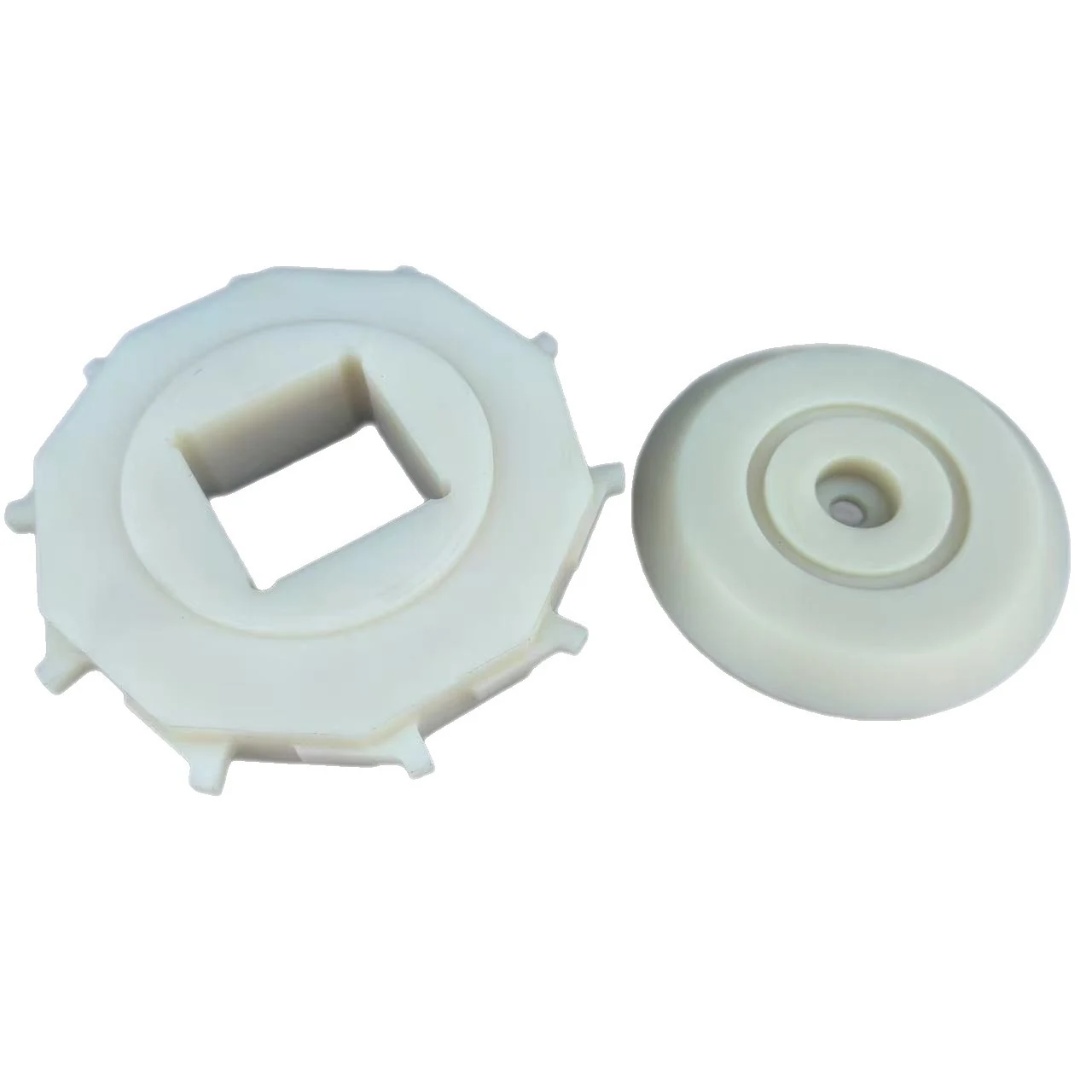
Nylon jobs, and the machines cutting them
Both parts below were turned here from solid nylon bar.
Four more clips from the floor — plate work, where the parts are nested and cut out together.
Tough to cut, and it moves
Nylon is soft and ductile, so it deflects away from the cutter and tends to string rather than chip. Sharp, high-rake tooling and a real feed rate keep the cut clean; a dull tool smears and melts it. Thin walls and long unsupported sections deflect noticeably more than they would in acetal.
The property that matters most is moisture. Nylon absorbs water from the air and expands measurably as it does — enough to move a fit on a large part. A part machined and measured in a dry workshop will be slightly larger after a few weeks in a humid environment. That is the material, not the machining, and the way to handle it is to design a fit with tolerance for it rather than to demand a tighter tolerance.
For precision parts, we rough, let the part relax, then finish, and we measure after the part has reached room temperature.
| At a glance | |
|---|---|
| Service temperature | Around 80–100 °C |
| Moisture absorption | Significant — the defining property of the material |
| Machinability | Fair; deflects and strings, needs sharp tooling |
| Friction | Low against steel, especially oil-filled grades |
| Typical parts | Bushings, gears, rollers, wear strips, guides, insulating parts |
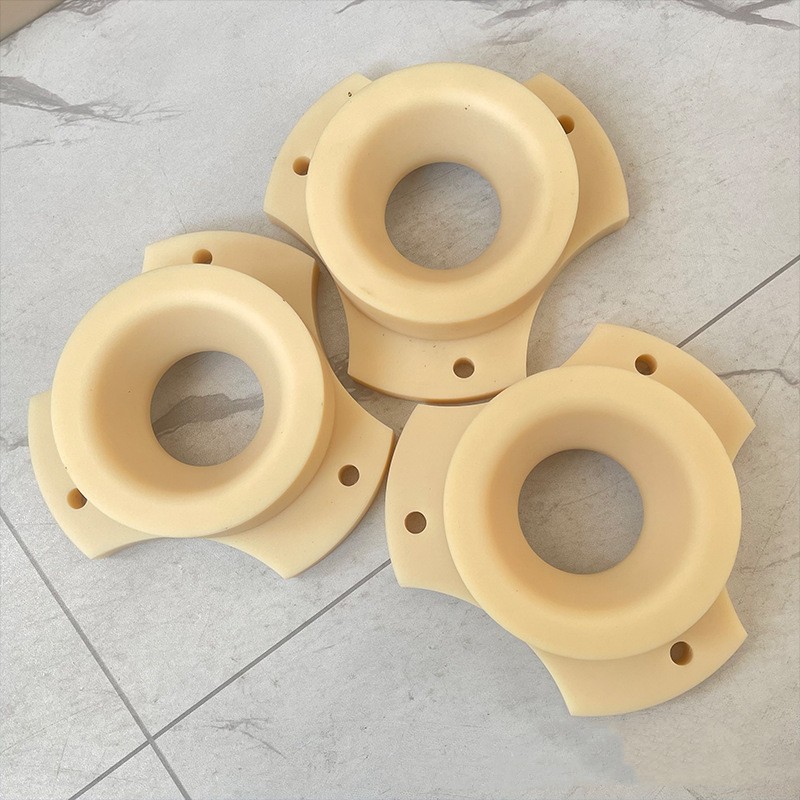
CNC machined nylon parts
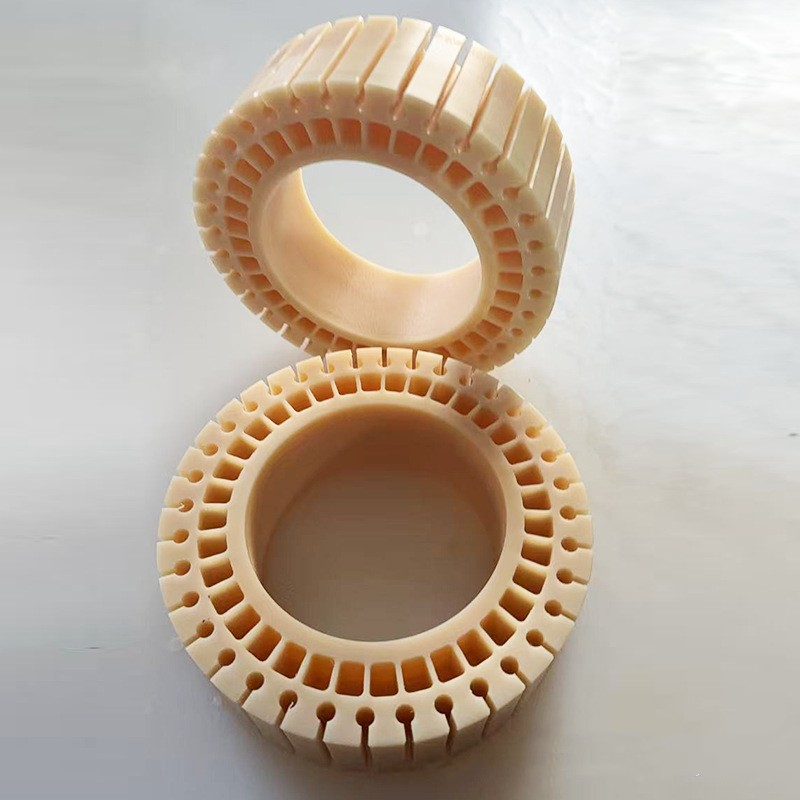
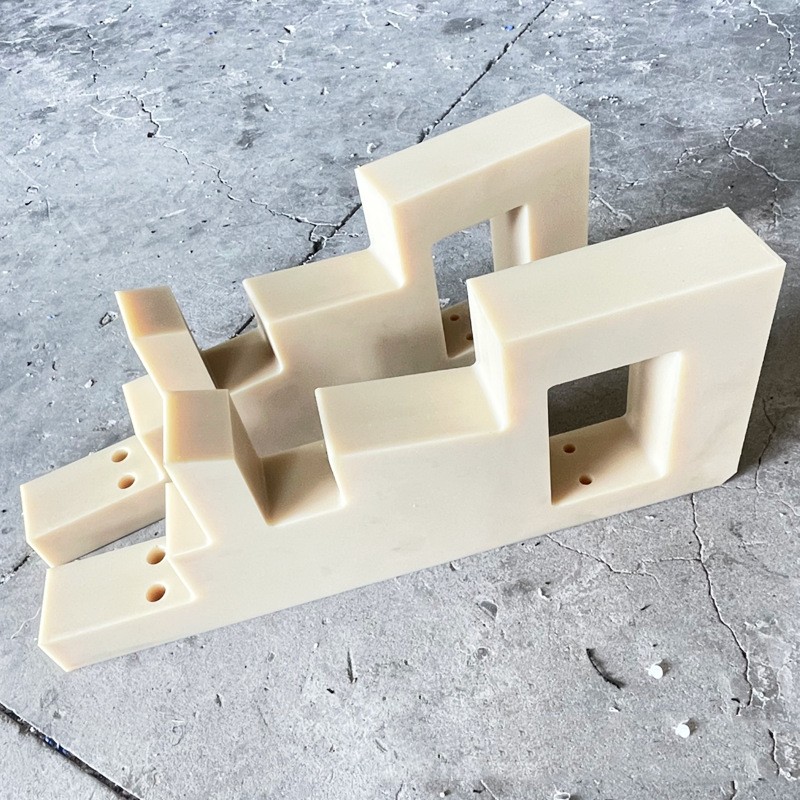
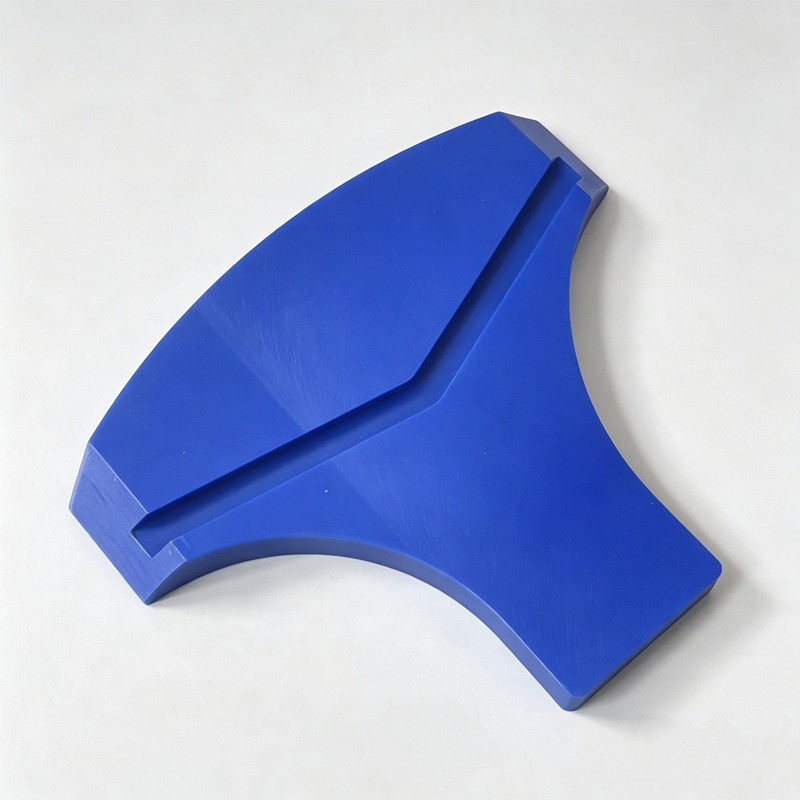
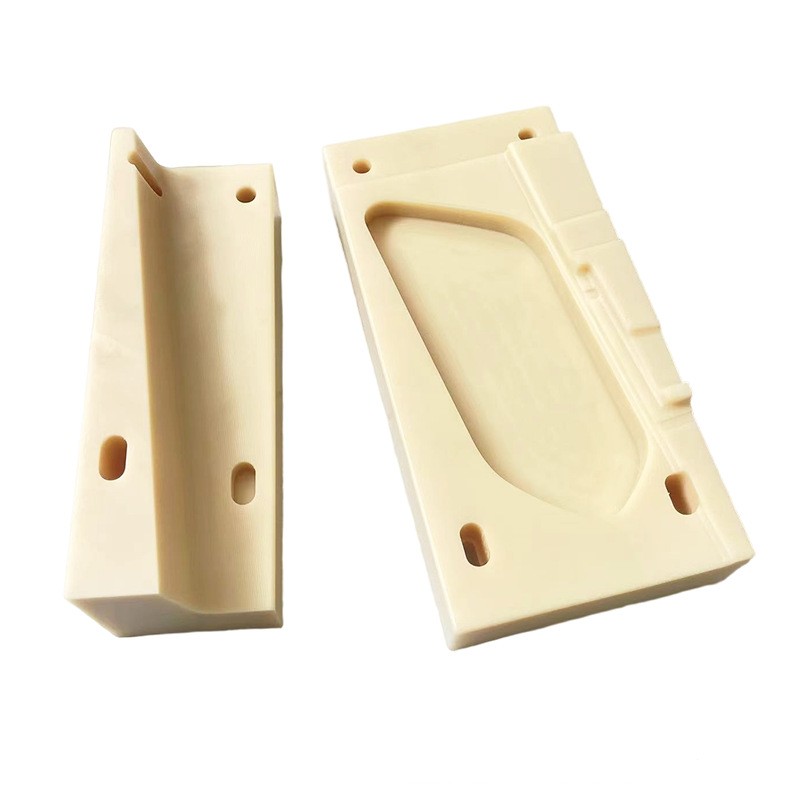
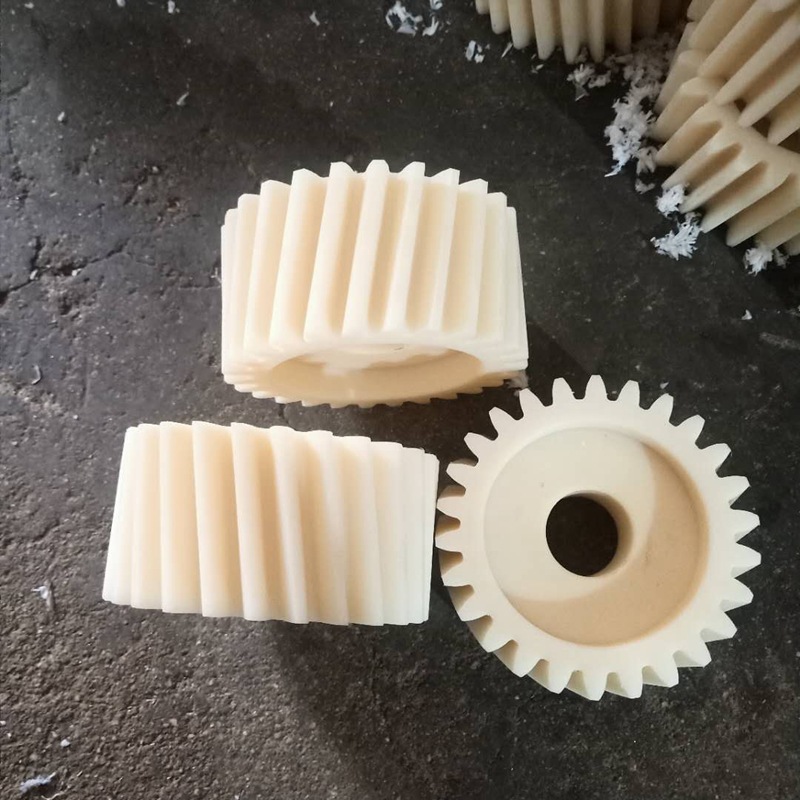
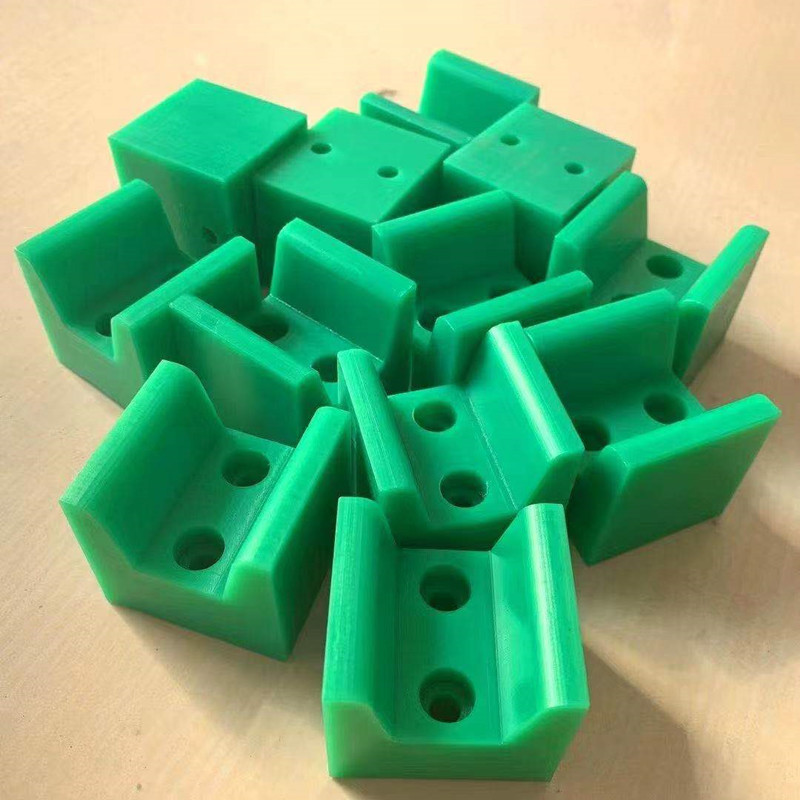
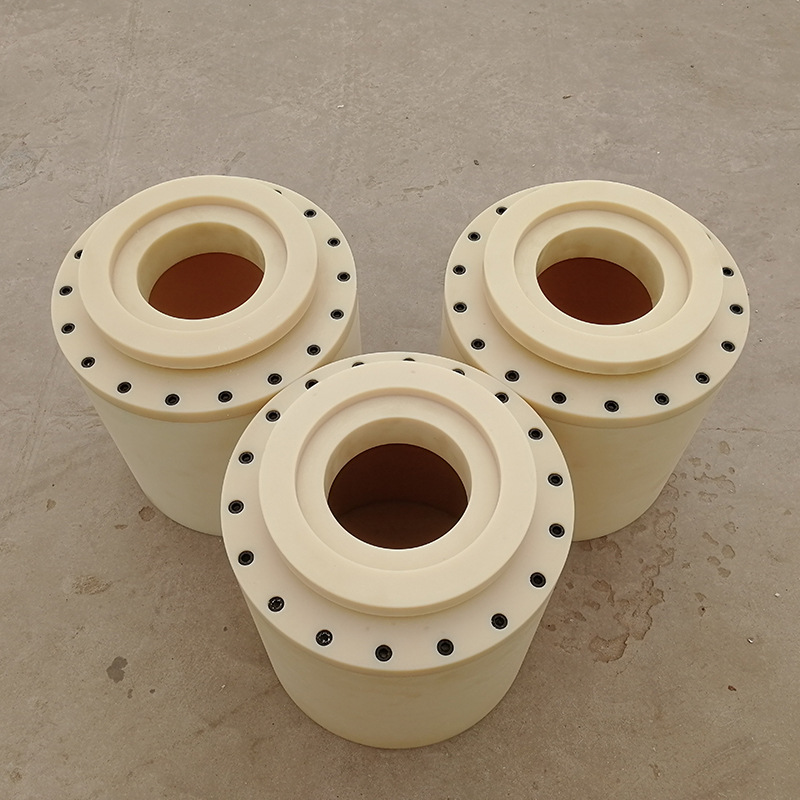
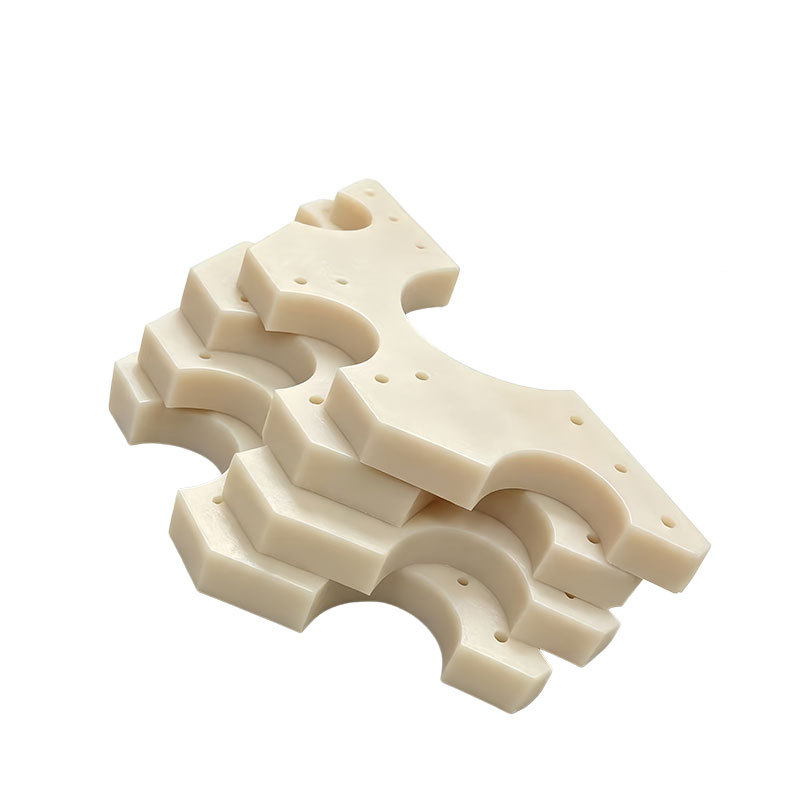
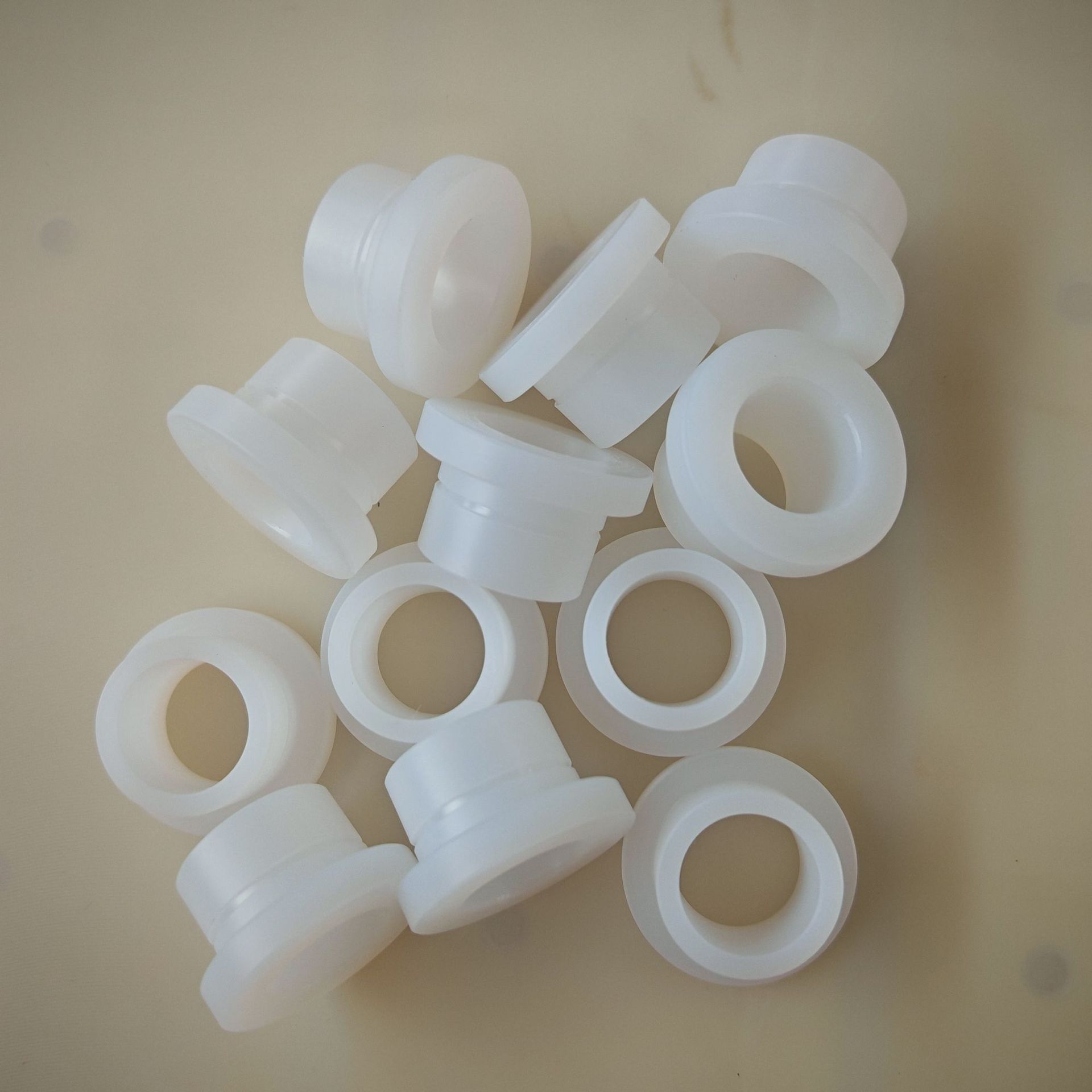
Bearing housings, guide rails, wear plates, clamp jaws and bushings — cut from solid cast and extruded nylon stock, not moulded. Sizes and hole patterns come straight off your drawing.
Four notes on nylon parts
Design the fit to tolerate growth
A press fit sized exactly in a dry room can become an interference in a humid one. Tell us the service environment and we will flag any dimension that is at risk.
Choose cast nylon for big parts
Cast stock carries less internal stress than extruded, so large machined parts stay closer to the shape they left the machine in.
Do not expect acetal tolerances
If the part must hold a tight fit and the environment varies, acetal is usually a better answer than a tighter tolerance on nylon.
Tell us if it runs dry against steel
Unfilled nylon wants a little lubrication. For a bushing or gear that runs dry, an oil-filled or MoS2 grade lasts far longer than plain PA6 and costs little more.
Ready for a quote?
Send the drawing — price and lead time within 16 hours. STEP, IGES, X_T, DWG, DXF or PDF.
No minimum order.