
CNC Machining Brass
Brass is the easiest metal in the shop. It cuts fast, it holds a tolerance, it takes a polish that no plated finish can imitate, and it does not rust. Where it needs thought is corrosion in specific environments, and the fact that it is soft enough to mark on the way to the customer.
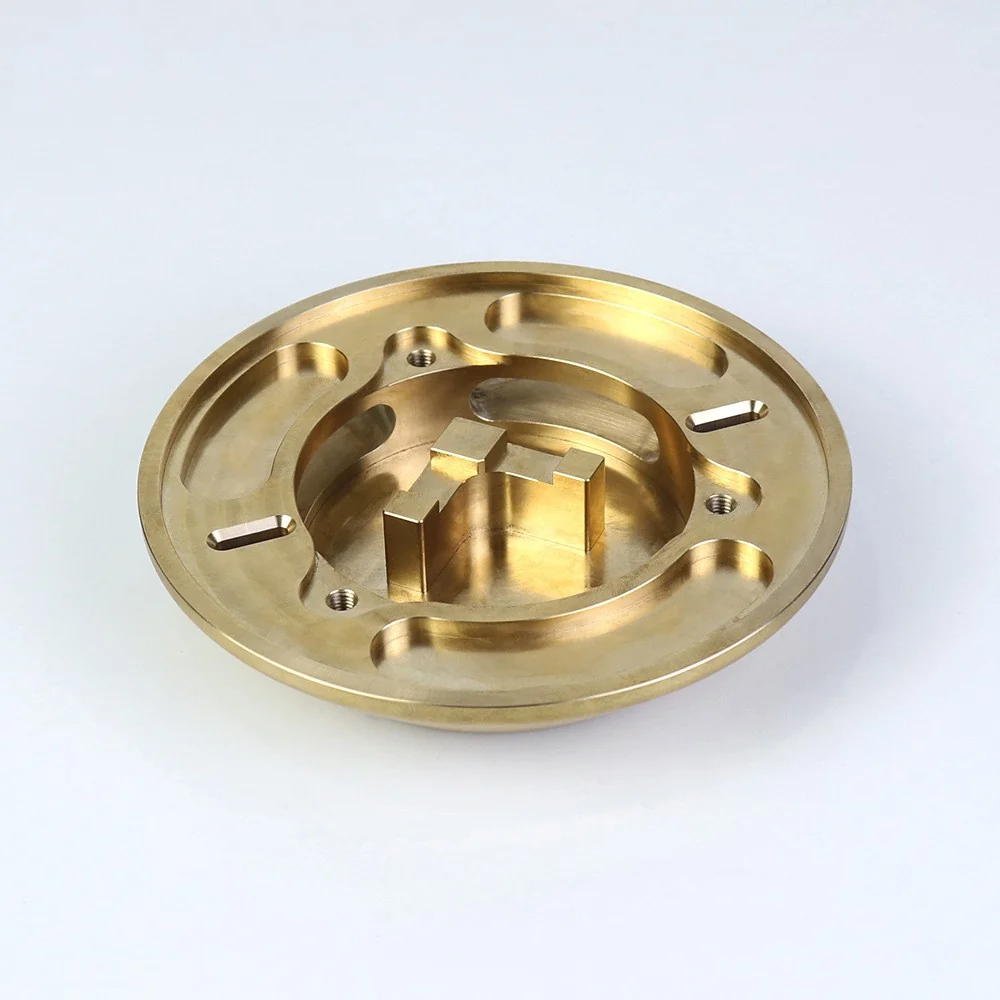
Grades we machine
C360 covers most work. The others turn up where the part is formed, welded or exposed to water over long periods.
| Grade | Best for | Notes |
|---|---|---|
| C360 free-cutting brass | Fittings, valve bodies, electrical hardware, instrument parts | The benchmark for machinability of any metal. High lead content makes chips break perfectly |
| C260 cartridge brass | Formed and drawn parts, deep-drawn components | Much more ductile, noticeably harder to machine cleanly than C360 |
| C464 naval brass | Marine hardware and fittings | Tin addition resists dezincification in salt water |
| Bronze (C932 and similar) | Bushings, bearings, wear surfaces | Bearing bronzes machine well and run against steel without galling |
Fast, clean, and easy to mark
Brass cuts with low cutting forces and breaks into short chips that clear themselves, which means high feeds, long tool life and excellent surface finish straight off the machine. On a turned part in quantity, brass is usually the cheapest metal to produce even though the stock costs more than steel.
The problems are all downstream of the machining. Brass is soft enough to pick up handling marks between the machine and the box, so parts that are polished or left bright need separating and wrapping rather than being tipped into a bin together. It also tarnishes in air — not corrosion in any structural sense, but a visible dulling that customers notice on a decorative part.
Where the part sits in water for long periods, dezincification is a real failure mode: zinc leaches out and leaves a porous copper structure behind. Naval brass or bronze is the answer, not C360.
| At a glance | |
|---|---|
| Typical tolerance | ±0.002 mm (±0.0001 in) on machined features |
| Machinability | The best of any metal we machine |
| Surface finish | Excellent straight from the tool; polishes to a mirror |
| Standard finishes | Polish, brush, nickel or chrome plate, clear lacquer, tumble |
| Certificates | EN 10204 3.1 on request |
Three brass jobs, and the machines cutting them
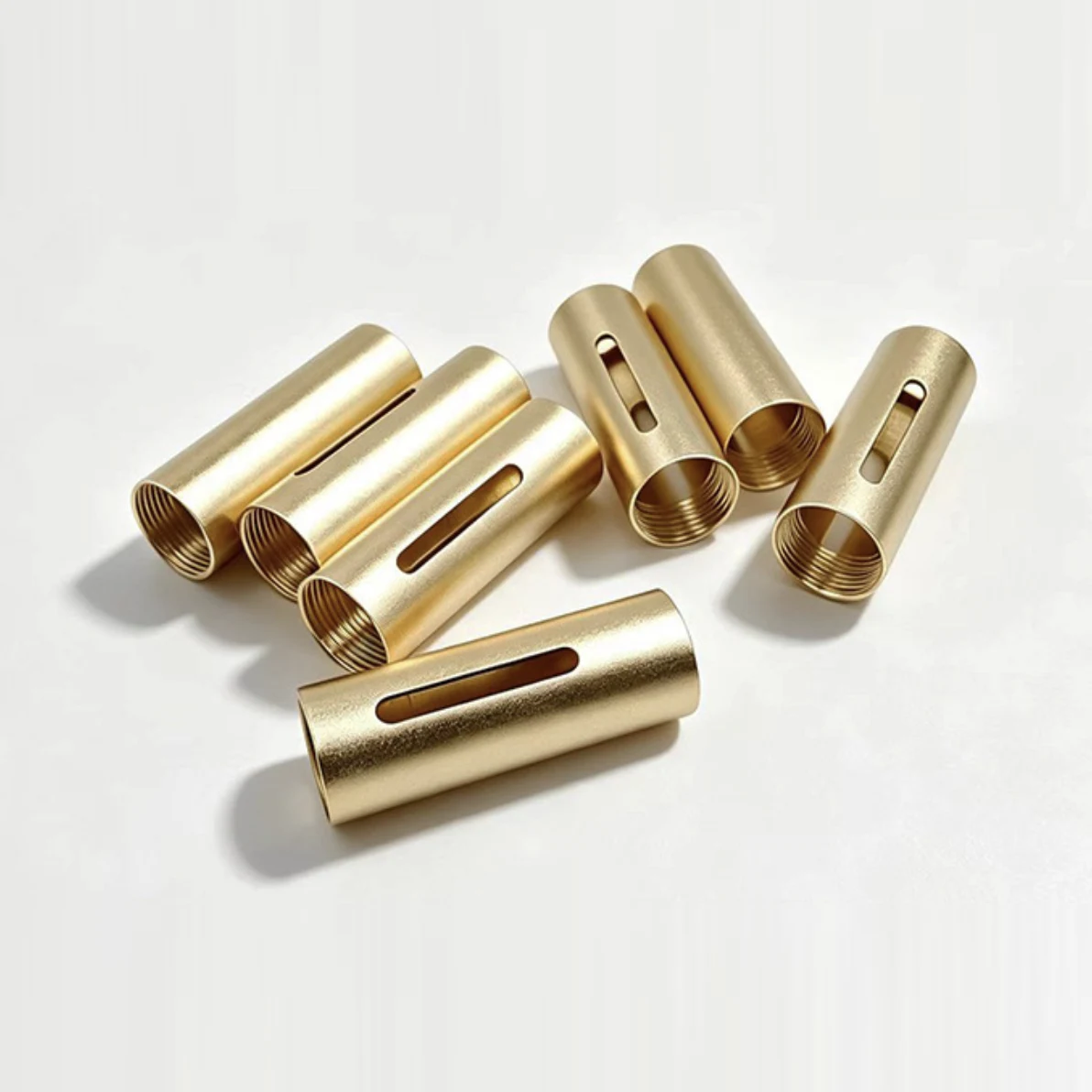
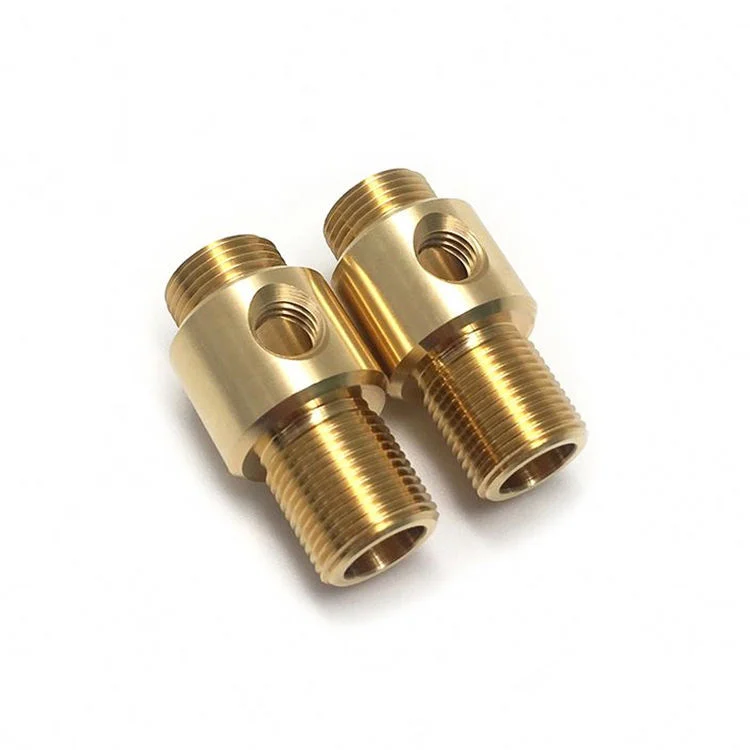
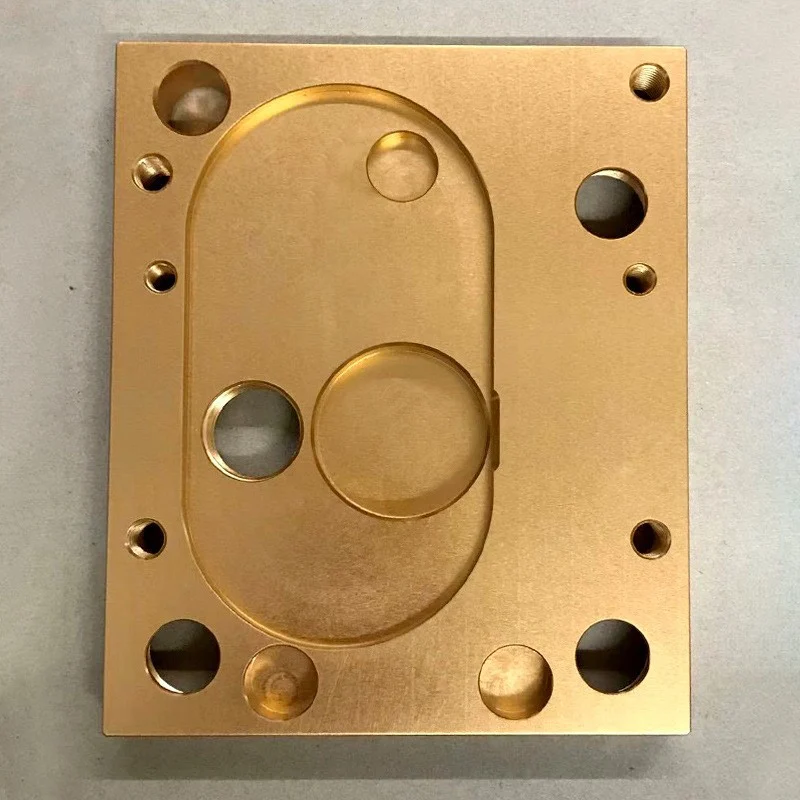
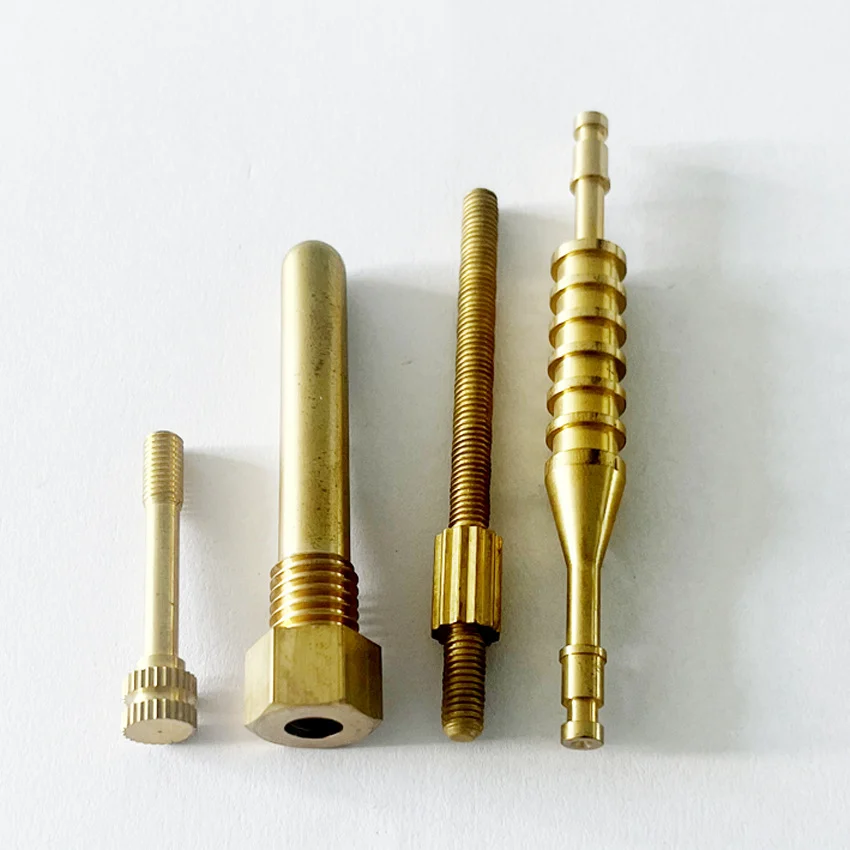
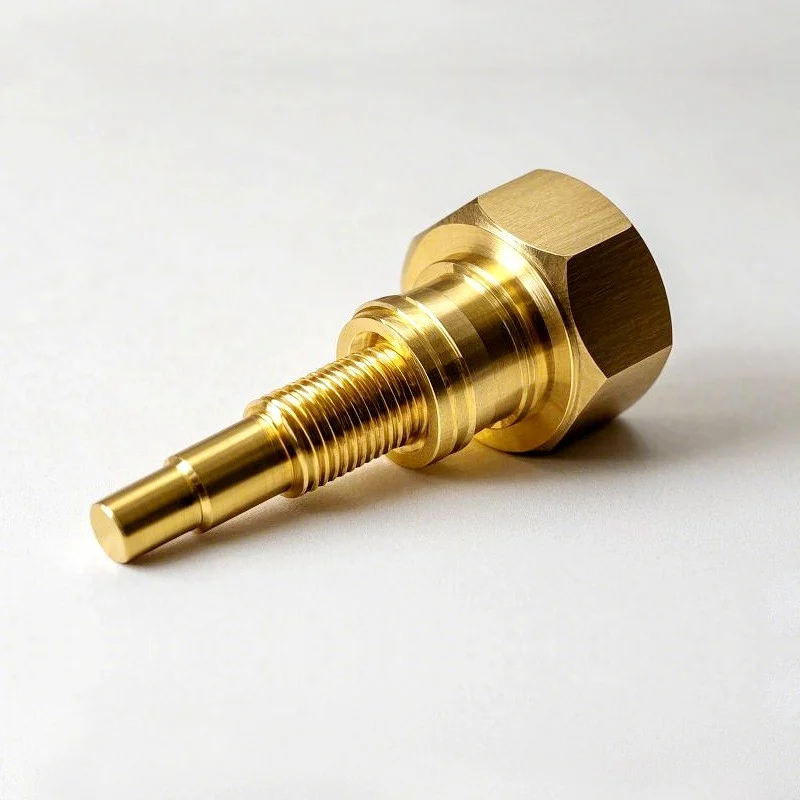
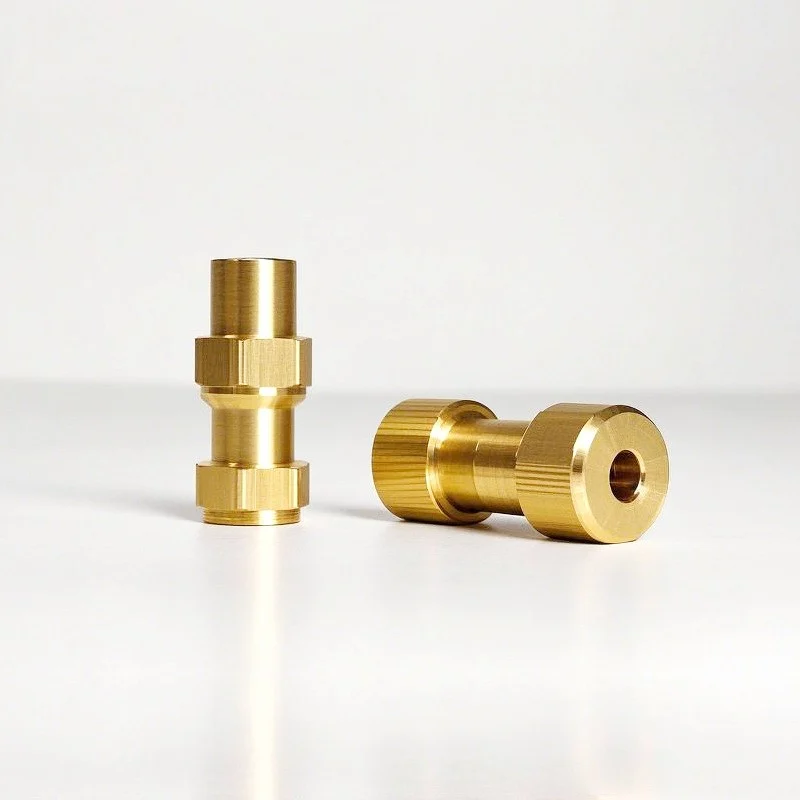
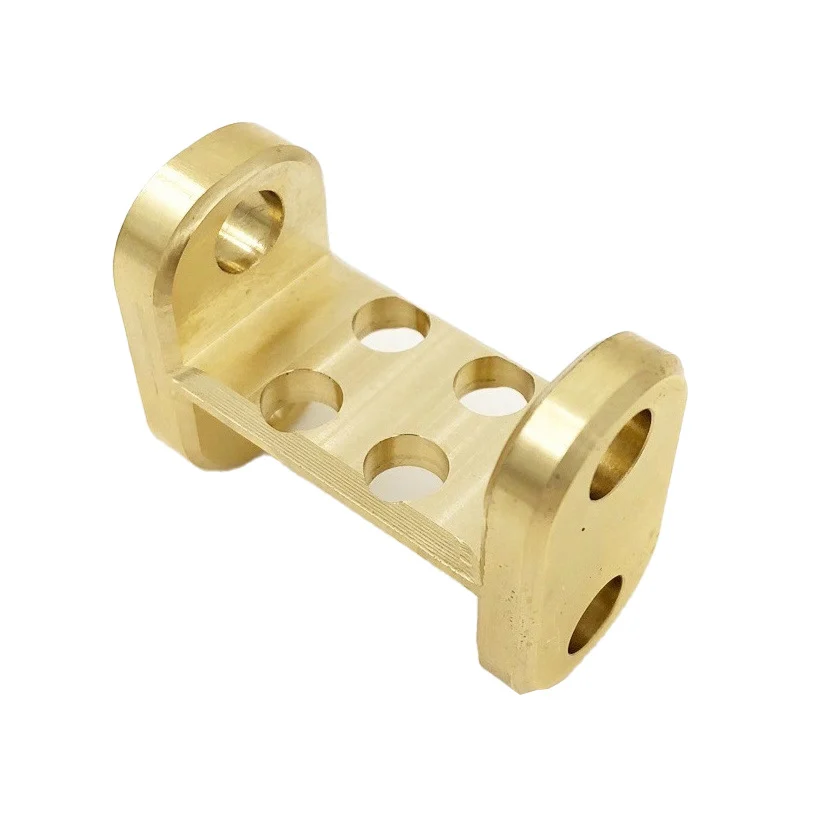
CNC machined brass parts
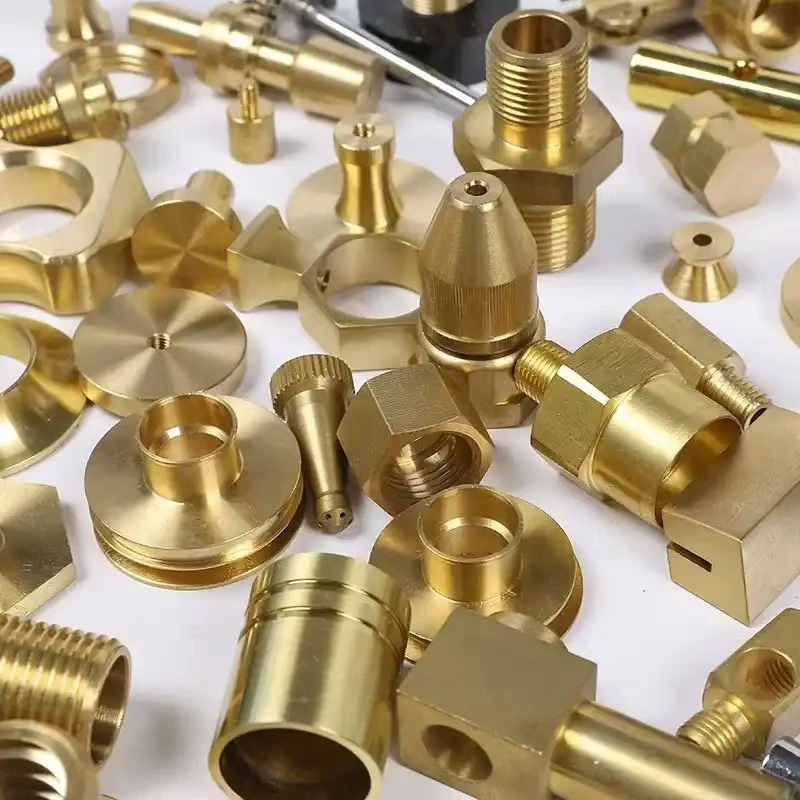
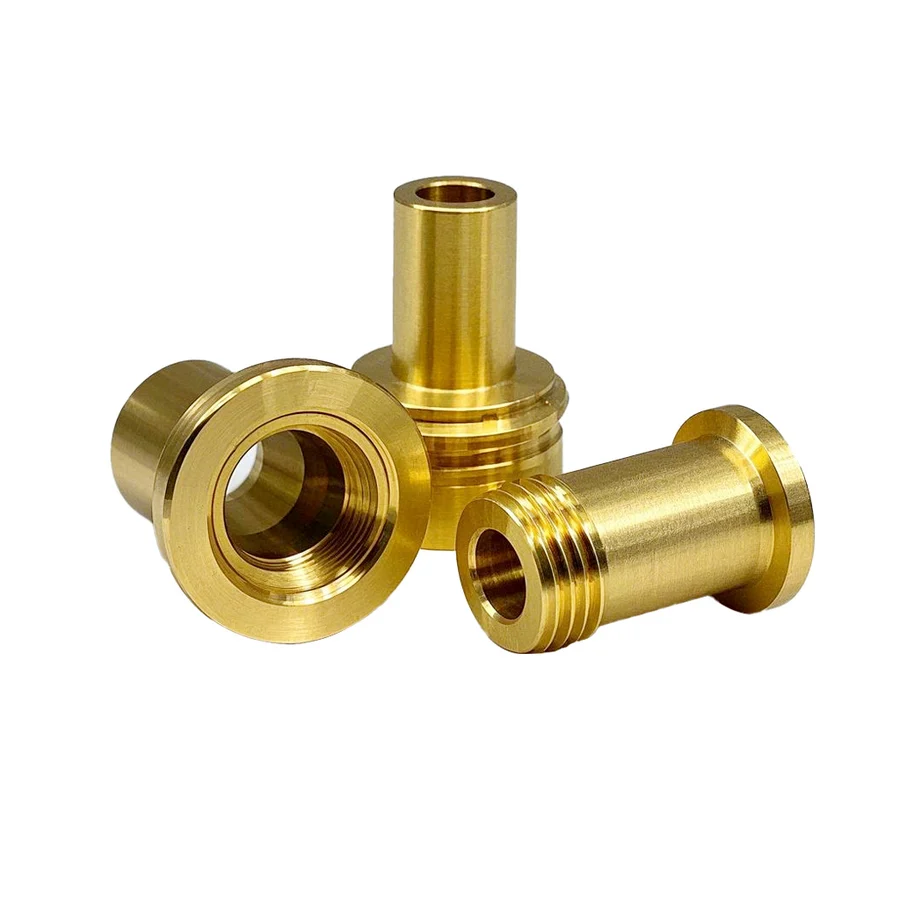
Fittings, bushings, nozzles, adapters and plates cut from C360 and C260 bar and plate. Most are turned and cross-drilled in one setup; the flat work is milled. Brass cuts cleanly enough that the as-machined finish is usually the one that ships.
Four things worth knowing before you order brass
Decide whether it stays bright
Bare brass tarnishes. If the part must still look new in six months, it needs a clear lacquer or plating — and that belongs on the order rather than being discovered later.
Say if the part is submerged
Long-term water exposure calls for naval brass or bronze rather than C360, because of dezincification. Tell us the environment and we will flag it.
Ask for individual packing on decorative parts
Polished brass marks against itself in transit. It costs a little to separate the parts and it costs a lot to re-polish a batch that arrived scuffed.
Say if it touches drinking water or has to be lead-free
C360 cuts the way it does because of the lead in it, and that is exactly what rules it out of potable water fittings in many markets and of anything that has to pass RoHS. Put it on the enquiry and we will tell you which lead-free grade we can get, and what it does to the price and the lead time.
Finishes that work on brass
Brass is usually finished for appearance or to stop it tarnishing, rather than for corrosion protection.
What we recommend: passivate it
Bare machined brass starts to dull within days, and a clear lacquer sprayed straight onto that surface does not hold it — on that route we have seen the reject rate reach 30 per cent. A passivation dip first, and lacquer on top only if you want the extra gloss, is what we quote on a brass part unless you tell us otherwise.
| Finish | What it does | Worth knowing |
|---|---|---|
| Passivation | Slows oxidation and holds the machined colour | Our default on brass. Adds very little to the price |
| Clear lacquer | Keeps a bright or polished surface looking new | Goes on after passivation, not instead of it |
| Polish or brush | Appearance — mirror, satin or a directional grain | Marks easily afterwards, so the parts need separating in the box |
| Nickel or chrome plate | A hard, bright surface that does not tarnish | Done at a partner plant and inspected here before it ships |
| Tumble and deburr | Takes the edge off and evens out the surface | Will dull a polished face, so do not ask for both |
Ready for a quote?
Send the drawing — price and lead time within 16 hours. STEP, IGES, X_T, DWG, DXF or PDF.
No minimum order.