
How to vet a CNC supplier in China: 12 checks before you send a drawing.
Most sourcing problems are visible before the first PO. These are the twelve checks we would use if we were buying from a Chinese machine shop — including the ones that make us look imperfect.
- 12 checks, in order
- Red flags to walk away from
- An email template you can copy
- No email gate — read it now
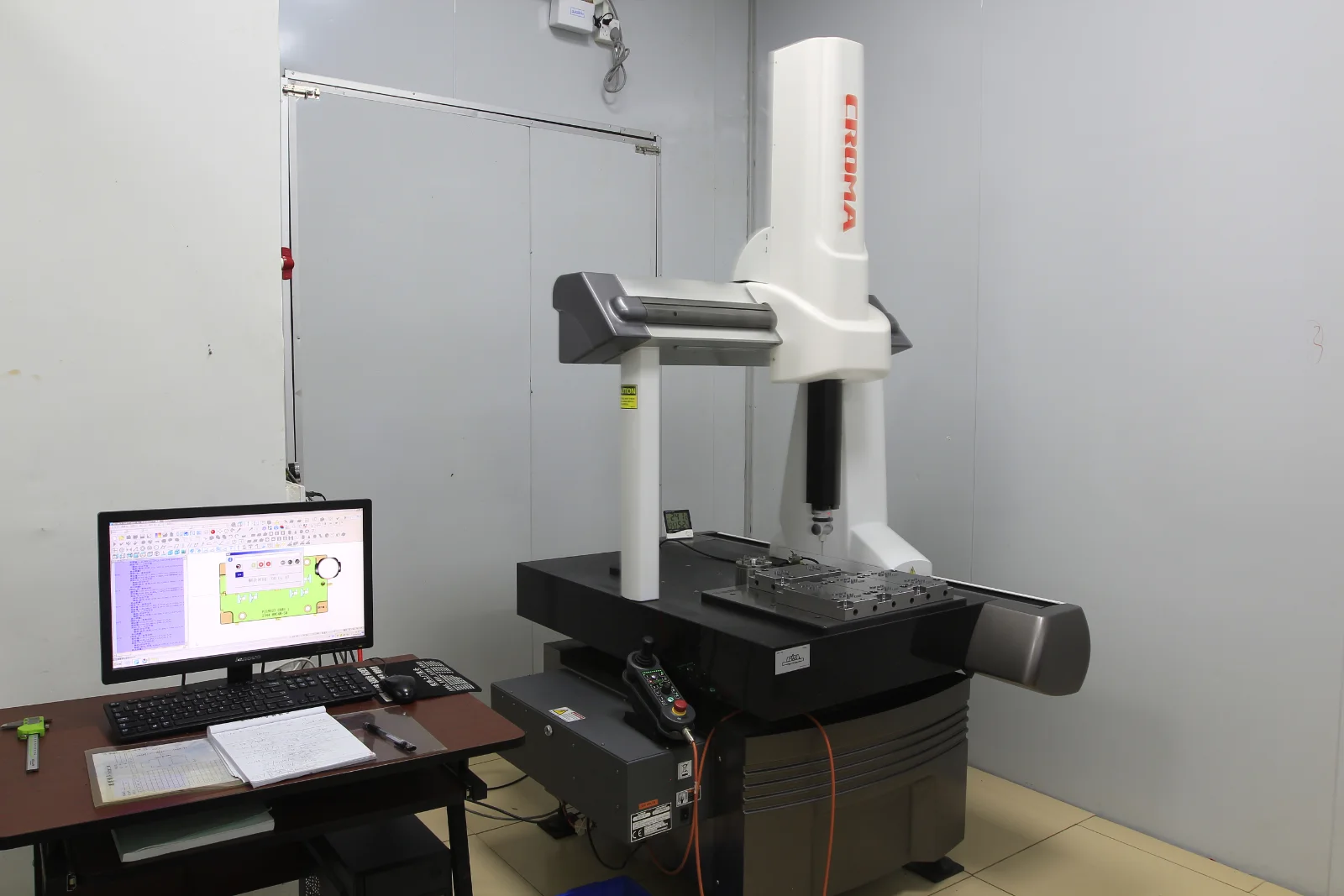
The 12 checks
1. Ask what they do not have
A supplier that lists its limits before you ask is easier to trust. If everything is “no problem”, keep asking.
2. Ask for the last three first-article reports
Redacted is fine. You want to see the measurements, the part numbers and the date, not a certificate on the wall.
3. Ask who owns the quote
The engineer who prices the part should be the one who plans how it is made. A sales desk reading a spreadsheet will miss the DFM note.
4. Ask for the machine list
Model, axis count, control and year. “32 machining centres” means little if none of them can hold your tolerance.
5. Ask for material certificates
EN 10204 3.1 or the mill certificate for the actual heat number. A generic “material certificate available” is not the same.
6. Ask who does the finishing
If anodising, plating or heat treatment is outsourced, say so. One invoice is fine; hiding the partner is not.
7. Ask how files are handled
NDA, access list, no photography, no client names. Put it in writing before you upload.
8. Ask for a DDP price
A landed cost is the only number you can compare with a local quote. If they cannot quote DDP, ask for FOB plus a freight estimate.
9. Ask for the lead time in writing
Not “2–3 weeks”. A date, the assumptions behind it, and what happens if material is late.
10. Ask for payment terms
Deposit and balance are normal. 100% upfront with a new supplier is not. Confirm the bank details on the invoice.
11. Buy one part
A $200 sample tells you more than a brochure. Check the tolerance, the finish, the packaging and the reply time.
12. Ask for two references you can email
A case study is marketing. A reference who answers a short email is evidence.
Red flags
- “We can do everything.” Every shop has limits. A supplier that will not name them is either guessing or hiding something.
- A certificate but no first-article report. ISO 9001 describes a system, not the part in your hand. Ask for the measurement report.
- A price with no assumptions. Material, finish, tolerance and quantity should be visible. A single number with no route is a number you cannot hold them to.
- No NDA, or an NDA that arrives after the files. Protect the design before you upload.
- Payment to a personal account. Pay the company named on the invoice, in the currency on the invoice.
- A lead time that changes after the deposit. Get the date and the assumptions in writing before you pay.
Email template you can copy
Subject: RFQ — [part name], [quantity], [material]
Hi [name],
We are evaluating suppliers for [part name]. Please quote [quantity] pieces in [material], with [finish] and the tolerances on the attached drawing.
Please also confirm:
1. The lead time from drawing approval, in writing.
2. Whether you hold ISO 9001, and if not, what inspection documentation you provide.
3. Who will own the quote and the DFM review.
4. Your DDP price to [city, country], or FOB port plus a freight estimate.
5. Payment terms for a first order.
6. Whether you will sign our NDA before files are shared.
We will start with one sample part before a production order.
Best regards,
[your name]
Where GY Machining stands on these checks
| Check | Our answer |
|---|---|
| ISO 9001 | No. We say so before you ask. We provide first-article reports and material certificates instead. |
| Machine list | 32 machining centres, 19 four-axis; 18 lathes and 10 Swiss-type machines; sinker EDM on six machines. |
| Who owns the quote | The engineer who plans the part. The DFM note comes from the same person. |
| Finishing | Partner plants, disclosed. One finished part, one invoice. We do not call partner work in-house. |
| NDA | Yours or ours. No photography, no client names. |
| DDP | Yes — EXW, FOB, DAP or DDP. |
| Payment | 50% deposit, balance before shipment. Net 30 after three completed orders. |
| Sample | One part is a valid order. No MOQ. |
If any of these answers disqualify us for your RFQ, that is useful to know before you spend time on the drawing.
FAQ
What is the first thing to check on a Chinese CNC supplier?
Ask what they do not have. A supplier that immediately says “no ISO 9001, no 5-axis, no in-house anodising” is easier to trust than one that claims everything. Then ask for the last three first-article reports.
Is ISO 9001 essential?
For regulated, high-volume or customer-audited work, yes. For prototypes, bridge tooling and low-volume parts, a first-article report, material certificates and a named engineer can be enough. Decide before you send the RFQ, not after.
How do I protect my design?
Sign an NDA before sending files, ask who can see them, and confirm that the supplier does not photograph or publish client work. Send a simplified drawing for the first quote if you are not ready to share the full design.
Should I ask for a sample part?
Yes. Pay for one part from your actual drawing. A sample tells you more about tolerance, finish and communication than any certificate.
What is a fair payment term?
For a first order, 30–50% deposit and the balance before shipment is common. Avoid 100% upfront with a new supplier. Ask for the bank details on the invoice, not in an email.
How do I compare quotes from different countries?
Compare the landed cost: part price + freight + duty + inspection + your time. A DDP quote is the only number that compares cleanly with a local quote.
Use the checklist, then test one part.
Send a STEP file and drawing when you are ready. We reply with price, lead time, DDP option and a DFM note within 16 hours.