
Delrin: What It Is, and Whether You Can Substitute It
Of all the plastics we machine, acetal — Delrin and POM — is the one we run most. So if Delrin is written on your drawing, we have probably already answered the four questions you are about to ask: is it the same thing as acetal, can we use something else, which grade, and whether a shop in China can get the real thing at all. This page answers those four, in that order.
Delrin is a brand of acetal homopolymer. “Acetal” on a drawing usually means the copolymer.
Acetal is the material family, and its chemical name is polyoxymethylene — POM. It comes in two forms. Delrin® is a registered brand of the homopolymer form, POM-H. Most stock sold plainly as “acetal” in the US is the copolymer form, POM-C, under names such as Celcon, Hostaform or Ultraform.
That is why a buyer who treats Delrin and acetal as two different products is not being fussy. In practice, in most American shops and distributors, the two words point at two different pieces of bar stock with genuinely different behaviour. They are close relatives, not the same material, and whether one can stand in for the other depends on the part.
One piece of housekeeping that catches people out: Delrin was developed by DuPont and is often still described that way, but DuPont sold the majority of the Delrin business to The Jordan Company in 2023, and it is now produced by an independent Delrin business. The material and the specification did not change; only the company name on the datasheet did.
Delrin (POM-H) against acetal copolymer (POM-C)
Both machine beautifully, both hold their size far better than nylon, and for a great many parts either one would work. These are the differences that decide it when it matters.
| Delrin — homopolymer (POM-H) | Acetal copolymer (POM-C) | |
|---|---|---|
| Stiffness and strength | Higher — the reason it is specified for gears and loaded parts | Slightly lower, but close enough for most parts |
| Centre of thick bar | Can carry porosity down the centreline of large sections | No centreline porosity — consistent right through |
| Hot water and alkaline service | Less resistant; degrades faster in hot water and caustic environments | Better — the usual choice for anything wet, hot or alkaline |
| Wear and fatigue | Marginally better in continuous wear applications | Very good, marginally behind |
| Machining | Excellent | Excellent — no practical difference at the machine |
| Availability in China | Very hard to buy here — Delrin 150 especially, and harder still in the diameter or plate thickness your part actually needs. Usually machined from material the customer supplies. How that works → | Widely available; shorter lead time and lower cost |
| Typical use | Gears, cams, loaded bushings, precision mechanical parts | Manifolds, blocks, thick machined parts, wet or chemical service |
Where a drawing carries a material standard rather than a trade name, it usually reads POM-H or POM-C. That is the unambiguous way to specify it, and it is what we would rather see on a print than a brand alone.
Can we substitute acetal copolymer for Delrin?
Often yes, sometimes emphatically no. We will always ask rather than assume — a quiet substitution is exactly the behaviour we criticise other shops for. This is how we think about it.
Copolymer is usually fine when
- —The part is a machined block, manifold or housing rather than a loaded mechanism
- —The section is thick and the centre becomes a functional surface
- —The part sees hot water, steam or alkaline cleaning
- —Delrin was written down because it is the word everyone uses, not because a test demanded it
- —Cost and lead time matter and the strength margin is generous
Insist on homopolymer when
- —The part is a gear, cam or spring element where stiffness sets the design
- —A qualification or approval names POM-H or Delrin specifically
- —The part replaces an existing Delrin component in an assembly that already works
- —Medical, aerospace or regulated work where the material is part of the record
- —You have tested with it and cannot re-qualify
If your drawing says Delrin and you are not certain which of those columns you are in, tell us what the part does and we will tell you what we would use, with the reason. We will not change a specified material without asking. What we will and will not do →
Can you actually get genuine Delrin in China?
Usually not, and we would rather say so than let you find out at the first article. Delrin 150 in particular is asked for constantly by American customers and is very hard to buy here — and harder again in the size the part needs. Even where a stockist has something, it is rarely the diameter or plate thickness your drawing calls for, so the material has to be bought up a size and the cost and lead time go up with it. What is widely available in China is acetal copolymer and unbranded homopolymer — good material, but not the same thing as a bar with a Delrin certificate behind it.
So most of the genuine Delrin work we do is on material the customer supplies. You send the bar or plate, we machine it, and the finished parts are in exactly the material your drawing, your qualification or your customer’s approval names. Nobody has to trust a substitution, because there is no substitution.
How free-issue material works
- You sendBar, plate or offcuts, with the mill or supplier certificate
- We quoteMachining, finishing and inspection only — no material line
- Allow forSetup pieces, offcuts and a spare or two on a first run
- We account forEvery piece received, used, and left over
- RemnantsReturned with the order or scrapped — you choose
- If we damage a pieceYou hear it the day it happens, not at delivery
When it is worth doing
Free-issue material is normal practice on any grade that is part of the record rather than just part of the part: a qualified Delrin grade, an aerospace or medical material with lot traceability, a plastic your customer has already tested, or a grade nobody in China stocks.
It is not worth doing for a general purpose part. If the drawing says Delrin because that is the word everyone uses, acetal copolymer bought here is quicker, cheaper and functionally equivalent for most geometry — and we will tell you which case we think you are in. The substitution question →
Tell us the grade and the quantity before you ship anything. We will come back with how much stock the job needs, including setup pieces, so you send the right amount once rather than twice.
Which Delrin grade the drawing means
“Delrin” on its own does not name a grade, and the grades are not interchangeable either. These are the ones that turn up on machined parts.
| Grade | What it is | Best for |
|---|---|---|
| Delrin 150 / 100 | The highest molecular weight, toughest grades | Parts that take impact or fatigue — latches, snap features, loaded mechanisms. 150 is the grade American customers ask us for most, and the one least likely to be found here — especially in the size your part needs. Almost always free-issue material |
| Delrin 500 | Medium viscosity, the general purpose grade | Most machined parts; the default if nothing else is stated |
| Delrin 570 | Glass-filled | Stiffness and dimensional stability where deflection matters; abrasive to tooling |
| Delrin AF blend | PTFE fibre added | Low-friction bearings, bushings and sliding parts that run dry |
| Delrin 100ST / 100P | Toughened and impact-modified grades | High-impact parts; specify explicitly, they are not stock items in most places |
| Black and natural | Pigmented or unpigmented | Black is UV stabilised and the usual choice for anything seeing light |
If the drawing just says “Delrin” we will quote a general purpose homopolymer and say so on the quotation. If a specific grade matters, put the number on the print — it takes one field and removes an entire class of argument.
How it behaves when we cut it
Delrin is one of the best-behaved materials in the shop. It cuts at high speed, produces short chips that clear themselves, and leaves a clean, almost glossy surface straight off the tool with no secondary operation. It absorbs very little moisture, so unlike nylon it does not grow between the measuring room and the customer’s bench.
Two things still need planning. Extruded stock carries internal stress, so on tightly toleranced parts we rough, let the part relax, then finish — the same sequence we use on thin aluminium. And acetal resists adhesives almost as well as it resists chemicals, so parts are designed for screws, press fits and snap features. If your assembly drawing shows a glued joint in acetal, that is worth a conversation before the order rather than after.
It also burns readily and softens well below 100 °C under load, which occasionally rules it out of an enclosure or a hot environment. Where that is the issue, PPS or PEEK is the direction to look.
| At a glance | |
|---|---|
| Service temperature | Around 80–100 °C, lower under sustained load |
| Moisture absorption | Very low — holds its size |
| Machinability | Among the best of any plastic |
| Bonding | Very poor; design for mechanical fastening |
| Typical tolerance | Tighter than most plastics, but still wider than metal — mark the functional dimensions |
| Typical parts | Gears, cams, bushings, rollers, manifolds, precision mechanical components |
Four lines on the drawing that prevent every Delrin argument
Say POM-H or POM-C, not only a brand
A material standard is unambiguous in any country and any shop. A trade name is not, and it also locks you to one supplier’s stock and price.
Say whether a substitution is acceptable
“Delrin, POM-C acceptable” on the enquiry tells us everything and often improves both the price and the lead time. If it is not acceptable, say that instead and we will hold it.
Name the grade if it matters
500 for general work, 100 for toughness, 570 for stiffness, AF for low friction. If any of those drove the design, put the number on the print.
Mark the functional dimensions
Acetal holds tolerance well for a plastic, but it is still a plastic. Tell us which dimensions have to be right and we will hold those properly rather than pretending every dimension is critical.
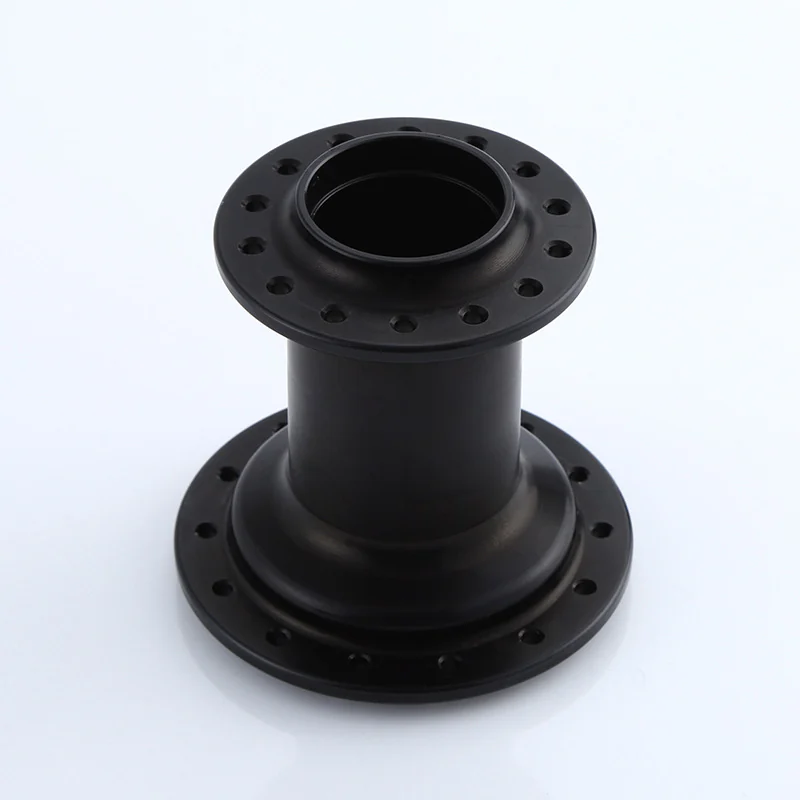
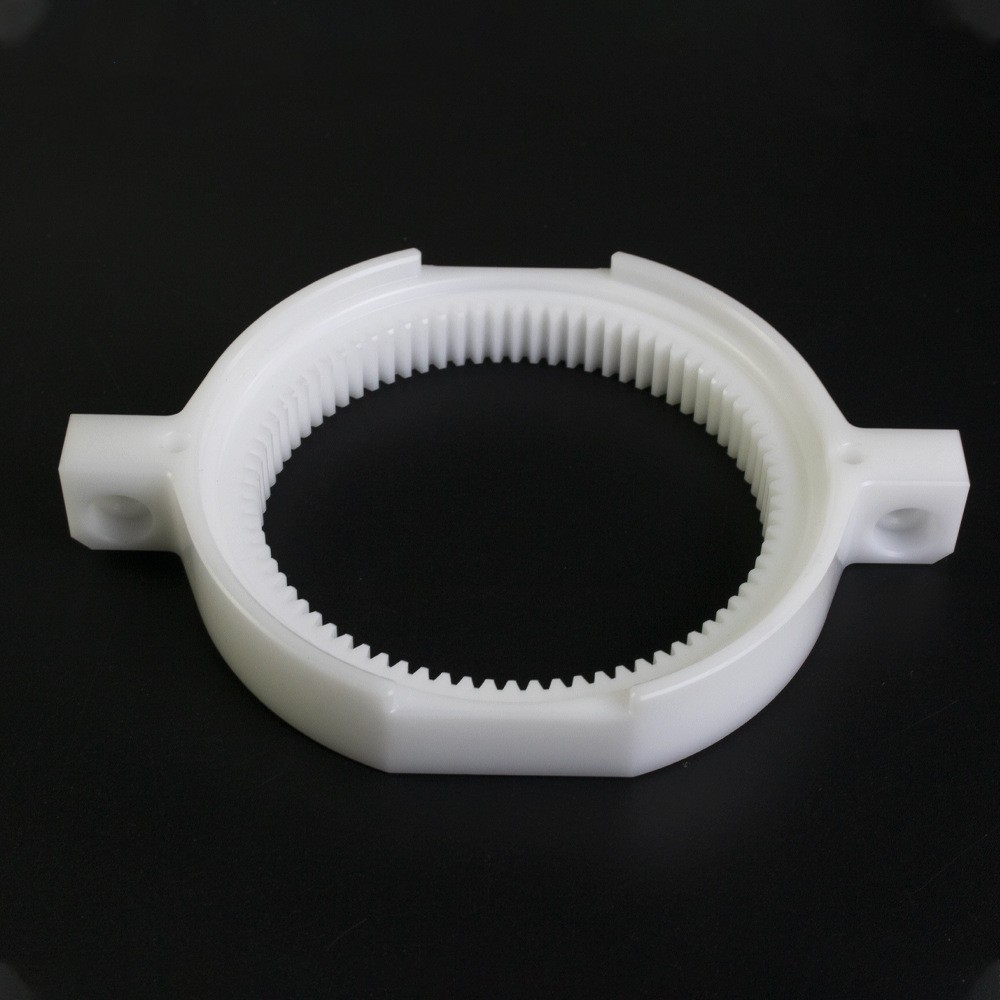
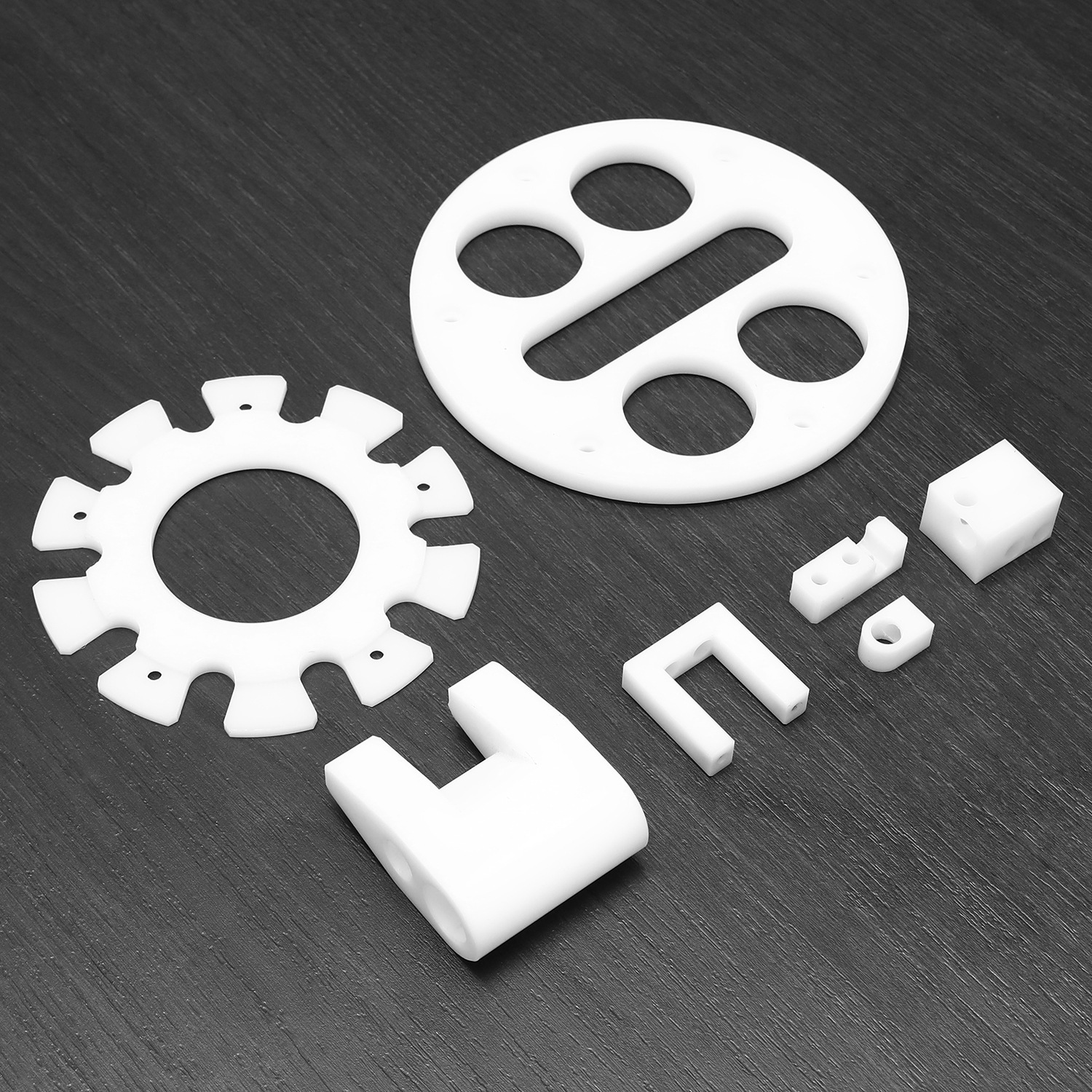
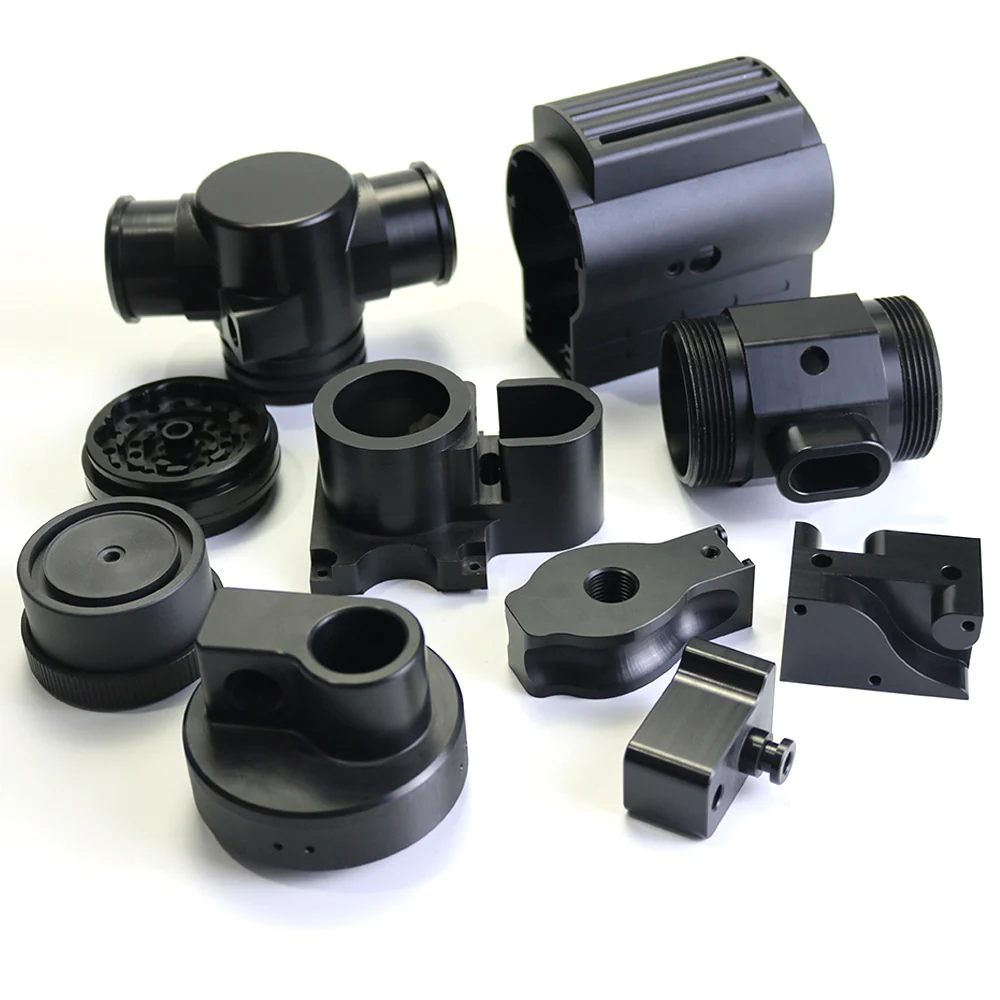
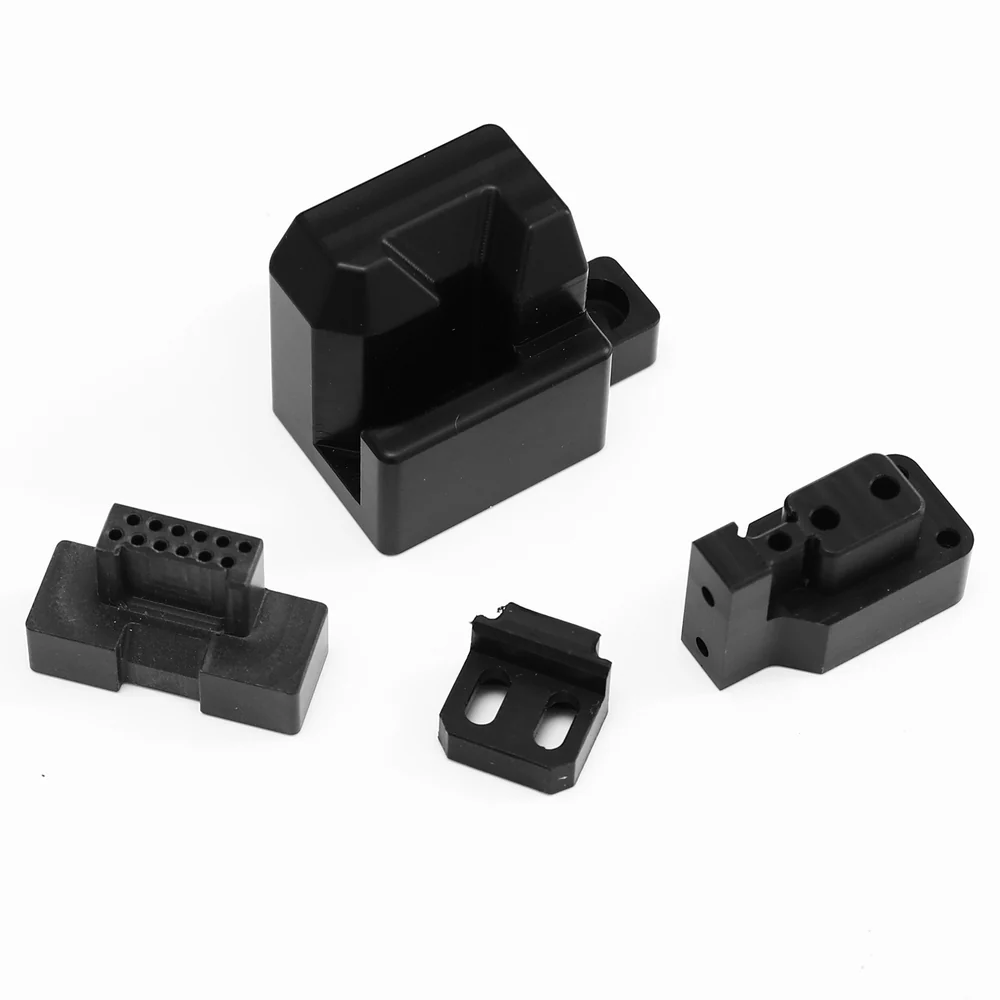
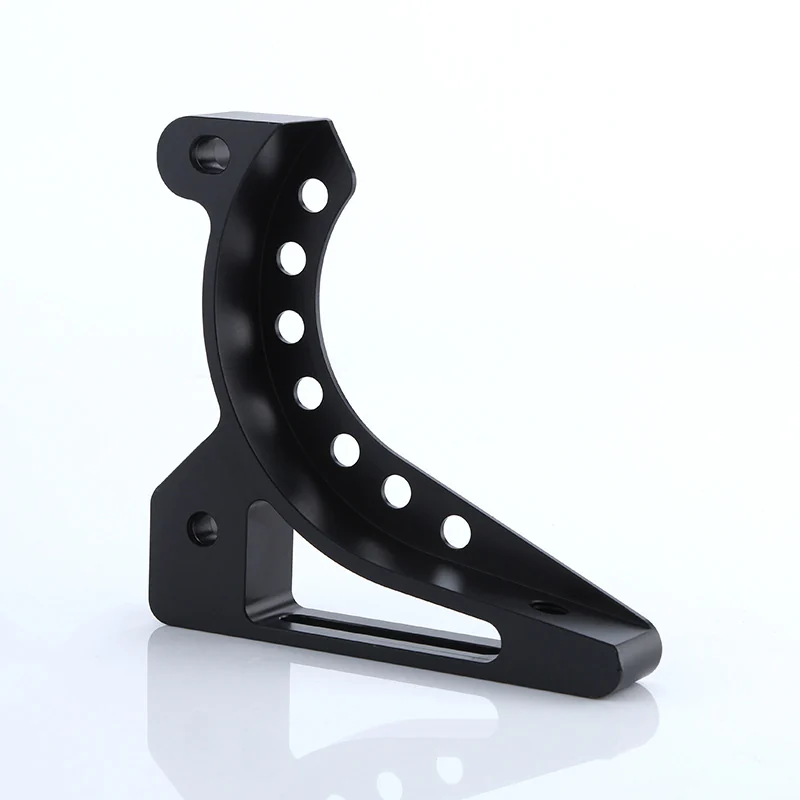
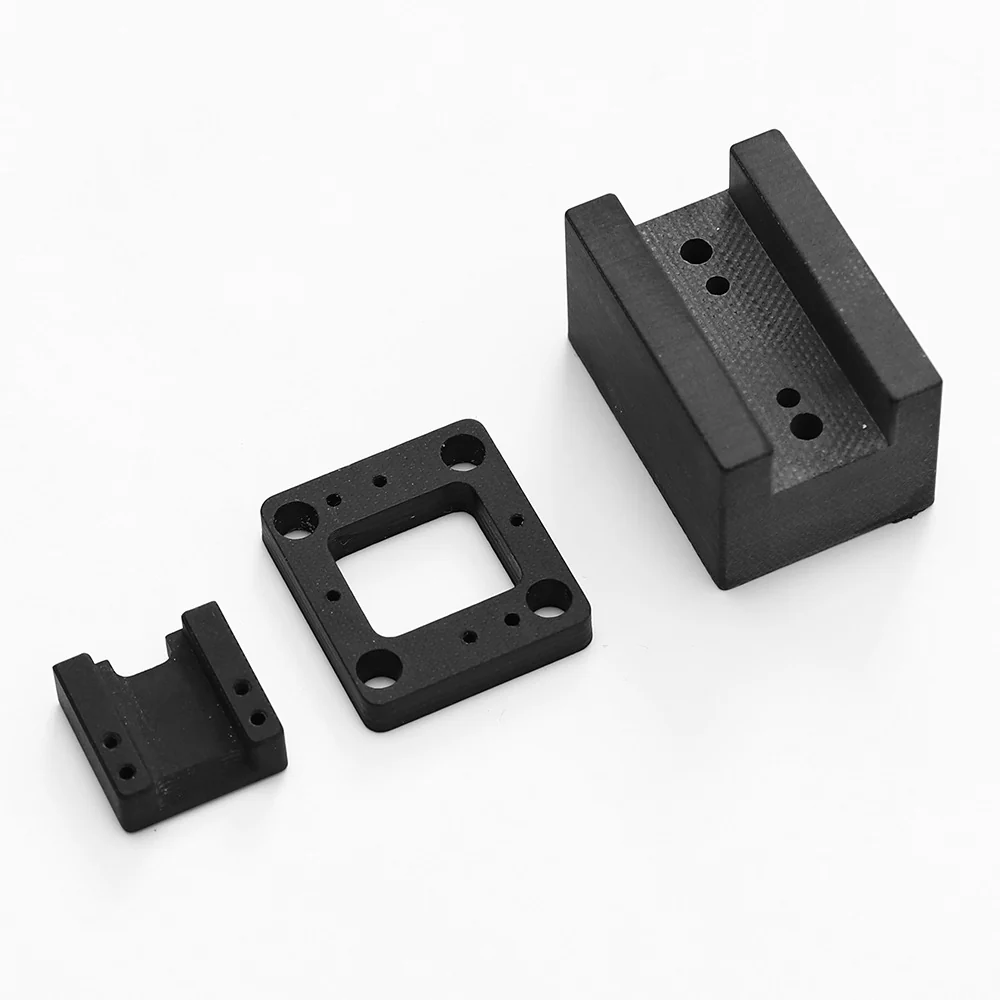
CNC machined Delrin parts
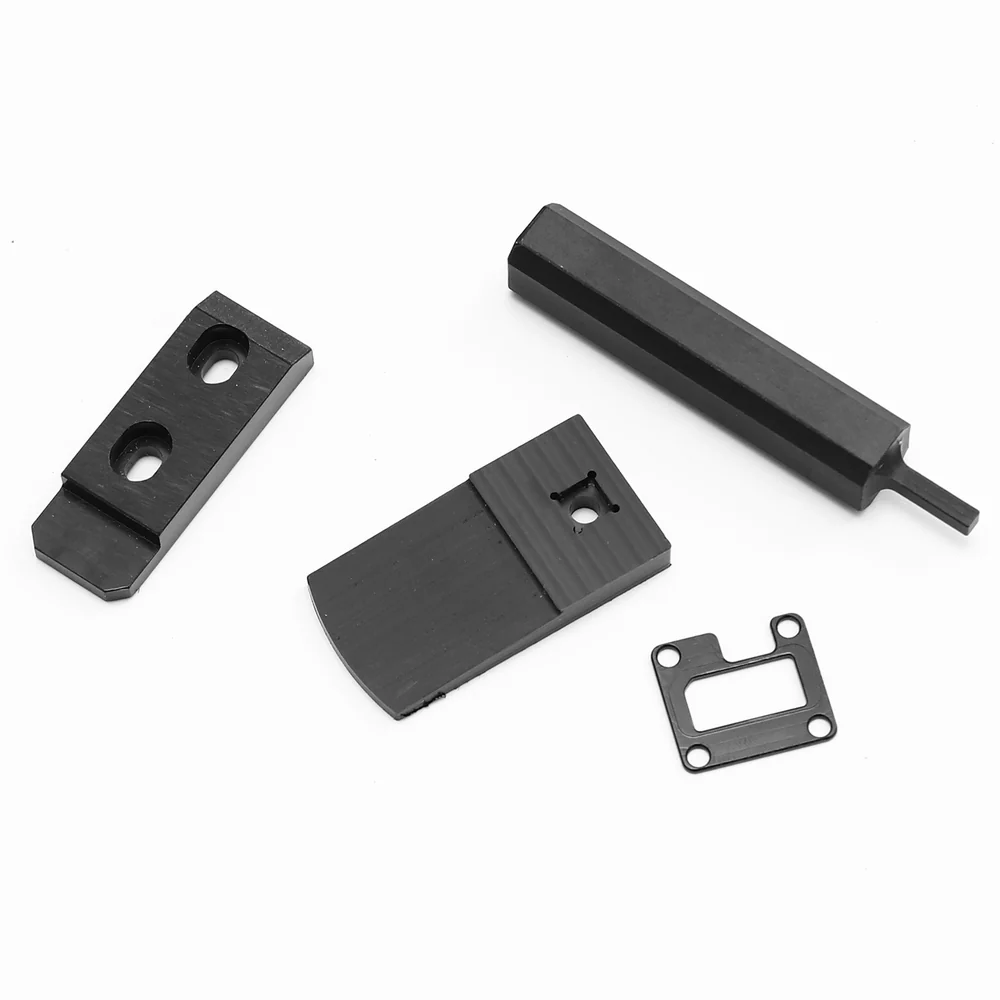
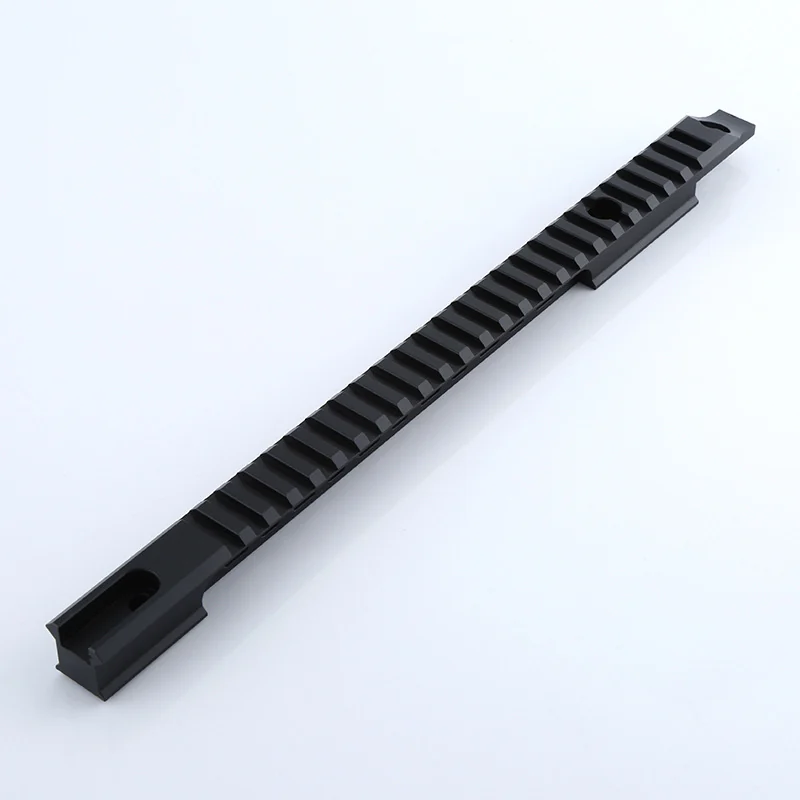
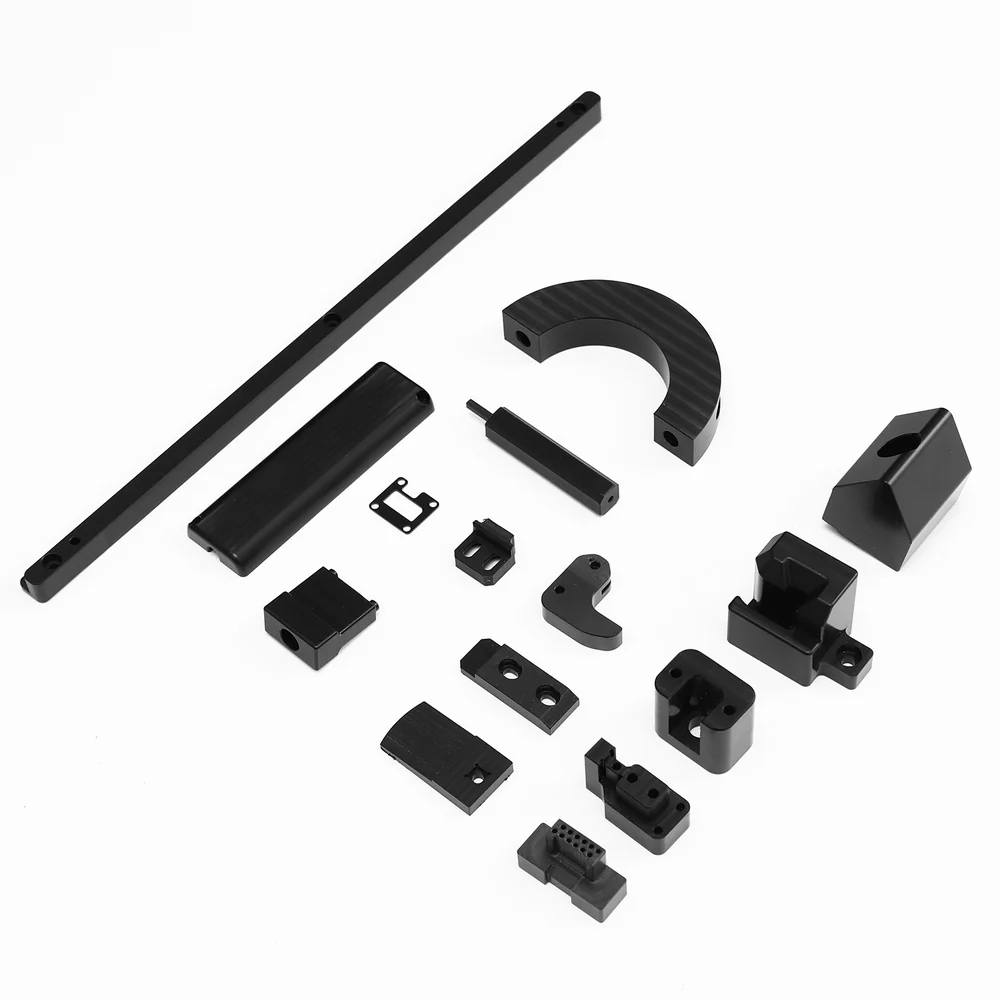
Bushings, rollers, gears, wear pads and manifold blocks — cut from solid Delrin bar and plate, not moulded, so the hole pattern is whatever your drawing says. A few parts shown here are other materials off the same machines.
Delrin on our machines
Three clips from our floor in Dongguan. Delrin cuts fast and holds an edge on the corners, so the finish you see comes straight off the tool — no sanding afterwards.
Ready for a quote?
Send the drawing — price and lead time within 16 hours. STEP, IGES, X_T, DWG, DXF or PDF.
No minimum order.