
CNC Machining for Electronics and Semiconductor Equipment
Test fixtures, heat sinks, vacuum-chamber components and precision plates where flatness and cleanliness matter more than appearance. Machined in Dongguan, measured on a CMM before the run continues.
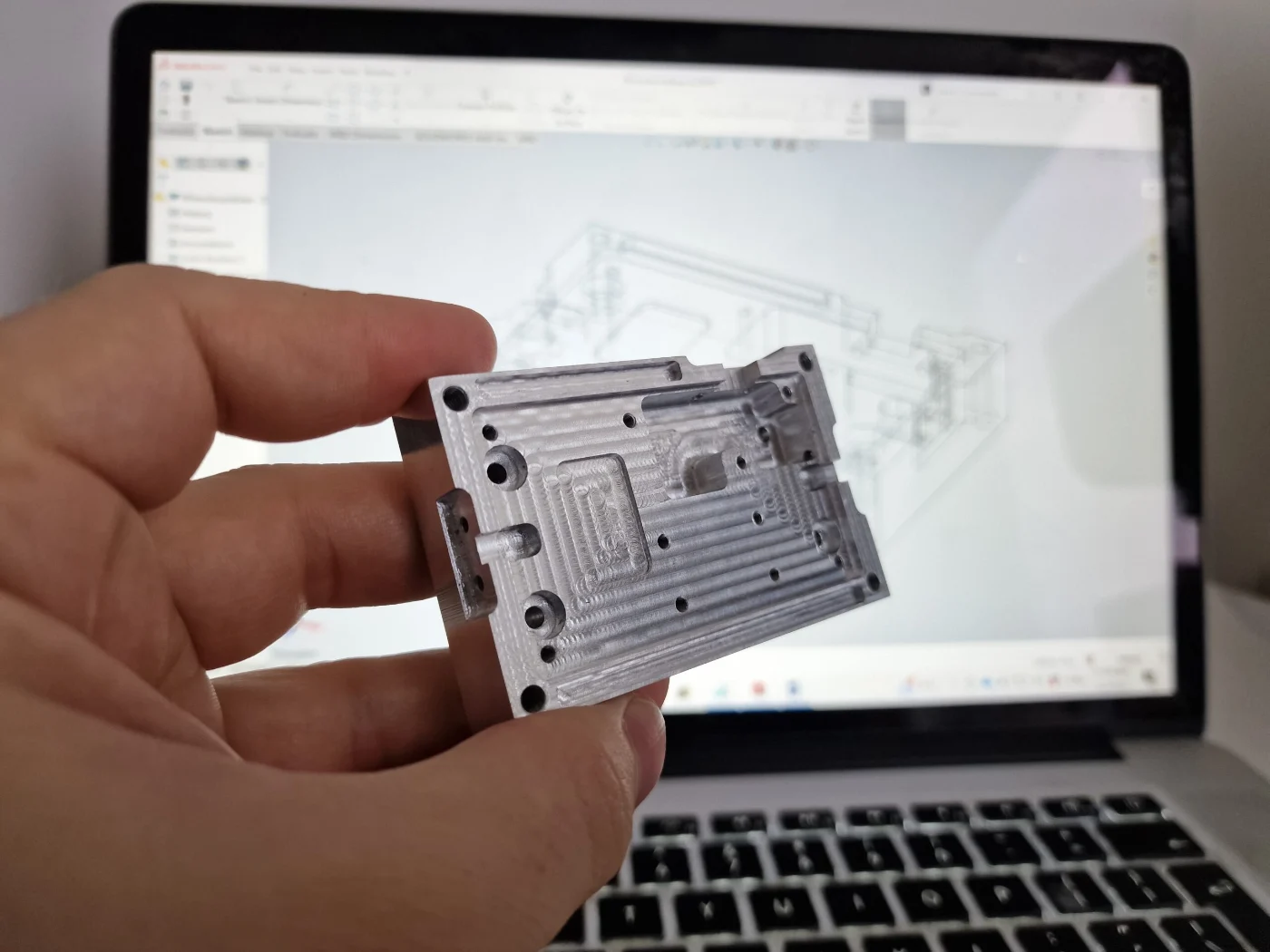
Problems buyers bring us in this sector
Electronics parts fail for reasons that are easy to miss on a drawing and expensive to discover at incoming inspection. These are the three we deal with most.
“The plate came back bowed”
Thin plate moves when the clamps release, whoever machines it. We rough, stress-relieve, then finish with light passes, and measure flatness on the CMM rather than by eye on a surface plate. Send the thickness and the flatness callout and we will tell you before you order whether it is realistic.
“Parts arrive with burrs in the hole intersections”
Every part is hand-deburred, and we ask you to mark which edges must stay sharp so the operator knows which is which. Cross-drilled intersections and thin webs are where burrs hide; deburring is in the price, not an extra.
“We need it clean enough to go straight into the tool”
Degreased, deburred and individually bagged as standard. We do not do certified cleanroom cleaning, so if your specification requires that step it stays on your side — better said now than after delivery.
What we machine for electronics customers
This is some of our most demanding work: thin plates that want to move, flatness called out over a large face, and parts that have to arrive clean.
Test and burn-in fixtures
Probe plates, locating nests and socket carriers with true position held between hundreds of holes.
Heat sinks
Pin-fin and skived-style heat sinks in 6061 and copper, with a flat, lapped mounting face.
Vacuum-chamber components
Flanges, feedthrough plates and spacers in 304/316L with sealing faces machined to the drawing.
Precision plates and shims
Ground and milled plates where flatness and parallelism are the whole specification.
Enclosures and chassis
Milled housings and sheet-metal chassis for instruments, EMI gaskets fitted if you supply them.
Handling and automation parts
End effectors, wafer-handling arms and mounting brackets in aluminium and engineering plastics.
What these parts are usually made from
Aluminium and copper where heat has to move, stainless where the part sees vacuum or cleaning, engineering plastics where it must not conduct.
What we watch on an electronics drawing
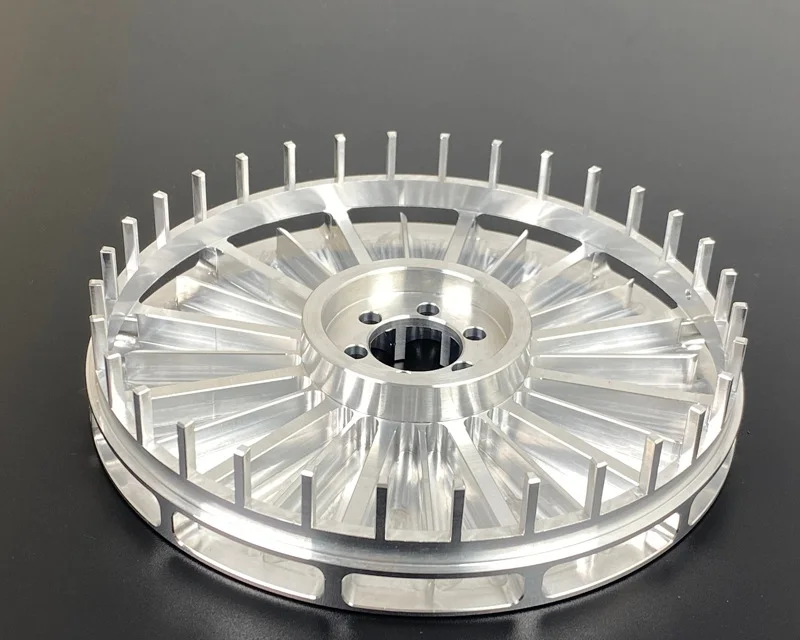
Flatness, true position and burrs
Three things decide whether an electronics part is accepted: flatness across the mounting face, true position across a hole pattern, and whether it arrives burr-free. We measure the first two on the CMM and deburr by hand before packing.
- Flatness, typical0.02 mm over 100 mm
- True position, hole patterns±0.002 mm achievable
- Achievable, milled±0.002 mm on critical features
- Surface finish, as-milledRa 1.6 µm
- Unmarked dimensionsISO 2768-mK
- CleanlinessDegreased, deburred, bagged
What buyers in this industry ask
Can you hold flatness on a thin plate?
Do you machine parts for vacuum use?
How do you handle burrs on parts with hundreds of holes?
How we make them
CNC Milling
Housings, plates and brackets on 3- and 4-axis centres. CNC milling →
CNC Turning
Shafts, bushings and fittings on twelve lathes. CNC turning →
Inspection
First article on the CMM before the run continues. Quality →
Ready for a quote?
Send the drawing — price and lead time within 16 hours. STEP, IGES, X_T, DWG, DXF or PDF.
No minimum order.