
CNC Machining ABS
ABS is the prototyping plastic. It is cheap, it machines easily, it glues and paints well, and it looks like a production moulding once it is finished. For a housing that has to be held, fitted and shown to somebody before the tooling is committed, machined ABS is usually the fastest honest answer.
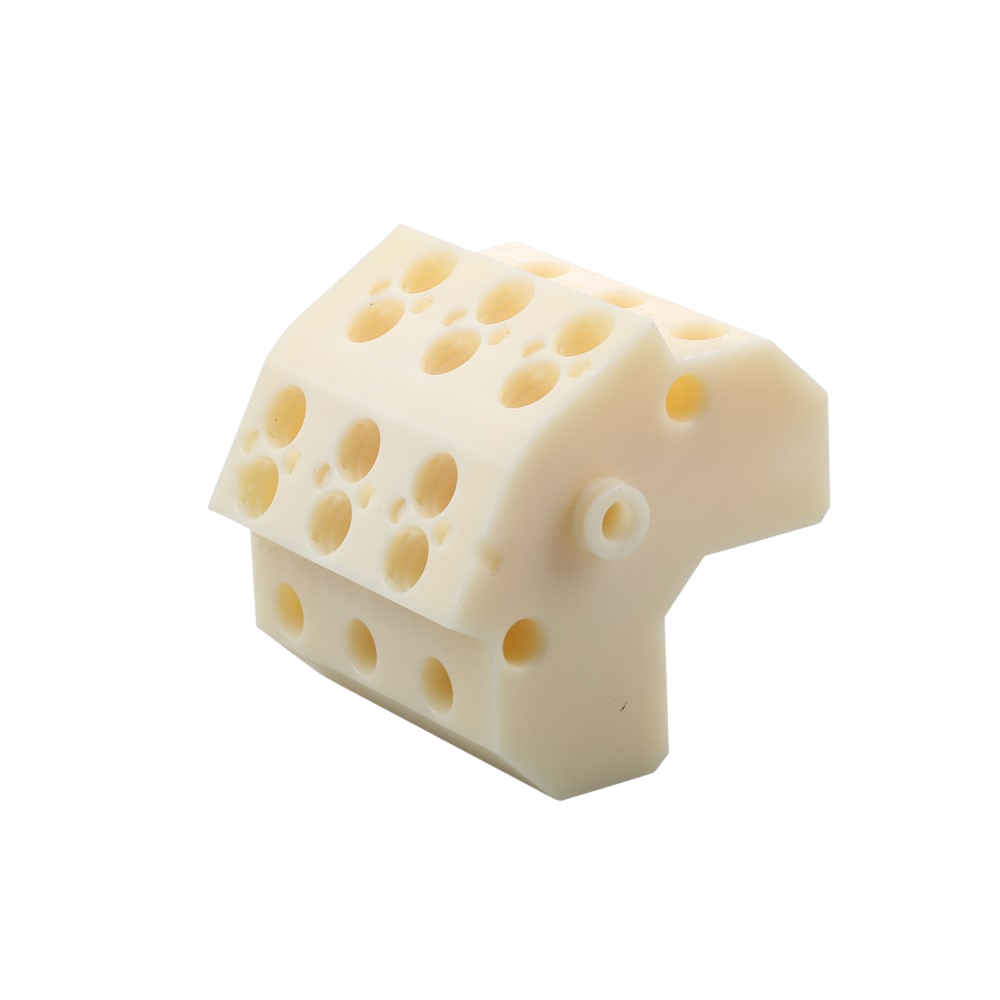
Grades and forms
Machined ABS comes from extruded sheet and rod. Grades differ mainly in impact and flame rating.
| Grade | Best for | Notes |
|---|---|---|
| General purpose ABS | Prototype housings, fit checks, jigs | The standard; easy to machine, glue and paint |
| High-impact ABS | Parts that will be handled and dropped | Tougher, slightly softer to cut |
| Flame-retardant ABS | Electrical enclosures where a rating is needed | Specify the rating explicitly |
| ABS/PC blend | Prototypes that need more stiffness and heat resistance | Closer to production polycarbonate parts in feel and performance |
Easy, and that is the point
ABS cuts fast and cleanly, does not wear tooling and produces good surfaces with ordinary care. Heat is the only real consideration — too slow a feed melts the surface — and it is easily avoided.
Its value is what comes after the machining. ABS accepts solvent bonding, so multi-part prototypes can be assembled invisibly, and it sands and paints to a finish that reads as a moulded production part. That combination is why it dominates appearance models and pre-tooling prototypes.
Its limits are equally clear: low stiffness, poor outdoors, and it softens well below 100 °C. It is not a structural or an outdoor material, and a prototype in ABS should not be used to validate anything that depends on those properties.
| At a glance | |
|---|---|
| Service temperature | Around 80 °C |
| Machinability | Excellent |
| Bonding and painting | Both excellent — solvent bonds, sands and paints well |
| Weakness | Low stiffness, degrades in sunlight, not structural |
| Typical parts | Prototype housings, enclosures, fixtures, appearance models |
Four notes on ABS parts
Say if it is an appearance model
A prototype that will be photographed or shown to a customer gets a different finishing effort from one that is checked for fit and thrown away. Both are legitimate; they are not the same price.
Do not use it outdoors
ABS yellows and embrittles in sunlight. For an outdoor prototype, ASA or a painted polycarbonate part is a better proxy.
Consider the production material now
If the final part will be moulded in polycarbonate or nylon, a machined prototype in that material tells you more than one in ABS — and we can machine either.
Say if it will be painted or plated
ABS is one of the few plastics that takes paint and electroplating well, but the part has to suit it — even wall thickness, no sharp corners, and a note on which faces are cosmetic.
Ready for a quote?
Send the drawing — price and lead time within 16 hours. STEP, IGES, X_T, DWG, DXF or PDF.
No minimum order.