
CNC Machining Polyimide
Polyimide is the plastic you reach for when nothing else survives: continuous service at 260 °C and beyond, no melting point, low outgassing in vacuum, and creep resistance that keeps a part in shape under load and heat. Vespel, Meldin and Duratron PI are the trade names. It is among the most expensive stock we buy, so the drawing, the nesting and the tolerance plan all matter more than usual.
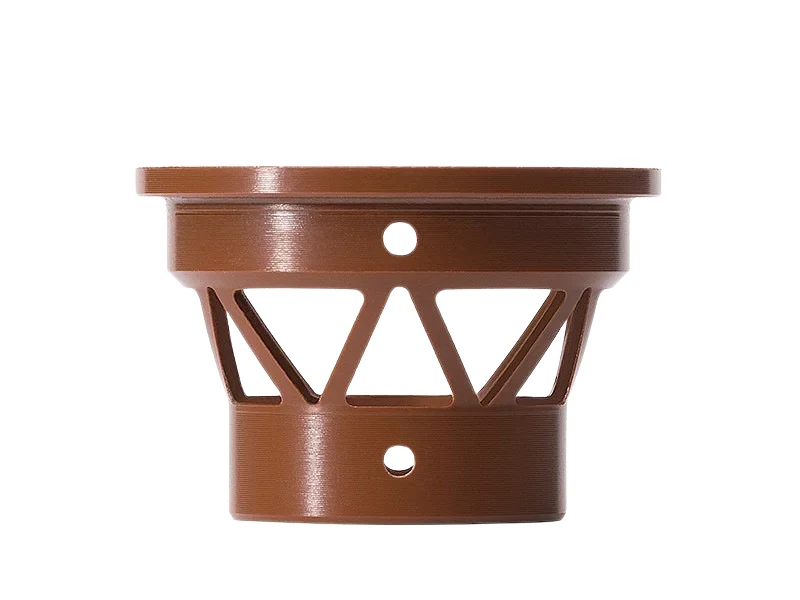
Grades and forms
Unfilled for insulation and vacuum, graphite-filled for wear. The grade decides both the machining and the price.
| Form / grade | Best for | Notes |
|---|---|---|
| Unfilled (Vespel SP-1, Meldin 7001, Duratron PI) | Electrical and thermal insulators, vacuum and plasma-chamber parts | Best dielectric strength and lowest outgassing; machines to a fine finish |
| 15% graphite (SP-21 type) | Bearings, bushings, wear parts | Lower friction and better wear; the most common bearing grade |
| 40% graphite (SP-22 type) | High-load bearings, thermal stability | Lowest thermal expansion, best wear under load |
| PTFE / MoS₂ filled (SP-211, SP-3) | Dry-running bearings, vacuum wear parts | Lowest friction; MoS₂ grade for vacuum where PTFE would outgas |
| Rod, plaque, tube, near-net shapes | Turned parts from rod; rings from tube | Direct-formed near-net shapes save material on larger runs — ask before finalising the drawing |
Machines beautifully, and every chip is money
Polyimide machines well: it is stiff, it does not melt or smear, and it takes a fine surface from sharp carbide tooling. The chips come off as a dry, fine dust rather than ribbons, so we run dust extraction and keep the cutting zone clear. Filled grades are abrasive and wear tools faster; unfilled grades are gentle.
The material absorbs a little moisture — up to about 1% — and grows measurably as it does. Parts with tight tolerances are machined from conditioned stock and packed dry, and we state the condition at which they were measured. Bake-out before use in vacuum equipment is normal practice and we can do it here.
Because the stock is expensive, we look at the drawing for yield before we quote: nesting several parts in one rod, choosing tube instead of solid for rings, or a near-net shape for larger quantities. It is not unusual for the material to cost more than the machining.
| At a glance | |
|---|---|
| Service temperature | Around 260 °C continuous; short excursions higher; no melting point |
| Vacuum and plasma | Very low outgassing; used in plasma-etch chambers and wafer handling |
| Creep and wear | Excellent creep resistance; filled grades run as dry bearings |
| Weakness | Absorbs some moisture, attacked by strong alkalis and concentrated acids, high cost |
| Typical parts | Plasma-chamber insulators and rings, wafer-handling and test-socket parts, high-temperature bushings and thrust washers, seal rings, valve seats, jet-engine and vacuum-pump wear parts |
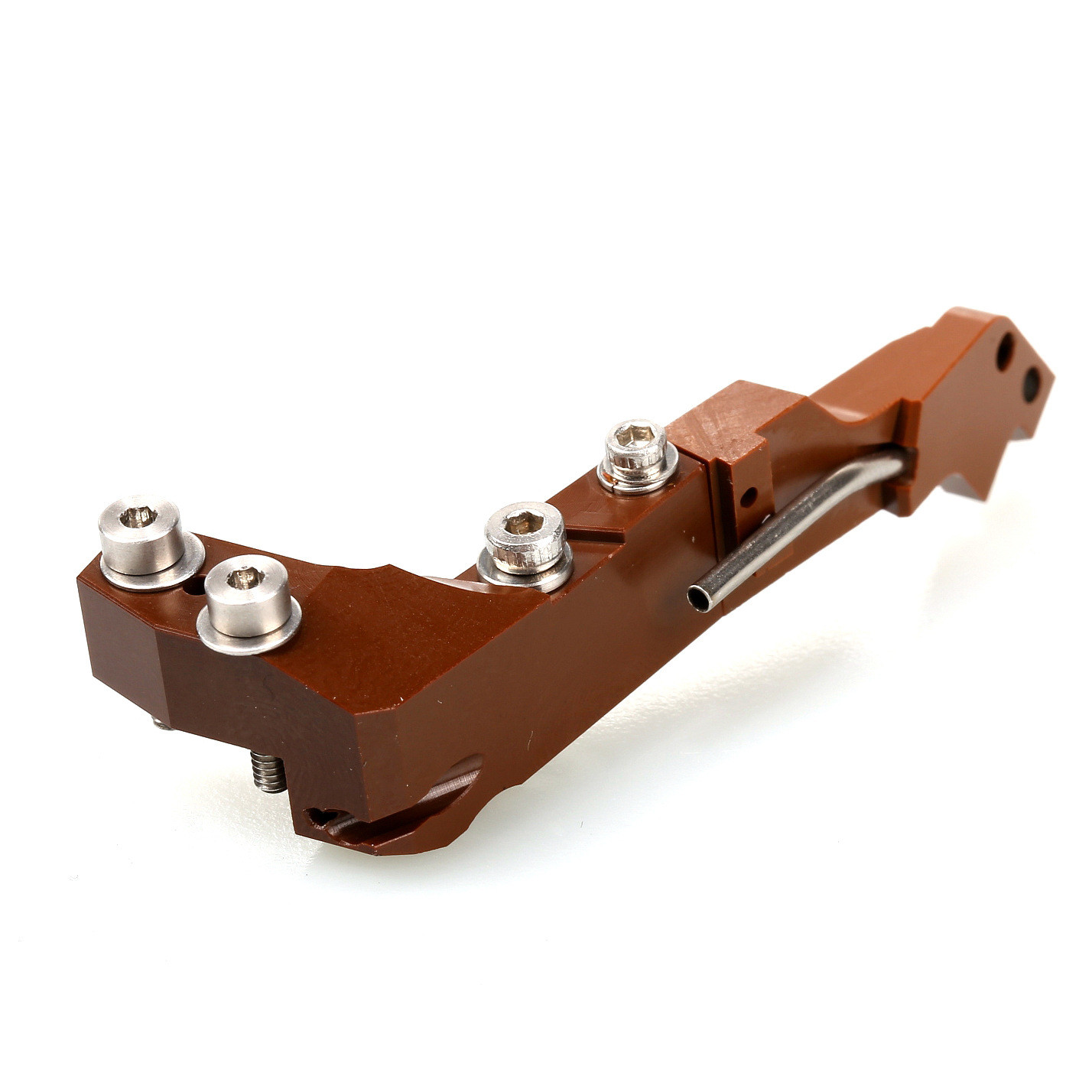
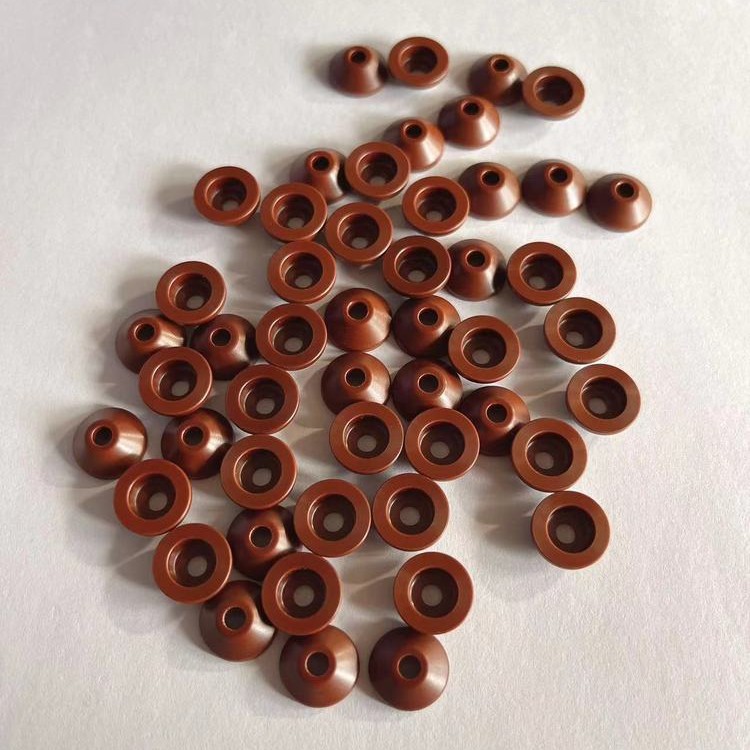
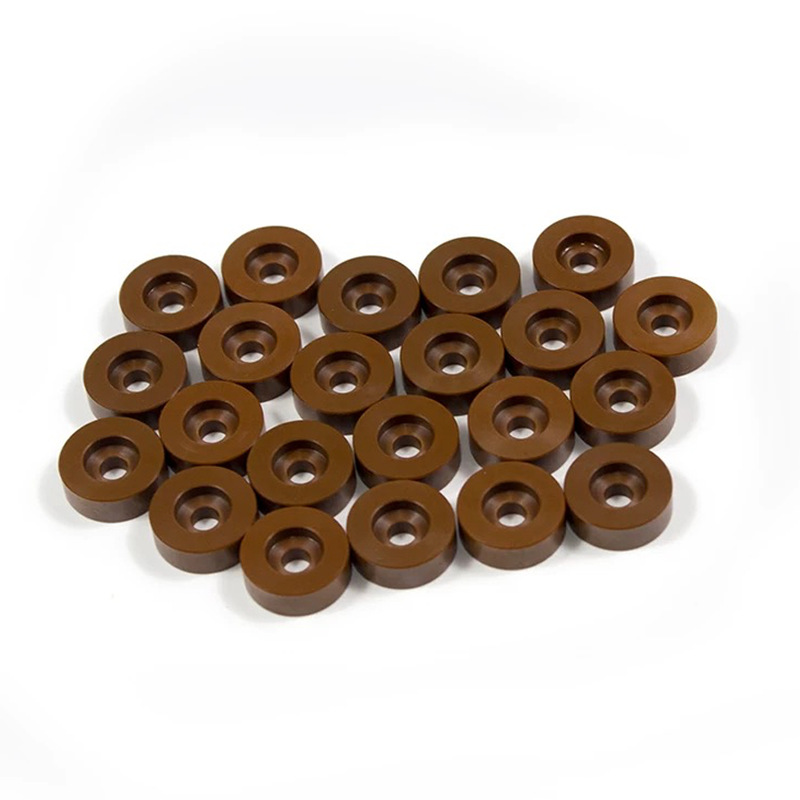
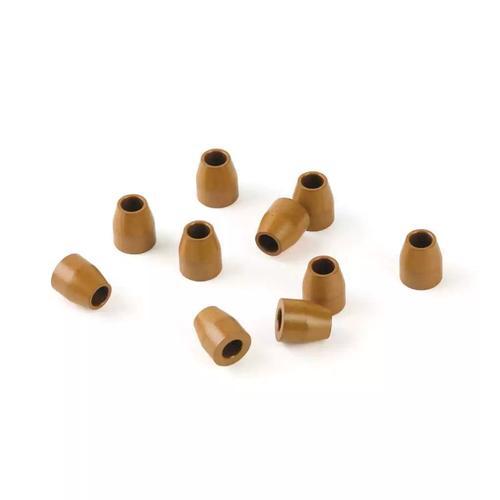
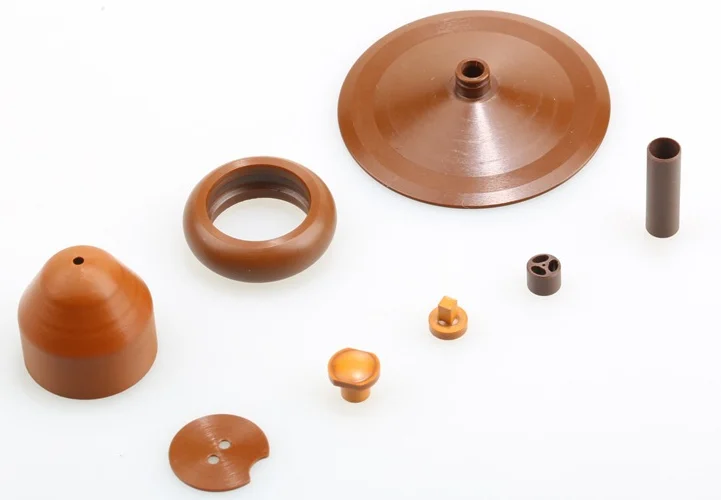
CNC machined polyimide (PI) parts
Insulating washers, seals, bushings and high-temperature spacers — machined from polyimide rod and plate. It keeps its strength far above most thermoplastics, and the stock costs enough that nesting and scrap rate show up in the price.
Four rules for a polyimide part that earns its cost
Design for the stock, not against it
Standard rod and tube sizes decide yield. A part drawn 2 mm over a stock diameter doubles the material bill; tell us the function and we will suggest where a dimension can move.
State the humidity or vacuum condition
Dimensions change with moisture. A tolerance below ±0.025 mm needs a stated conditioning and measuring state, or it cannot be verified.
Pick the fill for the function
Unfilled for insulation and vacuum, graphite for wear, MoS₂ for vacuum wear. Mixing them up wastes the material’s strengths.
Keep the part as small as the function allows
Polyimide is priced by the blank, and blanks are small. Trimming a flange, or splitting the job into a polyimide insert and a cheaper carrier, saves more than any machining change.
Ready for a quote?
Send the drawing — price and lead time within 16 hours. STEP, IGES, X_T, DWG, DXF or PDF.
No minimum order.