
CNC Machining Carbon Fibre
Carbon fibre sheet and plate cut, routed and drilled on our own machines — drone frames, brackets, plates and trim — with the edge quality and hole accuracy the material demands. The video is one of our jobs: a nest of small parts coming out of a 3 mm CFRP sheet.
Carbon fibre is not a metal, and cannot be cut like one
CFRP is layers of carbon cloth in a cured epoxy. It is stiff, light and abrasive — and it does not chip like aluminium. A cutter that is wrong for it, or a feed that is too slow, frays the edge, pulls fibres out of the top layer or splits the plies apart. That damage cannot be polished away afterwards.
We cut it with diamond-coated and compression-flute routers, at feeds set for the material rather than borrowed from aluminium, on a vacuum table so the sheet cannot lift. Drilled holes go through a backing board so the exit side is as clean as the entry. Cutting is enclosed and extracted — carbon dust is conductive and abrasive, and we do not want it in the machine or in the air.
- MaterialCFRP sheet & plate, twill or plain weave, forged
- AlsoG10 / FR4, GFRP, Kevlar hybrids
- OperationsProfile routing, drilling, countersinking, pockets
- Edge finishAs cut, or sealed with resin on request
- Not offeredLayup, moulding or autoclave — machining only
Four things that make a carbon fibre part cheaper and cleaner
Say which face is the show face
One side of a sheet is usually the cosmetic weave. Tell us which, and we cut with that side up so the cutter enters through it and any breakout lands on the back.
Keep internal corners at R1 or larger
A sharp internal corner in a laminate is a crack starter. A 1 mm radius costs nothing and is where the part will survive a drop.
Give holes room from the edge
Holes closer than two diameters to an edge are prone to splitting under load and to breakout when drilled. Two diameters is a safe rule; ask us if the design cannot allow it.
Nest, do not send singles
Small parts are cut as a nest from one sheet, tabbed and snapped out. Sending the assembly rather than one part at a time lets us nest everything on the same sheet and cut the price.
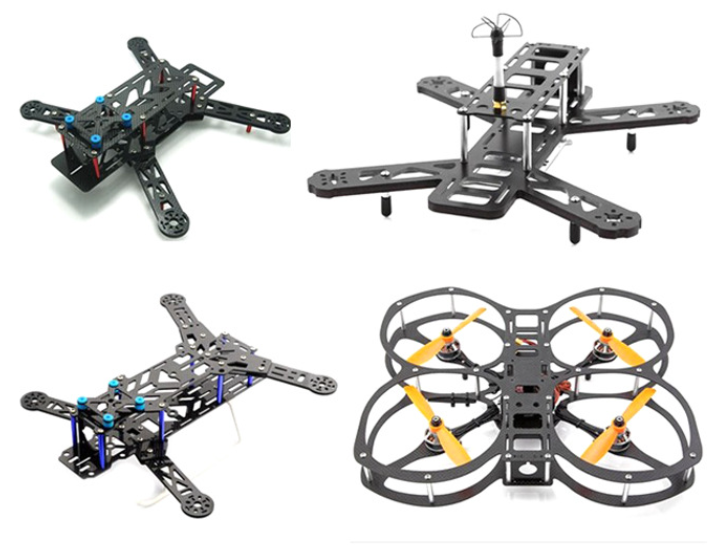
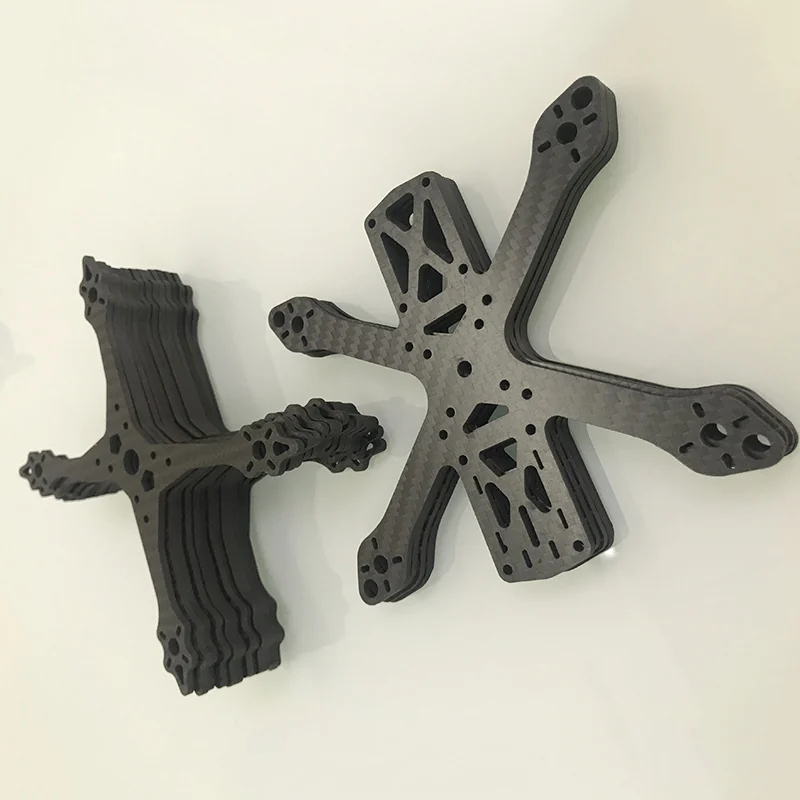
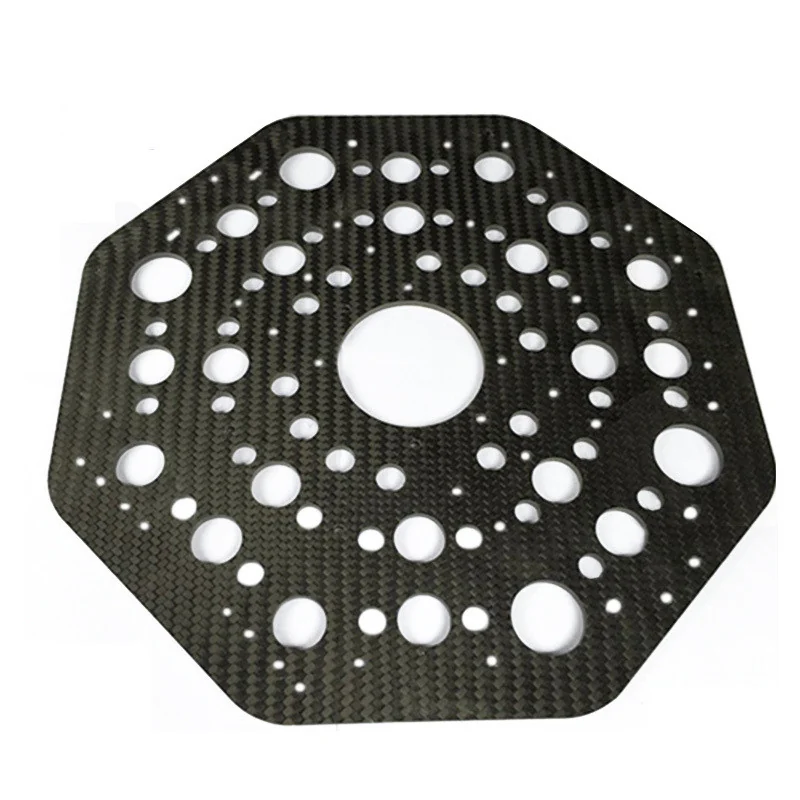
Carbon fibre parts we have cut
We do not publish customer parts or drawings. These are sample and demonstration parts — never a customer’s job.

Common questions
Do you make the carbon fibre sheet, or just machine it?
Will the edges fray?
What tolerance can you hold?
Can you machine carbon fibre with metal inserts?
Minimum quantity?
Ready for a quote?
Send the drawing — price and lead time within 16 hours. STEP, IGES, X_T, DWG, DXF or PDF.
No minimum order.