
Low-volume CNC machining, from 1 to 10,000 parts.
No MOQ. The fixture and program from your prototype carry into the batch, so the 500th part matches the first — and you do not pay for setup twice.
- 1–10,000 parts, no MOQ
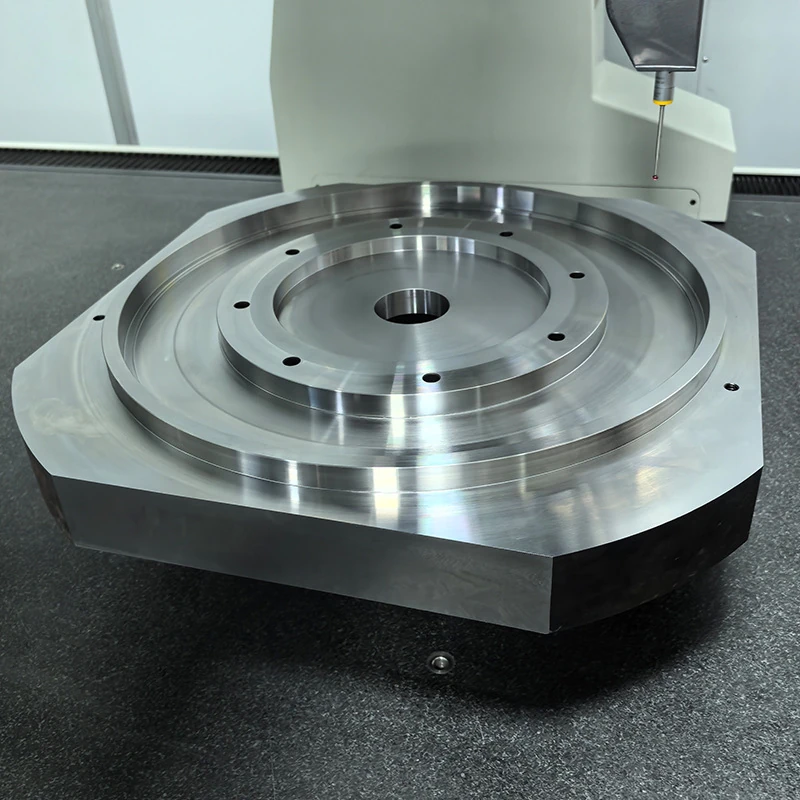
- Prototype fixture carried into production
- CMM first article before the run continues
- 16-hour quotes
- Repeat orders keep the program
When low volume is the right call
Before hard tooling
You need 50–500 parts to test a market, prove a design or bridge to injection moulding. Machining avoids tooling lead time and tooling risk.
High-mix, low-volume production
Ten part numbers, 20 pieces each, every quarter. We keep the programs and fixtures under your part numbers.
Service and spares
Replacement parts for equipment that is still in the field. One part is a valid order, and reverse engineering is available.
Custom and configured products
Knife parts, EDC hardware, fixtures and small mechanical assemblies where every order is slightly different.
Regulated but non-critical parts
Brackets, housings, trays and test fixtures that need traceability but not ISO 13485.
Pilot lines
Bridge tooling and nest fixtures for a line that is not ready for hard tooling.
The cost curve, honestly
| Quantity | What drives the price | What changes |
|---|---|---|
| 1–5 | Programming, setup, fixture, first article | Highest per-part cost; the quote shows the setup separately |
| 10–50 | Setup spread over more parts; same fixture | Per-part cost drops sharply; finishing may have a batch minimum |
| 100–500 | Cycle time dominates; inspection plan | Per-part cost stabilises; material buying improves |
| 1,000–10,000 | Cycle time, material, finishing, inspection | We quote a production route, not a prototype route |
The numbers depend on the part. Send a drawing and we will show the actual curve for your geometry.
Why the second order is cheaper
Most shops re-quote the setup every time. We keep the fixture, the program and the inspection plan under your part number. The second order starts at the machine, not at the drawing. That is also why the finish does not drift between the prototype and the batch: the same fixture holds the part, and the same program cuts it.
If you expect repeat orders, tell us at the quote stage. We will quote the first batch and the repeat batch separately, with the assumptions written down.
Low volume vs injection moulding
| Low-volume CNC | Injection moulding | |
|---|---|---|
| Tooling | None | Steel tool, typically weeks and thousands of dollars |
| Economic quantity | 1–10,000 | Usually 5,000+ to amortise tooling |
| Design changes | Change the program; no tool rework | Tool modification or a new tool |
| Material | Any machinable grade | Pellet grade with moulding constraints |
| Lead time | 5–15 working days | Tool build plus moulding |
If you are not sure which route fits, send the drawing and the annual volume; we will tell you honestly if machining is the wrong process.
FAQ
What is low-volume machining at GY?
Anything from one part to about 10,000 pieces a year. There is no minimum order, and no separate setup fee buried in the price.
Why is low volume more expensive per part?
Setup, programming, fixturing and inspection are spread over fewer parts. We show those costs in the quote so you can see what changes if you order 10 instead of 100.
Can you hold the prototype price for the production run?
The fixture and program carry over, so the second order usually costs less per part. We quote the production quantity separately instead of promising a price we cannot hold.
Do you keep the fixture for repeat orders?
Yes, for active programs. Tell us the expected repeat interval and we will store the fixture and program under your part number.
What is the smallest quantity you will anodise?
One part. Finishing is quoted as one finished part, one invoice; small batches may carry a minimum batch charge from the anodiser, which we show separately.
Can you ship partial batches?
Yes. Some customers take 10 pieces first, approve the fit, then release the remaining 200. We schedule the balance without re-quoting the setup.
Start with 1 part. Scale when the design is proven.
Send a STEP file and drawing. We reply with price, lead time and a DFM note within 16 hours.