
China sourcing
Most buyers who search for CNC machining China are not looking for the cheapest quote. They are trying to answer four questions: what will it cost landed, how long will it take, can the quality be proved, and will my drawing stay mine. This guide answers those four questions in order, with the numbers and limits we use at GY Machining in Dongguan.
Who this is for: engineers and buyers moving a machined part from a local prototype shop to a China supplier, or comparing a China quote with a local one. If you need one urgent part tomorrow, China is rarely the answer; if you need 50–10,000 parts with a stable drawing, it often is.
Quick answer: what a China CNC shop actually gives you
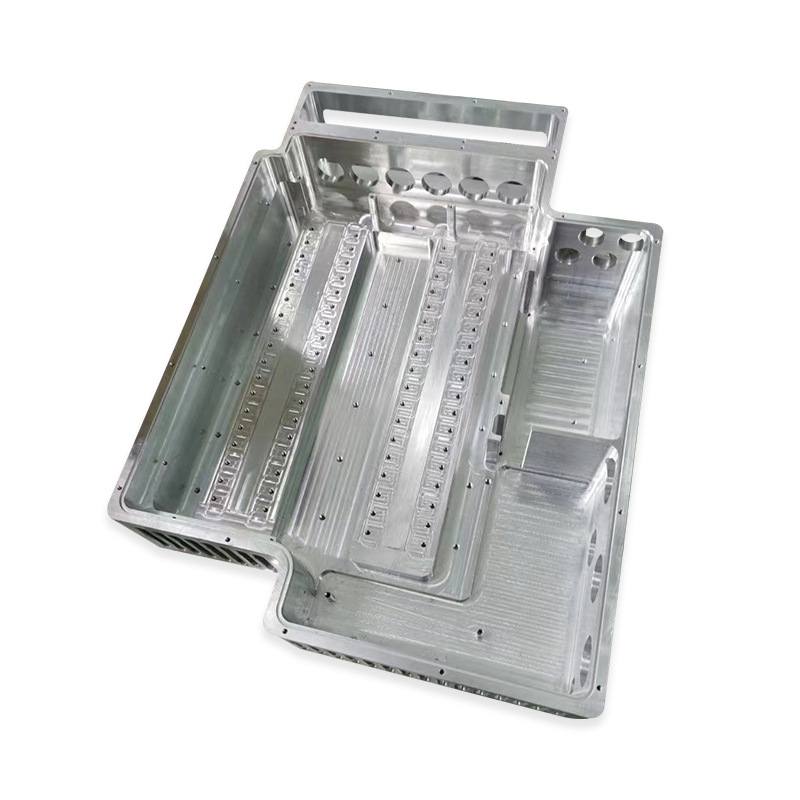
China is competitive when the part is labour-heavy, the drawing is stable, and the quantity is above the point where setup stops dominating the price. A good shop quotes in about 16 hours, machines a simple part in 5–10 working days, and can show a first-article report before the batch ships. The parts are not automatically cheaper: freight, duty, inspection and your own coordination time are part of the landed cost.
- Best fit: 50–10,000 pieces, 3-axis and 4-axis milling, turning, Swiss-type parts, aluminium, stainless, titanium and engineering plastics.
- Typical timing: 16-hour quote, 5–15 working days production, 2–5 days finishing, 3–6 days air freight or 25–35 days sea freight.
- Quality proof: first-article inspection report, CMM data, material certificate, finish certificate and photos before packing. A logo on a website is not proof.
- IP: an NDA before the drawing, need-to-know data, and written approval before any operation is subcontracted.
- When China loses: 10 urgent parts, regulated work that needs ISO 9001/13485 or PPAP, very bulky low-value parts where freight erases the labour gap, and parts you cannot legally or practically offshore.
What actually drives the price
Two China quotes for the same drawing can differ by 40% and both can be honest. The difference is usually in what the supplier assumed. Ask for the assumptions, not just the number.
1. Material. Aluminium 6061 is cheap and available; 7075 costs more and may need a mill order. Stainless 303 is easy to cut, 316L is tougher, and titanium Grade 5 is slower. The material certificate and the exact temper are part of the price. If the drawing says “aluminium” and nothing else, the quote is a guess.
2. Machining time. The same pocket can be cut in one pass or five. A shop that quotes 12 minutes for a feature you know takes 30 will either lose money or cut corners. Ask what cycle time the quote assumes.
3. Setup count. Every extra face adds a setup, a fixture and a chance for a datum error. A part that can be made in two setups is usually much cheaper than the same part in four. Designing a feature onto a face that is already open is free; adding a fourth face is not.
4. Tolerance. A general tolerance of ±0.1 mm is normal. A bore at ±0.05 mm needs a boring bar and a CMM check. A true position of 0.02 mm may need a jig bore or a grinding step. Tight tolerance is not a moral virtue; it is a cost. Put it only where the function needs it.
5. Finish. As-machined is the baseline. Anodising adds per-part cost and racking; hard anodising adds more and can change the fit. Powder coating is thick and hides edges. Plating, passivation, bead blasting and laser marking each add a step, a minimum charge and a lead time.
6. Inspection. A visual check is included. A full first-article report with CMM data, material cert and finish cert costs time. For a regulated part, that inspection is not optional; for a bracket, it may be overkill.
7. Quantity. Setup is spread across the batch. At 10 pieces, setup can be half the price. At 500, material and cycle time dominate. The quote should show the setup separately so you can see what changes when the volume changes.
8. Freight and duty. A part price is not a landed cost. Air freight is fast and expensive; sea freight is slow and cheaper per kilo. Duty depends on the HS code and the destination. Ask for a DDP landed cost if you want to compare with a local supplier fairly.
Cost ranges you can plan with
The table below is a planning range for 2026, not a quote. It assumes a complete drawing, a normal surface finish and a supplier in the Dongguan/Shenzhen area. Your part will move within the range based on the eight drivers above.
| Part type | Typical quantity | China ex-works range | What moves it |
|---|---|---|---|
| Simple turned pin or spacer | 50–500 | USD 3–12 / pc | Material, tolerance, finish, bar size |
| 3-axis milled housing | 50–500 | USD 25–70 / pc | Pocket depth, setup count, anodising |
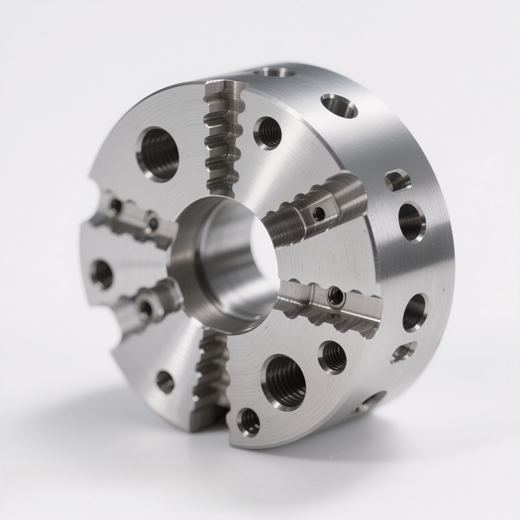
| 4-axis bracket or mount | 100–1,000 | USD 35–90 / pc | Complexity, fixture, inspection |
| Tight-tolerance bore | 20–200 | +20–40% on the base | Boring/grinding, CMM, scrap risk |
| Prototype, 1–10 pcs | 1–10 | USD 80–300 / pc | Programming and setup dominate |
For a more precise estimate, use the CNC machining cost calculator or send the drawing for a 16-hour quote. The calculator is a planning tool; the quote is the number you can hold us to.
Lead time: quote, production, finishing and shipping
“Lead time” means different things to a buyer and a supplier. A supplier may mean “ship date from our dock”; a buyer means “parts in my hands”. Write the definition into the PO.
Quote and DFM: about 16 hours. A shop that takes a week to quote is either overloaded or not prioritising new work. The quote should include a DFM note: what is expensive, what is ambiguous, and what would make the part cheaper.
Material and programming: 1–3 working days. Stock sizes are fast; a mill order or a special temper takes longer. Programming and fixture design happen in parallel if the shop is organised.
Machining: 3–15 working days. A simple turned part can be 3–5 days; a complex 4-axis housing with several setups can be 10–15. Quantity matters, but setup and inspection often matter more.
Finishing: 2–5 working days. Anodising, plating and powder coating are usually at partner plants. The finish is often the least predictable part of the schedule, especially near a holiday.
Inspection and packing: 1–2 working days. First article, final inspection, photos, protection and cartons. Do not let a supplier skip this to save a day.
Shipping: 3–6 days by air, 25–35 days by sea. Add customs clearance. A DDP quote includes duty and the final delivery; an EXW quote does not.
Quality: what can be proved, and what cannot
“Good quality” is not a claim; it is a set of measurements. Before you place a batch order, agree what will be measured, how, and what happens if it fails.
First-article inspection (FAI). The first part off the production setup is measured against the drawing, feature by feature. A useful FAI report shows the nominal, the tolerance, the actual value and the instrument. A report that only says “OK” is not a report.
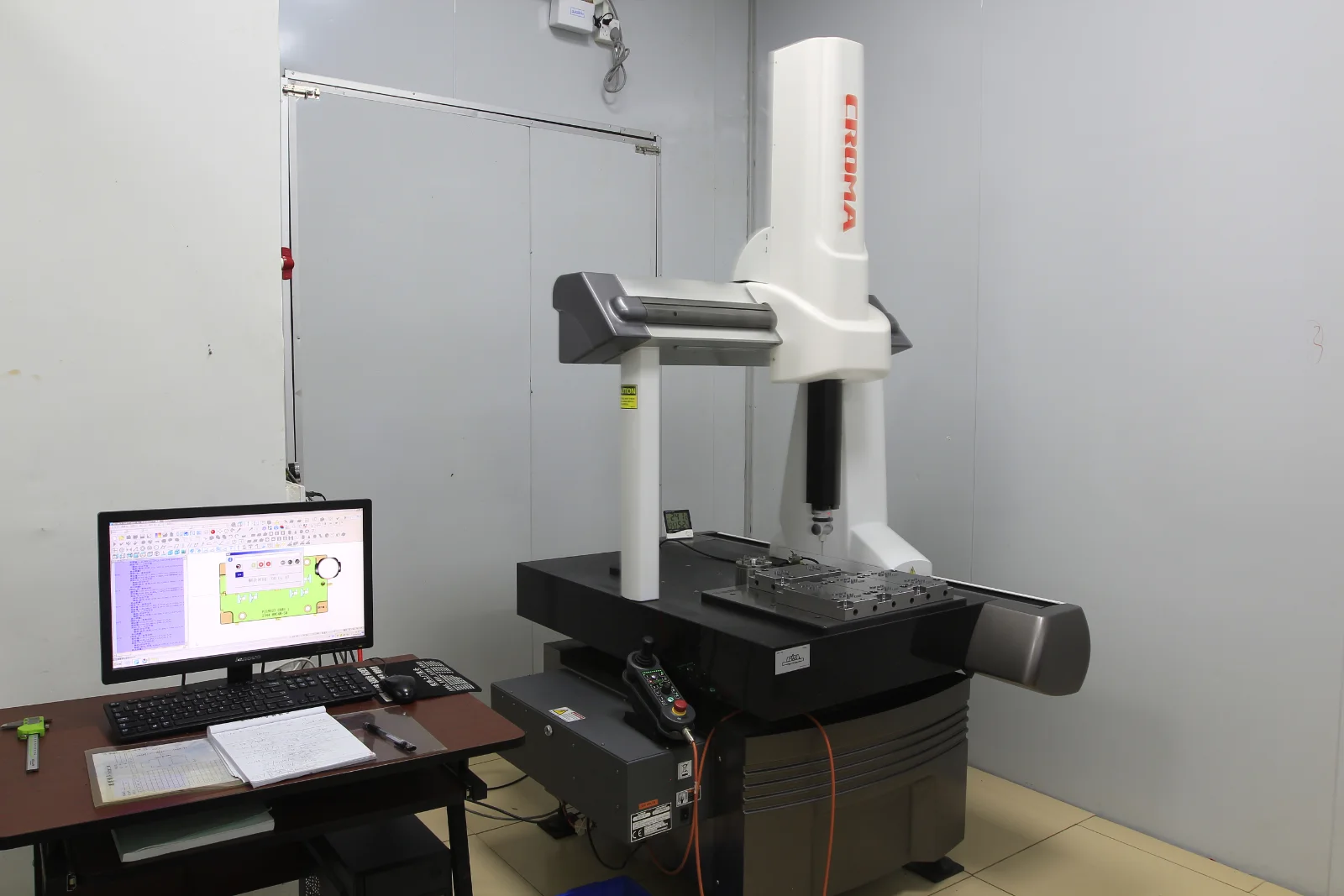
CMM data. Bores, positions, flatness and profiles are best checked on a coordinate measuring machine. Ask for the report, not just a photo of the screen. For a critical bore, ask which datum the CMM used.
Material certificate. The certificate ties the heat/lot to the grade. It does not prove the part was made from that lot unless the shop keeps traceability. Ask how the material is marked and stored.
Finish certificate. Anodising thickness, plating thickness and salt-spray results come from the finisher. If the finish is cosmetic, approve a physical sample under the light where the part will be used.
What cannot be proved cheaply: the sub-supplier’s process, heat treatment, plating adhesion, fatigue life and long-term corrosion. You can ask for certificates and sample testing, but you cannot audit every step from a desk. That is why supplier selection matters as much as the inspection report.
What we tell buyers at GY: we are not ISO 9001 certified. We do not have a cleanroom, ISO 13485 or IATF 16949. We do have a measuring room, a CMM, first-article reports and a process for agreeing inspection before the batch. If your customer requires a certificate we do not hold, say so before the RFQ; we will tell you honestly whether we can serve the job.
IP and NDA: how to protect the drawing
Most IP problems are not dramatic thefts; they are small leaks. A drawing sent to a broker, a sub-supplier who was not approved, or a quote request that includes the full assembly. The fix is a process, not a promise.
- Sign the NDA before the RFQ. A one-page mutual NDA is enough for most parts. If a supplier resists, that is information.
- Send only what the quote needs. The part drawing, the material, the finish and the quantity. You do not need to send the full BOM or the assembly if the job is one bracket.
- Ask which operations are subcontracted. Anodising, heat treatment, wire EDM and plating are commonly outsourced. Get the list in writing and require approval before your drawing goes to a third party.
- Control revisions. Put the revision in the filename and the email subject. Ask the supplier to confirm the revision they quoted.
- Agree what happens at the end. Files returned or deleted, surplus parts scrapped, and no use of your parts in a portfolio without permission.
A contract helps in China, but enforcement is slow and expensive. Prevention is cheaper: share less, approve subcontractors in writing, and keep the critical features in one supplier’s scope.
How to choose a CNC machining supplier in China
The fastest way to separate a real shop from a trading company is to ask for specifics. A trader can forward your drawing but cannot tell you which machine will run it, how many setups it needs, or what the inspection plan is.
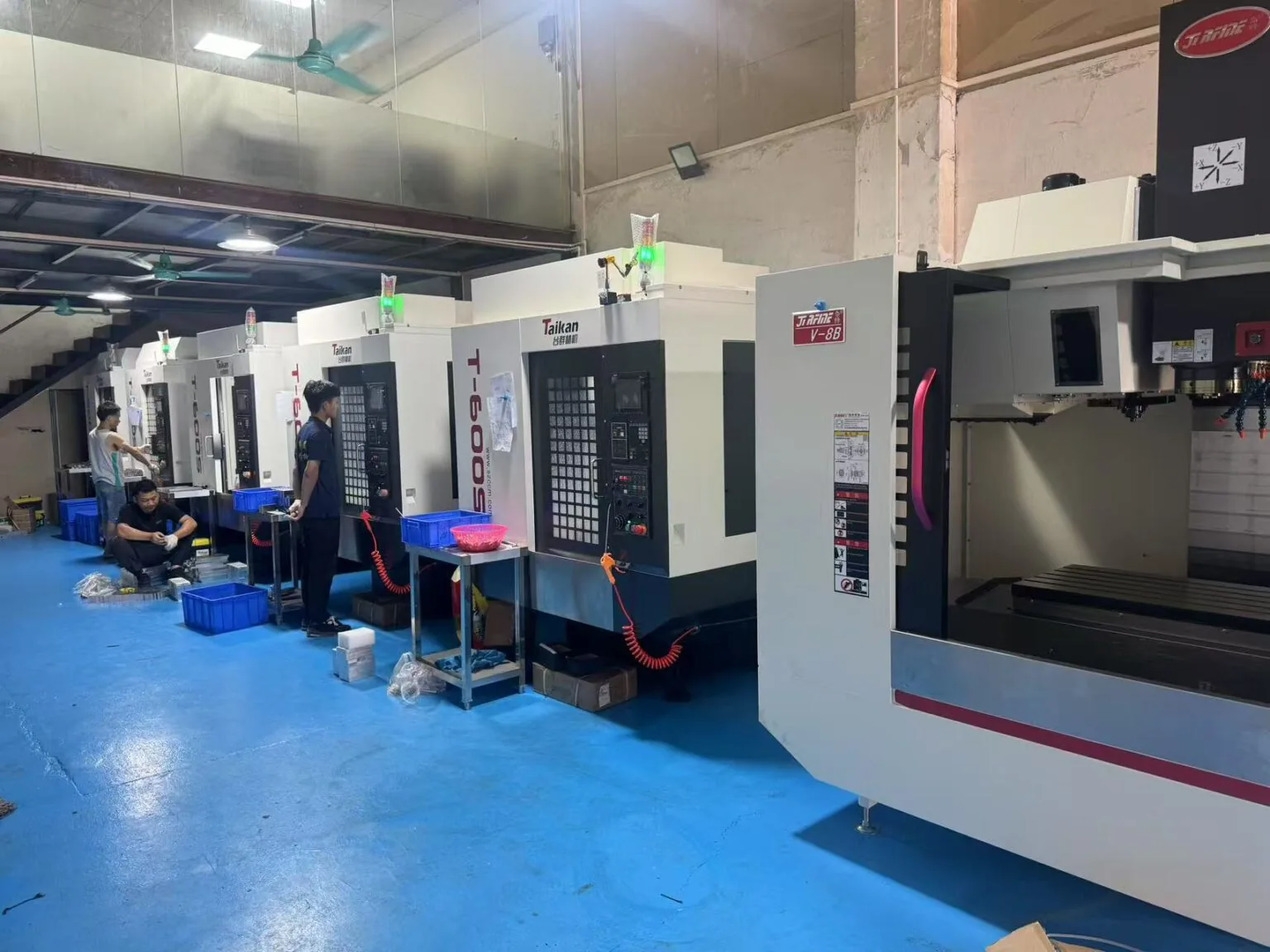
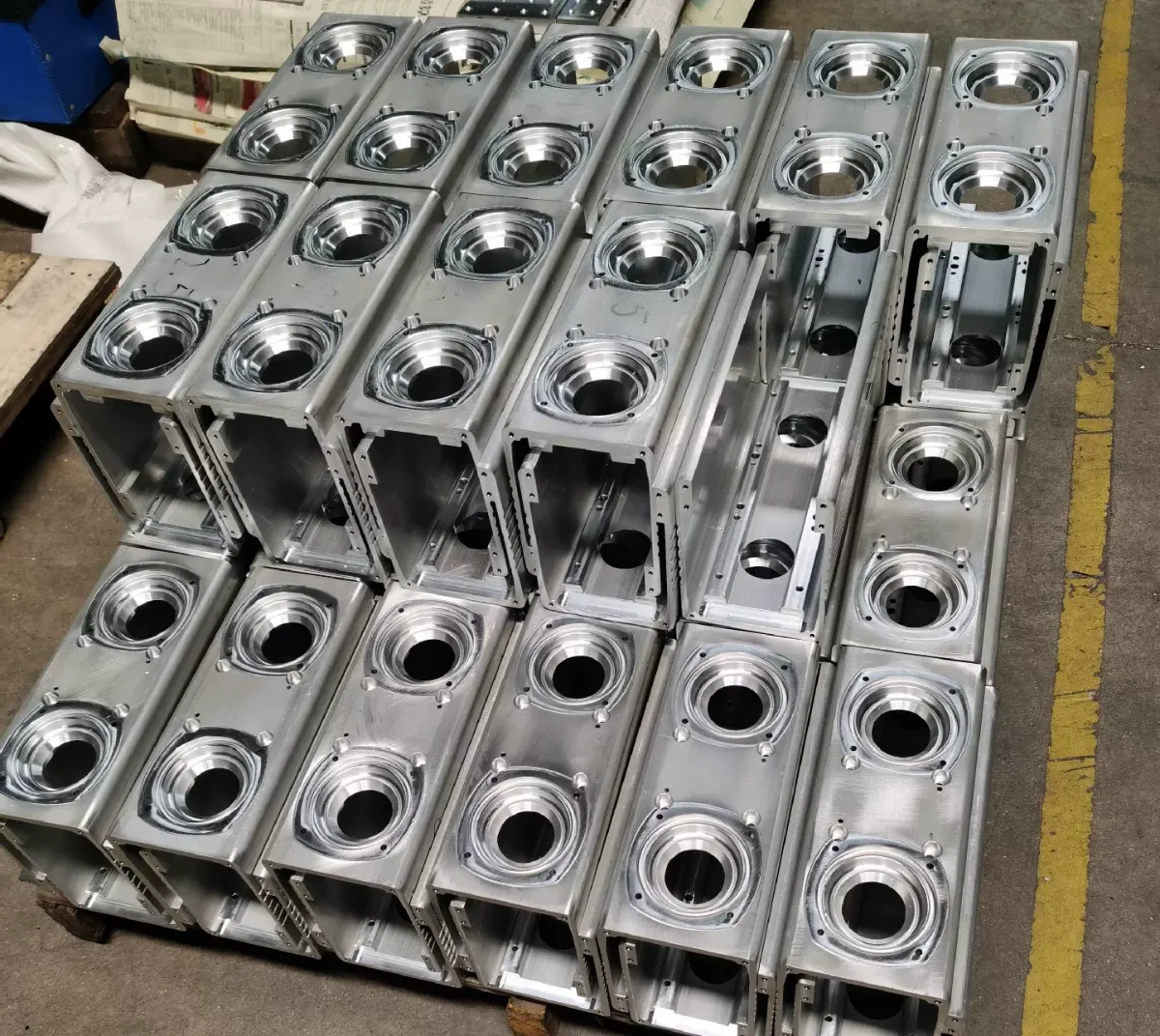
- Ask for the machine list, not a slogan. How many 3-axis, 4-axis and 5-axis machines? How many lathes, and how many are Swiss-type? At GY: 32 machining centres (19 four-axis), 18 lathes (10 Swiss) and 6 sinker EDM machines.
- Ask what is in-house and what is not. Finishing, heat treatment and wire EDM are often at partners. That is fine if the supplier manages them and tells you.
- Ask for a DFM note with the quote. A supplier who only sends a price is not adding engineering value. A supplier who flags a thin wall, a deep pocket or an impossible tolerance is.
- Check the inspection equipment. CMM, video measuring, roughness tester, hardness tester. Ask for a sample report.
- Ask for a first article before the batch. If the answer is “we always inspect”, ask to see the report format.
- Ask for material and finish certificates. If they cannot supply them, the traceability is weak.
- Test communication. Send a drawing with one ambiguous feature. A good supplier asks a question; a weak one guesses.
- Ask for the payment terms and currency. Deposit, balance, bank charges and who pays the transfer fee.
- Ask for the shipping terms. EXW, FOB, DAP or DDP. Get a DDP landed cost if you want to compare with local.
- Ask what they cannot do. ISO 9001, ISO 13485, IATF, 5-axis, cleanroom, in-house anodising. A supplier who admits a limit is easier to trust than one who claims everything.
- Ask for references or case studies. Not logos; a part, a problem and how it was solved.
- Start with a paid sample. One part through the full process tells you more than three calls.
China vs local: when China wins, and when it does not
The comparison is not “cheap vs expensive”. It is total cost, total time and total risk. A local shop can be cheaper for 10 urgent parts; a China shop can be cheaper for 500 parts with a stable drawing.
| Factor | China supplier | Local supplier |
|---|---|---|
| 1–10 urgent parts | Freight and coordination often dominate | Usually faster and simpler |
| 50–5,000 pieces | Labour and setup advantage | Higher hourly rate |
| Complex 3/4-axis parts | Good fit if the shop has the machines | Good, at a higher rate |
| ISO/PPAP/regulated work | Limited; check certificates first | Often the only practical route |
| Bulky, low-value parts | Freight can erase the saving | Usually better |
| Finishing options | 35+ finishes through partners | Depends on the local network |
| IP-sensitive work | NDA and process controls needed | Easier to control |
A common hybrid: prototype locally to prove the design, then move the stable revision to China for production. Another: machine in China, assemble and test locally. The right answer depends on where the risk sits, not on a slogan about labour rates.
A worked example: 500 aluminium housings
This is an illustrative example, not a quote. The part is a 6061-T6 aluminium housing, 120 × 80 × 35 mm, with a deep pocket, four tapped holes and a black anodised finish. Tolerance is ±0.05 mm on the bearing bore and general tolerance elsewhere. Quantity: 500 pieces.
| Cost line | USD / pc | Note |
|---|---|---|
| Material | 6.50 | 6061-T6 plate, with yield allowance |
| Machining | 14.00 | Two setups, 4-axis, cycle time included |
| Setup, amortised | 1.20 | Fixture and programming spread over 500 |
| Anodising | 2.80 | Black Type II, racking and masking |
| Inspection and packing | 1.00 | FAI, final sample check, protection |
| Ex-works total | 25.50 | Before freight, duty and your time |
| Air freight, 200 kg | 2.40 | Illustrative; actual rate depends on route |
| Duty, illustrative 5% | 1.28 | HS code and destination decide the rate |
| Landed, approximate | 29.18 | Compare this with the local landed price |
The leverage is in the design and the process, not in squeezing the hourly rate. On this part, moving one pocket to the open face removed a third setup and saved about USD 1.80 per piece. At 500 pieces, that is USD 900 — more than a small discount negotiated on the part price.
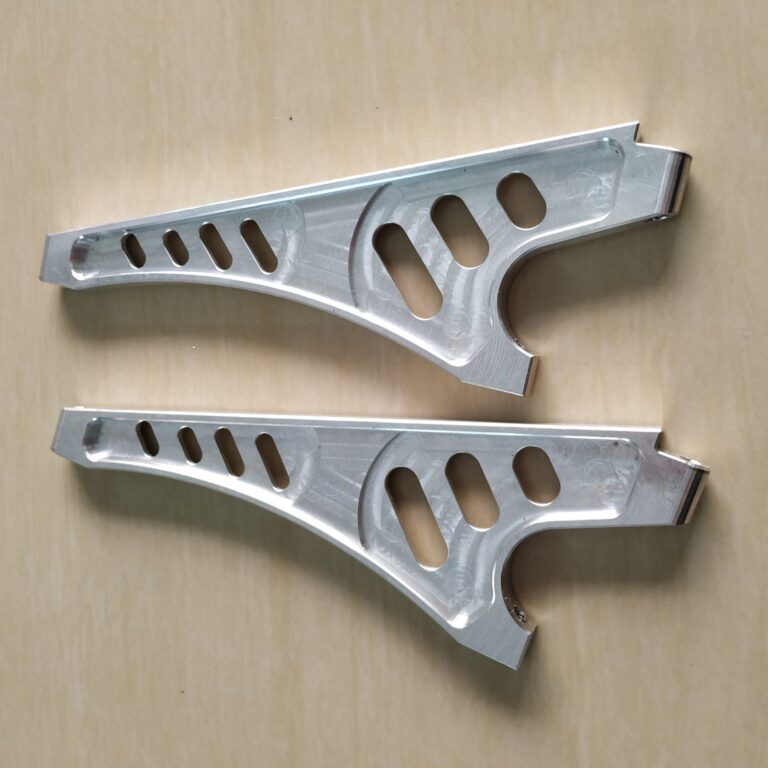
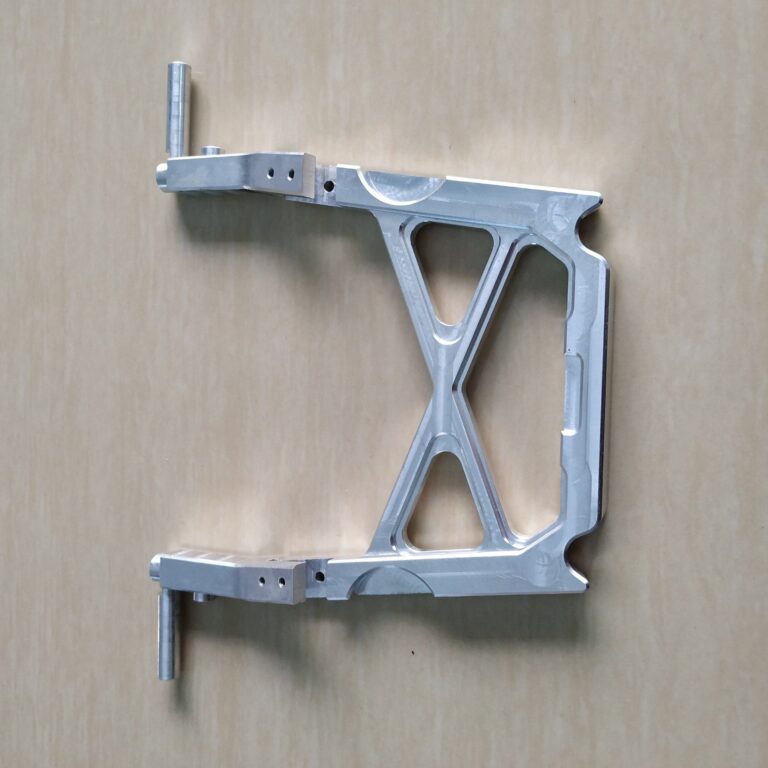
Lead time for this example: about 4 weeks door-to-door by air, including material, machining, anodising, inspection and freight. By sea, add 3–4 weeks and reduce the freight cost per piece.
Common mistakes buyers make
- Comparing part price, not landed cost. Freight, duty, bank charges and your inspection time are real.
- Sending a PDF only. A 3D model removes ambiguity; a PDF leaves the supplier guessing about the third view.
- No datum or tolerance callouts. “Make it accurate” is not a specification. Put the tolerance on the feature that matters.
- Approving a finish from a photo. Anodising colour changes with light, surface finish and voltage. Approve a physical sample.
- Skipping the FAI. A batch made before the first article is approved is a batch at risk.
- Choosing the lowest quote. The lowest quote often has the most assumptions. Ask what is excluded.
- Wrong Incoterm. EXW means you arrange export clearance; DDP means the seller pays duty. They are not the same landed cost.
- No NDA or subcontracting approval. The drawing can travel further than you think.
What GY does and does not do
We are a machining shop in Dongguan, not a marketplace. The work stays in one building or with partners we name. That is the part we can control.
What we do: 3-axis and 4-axis CNC milling, CNC turning, Swiss-type turning, sinker EDM, wire EDM through a long-term partner, and 35+ finishes through partner plants. We quote in about 16 hours, have no MOQ, and send a DFM note with the price. We machine aluminium, stainless steel, titanium, brass, copper and engineering plastics.
What we do not do: we are not ISO 9001 certified. We do not have 5-axis machining, a cleanroom, ISO 13485 or IATF 16949. We do not claim PPAP capability. If your part needs those, we will say so before you send a PO, not after.
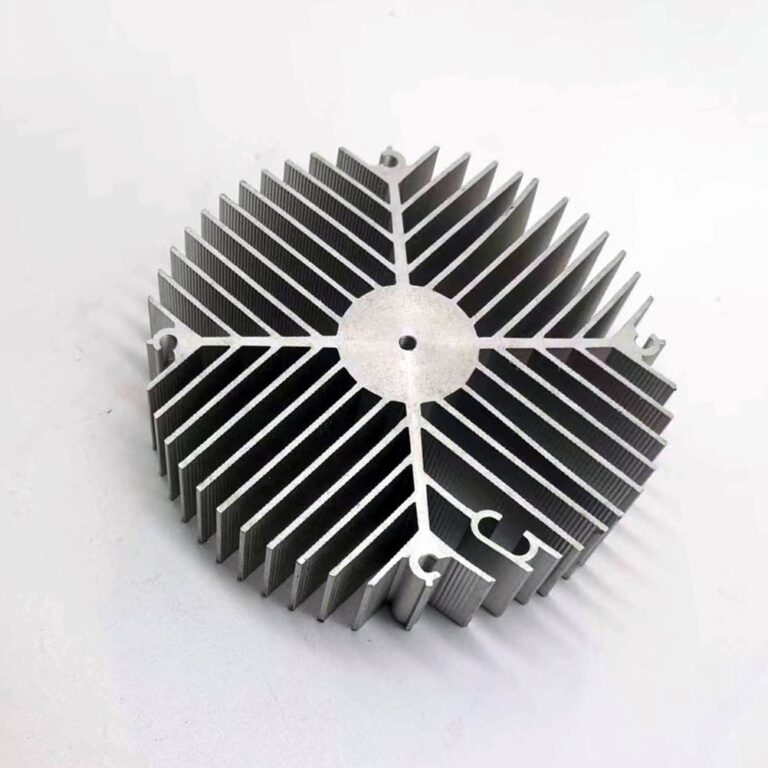
If you need a supplier who can prove a certificate we do not hold, we are the wrong shop. If you need a shop that will tell you what is expensive, what is ambiguous and what it cannot do, send the drawing.
What to send for a China CNC quote
- The 3D model (STEP) and the latest 2D drawing with the revision.
- Material and temper, or the application if you want a recommendation.
- Quantity now and annual volume.
- Critical tolerances and the datums; do not rely on general tolerance for a bearing fit.
- Surface finish and colour; a physical sample if cosmetic.
- Inspection requirement: FAI, CMM report, material cert, finish cert.
- Whether the part will be anodised or plated, so the pre-finish size can be adjusted.
- Shipping destination and Incoterm; ask for DDP if you want a landed comparison.
- Any IP or subcontracting restrictions.
- The date you actually need the parts, not the date you would like them.
FAQ
How much does CNC machining cost in China?
It depends on material, machining time, setup count, tolerance, finish and quantity. As a planning range, simple turned parts can be USD 3–12 per piece at 50–500 pieces; 3-axis milled housings can be USD 25–70; complex 4-axis parts can be USD 35–90. Tight tolerances, finishing and inspection add cost. Send a drawing for a real quote.
What is the minimum order at GY Machining?
There is no MOQ. We machine one part or 10,000. For a single prototype, programming and setup dominate the price; for a batch, material and cycle time dominate.
How long does CNC machining in China take?
A quote usually takes about 16 hours. Simple parts can be machined in 5–10 working days; complex parts with several setups can take 15–25 working days. Add 2–5 days for finishing, 1–2 days for inspection and packing, then 3–6 days by air or 25–35 days by sea.
Is Chinese CNC machining quality good?
It depends on the supplier, not the country. Ask for a first-article report, CMM data, material certificate and finish certificate. At GY, we are not ISO 9001 certified; we tell buyers that before the RFQ and let them decide whether our inspection process is enough.
How do I protect my IP when machining in China?
Sign an NDA before sending the drawing, send only the part data the quote needs, ask which operations are subcontracted, and require written approval before a third party sees the drawing. Control the revision in the filename and email subject. Prevention is cheaper than enforcement.
What payment terms are normal?
Most China machining orders use a deposit and a balance before shipment. The exact split, currency and bank charges should be on the proforma invoice. For repeat orders, terms can be agreed after a track record. Do not wire money to a personal account.
Can you ship DDP?
Yes, through a freight forwarder. DDP means the seller arranges carriage and pays import duty, so the price you see is closer to the landed cost. Compare DDP with your local landed cost, not with the ex-works price.
What can GY not do?
We do not have 5-axis machining, a cleanroom, ISO 9001, ISO 13485 or IATF 16949. We do not claim PPAP capability. Wire EDM is through a partner plant. If your part needs any of these, tell us early and we will say whether we can help.
Related reading
- CNC machining in China: the service page
- China vs local CNC machining: cost, lead time and risk
- CNC machining cost in China: 2026 price guide
- Incoterms for CNC parts: EXW, FOB, DAP and DDP
- 12 checks before you choose a CNC supplier
- How to read a first article inspection report
- Custom CNC parts from China: RFQ to delivery