
Every week a drawing arrives for a small turned part, a stainless pin or a brass fitting or a titanium standoff, with a note asking whether it should be “Swiss machined”. Sometimes the answer is yes and the price drops. Sometimes the answer is no and the price would have gone up. This is how we decide, and how you can decide before you ask.
What a Swiss-type lathe actually does differently
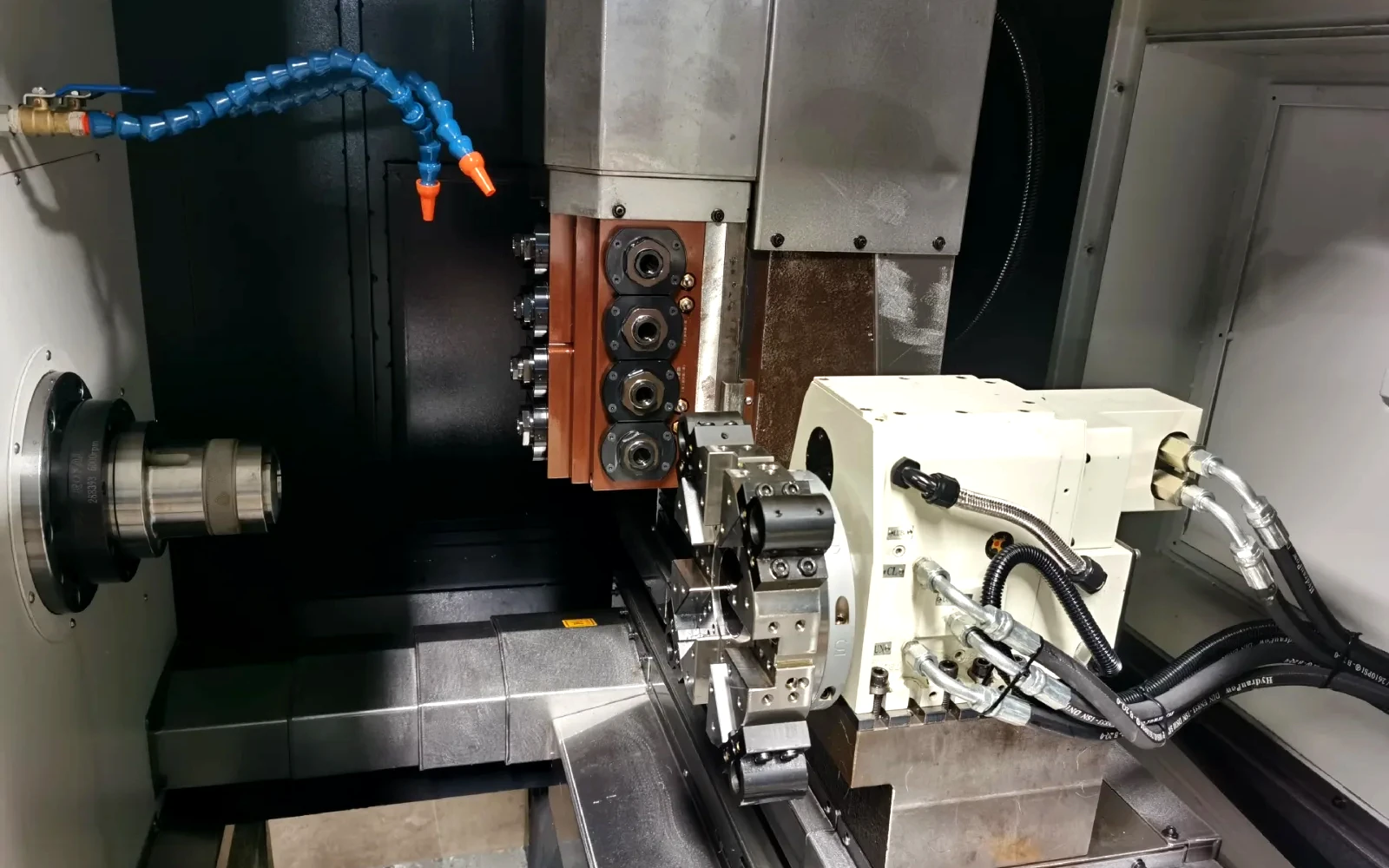
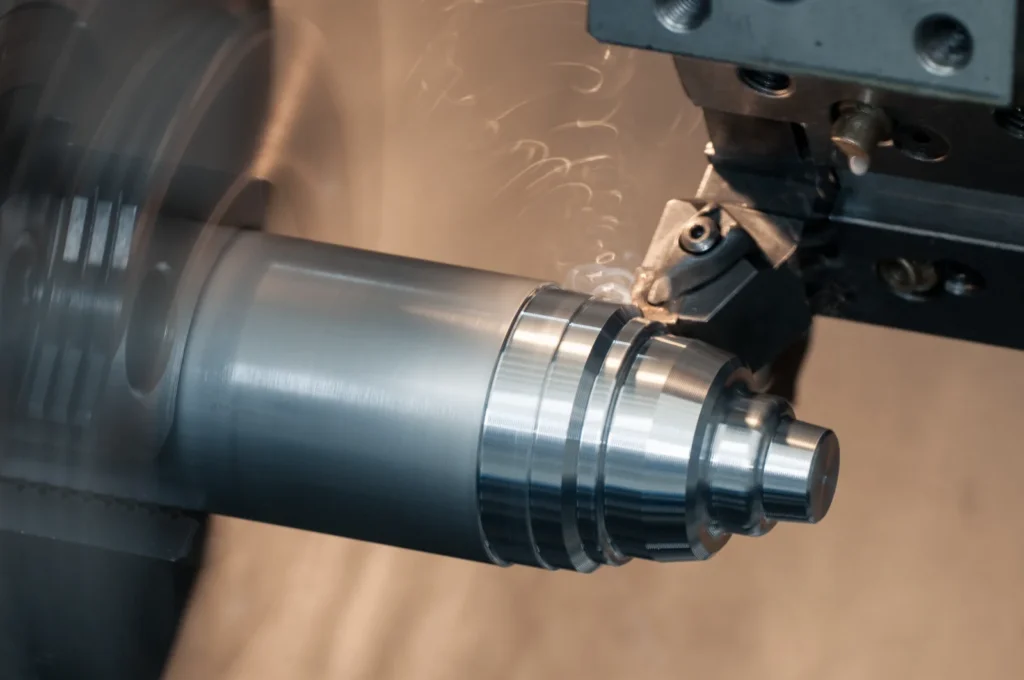
On a conventional CNC lathe the bar is held in a chuck or collet and the tool moves along it. The further the tool works from the chuck, the more the bar flexes, which is why long thin parts come off conventional lathes tapered, chattered, or in two setups.
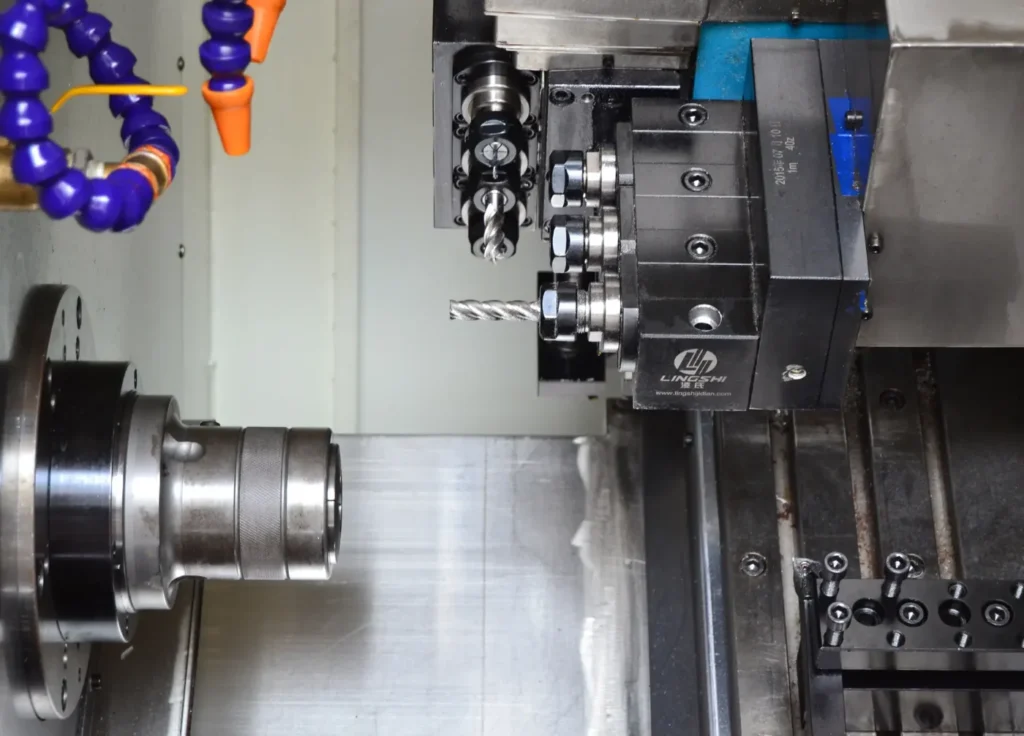
On a Swiss-type (sliding-headstock) lathe the headstock itself moves. The bar passes through a guide bushing and the cutting always happens a few millimetres from that bushing, so the material is supported at exactly the point where the force is. Diameter, straightness and surface finish stop depending on how far down the bar you are. Add live tools for cross holes, flats and slots, and a sub-spindle to finish the back of the part, and a complete part drops into the catcher every cycle with nobody touching it.
We run ten Swiss-type machines, from Ø1 mm up to Ø25 mm bar, alongside eight chucking CNC lathes that take work up to Ø250 mm and four cam-type automatic lathes for the simplest small brass parts. Having all three in the same building is what lets us put a part on the right machine instead of the one we happen to own.
When Swiss wins
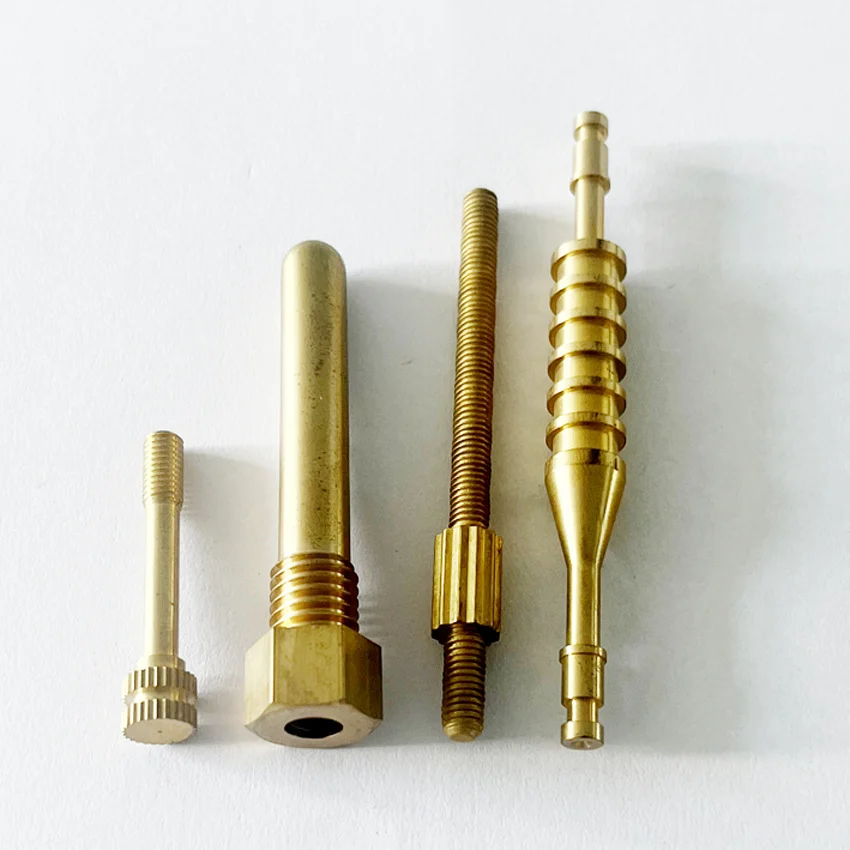
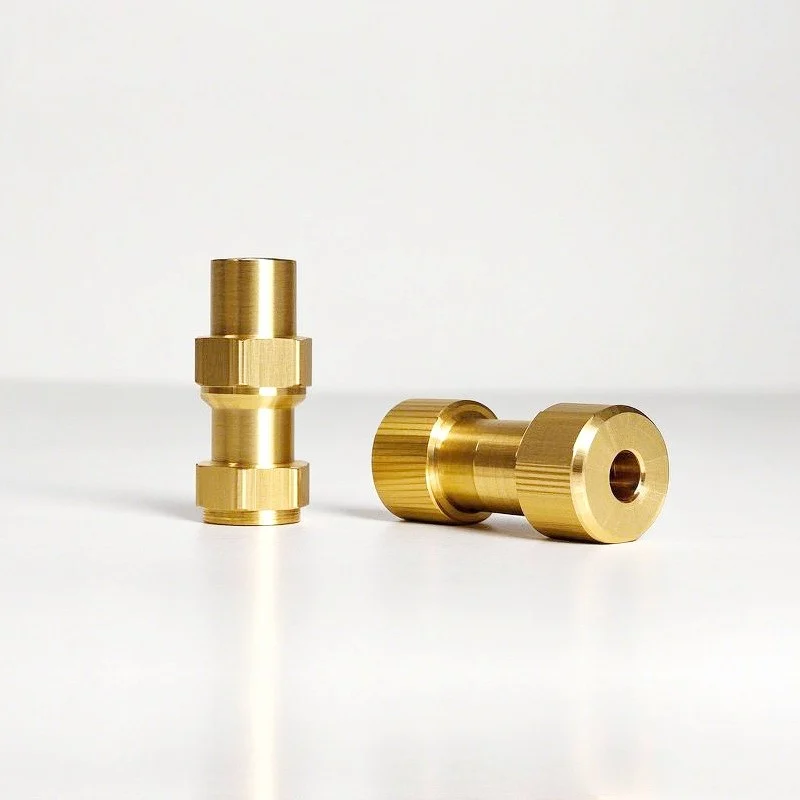
- Diameter up to 25 mm and a length more than about three times the diameter. This is the shape a conventional lathe struggles with and a Swiss lathe was built for: pins, shafts, probes, standoffs, nozzles, valve stems, medical and instrument components.
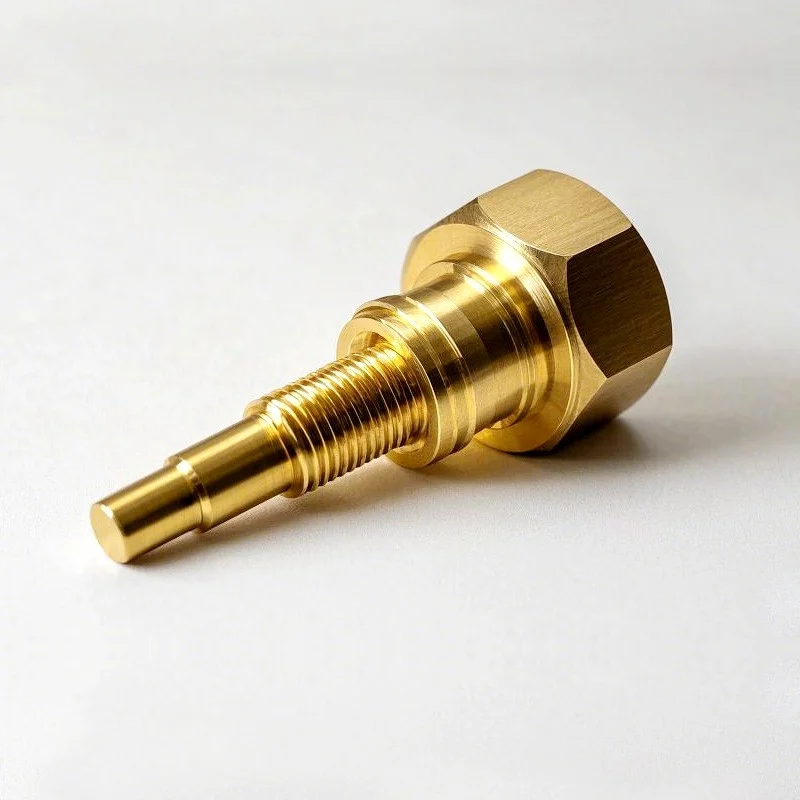
- Several operations on one part. A turned body with a cross-drilled hole, a milled flat and a thread on the back end is three setups on a chucker and one cycle on a Swiss. Each setup you remove takes handling time, a chance to lose concentricity, and money out of the price.
- Quantity. The bar feeder runs unattended, so the per-part price keeps falling as the batch grows in a way it does not on a manually loaded chucker. From a few hundred pieces upward the difference is usually obvious on the quote.
- Tight, repeatable diameters. Because the cut always happens at the guide bushing, piece 1 and piece 2,000 measure the same. We hold ±0.01 mm as our general tolerance; on a long run of small diameters, Swiss is how we hold it without inspecting every piece.
- Difficult materials in small sizes. Titanium, 316 stainless and PEEK are all easier to turn well when the material cannot deflect away from the tool.
When a conventional lathe is cheaper
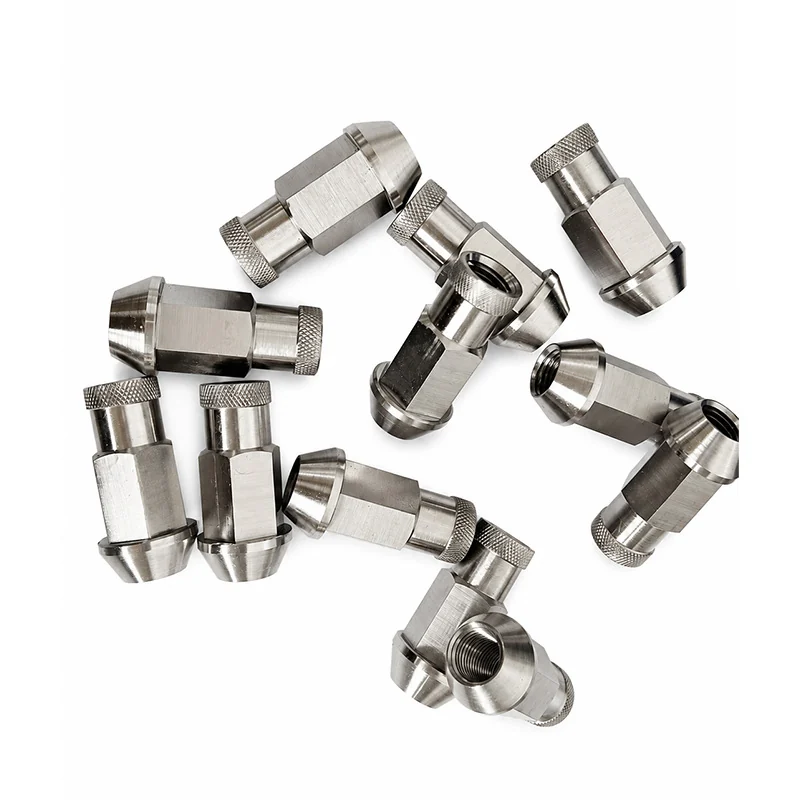
- Short, large-diameter parts. A Ø60 mm flange that is 12 mm thick has no business on a Swiss machine. It is a chucker part, and above Ø25 mm it cannot go through our guide bushings anyway.
- One to a handful of pieces. Swiss setup is slower: the guide bushing has to match the bar, the bar has to be prepared, and the program for a done-in-one part takes longer to prove. For a prototype pair, a chucking lathe and a second setup is often the cheaper route, and we will quote it that way.
- Material only available as cut blanks or odd stock. Swiss machines eat bar. If the part is made from a casting, a forging, a plate offcut or a customer-supplied blank, it is a chucker job.
- Loose tolerances on a simple shape. If a part is a plain turned sleeve with a ±0.1 mm tolerance, the Swiss machine’s accuracy is wasted, and the extra setup is pure cost.
The cost line nobody shows you: bar stock
Swiss machines need bar that is straight and close to size, because the guide bushing is set to the bar diameter. That usually means ground or precision-drawn bar rather than the hot-rolled stock a chucker shrugs off. On brass and aluminium the difference is small. On titanium and some stainless grades it is real money, and on a small batch it can be the line that decides which machine wins. Ask for the material to be shown as its own line on the quote, so you can see whether the saving in cycle time is being eaten by the cost of the bar.
Where the cam-type automatics fit
Below Swiss there is one more step down in cost. For the simplest small brass parts, plain turned pins, bushes, contacts and fittings with no cross features, we run cam-type automatic lathes. They are not programmable in the CNC sense; they are set up once with cams and then run very fast and very cheaply for as long as the batch lasts. If your part is small, simple and brass, and the quantity is in the thousands, ask whether it qualifies.
| Part looks like this | Usual machine | Why |
|---|---|---|
| Ø1–25 mm, long and thin, several features, hundreds or more | Swiss-type | Supported cut, done in one, runs unattended |
| Ø1–25 mm, simple turned shape, one or two pieces | Chucking lathe | No bar preparation, faster setup |
| Over Ø25 mm, short and wide | Chucking lathe | Will not pass the guide bushing; chucker is the right tool |
| Small simple brass part, thousands | Cam-type automatic | Cheapest per piece once set up |
| Made from a casting, forging or supplied blank | Chucking lathe | Swiss machines need bar |
How to get the right machine on the quote
You do not need to specify the machine; you need to give us what decides it. Send the STEP file and drawing, the material, the quantity now and the likely quantity per year, and mark the diameters and lengths that actually matter. If a feature could be dropped or loosened to let the part run as a single Swiss cycle, the quote will say so, because that is usually the single biggest saving available on a small turned part.
We turn brass, stainless, aluminium, titanium and engineering plastics in Dongguan, China, on Swiss-type, chucking and cam-type lathes, with milling and EDM in the same building. See the turning capability, or send a drawing for a quote and we will tell you which machine it belongs on and why.
A worked example: stainless pin, 5,000 pieces
The part is a 316 stainless pin, Ø6 × 60 mm, with a Ø2 cross-hole 8 mm from one end, a chamfer at both ends and a short M4 thread on the back. Quantity: 5,000. The drawing allows ±0.02 mm on the diameter and a position tolerance of 0.05 mm on the cross-hole.
On a chucker: turn the diameter and the thread in one setup, then a second setup on a mill for the cross-hole. The second setup needs a fixture, a probe or a pin to locate the hole, and an inspection. The per-part cycle is short, but the handling and the second setup make the price sensitive to quantity.
On a Swiss-type: bar feed, guide bushing, turn, cross-drill, thread and part off in one cycle. The bar is supported at the cut, so the Ø6 diameter stays straight over the 60 mm length. The cross-hole position is set by the programme, not by a fixture. At 5,000 pieces, the unattended bar feed and the removed second setup usually make Swiss the lower total cost, even though the machine rate is higher.
The break-even is not a fixed number. At 200 pieces, the chucker may still win because the Swiss setup and bar preparation take longer. At 2,000–5,000 pieces, the Swiss route usually pulls ahead. Ask for both prices at your real quantity; the answer changes with the batch.
Bottom line
Swiss-type turning wins on long, slender parts and on parts that combine turning, cross-holes, flats and a back-end thread in one cycle. It is not automatically cheaper for a short, large-diameter part or a handful of prototypes. Send the drawing with the annual quantity; we run 10 Swiss machines from Ø1 to Ø25 mm and eight chucking lathes up to Ø250 mm, so we can quote the right route instead of the one we prefer.
Common Swiss-turning mistakes
- Putting a short, large-diameter part on a Swiss machine. Above Ø25 mm it will not go through the guide bushing, and the setup is wasted.
- Ignoring quantity. Swiss setup is slower; at a handful of parts, a chucking lathe can be cheaper.
- Assuming the material is available as bar. Swiss machines eat bar. A casting, forging or plate offcut is a chucker job.
- Turning a long slender part on a chucker. The bar deflects away from the tool; the part comes off tapered or chattered.
- Not planning cross-features. A cross-hole or flat can turn a one-cycle Swiss part into a two-setup job if the live tooling is not considered at the quote.
Before you ask for a Swiss quote
- Diameter and overall length.
- Cross-holes, flats and back-end features.
- Quantity now and annual volume.
- Material form: bar, blank or casting.
- Critical diameters and threads.
- Bar size available from the mill.
FAQ
When should a part be Swiss machined?
When the diameter is under 25 mm and the length is more than about three times the diameter, or when the part needs cross-holes, flats or a back-end thread in one cycle. Long, slender parts are where the guide bushing pays for itself.
Is Swiss turning more expensive for small quantities?
Often yes. Setup is slower because the guide bushing must match the bar and the done-in-one programme takes longer to prove. For a handful of simple parts, a chucking lathe can be cheaper.
What diameter range can you run?
Ø1 mm to Ø25 mm bar on our Swiss-type machines. Larger work goes on the chucking lathes, up to Ø250 mm.
Can you hold ±0.01 mm on a long run?
Yes, on small turned diameters. The guide bushing keeps the cut close to the support, so piece 1 and piece 2,000 measure the same without inspecting every part.
Do you have Swiss-type machines in-house?
Yes, ten, alongside eight chucking CNC lathes and four cam-type automatics. Having all three lets us put the part on the right machine rather than the one we happen to own.