
CNC Machining Polysulfone
Polysulfone is the transparent amber plastic that takes hot water, steam and repeated autoclaving without clouding or cracking. It sits between polycarbonate and PEEK on both temperature and price, which is why it turns up in sterilisable medical parts, hot-water valves and fittings, food-processing equipment and membrane housings. PPSU is its tougher cousin; both machine well from sheet and rod.
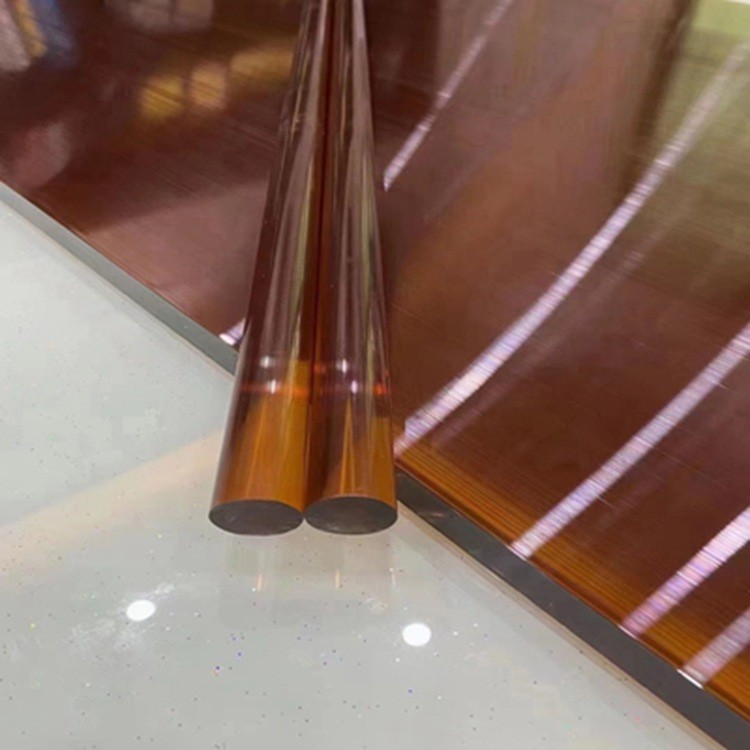
Grades and forms
Three sulfone polymers, close relatives with different limits. Say which the application calls for.
| Form / grade | Best for | Notes |
|---|---|---|
| PSU (polysulfone, e.g. Udel) | Hot-water and steam parts, medical, food, membranes | Transparent amber, autoclavable, good dielectric; the everyday grade |
| PPSU (polyphenylsulfone, e.g. Radel) | Reusable surgical instruments, sterilisation trays, aircraft interiors | Far tougher, higher temperature, survives thousands of autoclave cycles |
| PES (polyethersulfone) | Higher-temperature transparent parts | Slightly higher heat resistance than PSU, less impact resistance |
| Medical / food grades | Anything that contacts the body or food | USP Class VI and FDA-compliant grades exist; name the one the file needs |
| Sheet, rod, tube | Plates and manifolds from sheet, turned parts from rod | Thick sections benefit from annealing before finish machining |
Cuts like polycarbonate, then stays clear in the autoclave
Polysulfone machines much as polycarbonate does: sharp carbide, moderate speeds, a light coolant, and a crisp transparent edge. It is stiffer than PC and holds bores and threads well. PPSU is slightly tougher under the cutter and gives a similar finish.
Internal stress is the point to watch. Extruded stock is stressed, and a part with tight tolerances or heavy stock removal is roughed, annealed and finished. We anneal again after machining for parts that will be autoclaved, so they do not move in the first sterilisation cycle.
Like every amorphous transparent plastic, polysulfone stress-cracks in the wrong solvents — ketones, esters and chlorinated solvents in particular. Tell us how the part will be cleaned; alcohols and most hospital cleaners are fine.
| At a glance | |
|---|---|
| Service temperature | PSU around 150 °C continuous; PPSU around 180 °C |
| Sterilisation | Steam autoclave, repeated cycles; also EtO and gamma |
| Optical clarity | Transparent amber; stays clear in hot water where polycarbonate clouds |
| Weakness | Sensitive to ketones and chlorinated solvents; moderate UV resistance; notch-sensitive at sharp corners |
| Typical parts | Sterilisation trays and instrument handles, hot-water valves and fittings, membrane and filter housings, food-processing parts, manifolds, sight glasses, electrical insulators |
Four rules for a polysulfone part that lasts
Radius internal corners
Sulfones are notch-sensitive. R0.5 minimum in every internal corner and a chamfer on every edge that meets a seal or a hand.
Call out annealing for tolerance and for the autoclave
If the part is toleranced below ±0.05 mm or will be steam sterilised, say so, and we will put stress relief before and after machining.
Choose PPSU when cycles count
PSU is fine for hot water and occasional sterilisation; a reusable instrument that sees the autoclave every day belongs in PPSU.
Keep ketones and chlorinated solvents away from it
Polysulfone is strong and takes steam, but it stress-cracks with acetone, MEK and many chlorinated cleaners. Check the cleaning process as carefully as the service condition.
Ready for a quote?
Send the drawing — price and lead time within 16 hours. STEP, IGES, X_T, DWG, DXF or PDF.
No minimum order.