
CNC Machining PEEK
PEEK is the plastic you choose when nothing cheaper survives. It holds its properties at temperatures that destroy acetal and nylon, resists almost every chemical it meets, is biocompatible in the right grade, and is stiff enough to replace metal in some assemblies. It is also, by a wide margin, the most expensive material on this website, and that changes how a part should be designed.
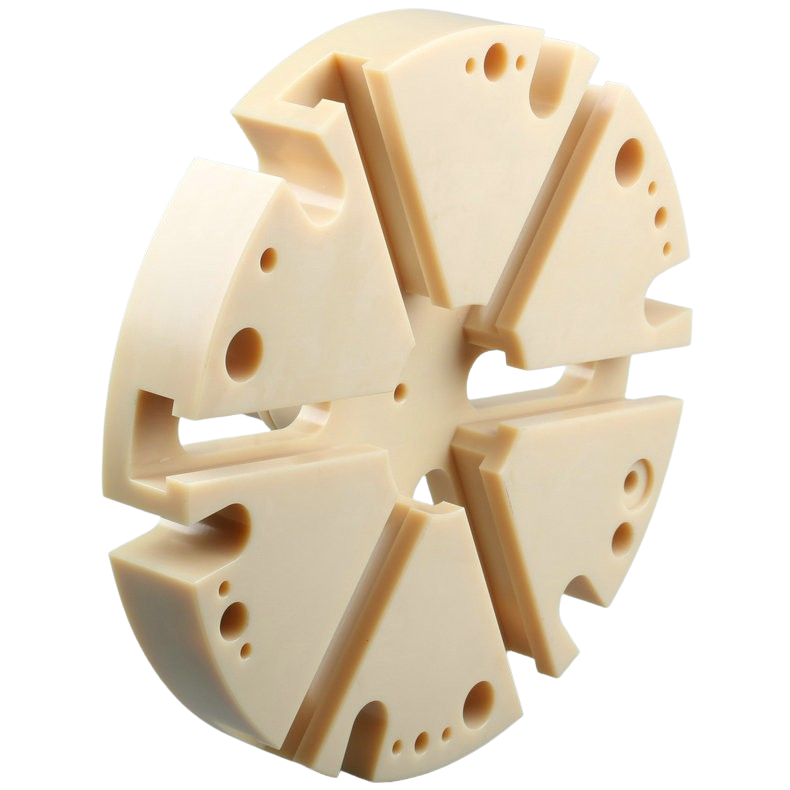
Grades we machine
The filled grades are not interchangeable with unfilled PEEK — they buy stiffness or wear resistance and give up toughness or purity.
| Grade | Best for | Notes |
|---|---|---|
| Unfilled PEEK (natural or black) | General high-temperature and chemical parts, medical, semiconductor | The baseline; tough and machinable, best purity |
| 30% glass-filled | Stiffness and dimensional stability at temperature | Abrasive to tooling, less tough, not for sliding against soft counterfaces |
| 30% carbon-filled | Stiffness, better thermal conductivity, lower expansion | Also abrasive; electrically conductive, which matters in some applications |
| Bearing grade (carbon, PTFE, graphite) | Sliding and wear parts at temperature | Self-lubricating; the usual choice for high-temperature bushings |
| Medical and implantable grades | Surgical and implant components | Supplied with full traceability; specify the grade explicitly |
Machines well, but it is the stock that costs
PEEK cuts predictably with sharp tooling and does not fight the machine the way titanium does. It does need care with heat — it is a plastic, and the heat of cutting stays in the cut — so speeds are moderate, tooling is kept sharp and chips are cleared continuously.
The engineering decision that matters is stock size. Because the material is expensive per kilo, the difference between a part machined from a near-net section and the same part carved out of an oversized block is a real number on the quote. Sending us the finished geometry early enough that we can buy the right stock is worth more than any process improvement we could make.
Filled grades are abrasive and wear tooling faster, so a glass-filled part costs more to machine than an unfilled one even though the material price is similar. If the stiffness is not needed, unfilled is cheaper twice over.
| At a glance | |
|---|---|
| Service temperature | Around 250 °C continuous |
| Chemical resistance | Excellent across most acids, bases and solvents |
| Machinability | Good for a high-performance plastic; filled grades wear tooling |
| Cost | The highest of any material here — design around stock size |
| Typical parts | Semiconductor handling parts, medical components, seals, valve parts, high-temperature bushings |
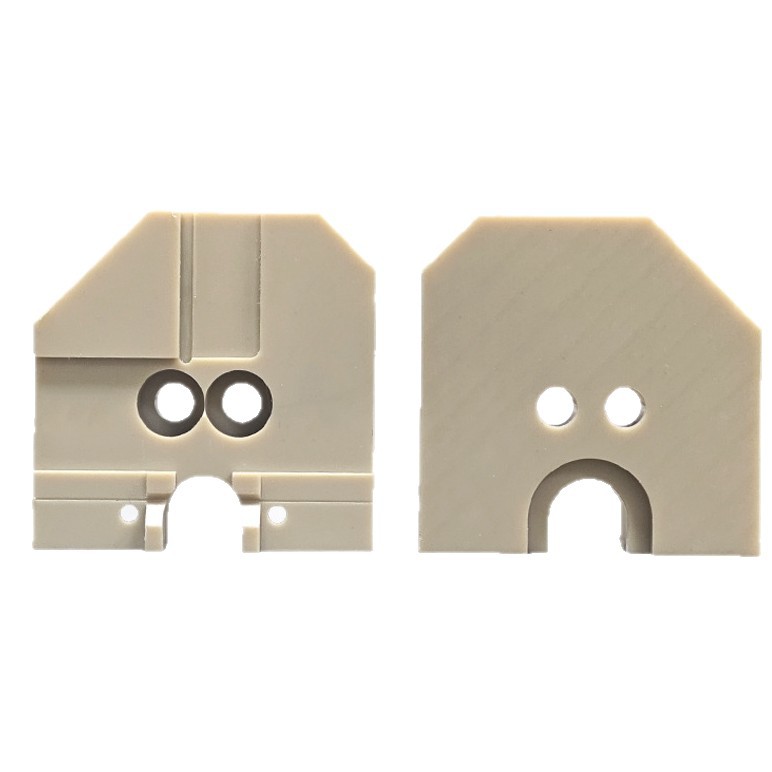
PEEK end plates, on the machine
Filmed in our shop in Dongguan. The clip and the photo are the same part — the plates on the right are what the machine is cutting.
Four ways to make a PEEK part cost less
Design to a stock size
Tell us the finished envelope early and we will buy the closest section available. On PEEK this single decision often outweighs everything else on the quote.
Only specify filled grades when you need them
Glass and carbon fill buys stiffness and costs tool life. Unfilled PEEK is cheaper to buy and cheaper to cut.
Ask whether PPS would do
If the service temperature is around 200 °C rather than 250 °C, PPS may survive the job at a fraction of the material cost. We will raise it if the drawing looks like a candidate.
Say whether it is used as machined or stress relieved
Stock carries internal stress. A thin or tightly toleranced PEEK part usually needs relieving between roughing and finishing; if yours does not, say so and that step comes out of the price.
A PEEK plate being finish-milled on a three-axis machine. The comb of thin fins is the hard part of this job: PEEK is stiff enough to hold the shape, but it holds heat, so the cut has to keep moving and the coolant has to reach the tool. On most PEEK parts the bar stock costs more than the machining time.
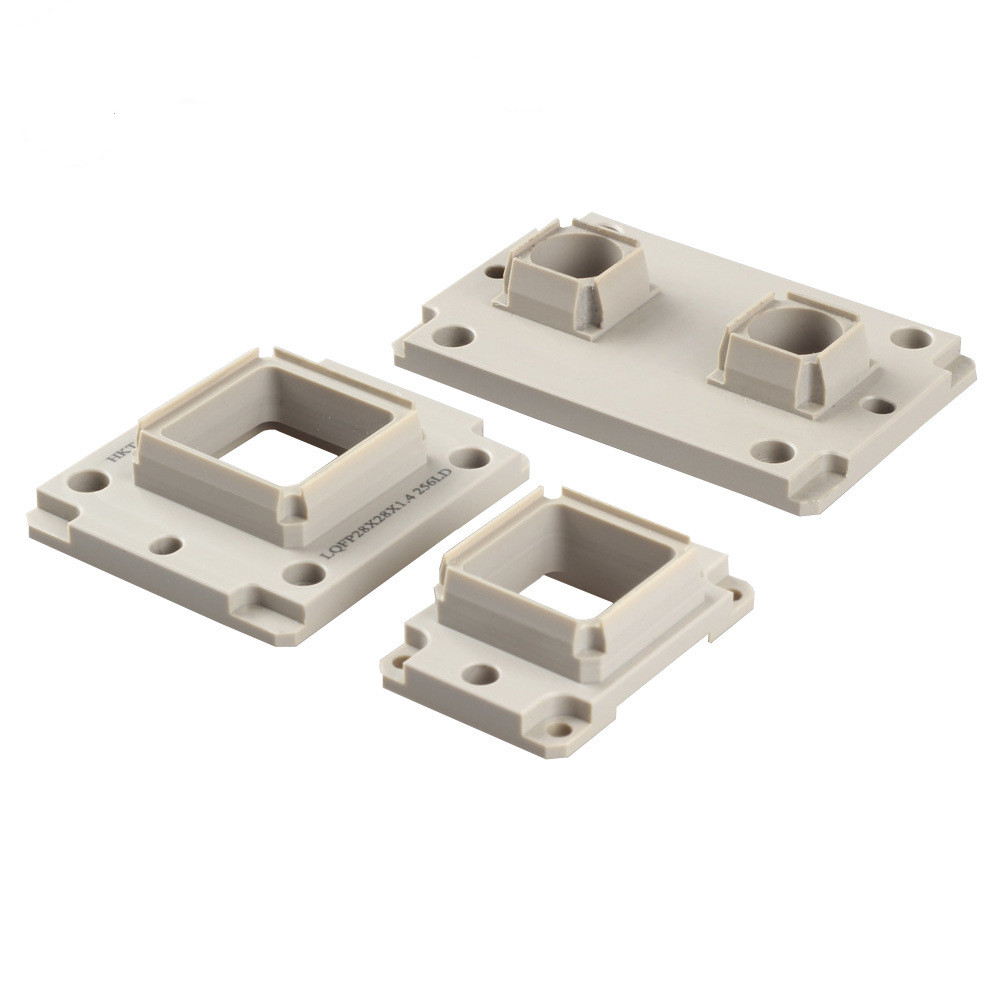
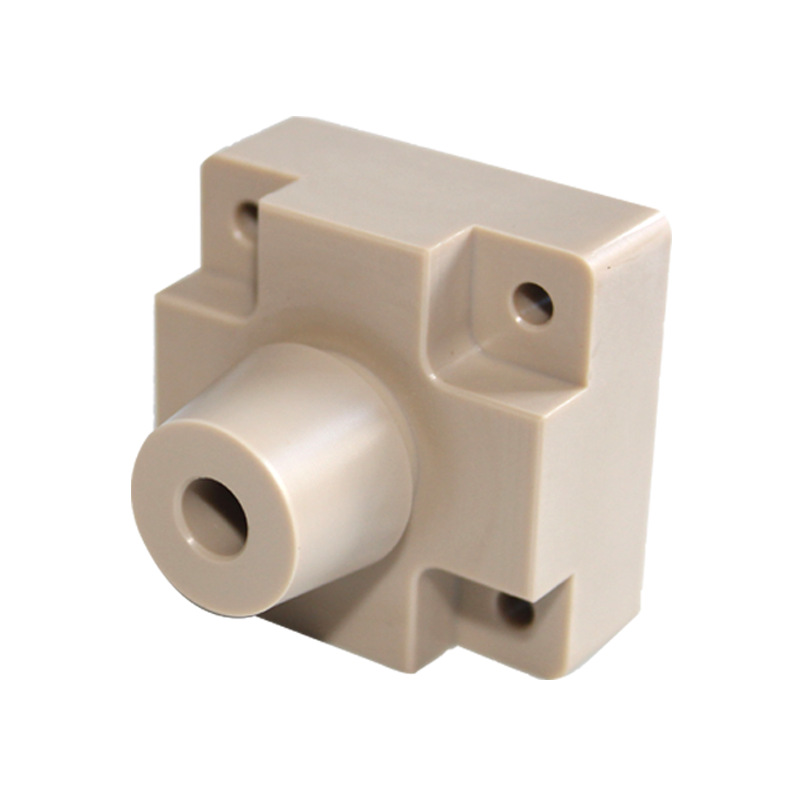
CNC machined PEEK parts
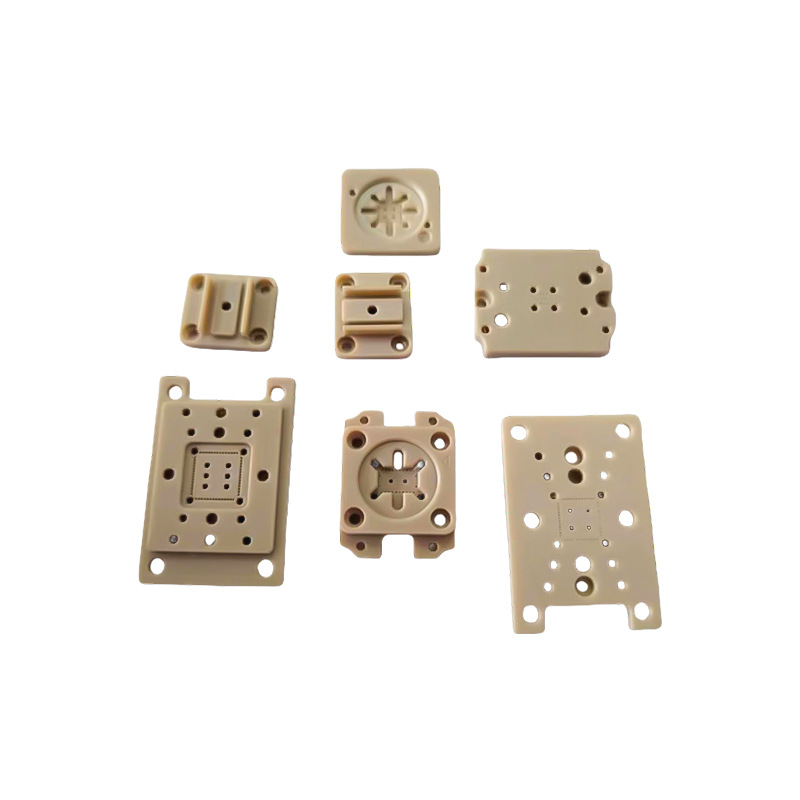
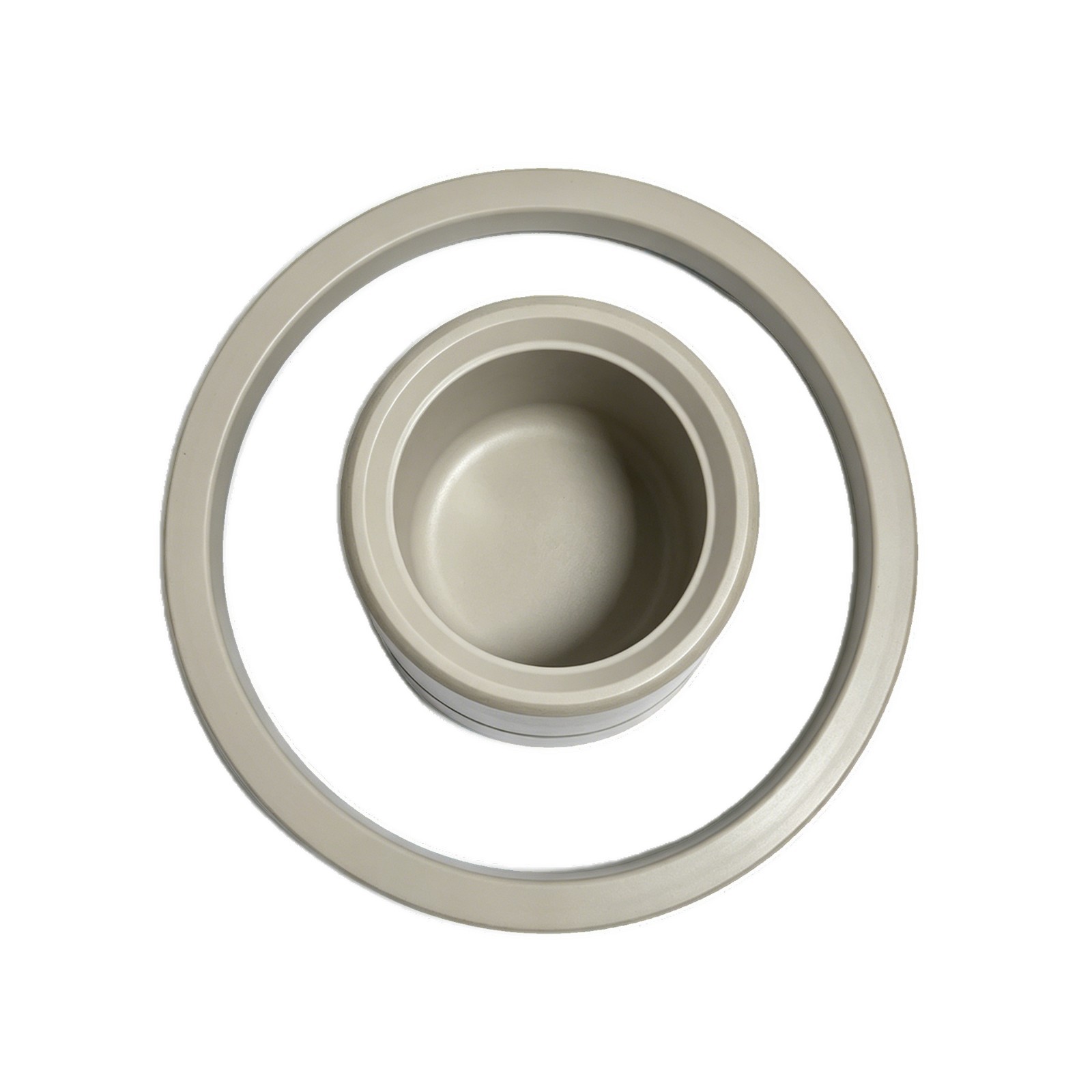
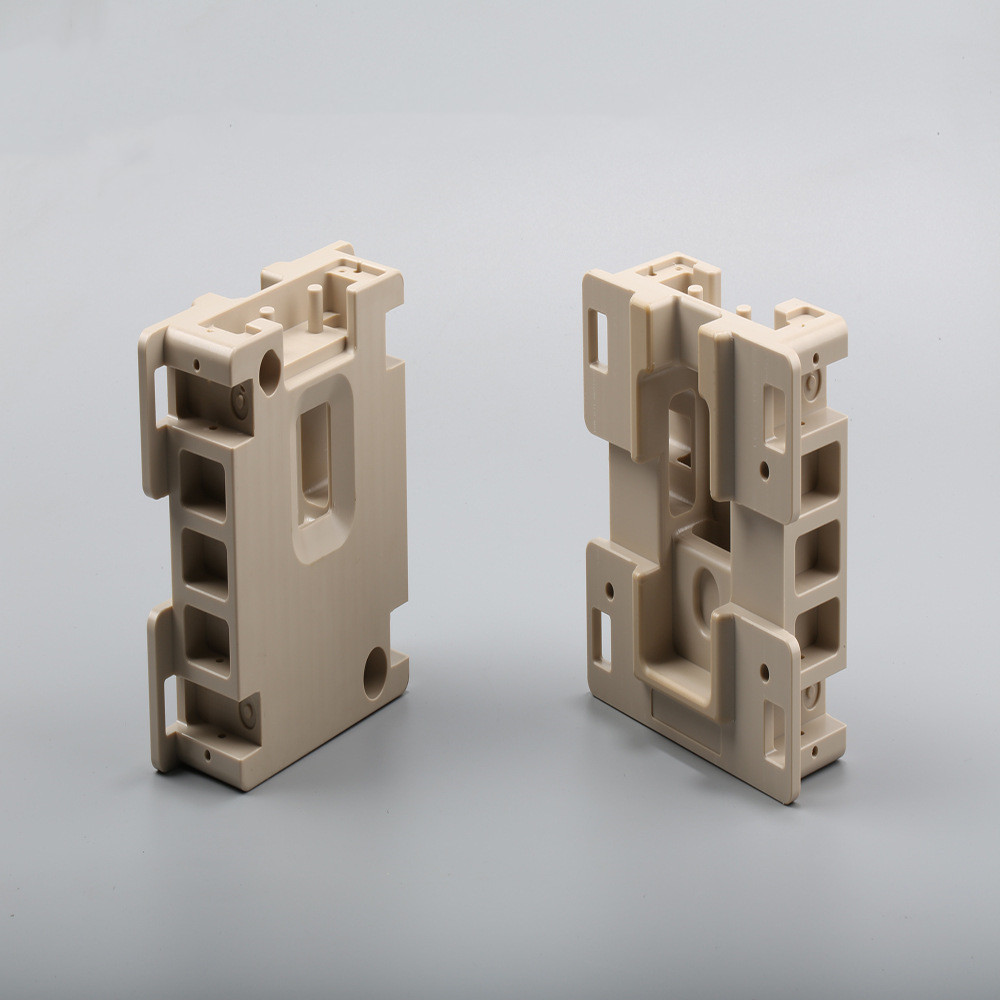
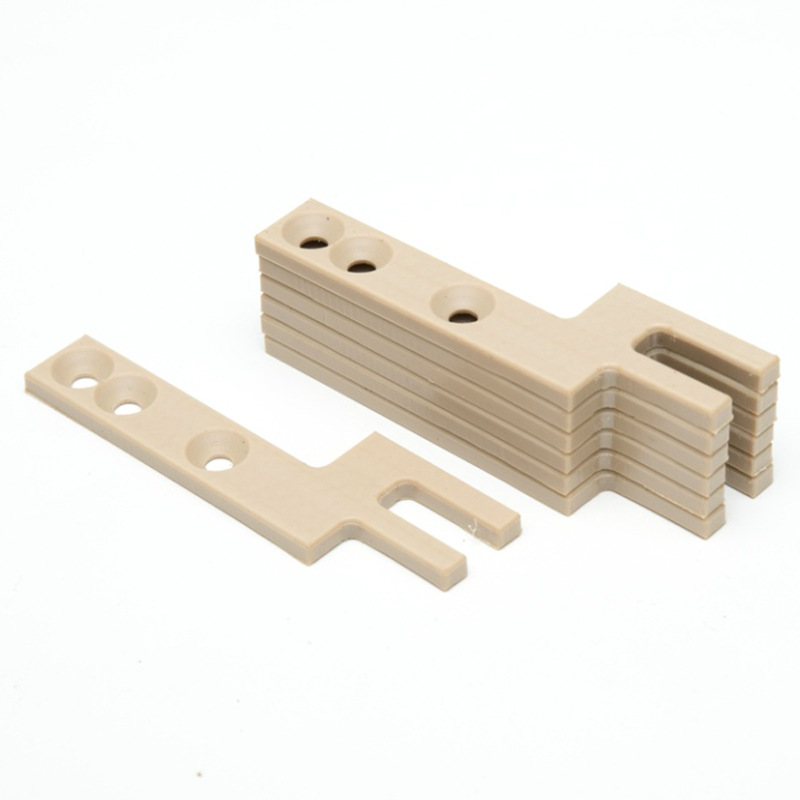
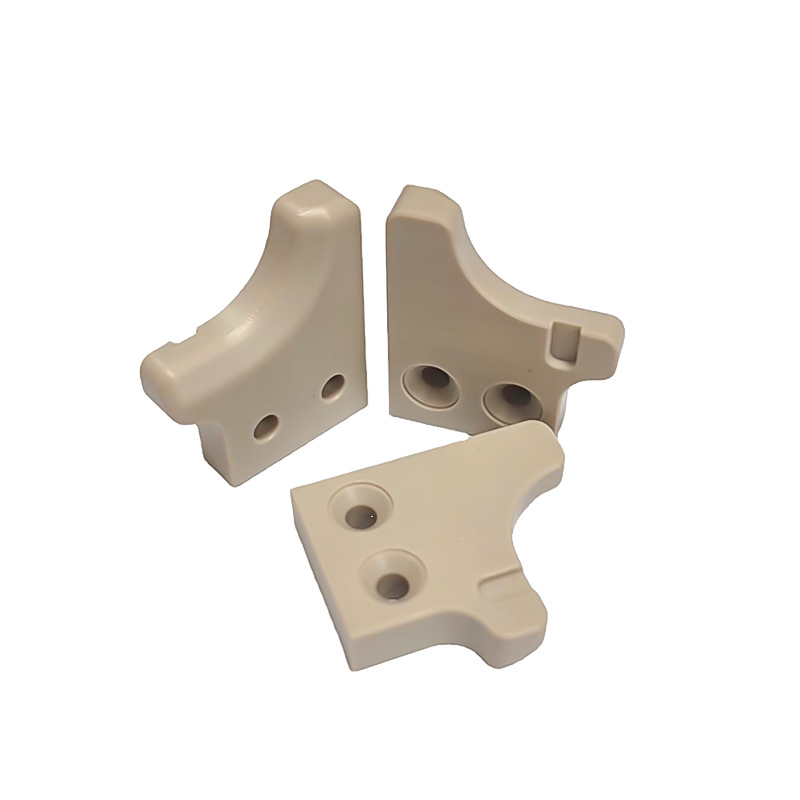
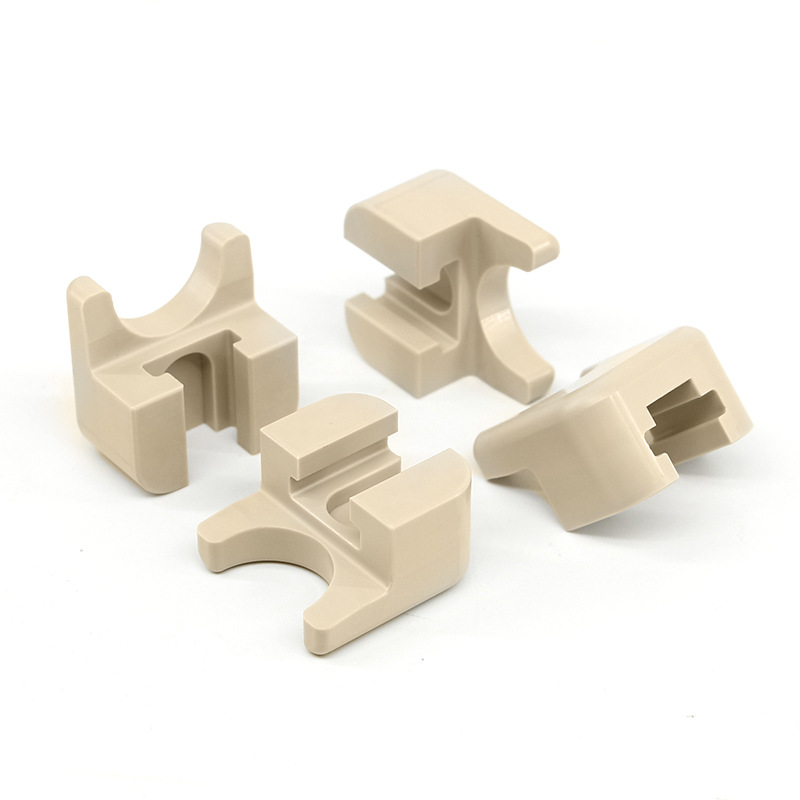
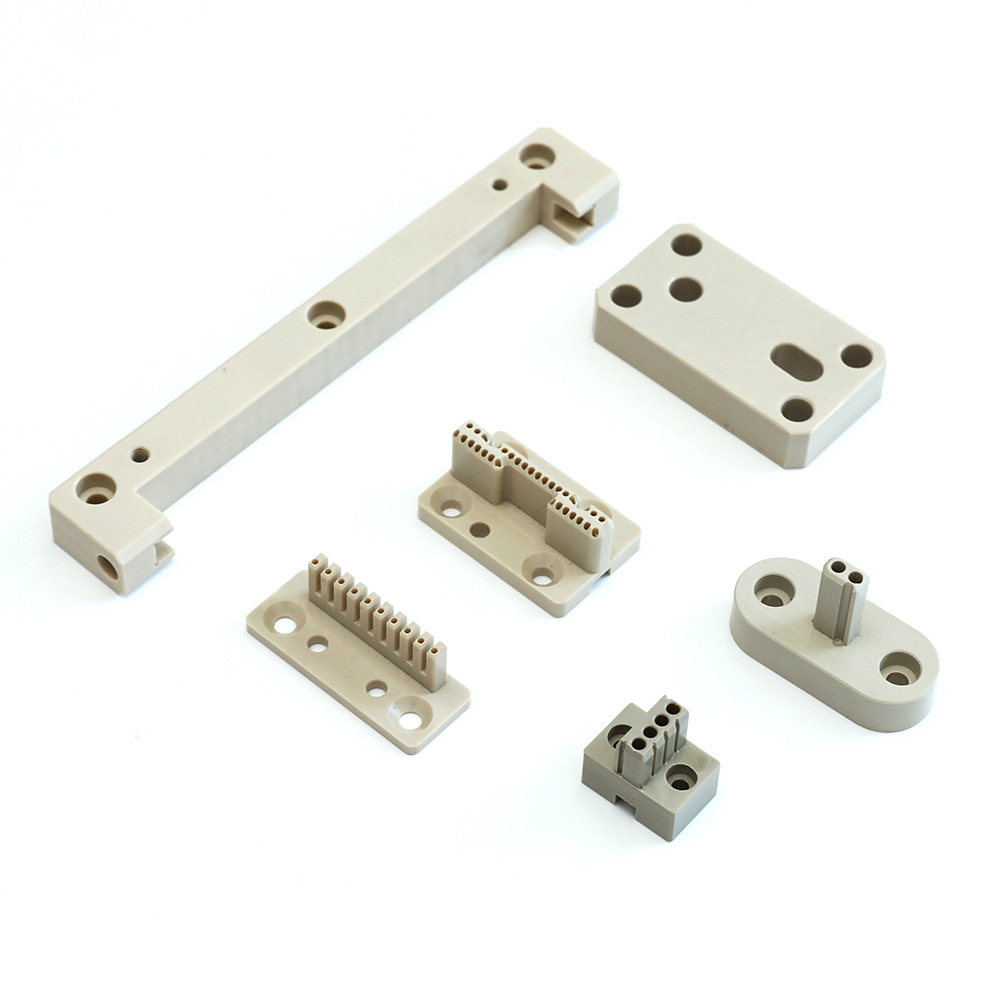
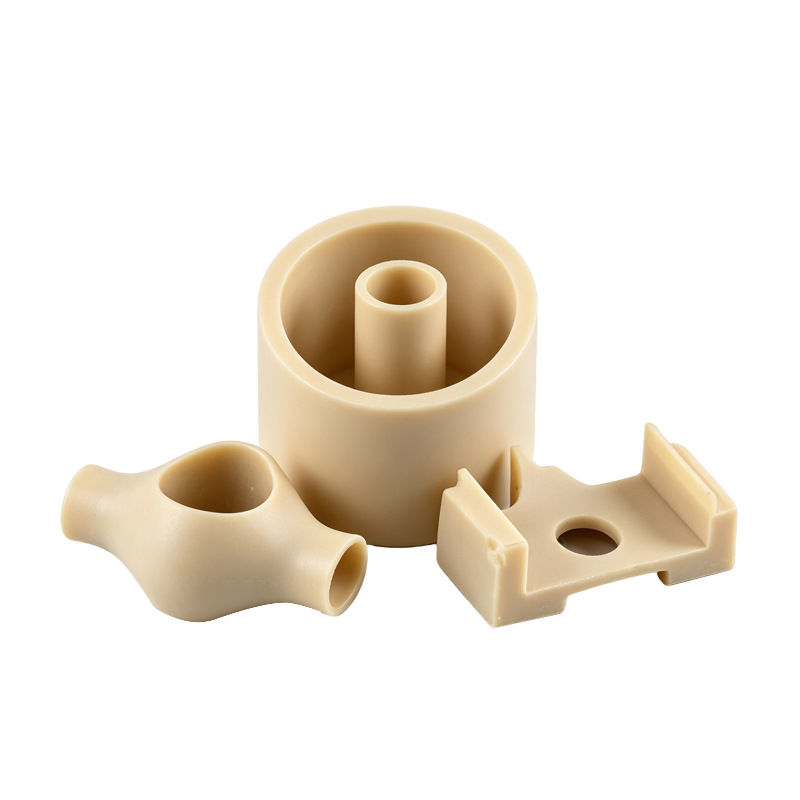
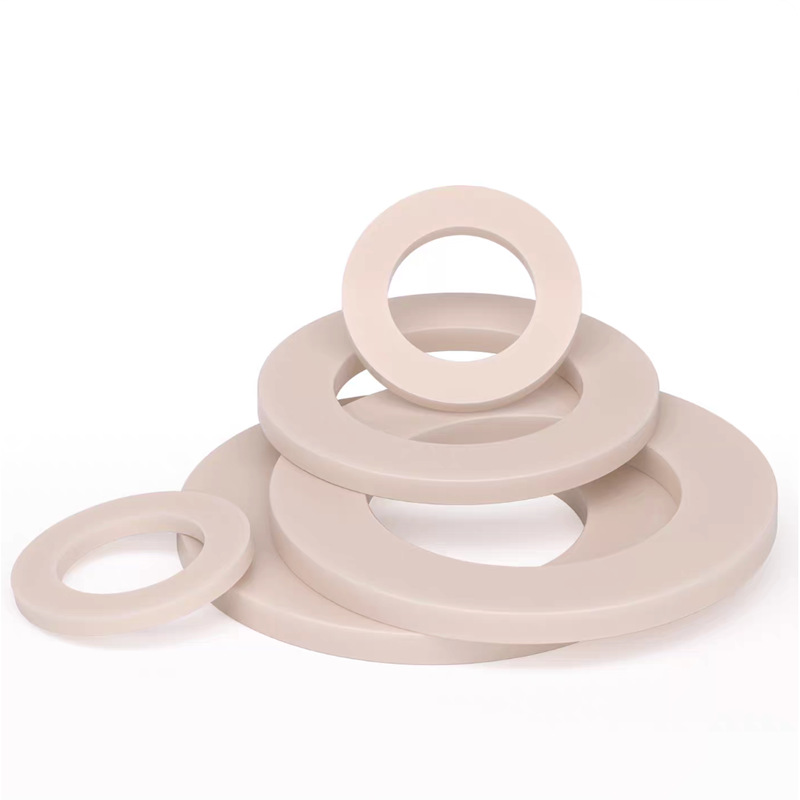
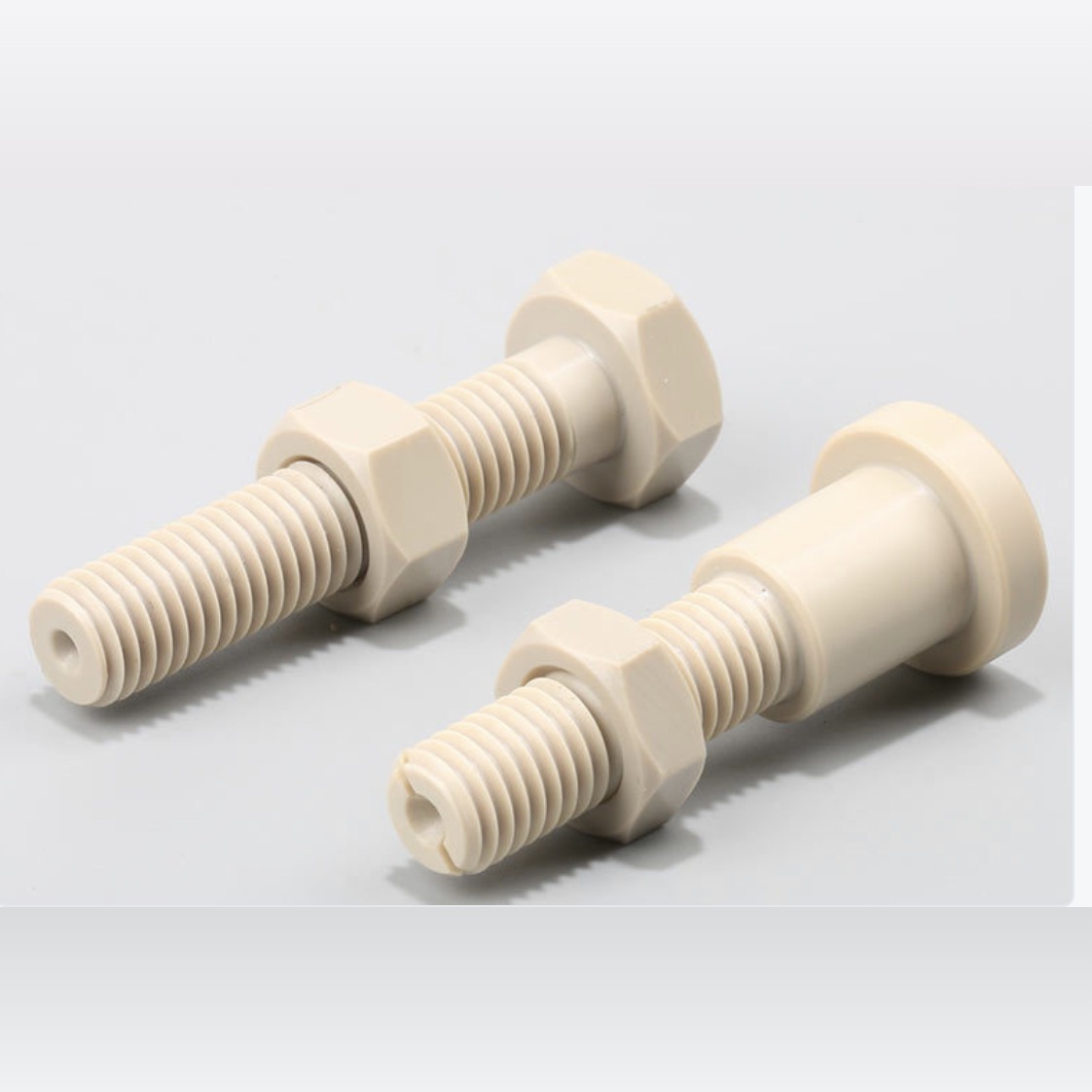
Seal rings, bushings, insulators, manifold blocks and test-fixture parts — machined from PEEK rod and plate. It keeps its strength hot and cuts cleanly; the cost sits in the stock, so nesting and scrap matter more here than cycle time.
Ready for a quote?
Send the drawing — price and lead time within 16 hours. STEP, IGES, X_T, DWG, DXF or PDF.
No minimum order.