
CNC Machining Polystyrene
Polystyrene is the low-cost sheet material of model shops, displays and prototypes. General-purpose PS is clear and brittle; high-impact PS (HIPS) is opaque, tougher and the grade almost everyone actually machines. It is not an engineering plastic and we will say so when a drawing would be better served by acrylic, ABS or polycarbonate — but for quick, cheap, good-looking parts it has its place.
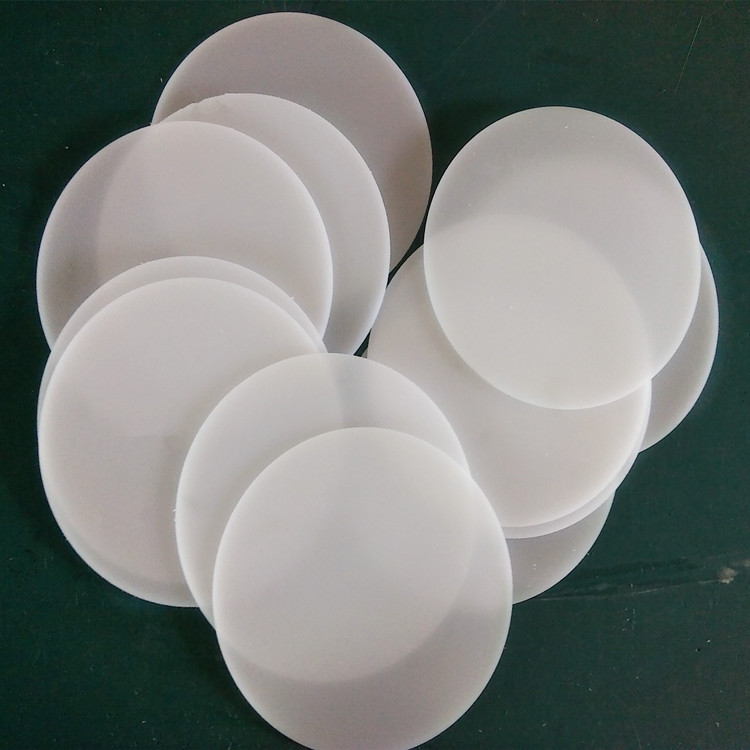
Grades and forms
Two grades matter. Say which, because they behave very differently in the machine.
| Form / grade | Best for | Notes |
|---|---|---|
| GPPS (general-purpose, crystal) | Clear covers, light guides, prototypes of clear parts | Glass-clear and cheap, but brittle: cracks at sharp corners and under drilling |
| HIPS (high-impact) | Housings, display parts, vacuum-formed and machined prototypes | Opaque white or coloured, tougher, machines cleanly, takes paint well |
| Frosted / diffuser sheet | Light diffusers, signage | Textured or matte surface; keep protective film on until delivery |
| Sheet 1 – 25 mm | Almost all machined PS is cut from sheet | Thick block is uncommon; for thick clear parts, acrylic is the practical choice |
Cuts fast, chips at the edge, cracks at the corner
Polystyrene machines quickly with sharp tooling and moderate feeds. GPPS chips at edges and cracks at sharp internal corners; HIPS is far more forgiving. Heat is the limit: the material softens below 100 °C, so a dull cutter or a slow feed melts and re-welds the chips instead of clearing them.
Drilling is the operation most likely to split a GPPS part. We use plastics drill geometry, back the part up, and drill undersize before reaming to a finished bore. Tapped threads in polystyrene are weak; inserts are the answer where a screw has to be tightened more than once.
Solvents are the other risk. Polystyrene is attacked by acetone, many cleaners and some adhesives, and stress-cracks around any machined feature that later meets them. Tell us what the part will be cleaned with.
| At a glance | |
|---|---|
| Service temperature | Around 70 °C continuous |
| Optical clarity | GPPS is glass-clear; HIPS is opaque |
| Impact resistance | GPPS low; HIPS moderate |
| Weakness | Brittle (GPPS), poor solvent and UV resistance, low heat resistance, weak threads |
| Typical parts | Display and point-of-sale parts, light diffusers, prototype housings, model and jig parts, spacers |
Four rules for a polystyrene part that survives
Choose HIPS unless the part must be clear
Almost every failure we see in polystyrene is a GPPS part that should have been HIPS, or an acrylic part drawn in PS to save money.
Radius every internal corner and keep holes away from edges
GPPS starts a crack at any sharp corner. R1 minimum, and at least one hole diameter of material between a hole and an edge.
Plan the fastening and the cleaning
Use inserts, not tapped threads, and check that every cleaner and adhesive in the assembly is polystyrene-safe.
Do not put it anywhere that flexes
GPPS has almost no give. If the part clips, snaps or gets bent into place even once, it belongs in ABS or polycarbonate, not polystyrene.
Ready for a quote?
Send the drawing — price and lead time within 16 hours. STEP, IGES, X_T, DWG, DXF or PDF.
No minimum order.