Finishing choice
Anodising and powder coating both protect a machined part, but they are not interchangeable. One grows out of the aluminium; the other is a polymer layer on top. The difference decides the colour, the fit, the masking and the price.
Quick answer
Aluminium, metallic look, wear resistance, tight fits or electrical conductivity: anodise. Wide colour range, thicker coverage, steel or mixed materials, outdoor durability on a budget: powder coat. If the part has precision bores or threads, the finish decision belongs at the drawing stage, not after machining.
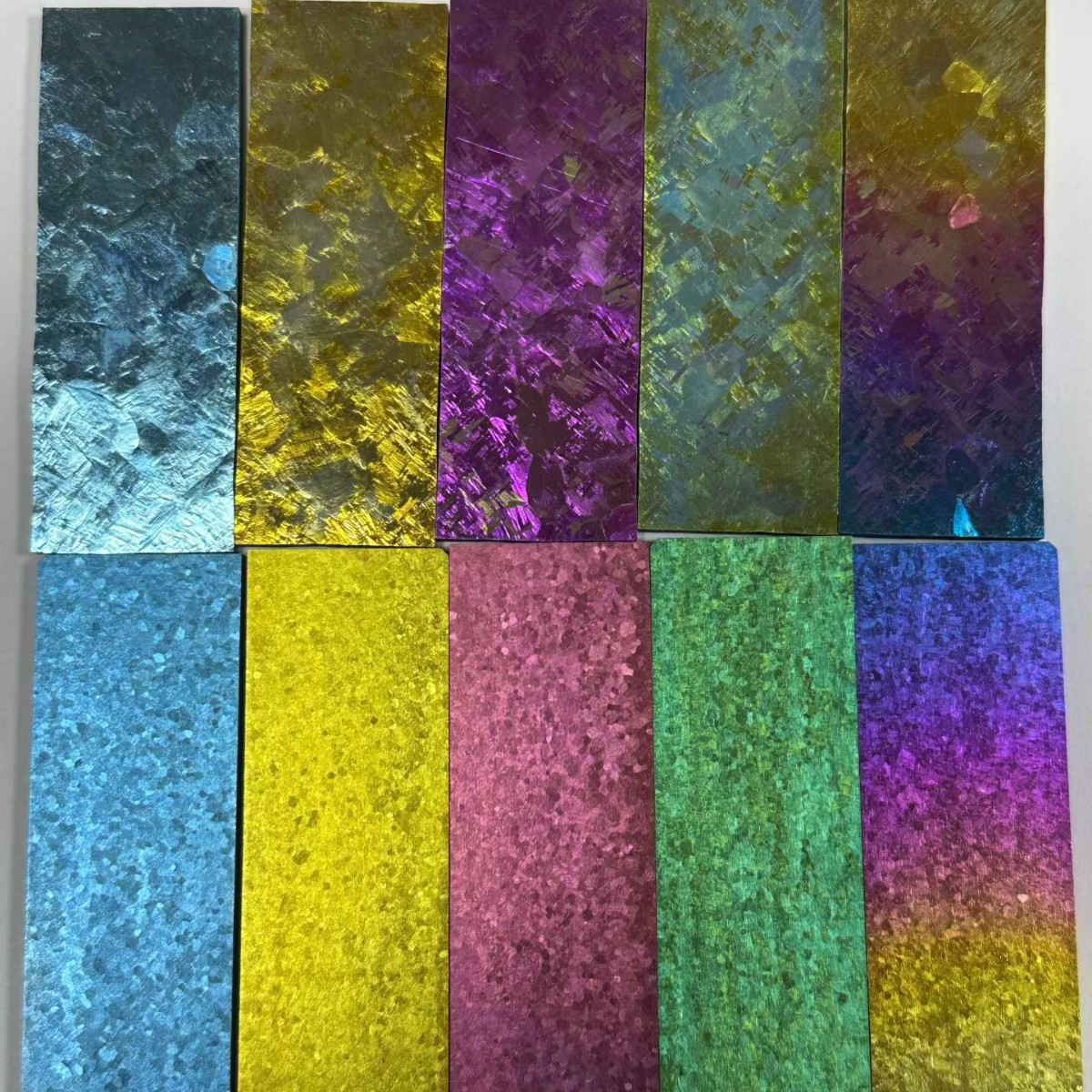
The two processes side by side
| Property | Anodising (Type II) | Powder coating |
|---|---|---|
| What it is | An oxide layer grown from the aluminium | A dry polymer powder melted and cured on the surface |
| Typical thickness | 5–20 µm (Type II); 25–50 µm (Type III) | 60–120 µm |
| Bond | Integral to the substrate | Mechanical/chemical adhesion to the surface |
| Colour range | Clear, black, dyes; metallic look | Very wide, including textures and gloss levels |
| Dimensional effect | Grows into and out of the surface; fits change | Adds a thick layer; fits and threads must be masked |
| Electrical conductivity | Insulates unless masked | Insulates |
| Wear resistance | Good (Type II); excellent (Type III) | Good impact resistance; softer than hardcoat |
| UV / outdoor | Excellent | Good with the right resin; colour can chalk |
| Typical use | Aluminium parts, cosmetic or wear surfaces | Steel, aluminium, enclosures, outdoor products |
The thickness difference is the one that causes the most scrap. A 10 µm anodised layer changes a bore by a few micrometres; a 100 µm powder coat can close a thread and change a press fit. If the part has a tolerance that matters, the finish is part of the tolerance stack.
What each does to fits and threads
Anodising grows roughly half into the surface and half outward. A masked bore keeps its size; an unmasked bore shrinks. Threads can be masked, or the drawing can specify an oversized allowance. Type III is the more aggressive case: 25–50 µm per surface is enough to turn a sliding fit into an interference fit.
Powder coating adds 60–120 µm on top of the surface. It is thicker and less precise. Threads, bores, mating faces and grounding points must be masked, or the coating must be removed after curing. A powder-coated thread is usually a thread that will not start.
The practical rule: if the feature is toleranced, mask it or finish after machining. Do not ask the coater to “be careful”; give them a masking drawing.
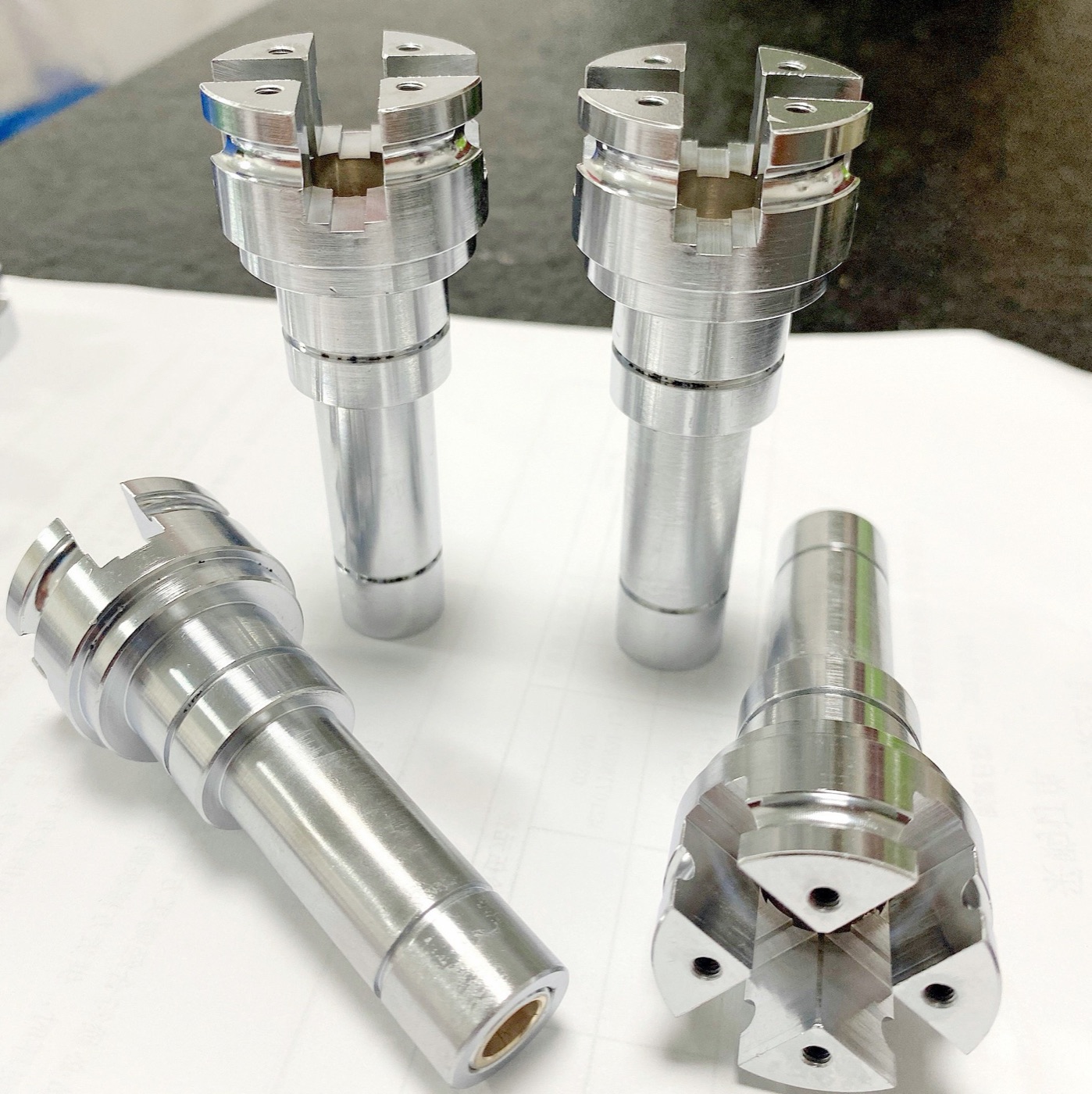
When anodising wins
- The part is aluminium and the look is metallic. Anodising keeps the machined surface visible; powder coating covers it.
- Wear resistance matters. Type III hardcoat is much harder than powder and is used for slides, wear pads and knurled parts.
- The fit is tight. A thin anodised layer is easier to accommodate than a 100 µm powder layer.
- Electrical conductivity is needed. Mask the contact areas and anodise the rest; powder coating is an insulator everywhere.
- Outdoor UV exposure. Anodised aluminium does not chalk or fade like some powder colours.
- The part is cosmetic and precision. A clear or black anodise preserves the machined detail.
When powder coating wins
- You need a specific colour. Powder has a much wider range, including RAL colours, textures and gloss levels.
- The substrate is steel or a mixed assembly. Anodising is an aluminium process; powder works on steel, aluminium and some other metals.
- You need thick, uniform coverage. Powder hides surface variation and gives a durable film on a complex shape.
- The part is an enclosure or a visible cover. A textured or matte powder finish can look better than anodising.
- The budget is tight on a simple steel part. Powder is often the lower-cost route for a batch of steel brackets.
Cost comparison with a worked example
Take 100 aluminium brackets, 150 × 80 × 6 mm, with four holes and one tapped M6 hole. The machining is the same; only the finish changes.
| Line | Clear anodise | Powder coat, black |
|---|---|---|
| Preparation | Rack, mask the thread | Pre-treatment, mask the thread and holes |
| Batch minimum | Often a rack minimum | Often a colour/line minimum |
| Typical cost driver | Surface area, colour, masking | Surface area, colour, masking, curing |
| Dimensional risk | Low if masked; bores shrink if not | High if not masked; thick layer |
| Look | Metallic, shows machining | Opaque, hides machining |
Illustrative; ask for a quote with the masking plan included.
On a small batch, the finishing minimum can dominate. A colour change or a rack minimum may cost more than the difference between the two processes. That is why the finish should be quoted with the part, not added later.
Design rules that save money
- Mark the finish on the drawing with the process, thickness and colour. “Anodise” alone is not a specification.
- Mark the masking for threads, bores, sealing faces and grounding points. A masking drawing is cheaper than a rework.
- Break sharp edges. Both finishes build on corners; a sharp edge can chip or show a thin spot.
- Do not specify a colour match across alloys. 6061 and 7075 anodise differently; powder is more consistent across substrates.
- Allow for the growth in the fit. Say whether the fit is before or after finishing.
- Keep one finish per batch if the colour must match. Mixing processes or alloys in one batch is a matching problem.
Common mistakes
Specifying powder on a precision bore. The coating is 60–120 µm; the bore will not fit unless it is masked. Masking a deep bore is not always reliable.
Anodising a part that needs a colour match to a powder-coated cover. The two finishes will never match exactly; the materials and the colour mechanisms are different.
Forgetting the thread. A coated thread is a classic assembly failure. Mask it or use an allowance.
Choosing a finish before the function. Wear, corrosion, conductivity and colour should decide the process, not the other way round.
Not quoting the masking. The cheapest finish quote can become the most expensive part if the masking was not included.
How GY manages finishing
We machine in-house and manage anodising, powder coating, plating and passivation through long-term partners. The quote includes the finish, the masking plan and the first-article check. We do not pretend to run chemical tanks on site; a 36-person machine shop that claimed to would be telling you something untrue.
For a first order we send a coupon in the production alloy and the production finish, and we check the coated first article before the batch is released. If the finish changes a fit, we want to know before 500 parts are coated, not after.
Which finish should I choose for my part?
| Requirement | Choose | Why |
|---|---|---|
| Aluminium, metallic look | Anodising | Keeps the machined surface visible |
| Wear resistance | Type III hard anodising | Hard ceramic layer |
| Wide colour range | Powder coating | RAL colours, textures, gloss levels |
| Tight bores or threads | Anodising with masking | Thinner layer, easier to accommodate |
| Steel or mixed materials | Powder coating | Anodising is an aluminium process |
| Electrical conductivity | Anodising with masked contacts | Powder insulates everywhere |
| Outdoor UV | Anodising or a suitable powder | Anodised aluminium is UV-stable |
What does each finish cost?
Both finishes have a fixed batch cost and a variable area cost. Anodising is usually priced by surface area, colour and masking; powder coating by area, colour, masking and curing. On a small batch, the rack or line minimum dominates.
Example: 100 aluminium brackets, 150 × 80 × 6 mm. Clear anodise with a masked thread may be a few dollars per part at this quantity; a black powder coat may be similar or slightly lower, but the powder layer is 60–120 µm and the thread must be masked. The part price difference is small; the dimensional risk is not.
Ask for the finishing line separately, including the masking. A cheap finish quote that excludes masking is not comparable.
What happens to threads and bores?
Anodising grows into and out of the surface; powder coating adds a thick layer on top. Both can close a thread or a bore. Mask them, or specify the fit after finishing. For a powder-coated part, masking a deep bore is not always reliable; a plug or a post-finish ream may be needed.
If the thread must conduct or ground, anodising and powder both insulate. Mask the contact area or use a masked insert.
A real example: 100 aluminium brackets
A customer specified black powder coat on a 6061 bracket with an M6 thread and a Ø8 H7 dowel hole. The first batch arrived with the thread and the dowel hole coated; the bolt would not start and the dowel would not fit.
We changed the drawing to mask the thread and the dowel hole, and added a note that the fit is after coating. The next batch was masked and the holes were checked with a pin gauge. The finish looked the same; the assembly worked.
The lesson: the finish is part of the tolerance stack. A 100 µm powder layer is not a cosmetic detail on a precision part.
Before you specify a finish
- Substrate: aluminium, steel or mixed.
- Function: wear, corrosion, colour, conductivity.
- Thickness and dimensional effect.
- Masking for threads, bores and contacts.
- Colour and gloss, with a sample.
- Batch size and finishing minimum.
What does each finish do to a thread?
Anodising grows into and out of the surface; a 20 µm coating can tighten a thread enough that a standard bolt will not start. Powder coating adds 60–120 µm on top and will usually fill a thread completely. Both require masking, an allowance, or a post-finish tap.
The reliable production answer is to mask the thread. If the thread must be coated, specify an allowance such as 6H mod and prove it with a go/no-go gauge after finishing. Do not ask the finisher to “keep it loose”; that is not a specification.
For a powder-coated part, masking a deep thread is difficult. A plug or a post-finish re-tap may be needed. If the thread is critical, anodising with masking is usually the lower-risk route.
How do I write the finish callout?
A finish callout should include the process, the thickness range, the colour or gloss, the masking and the fit condition. “Anodise” or “powder coat” alone leaves the important decisions to the supplier.
Example: “Anodise Type II, black, 10–15 µm, mask M6 threads and Ø8 H7 bore, fit after coating.” That is a specification a machinist and a finisher can both follow. Add a sample or a RAL number for colour.
For a cosmetic part, say which faces are cosmetic and which are functional. A global finish callout can add cost on faces nobody sees, and it can change a fit that mattered.
What does a finish failure cost?
A finish failure usually appears at assembly: a bolt will not start, a bearing will not fit, or a colour does not match the previous batch. The part may be functionally correct and still unusable. The cost is rework, scrap, and a delay in the build.
The cheapest prevention is a coated first article. Check the thread, the bore and the colour before the batch is finished. A 10-minute check on one part is cheaper than reworking 500.
A supplier checklist for finishing
- Process and thickness range.
- Colour/gloss and an approved sample.
- Masking drawing for threads, bores and contacts.
- Fit condition: before or after coating.
- Coated first-article check.
- Batch size and finishing minimum.
FAQ
Is anodising stronger than powder coating?
For wear resistance on aluminium, Type III hard anodising is harder. Powder coating is more impact-resistant and hides surface imperfections. They solve different problems.
Can I powder coat aluminium?
Yes. Aluminium is commonly powder coated. The part needs the right pre-treatment, and threads and bores must be masked.
Does anodising change the colour of the aluminium?
Clear anodising preserves the metal look; black and coloured anodising dye the oxide. The alloy and surface finish change how the colour reads.
Which finish is better outdoors?
Both can work outdoors. Anodised aluminium has excellent UV stability; powder needs a suitable resin and colour. For a mixed-material assembly, powder is often the practical choice.
Can you finish a part with both?
Usually not on the same surface. A part can have anodised and powder-coated components, but the colours will not match exactly.
Do you finish in-house?
No. We machine in-house and manage finishing through partners we have used for years, with the masking and first article controlled here.