
Aluminium at volume
Aluminium is the default metal for high-volume machined parts because it is light, fast to cut and easy to finish. That does not make every aluminium part cheap. Alloy, temper, plate quality, fixture design and anodising decide whether the volume price holds. This guide covers the choices that matter at 1,000–100,000 pieces.
Short version: 6061-T6 is the default for machined parts and cosmetic anodising. 7075-T6 is for strength and weight, but it costs more and anodises less predictably. Choose the plate, the temper and the fixture before you negotiate the hourly rate.
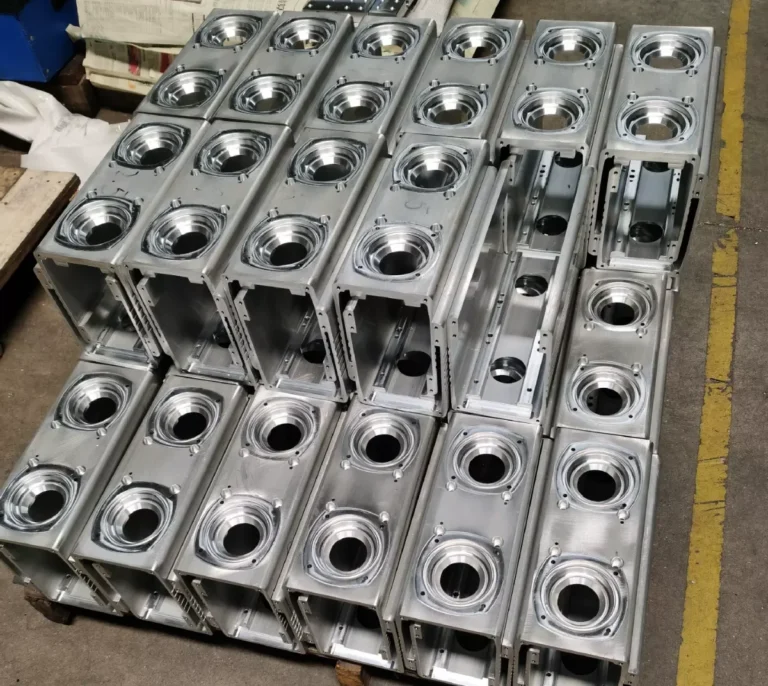
Quick answer: what drives the price of aluminium at volume
- Alloy and temper: 6061-T6 is the default; 7075-T6 is stronger but costs more and is less forgiving to anodise. 6082 is common in Europe; 5083 is marine and gummy to machine.
- Plate quality: cast plate is stable; rolled plate can move after machining. Stress relief matters on thin walls and large pockets.
- Fixture: a multi-part fixture and a good datum reduce cycle time more than a higher spindle speed.
- Anodising: rack density, masking and colour match are part of the volume cost; the anodiser can be the bottleneck.
- Inspection: FAI, CMM and a cosmetic limit sample are agreed before the batch, not after.
- China fit: 3-axis/4-axis aluminium parts at 1,000–100,000 pieces are a good fit; 5-axis, cleanroom and ISO/PPAP programs are not.
Why aluminium works at volume
Aluminium is about one-third the density of steel, cuts fast, and does not need plating to look good. It machines at high speed, produces long chips that are easy to control with the right tool and coolant, and takes anodising, powder coating, bead blasting and laser marking.
At volume, the advantages compound. A lighter part reduces shipping cost. A faster cycle time reduces machine hours. A stable alloy reduces scrap. A good anodising rack reduces the finishing cost per piece. The metal is not automatically cheap, but the process can be.
The limits are equally important. Aluminium is softer than steel, so thin walls deflect and threads pull out more easily. It has a high thermal expansion, so a part measured hot can be out when it cools. It can move after machining if the plate is not stress-relieved. And not every alloy anodises to the same colour: 6061 is the most predictable; 7075 is darker and less uniform.
Aluminium vs steel vs plastic at volume
| Property | Aluminium 6061-T6 | Stainless 316L | Engineering plastic (POM/PEEK) |
|---|---|---|---|
| Weight | About 2.7 g/cm³; lightest metal option | About 8.0 g/cm³ | About 1.2–1.4 g/cm³ |
| Strength | Medium; good stiffness-to-weight | High | Low to medium; creep under load |
| Machinability | Fast, long chips, easy to finish | Slower, work-hardens | Fast but gummy; tolerance moves |
| Finish | Anodising, powder, bead blast | Passivation, electropolish, plating | As-machined, bead blast; limited colour |
| Cost at volume | Moderate | Higher material and cycle time | Material-dependent; PEEK can be expensive |
| Best for | Housings, brackets, heat sinks, cosmetic enclosures | Corrosion, food, medical, high strength | Insulation, low weight, chemical resistance |
Aluminium is usually the right default for a machined enclosure or bracket: light, fast to cut, easy to anodise. Stainless wins where corrosion or strength is the driver. Plastic wins where insulation, weight or chemical resistance matters more than stiffness. Do not choose aluminium only because it is “cheap”; choose it because the properties fit.
6061, 7075, 6082 and temper: what to choose
| Alloy | Typical temper | Strength | Machinability | Anodising | Best for |
|---|---|---|---|---|---|
| 6061 | T6, T651 | Medium | Very good | Excellent, uniform colour | Housings, brackets, heat sinks, cosmetic parts |
| 7075 | T6, T651 | High | Good, less forgiving | Darker, less uniform | High-strength brackets, aerospace-style parts, weight-critical |
| 6082 | T6, T651 | Medium-high | Very good | Good | European drawings, structural parts |
| 5083 | O, H321 | Medium | Gummy, harder to finish | Poor for cosmetic | Marine, welded structures |
| 2024 | T351 | High | Good | Poor, needs protection | Aerospace, fatigue-critical |
6061-T6 is the default for a reason: it machines well, welds, anodises evenly and is widely available. If the drawing says “aluminium” and nothing else, 6061-T6 is the safe assumption, but confirm it.
7075-T6 is stronger and harder, which is useful for thin, highly loaded brackets. It costs more, cuts a little slower, and anodises to a darker, less uniform colour. If the part is cosmetic, 6061 is usually the better choice.
6082-T6 is common in European drawings and behaves similarly to 6061. 5083 is marine-grade and gummy; it is not a cosmetic alloy. 2024 is aerospace-grade and needs corrosion protection; it is not a default for general machining.
Temper matters. T6 is solution heat-treated and artificially aged; T651 is stretched to relieve stress. For large plates and thin walls, T651 or cast plate reduces movement after machining. If the drawing only says “6061”, ask which temper; the price and stability change.
Cast, rolled or extruded: the plate decision
Aluminium does not start as a generic block. The form of the stock changes stability, cost and the process.
| Stock type | Stability | Cost | Best for | Risk |
|---|---|---|---|---|
| Cast plate (e.g. MIC-6) | Very stable, low internal stress | Higher | Large thin plates, cosmetic faces, flatness | Lower strength than 6061-T6 |
| Rolled 6061-T651 | Good when stress-relieved | Moderate | Structural housings, brackets | Can move after removing skin |
| Rolled 7075-T651 | Good, but more residual stress | Higher | High-strength, weight-critical parts | Distortion on thin walls; anodising colour |
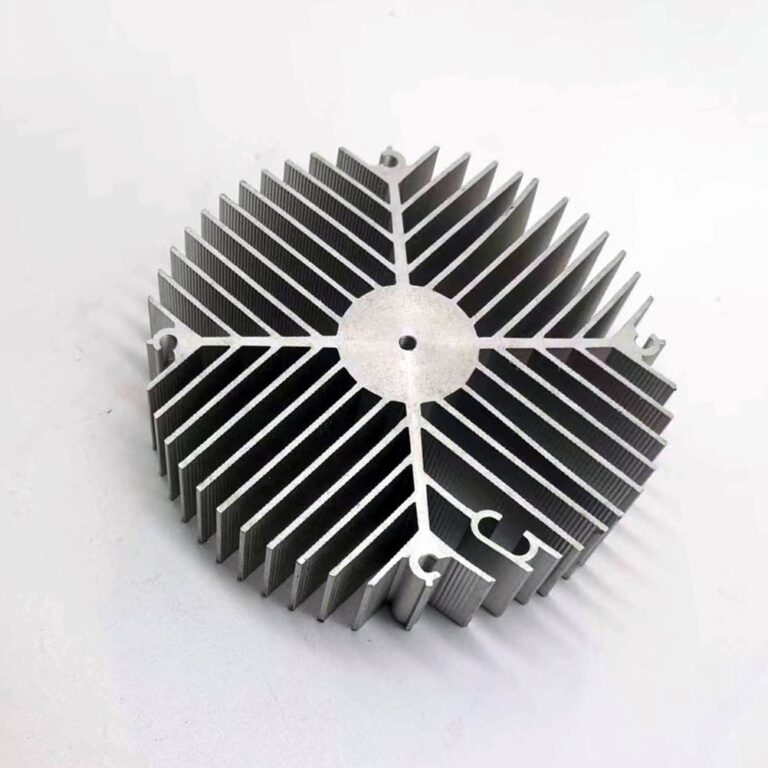
| Extruded profile | Good along the length | Die cost | Constant section, heat sinks, rails | Not for complex pockets; die lead time |
For a large, thin, cosmetic plate, cast plate can be cheaper overall than rolled plate because it needs less straightening and scrap. For a structural bracket, 6061-T651 or 7075-T651 is the better choice. Ask which stock the quote assumes; the price and the flatness depend on it.
A volume cost model for an aluminium housing
This is an illustrative 6061-T6 housing, 1.2 kg blank, two setups, black anodised, with FAI and final sample inspection. The numbers show which line moves with volume; they are not a quote.
| Cost line | 1,000 pcs | 10,000 pcs | 50,000 pcs | Why it moves |
|---|---|---|---|---|
| Material | 6.50 | 5.80 | 4.90 | Plate size, mill order, yield |
| Machining | 11.50 | 9.20 | 7.60 | Fixture, cycle time, tool life |
| Setup | 2.20 | 0.35 | 0.10 | Spread over the batch |
| Anodising | 2.80 | 2.20 | 1.90 | Rack density, colour change |
| Inspection + packing | 1.50 | 0.80 | 0.55 | Sampling and protection |
| Ex-works total | 24.50 | 18.35 | 15.05 | Before freight and duty |
The drop from 1,000 to 10,000 is mostly setup and process maturity. The drop from 10,000 to 50,000 is material, cycle time and anodising density. If a supplier quotes the same rate at 1,000 and 50,000, ask which line is not moving.
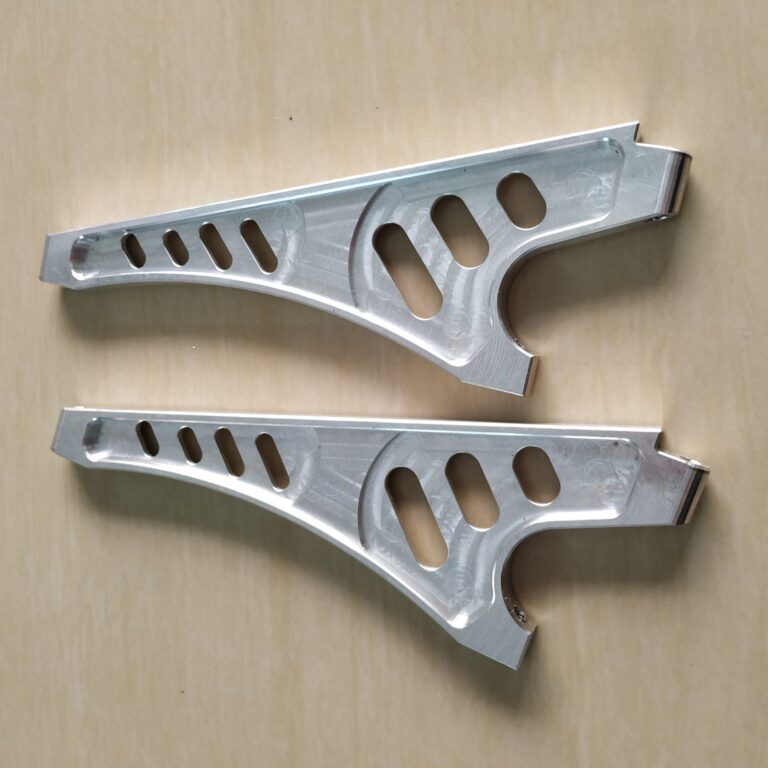
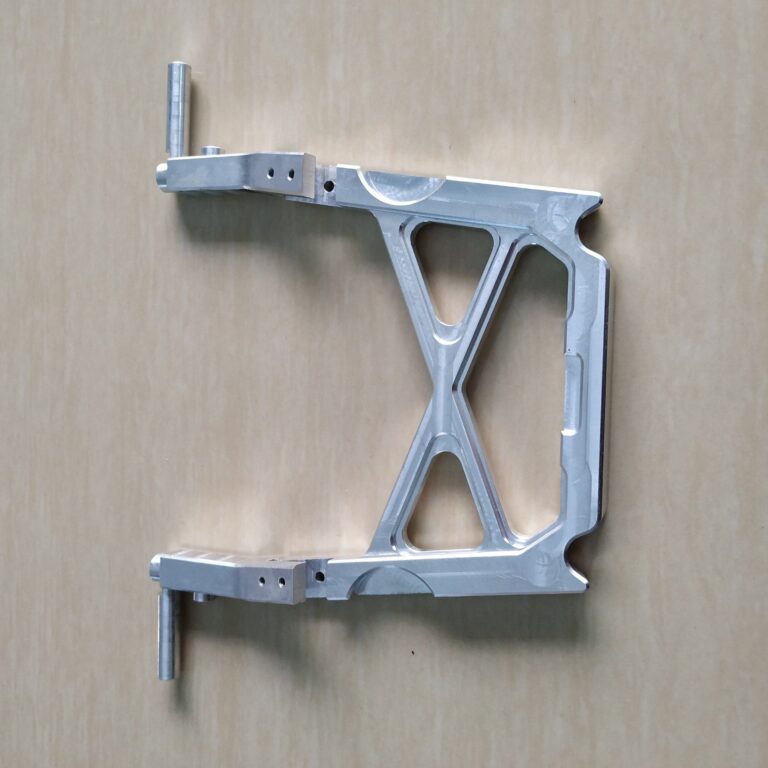
Design rules for aluminium at volume
Aluminium is forgiving, but not infinitely. These rules prevent the most common volume problems.
| Feature | Practical rule | What goes wrong |
|---|---|---|
| Wall thickness | 1.5–2.5 mm; below 1 mm needs support | Deflection, chatter, distortion |
| Pocket depth | Up to 4× cutter diameter; deeper needs a smaller tool | Long cycle time, taper, tool breakage |
| Inside corner | Use a standard cutter radius, not a sharp corner | Small cutter, slow finish, chatter |
| Ribs | 0.8–1.2 mm thick, with a draft-free profile | Thin ribs deflect and vibrate |
| Threads | Depth ≥1.5× diameter; thread mill for large | Pull-out, incomplete threads |
| Anodising | Mask bores and threads; allow for coating growth | Tight fit becomes tight or loose |
| Flatness | Stress-relieve large plates; machine both sides | Bow after machining |
Anodising allowance: an anodic coating grows into and out of the surface. The exact growth depends on the process and thickness. For a tight bore or thread, tell the machinist the part will be anodised and agree whether to mask the feature or machine it undersize. Do not discover this after the first batch.
Five DFM changes with a price
Aluminium responds well to design changes because the cycle time is short and the material is easy to cut. These are the changes that show up most often at 10,000 pieces.
| Change | What it saves | At 10,000 pcs | What to check |
|---|---|---|---|
| Remove a setup | 15–30% of machining | $3,000–$6,000 | Can the feature move to an open face? |
| Use a standard cutter radius | 5–15% of cycle time | $2,000–$4,000 | Can the corner be 6 mm instead of 3 mm? |
| Reduce pocket depth | 10–20% of cycle time | $2,500–$5,000 | Is the deep pocket functional? |
| Open a non-functional tolerance | 5–10% of machining + inspection | $1,500–$3,000 | Does the function need ±0.05? |
| Start from standard plate | 3–8% of material | $1,000–$2,500 | Can the part fit a standard size? |
The savings are illustrative, but the direction is consistent. Review the drawing with the supplier before the volume RFQ; a 5% price negotiation is small compared with a design change that removes a setup.
Fixtures and cycle time: where the volume price is made
At 10,000 pieces, the fixture is not a accessory; it is the process. A multi-part fixture that loads four parts per cycle can cut the machine time per part and improve consistency, if it is rigid and the chips clear.
- Datum first. Hold the part on the face that carries the critical bore or flatness. Do not clamp on a cosmetic surface.
- Multi-part fixture. Two or four parts per cycle reduces load/unload time and spindle idle time.
- Quick-change. If the family has variants, a pallet or quick-change fixture reduces changeover.
- Chip evacuation. Aluminium chips are voluminous; poor evacuation causes recutting and surface marks.
- Tool life. Sharp, polished flutes and the right coolant prevent built-up edge on 6061.
- Program record. The programme and setup sheet should stay with the part, not with one programmer.
| Cycle time per part | Machine hours for 10,000 | Machines for a 12-week run* | What it means |
|---|---|---|---|
| 4 min | 667 h | 1 | One machine plus buffer |
| 8 min | 1,333 h | 2 | Two machines or a longer window |
| 12 min | 2,000 h | 3 | Capacity becomes the constraint |
| 20 min | 3,333 h | 5 | Needs a dedicated cell |
*16 hours/day, 5 days/week, 12 weeks, 75% uptime. One machine gives about 720 productive hours in that window. Divide the cycle time by the number of parts per fixture.
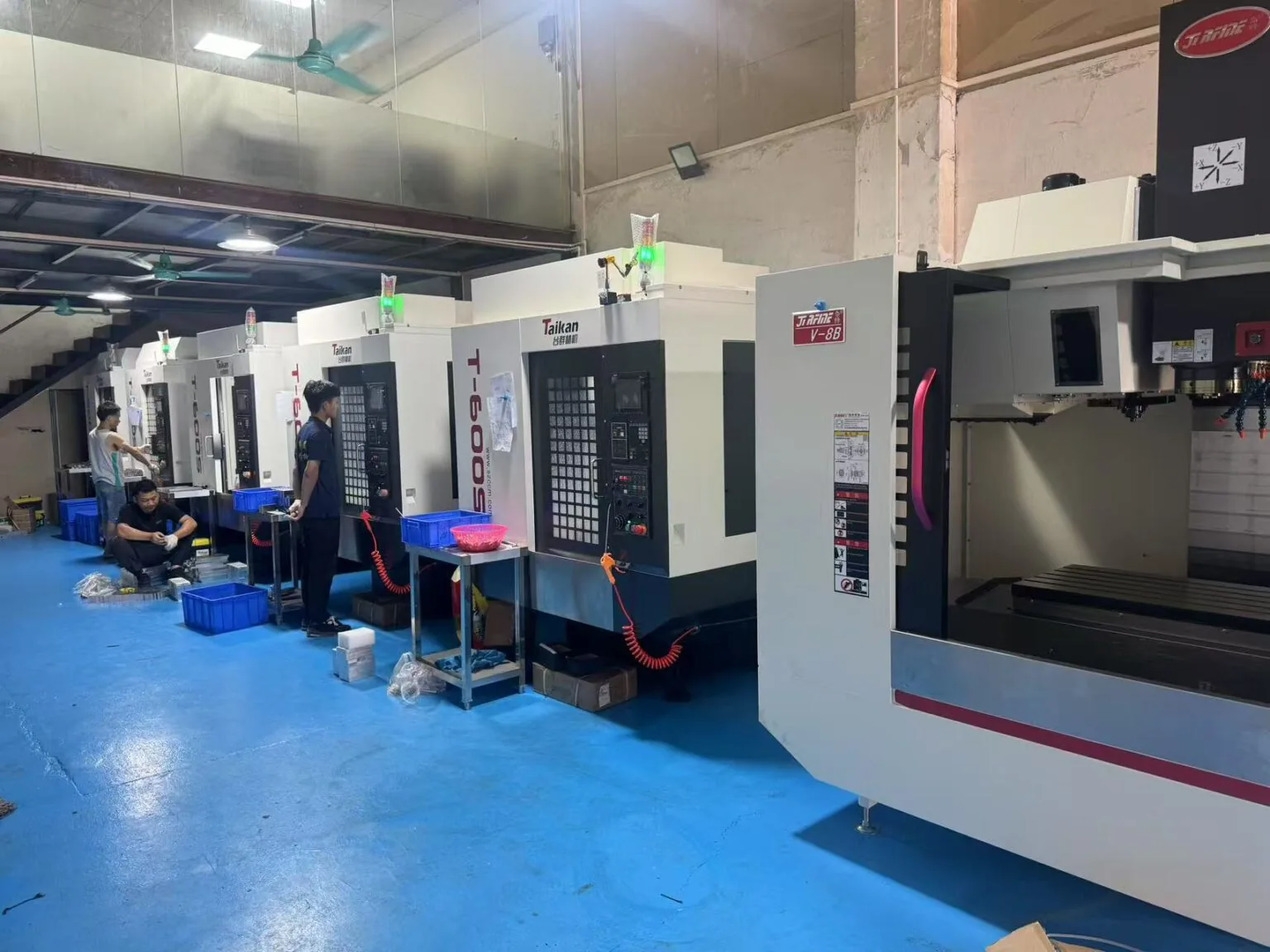
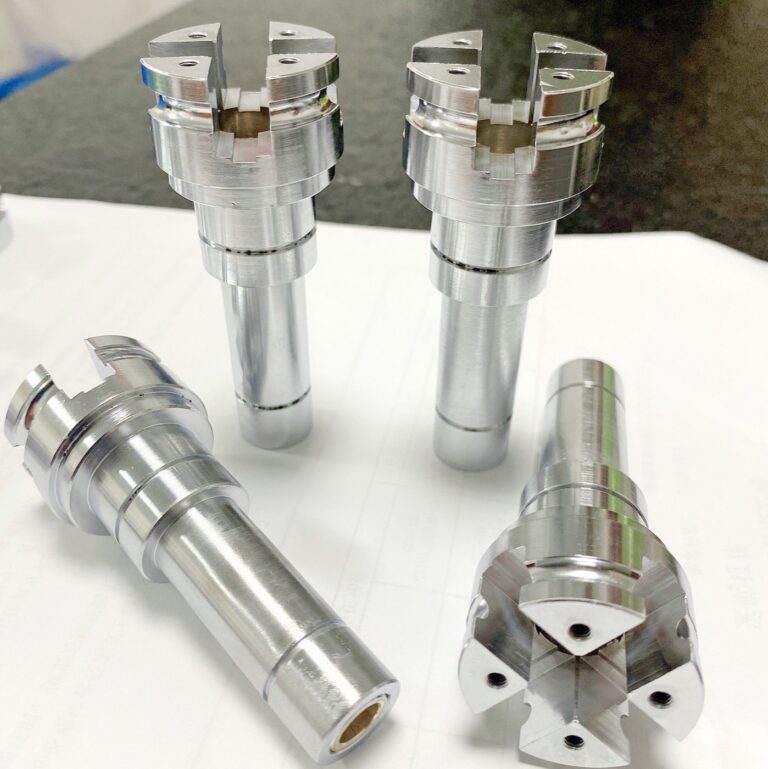
Anodising and finishing: the volume bottleneck
Aluminium finishing is not a single process. Anodising, hard anodising, powder coating, bead blasting, laser marking and passivation each change the cost, the fit and the lead time.
| Finish | What it does | Volume driver | What to agree |
|---|---|---|---|
| Type II anodising | Decorative, corrosion-resistant oxide; can be dyed | Rack density, colour change, masking | Colour sample, gloss, thickness, masking |
| Type III hard anodising | Thicker, harder oxide; wears better | Rack time, thickness, alloy | Pre-finish size, bore/thread allowance |
| Powder coating | Thick polymer coating; wide colour range | Batch colour, part size, cure | Colour, gloss, thickness, edge coverage |
| Bead blasting | Matte texture; hides tool marks | Batch size, media, coverage | Ra range, uniformity, masking |
| Laser marking | Logo, serial, UDI | Mark time, area, contrast | File, position, contrast, durability |
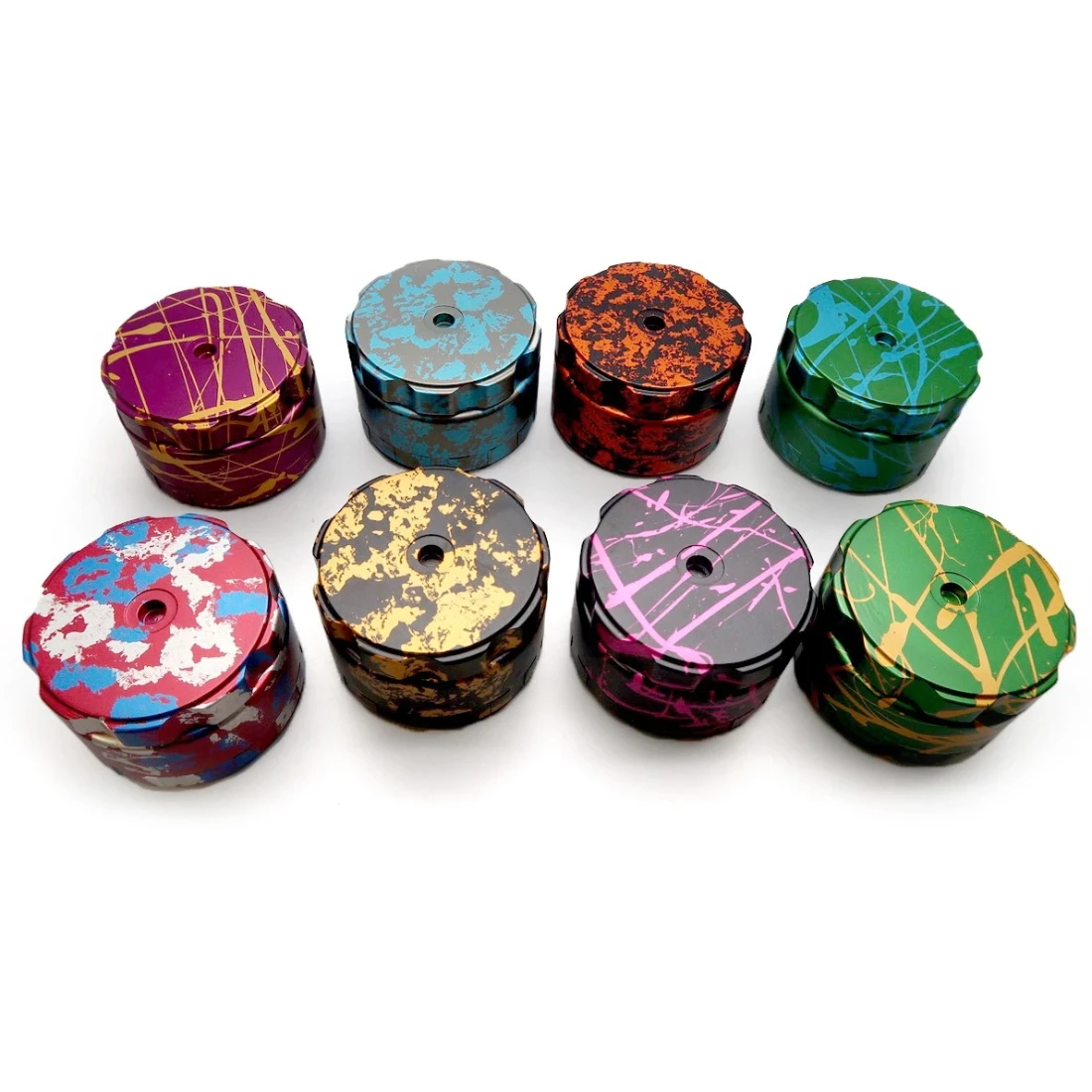
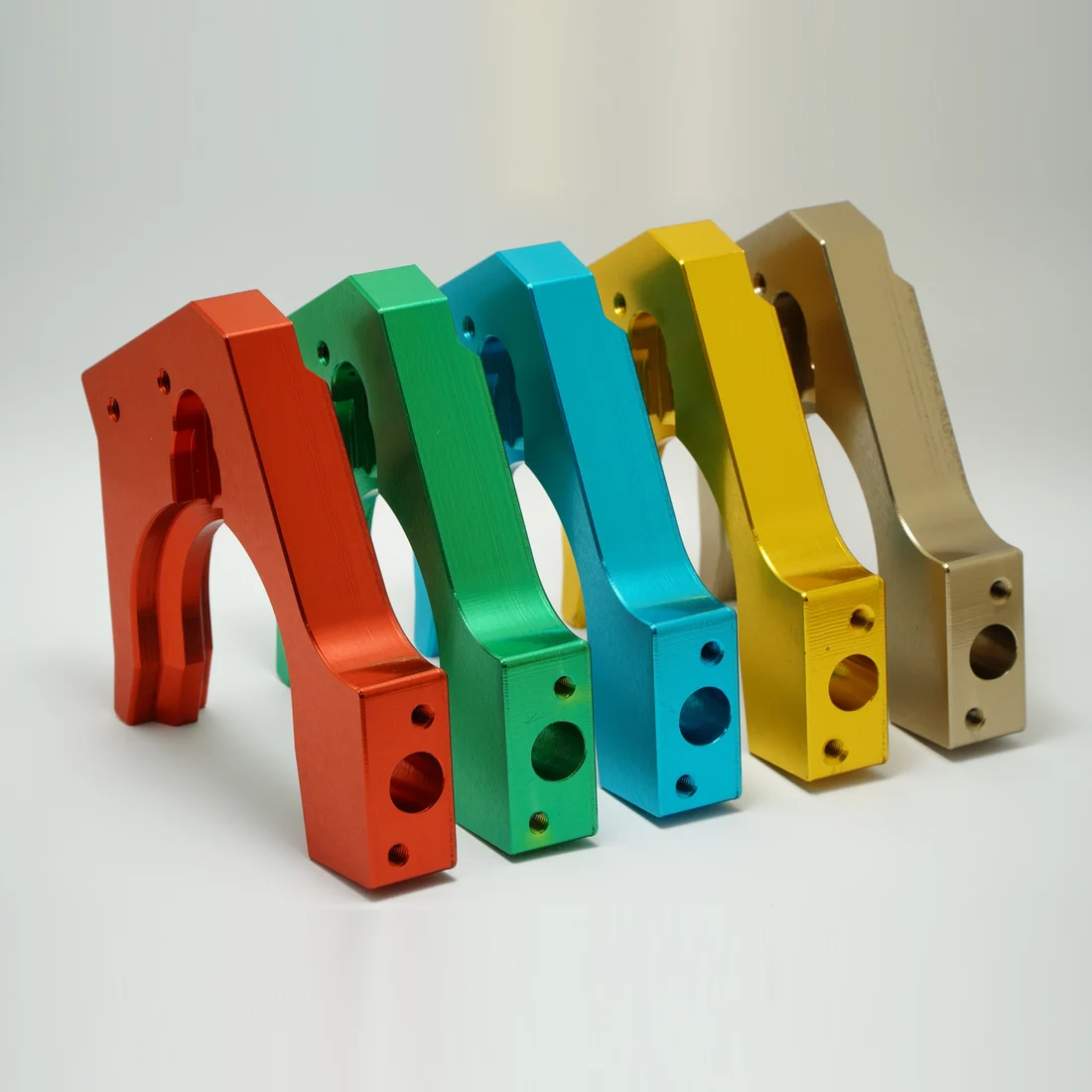
Aluminium anodising colour comes from dye, not voltage. This is different from titanium, where colour comes from oxide thickness. For aluminium, the alloy, surface finish, dye and sealing decide the colour. 6061 is the most predictable; 7075 is darker and less uniform. Approve a physical sample in the shipping finish.
Masking is a cost line. Bores, threads, mating faces and ground surfaces may need masking. A masking plan agreed before the batch prevents a tight fit from becoming too tight after coating.
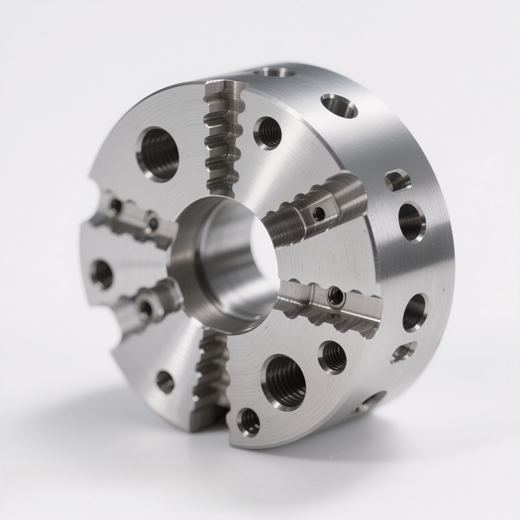
Finishing cost at volume
Anodising is priced by rack, batch and handling, not just by surface area. At 10,000 pieces, the finishing quote can be 15–25% of the part price; at 50,000, the rack density and colour batching decide whether that share falls.
| Cost driver | What it means | How to reduce it |
|---|---|---|
| Rack density | How many parts fit on one rack | Design a rack for the part; avoid oversized racks |
| Colour change | Clean-out and new dye batch | Group one colour; avoid small colour batches |
| Masking | Labour to protect bores, threads, faces | Design fewer critical masked areas; use plugs |
| Thickness | Type II vs Type III, dwell time | Specify the minimum that meets the function |
| Cosmetic yield | Scratches, rack marks, colour rejects | Limit sample, handling, packing |
| Freight to finisher | Parts moving between shop and anodiser | Choose a finisher close to the machine shop |
A low anodising price with poor colour control is not a saving. At 10,000 pieces, a 2% colour reject rate costs more than a few cents per part. Ask for the rack size, the colour batch size and the reject policy before you compare prices.
Anodising defects and how to prevent them
| Defect | Likely cause | Prevention |
|---|---|---|
| Colour mismatch between batches | Alloy, dye concentration, sealing, rack position | Same alloy, same anodiser, approved sample, one batch per colour |
| White spots or streaks | Poor pre-treatment, water spots, contamination | Clean handling, controlled rinse, inspect before sealing |
| Edge burn or dark edges | Current concentration at sharp edges | Break edges, adjust rack, accept a defined edge effect |
| Masking bleed | Poor masking, coating under the tape | Masking plan, correct tape, post-finish check |
| Bore too tight | Coating growth, no allowance | Mask or machine for post-finish size |
| Rack marks | Contact points | Rack on a non-cosmetic face; agree the mark position |
Anodising is a chemical process, not a paint booth. The anodiser, the alloy and the surface finish all contribute. For a cosmetic part, approve a physical sample and state the acceptable range; a photo is not a colour reference.
Quality at volume: dimensions, flatness and cosmetics
Aluminium volume quality has three layers: dimensional, flatness and cosmetic. Agree all three before the first batch.
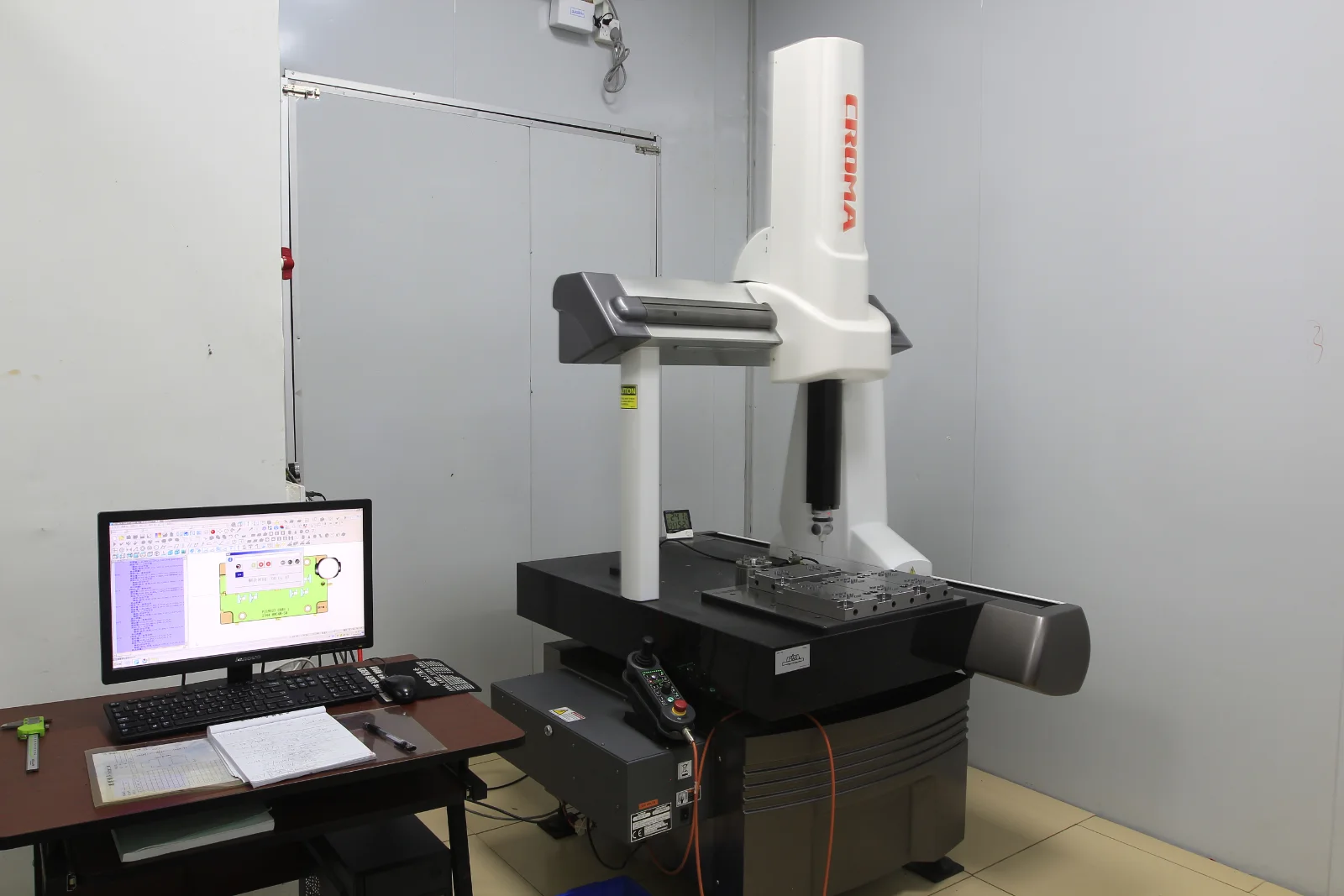
- Dimensional: FAI, CMM data for bores and positions, and a sampling plan for the batch.
- Flatness: measure on the datum face after machining and after anodising; thin plates can move.
- Cosmetic: a limit sample for tool marks, scratches, edge break and anodising colour. A photo is not a limit sample.
- Material: certificate with alloy and temper; heat/lot traceability if required.
- Finish: anodising thickness and colour; powder coating thickness and adhesion if specified.
What GY can and cannot provide: FAI, dimensional reports, CMM data, material certificates and finish certificates. We are not ISO 9001 certified and do not provide PPAP or IATF 16949. If your customer requires those, say so before the RFQ.
A worked example: 10,000 aluminium enclosures
This is an illustrative 6061-T6 enclosure, 0.8 kg blank, two setups, black anodised, with a cosmetic face. The buyer needs 10,000 pieces a year, packed individually.
| Process step | Plan | What can go wrong |
|---|---|---|
| Material | 6061-T651 plate, standard size, certificate | Plate moves after skin removal |
| Machining | Two setups, multi-part fixture, 8-minute cycle | Chip recutting, tool marks on cosmetic face |
| Deburr | Hand edge break + controlled tumbling | Rounded edges, media in holes |
| Anodising | Black Type II, rack on non-cosmetic face, colour sample | Colour mismatch, rack marks, bore growth |
| Inspection | FAI, CMM critical features, cosmetic limit sample | Scratches found late, no limit sample |
| Packing | Individual bag, divider, carton | Rubbing in transit |
At 10,000 pieces, the anodising batch and the cosmetic yield decide the delivery. A machining cycle that is 30 seconds faster means little if the anodiser runs one colour batch a week or the packing line scratches 2% of the parts. Plan the finishing and packing as part of the process, not as an afterthought.
Scaling to 50,000: what changes
The 10,000-piece plan does not simply multiply. At 50,000, the constraints move:
- Material: a mill order and a standard plate size matter; cut-to-size from a distributor becomes expensive.
- Machining: a dedicated fixture and a shorter cycle time are necessary; one general fixture cannot carry the volume.
- Anodising: the rack and the colour batch become the bottleneck; a single anodiser may not have the capacity.
- Inspection: sampling and a cosmetic limit sample replace 100% inspection; the report format is agreed up front.
- Packing: individual protection and a packing line are part of the process, not an afterthought.
- Inventory: a 50,000-piece batch ties up cash; plan the call-off and safety stock with the supplier.
At 50,000, the buyer is not buying a part; they are buying a supply process. The supplier must show the machine hours, the finishing capacity and the packing plan, not just a lower unit price.
Robotics, telecom and consumer electronics
| Industry | Typical aluminium parts | Critical requirement | Volume range | What breaks first |
|---|---|---|---|---|
| Robotics | Joint housings, actuator mounts, leg saddles | Bearing bore, pair matching, anodising fit | 1,000–20,000 | Bore distortion after anodising |
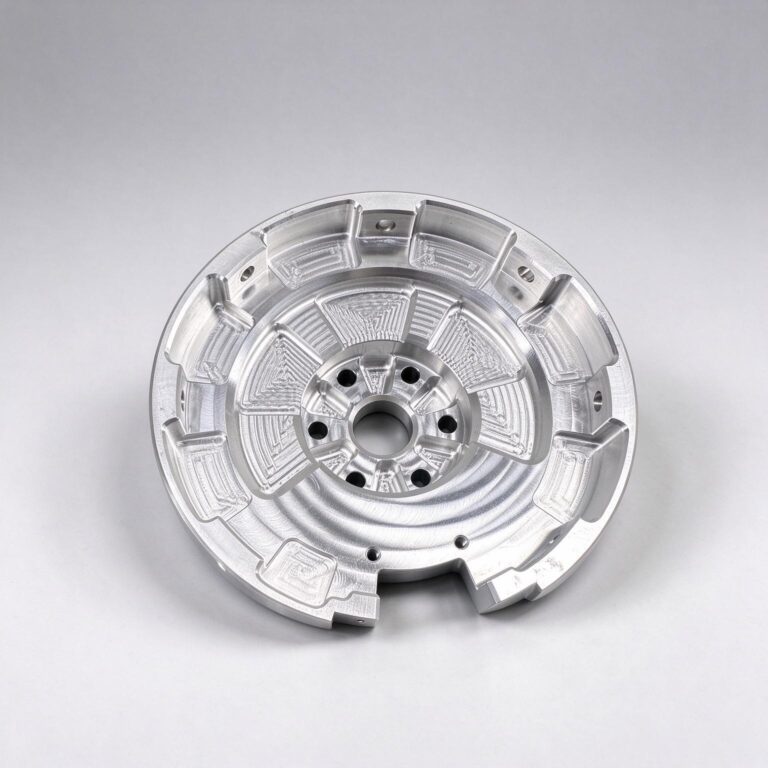
| Telecom | RF cavities, filter housings, heat sinks, waveguide flanges | Cavity depth, flatness, plating/anodising | 1,000–50,000 | Flatness after finishing |
| Consumer electronics | Enclosures, heat spreaders, camera rings, buttons | Cosmetic finish, colour match, flatness | 10,000–100,000+ | Cosmetic yield and anodising colour |
| Industrial hardware | Brackets, mounts, fixtures, machine guards | Strength, flatness, repeatability | 1,000–50,000 | Material yield and cycle time |
For robotics, machine the bearing bore for the post-anodising fit and keep the left/right pair from the same setup. For telecom, check cavity depth and flatness before and after finishing. For consumer electronics, agree the cosmetic limit sample and the anodising batch; a small scratch rate can erase the machining saving.
China vs local landed cost
Compare landed cost, not the ex-works price. A China quote can be lower per piece and still lose after air freight, duty, inventory and a late batch.
| Cost element | China | Local | What to check |
|---|---|---|---|
| Part price | Lower at volume | Higher hourly rate | Same drawing, same volume |
| Freight | Air or sea | Local delivery | Carton efficiency, consolidation |
| Duty/clearance | HS code dependent | Domestic | DDP landed cost |
| Inventory | Longer pipeline | Short replenishment | Safety stock, who holds it |
| Inspection | Incoming check | Easy to visit | FAI, sampling, report format |
| Line-down risk | Longer recovery | Faster replacement | Second source, capacity hold |
At 1,000 pieces, a 20% lower part price can be erased by air freight and one late batch. At 50,000, the labour and material gap is larger, but the inventory and risk are also larger. Build the landed-cost sheet before you negotiate.
Packing and logistics for aluminium cosmetic parts
Aluminium is soft enough to scratch in a carton. At volume, packing is a quality process.
- Individual protection. Bag or wrap cosmetic faces; use dividers or trays so parts do not rub.
- Edge protection. Corners and machined edges are the first to dent; use corner guards on heavy parts.
- Moisture. Aluminium does not rust, but wet packing can stain anodised surfaces; use dry cartons and desiccant if needed.
- Carton strength. A double-wall carton and a pallet for heavy batches; label the batch and revision.
- Freight mode. Air for urgent batches; sea for repeat volume. Compare landed cost, not just freight rate.
Ask the supplier to show a packed carton before the batch ships. A photo of the packaging is a cheap way to catch a problem before the freight forwarder arrives.
Common mistakes with aluminium at volume
- “Aluminium” with no alloy or temper. 6061-T6 and 7075-T6 are different prices and different processes.
- Using 7075 for a cosmetic part. It anodises darker and less uniformly; 6061 is the better default.
- No stress relief on a thin plate. The part can bow after machining or anodising.
- No anodising allowance. A tight bore becomes too tight after coating.
- Approving colour from a photo. Anodising colour depends on alloy, finish, dye and light.
- Choosing the cheapest anodiser. A low rack price with poor colour control costs more in rejects.
- Skipping the FAI. A batch made before the first article is a batch at risk.
- Ignoring packing. Scratches in transit can turn a good batch into scrap.
Capacity and lead time
Aluminium cuts fast, but the machine is not the only constraint. A 10,000-piece order with an 8-minute cycle needs about 1,333 machine hours; at 75% uptime and 16 hours/day, that is roughly two machines for a 12-week window. Add anodising, inspection and packing.
Ask for the cycle time, the parts per fixture, the shift pattern and the finishing lead time. A supplier who quotes a 4-week delivery without the arithmetic is guessing. A supplier who shows the machine hours and the anodising batch is planning.
Material lead time also matters. 6061-T651 is usually stocked; 7075-T651 or a special temper may need a mill order. A 50,000-piece program on a special plate can add weeks before the first chip is cut.
Aluminium RFQ checklist
- 3D model and 2D drawing with the revision.
- Alloy and temper: 6061-T6, 7075-T6, 6082-T6, or the application.
- Plate type: cast, rolled, extruded, or “supplier recommendation”.
- Annual volume and monthly forecast; the quantity brackets you want priced.
- Critical tolerances, datums and flatness.
- Anodising type, colour, gloss and masking plan; a physical sample if cosmetic.
- Inspection: FAI, CMM, material cert, finish cert, cosmetic limit sample.
- Packing: individual bag, divider, carton, pallet.
- Destination and Incoterm; DDP if you want a landed comparison.
- Certification requirement: ISO 9001, IATF, PPAP, or none.
Supplier checks for aluminium at volume
- Alloy and temper certificate; plate source and heat/lot.
- Cast plate vs rolled plate; stress relief for thin walls.
- Machine list and 3/4-axis capacity.
- Fixture ownership and programme record.
- Anodiser: rack size, colour control, masking, lead time.
- FAI and CMM sample; flatness measurement method.
- Cosmetic limit sample; packing and handling.
- Scrap/rework policy and capacity hold.
- Second source and exit plan.
- Honest certification boundary (ISO, PPAP, 5-axis).
What GY does
We machine aluminium 3-axis and 4-axis parts, turn parts and run Swiss-type work, with 32 machining centres (19 four-axis), 18 lathes (10 Swiss-type) and 6 sinker EDM machines. We quote in about 16 hours, have no MOQ, and finish through partner plants for anodising, hard anodising, powder coating, bead blasting and laser marking.
We are not ISO 9001 certified. We do not have 5-axis, a cleanroom, ISO 13485 or IATF 16949, and we do not claim PPAP. If your aluminium program requires those, we will say so before the RFQ.
FAQ
Is 6061 or 7075 better for anodising?
6061 is more predictable and gives a more uniform colour. 7075 is stronger but anodises darker and less uniformly, so it is a poor choice for a cosmetic part unless the sample proves otherwise.
Can 7075 be anodised?
Yes, but the colour and uniformity are different from 6061. Approve a physical sample in the shipping finish; do not assume the same dye will produce the same colour on 7075.
What tolerance can you hold on aluminium?
±0.05 mm on critical features is normal; tighter features need a specific process and CMM check. General tolerance should be on the drawing, not assumed.
What is the minimum wall thickness?
1.5–2.5 mm is comfortable; below 1 mm needs support, a fixture and a finishing plan. Thin walls deflect during machining and can distort after anodising.
Does anodising change the bore size?
Yes. The coating grows into and out of the surface; the exact change depends on the process and thickness. Mask the bore or machine for the post-finish size, and agree the method before the batch.
How much does aluminium CNC machining cost in China?
It depends on alloy, plate, cycle time, tolerance, finish and volume. At 1,000–50,000 pieces, material, cycle time and anodising dominate. Send the drawing and annual volume for a real quote.
Can you match a specific anodised colour?
We work to a physical sample and a defined finish. 6061 is the most predictable; colour depends on alloy, surface finish, dye and sealing. A photo is not a colour reference.
Do you provide FAI and CMM reports?
Yes: FAI, dimensional reports, CMM data for critical features, material certificates and finish certificates. We do not provide PPAP or IATF 16949.
What is the lead time for 10,000 aluminium parts?
It depends on cycle time, machine count, finishing and material. A simple part can run in days per batch; a complex part with several setups takes longer. We plan the batch and shipping schedule with you.
Should I use cast plate or rolled plate?
Cast plate is more stable and flatter for large thin parts; rolled 6061-T651 is stronger and usually cheaper. The choice depends on flatness, strength and the amount of material removed.
How do I avoid anodising colour mismatch?
Use one alloy, one anodiser and one approved physical sample. Keep the colour batch together, avoid mixing 6061 and 7075 in the same batch, and check the rack position for marks.
Is aluminium strong enough for structural parts?
6061-T6 is strong enough for many housings and brackets; 7075-T6 is stronger for weight-critical parts. The geometry, wall thickness and load path matter as much as the alloy.
Can you anodise after machining?
Yes. Tell the machinist before the batch so the bore, thread and mating faces can be masked or machined for the post-finish size.
Can you machine thin aluminium plates?
Yes, with stress-relieved plate, a suitable fixture and a machining sequence that balances both sides. Very thin plates may need sacrificial tabs or a vacuum fixture.
Related reading
- High-volume CNC machining China: capacity, cost and supplier checks
- From 50 to 5,000 parts: how CNC unit price falls
- 6061 vs 7075 aluminium: which grade to use
- CNC machining China: cost, lead time, quality and IP
- Aluminium CNC machining services
- GY Machining: company facts and capacity
- High-volume telecom CNC machining China: RF cavities and filter housings