
Supplier shortlist
Search “China CNC machining manufacturers” and you will find lists. Most of them are paid, outdated, or mix factories with traders. This page is not another ranking. It is the method we use to shortlist a supplier: define the part, verify the factory, score the capability, run a paid sample, and only then talk about volume.
How to use this page: treat it as a buyer’s checklist. GY Machining is one option on the list, not the only one. We state our capabilities and our limits, including the certifications we do not hold, so you can compare us honestly with other Chinese manufacturers.
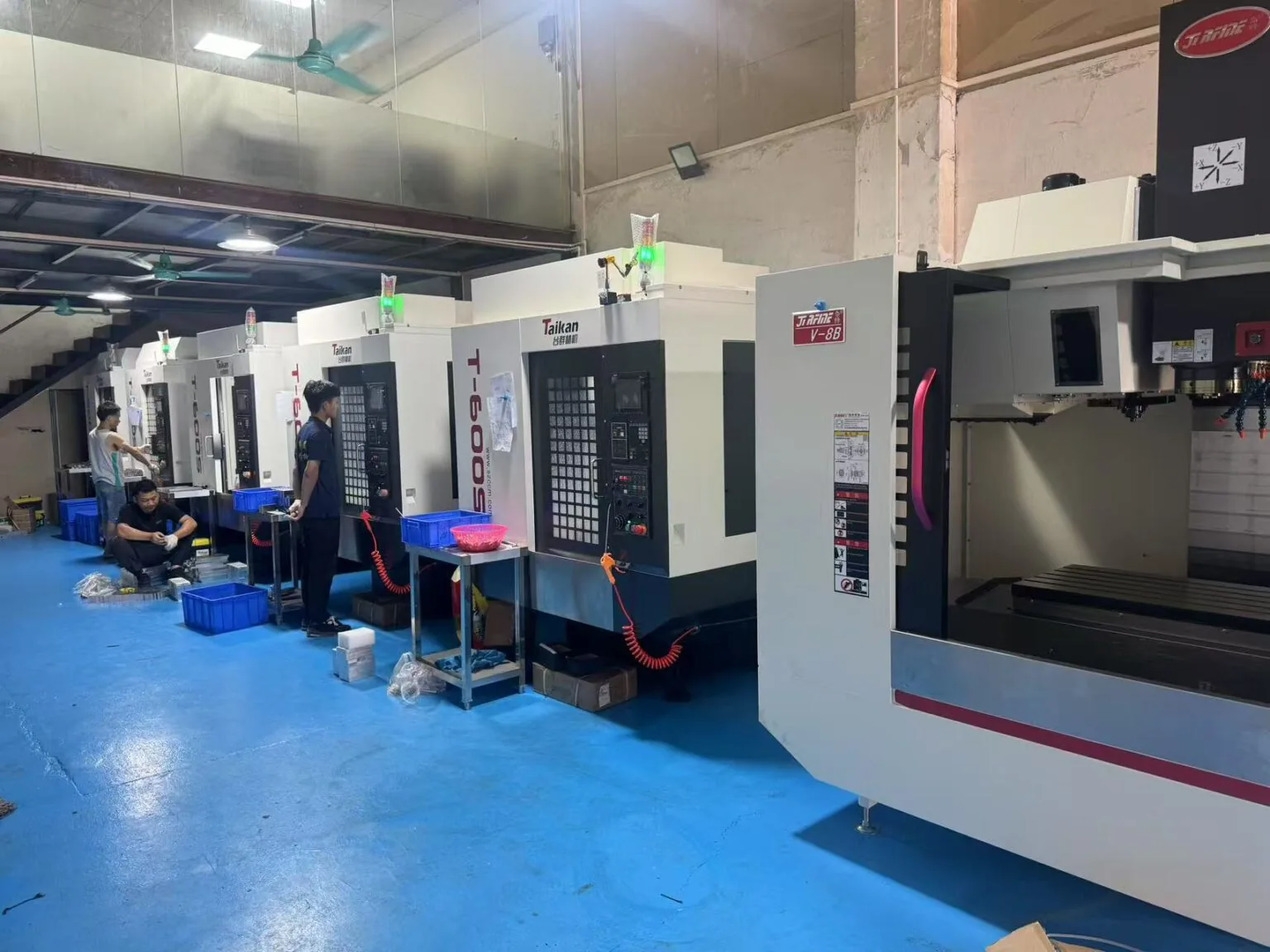
Quick answer: how to shortlist Chinese CNC manufacturers
- Define the part family and volume. Process, material, tolerance, finish, annual quantity and certification requirement.
- Screen 10 factories, not 100. Check machine list, industries, finishing, quality equipment and export experience.
- Separate factories from traders. A trader can be useful, but you need to know who actually machines the part.
- Audit 3. Video call, business license, floor walk, CMM, sample reports, references.
- Run a paid sample with 2. Use the production process, not a hand-finished showpiece.
- Place a pilot batch with 1. Then agree capacity, inspection and a second source.
Why “top 10” lists mislead
Most “top CNC machining companies in China” articles are not buyer’s guides. They are lead-generation pages, paid placements or old lists copied from one another. They rarely say which process the factory is good at, which industries it serves, or which certifications it actually holds.
A factory that is excellent at 5-axis aerospace parts may be a poor fit for 50,000 consumer enclosures. A shop with 20 lathes may have no milling capacity. A trading company may have a beautiful website and no machines. The list cannot tell you that; the audit can.
Use lists to discover names, not to choose a supplier. Then apply the same shortlist method to every name, including the ones that paid for the top spot.
Five types of supplier you will meet
1. The factory
Owns the machines, employs the operators, programs the parts and controls inspection. The address on the business license is the factory address. This is the simplest supplier to audit, but not every factory is good at every process.
2. The trading company
Sells machining services and subcontracts the work. A good trader can manage several factories, consolidate finishing and handle export documents. A weak trader forwards your drawing and adds a margin. Ask who machines the part, which factory, and who owns the fixture.
3. The broker or agent
Works on commission and may never see the part. Useful for finding capacity in a region; risky for quality and IP because the technical conversation is indirect.
4. The marketplace
Alibaba, Made-in-China and Global Sources are directories, not factories. They can help you find suppliers, but the verification is still your job. A storefront is not an audit.
5. The partner-network shop
Some operations in-house, some at long-term partners. This is common and can be efficient: machining in one shop, anodising at a specialist, wire EDM at another. The key is disclosure. Ask which operations are subcontracted and who manages them.
None of these types is automatically bad. The problem is not knowing which one you are talking to. Ask for the business license, the factory address, a live video walk and the name of the person who will program your part.
Capability matrix: what to verify
| Capability | What to ask | Good sign | Limit to check |
|---|---|---|---|
| 3-axis milling | Machine count, work envelope, controller | Clear list and photos | Deep pockets, tall parts |
| 4-axis milling | Number of 4-axis machines, fixtures | Runs complex parts weekly | True 5-axis geometry |
| 5-axis | Machine type, simultaneous or 3+2 | Can explain the difference | Many shops say “5-axis” but mean 3+2 |
| Turning | Bar capacity, chuck size, live tooling | Matches your diameter | Long shafts, large diameters |
| Swiss-type | Number of machines, bar diameter | Ø1–25 mm experience | Larger parts |
| EDM | Sinker or wire, in-house or partner | Discloses partner | Hardened steel, sharp corners |
| Finishing | In-house or partner, rack size | Names the finishes | Colour matching, capacity |
| Materials | Aluminium, stainless, titanium, plastics | Certificates and experience | Exotic alloys, special tempers |
At GY, the matrix is 3-axis and 4-axis milling, CNC turning, Swiss-type turning and sinker EDM, with wire EDM through a long-term partner and 35+ finishes through partner plants. We do not have 5-axis. If your part needs true 5-axis, we are not the right shop, and we will say so before you send a drawing.
Certifications that matter, and what they do not prove
| Certification | What it covers | What it does not prove |
|---|---|---|
| ISO 9001 | Quality management system | That every part is good; it is a process certificate |
| IATF 16949 | Automotive quality system, PPAP | That the shop has capacity for your program |
| ISO 13485 | Medical device quality system | Cleanroom or sterile packaging |
| AS9100 | Aerospace quality system | Material or process approval for every alloy |
| ISO 14001 | Environmental management | Product quality |
| RoHS / REACH | Material restrictions | A quality system |
Ask for the certificate number and the scope. A certificate for “manufacture of metal parts” may not cover the process you need. Check the expiry date and the certification body.
GY’s position: we are not ISO 9001 certified. We do not have IATF 16949, ISO 13485, AS9100, a cleanroom or PPAP. We can provide first-article reports, dimensional reports, CMM data, material certificates and finish certificates. If your customer requires a QMS certificate we do not hold, choose a certified supplier or plan for certification; do not accept a logo without a number.
What a factory audit looks like
A factory audit is not a tour of the showroom. It is a structured check of the things that decide whether your part will be made correctly, repeatedly, at the volume you need. You can do most of it on a live video call.
- License and address. The company name on the business license should match the quotation, the invoice and the factory address. If the address is an office, ask where the machines are.
- Live floor walk. Ask the supplier to walk from the entrance to the machine that will run your part. Look at the floor, the machines, the material rack and the inspection area. A recorded video can be old; a live call is harder to fake.
- Machine list cross-check. Count the machines you see against the list. Ask which machine, which fixture and which shift will run your part.
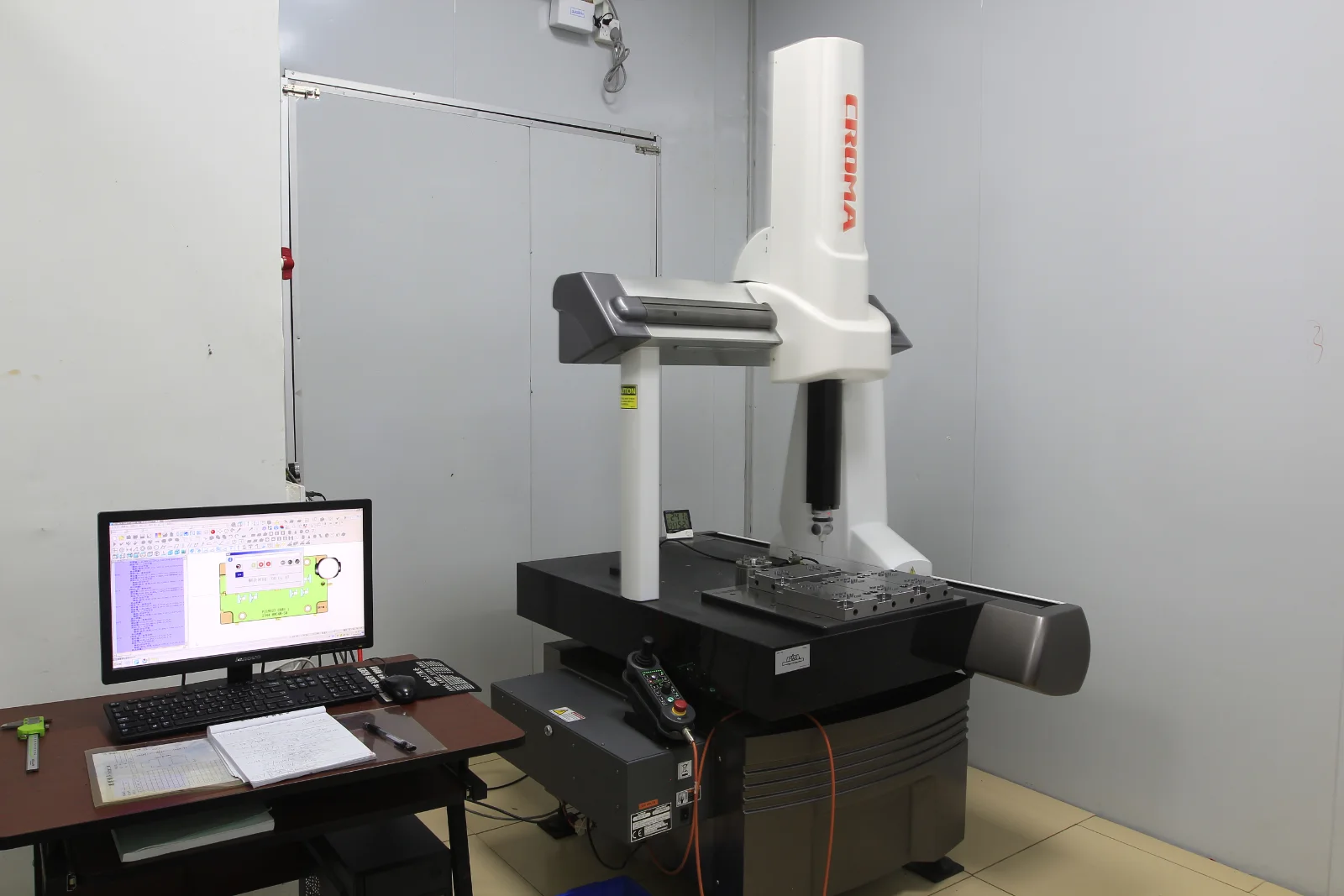
- Quality room. Look for a CMM, a video measuring system, a roughness tester and a temperature-controlled room. Ask for a sample report and the datum scheme.
- Programmer and inspector. Ask to speak to the person who will program the part and the person who will inspect it. If no one can answer a technical question, the technical capability is thin.
- Material traceability. Ask how the heat/lot is recorded and how the certificate is linked to the batch.
- References. Ask for two customers in your industry, not logos on a website. A reference call is worth more than a brochure.
- Paid sample. Run the sample on the production route, not a hand-finished showpiece.
A weighted scorecard
Score each supplier 1–5 on the criteria below. The weights are a starting point; change them for your part. A supplier with a low capability score should not win on price.
| Criterion | Weight | What a 5 looks like |
|---|---|---|
| Process capability | 25% | Machines, tolerance and materials match the drawing |
| Quality system | 20% | FAI, CMM, material certs, clear NCR process |
| Capacity and lead time | 15% | Machine hours and shift plan support the forecast |
| Price and landed cost | 20% | Cost breakdown is transparent; DDP is competitive |
| Communication | 10% | English, response time, named engineer |
| Risk and continuity | 10% | Second source, fixture ownership, financial stability |
Set a minimum score for capability and quality before you look at price. A 5% lower price with a 2/5 quality score is not a saving; it is a future line-down.
China vs local: compare landed cost, not part price
A China quote can look 30% lower ex-works and still be more expensive landed. The comparison has to include freight, duty, clearance, inventory, inspection and the cost of a late batch.
| Cost element | China supplier | Local supplier | What to check |
|---|---|---|---|
| Part price | Usually lower at volume | Higher hourly rate | Same drawing, same volume |
| Freight | Air or sea, per kg/CBM | Usually local delivery | Consolidation, carton efficiency |
| Duty and clearance | Depends on HS code and Incoterm | Usually included or domestic | DDP landed cost |
| Inventory | Longer pipeline, safety stock | Shorter replenishment | Who holds the buffer |
| Inspection | FAI, sampling, incoming check | Often easier to visit | Report format and AQL |
| Line-down risk | Longer recovery if a batch fails | Faster replacement | Second source, capacity hold |
For a 1,000-piece order, a 20% lower part price can be erased by air freight, duty and a single late batch. Build a landed-cost sheet before you negotiate. The lowest part price is not the lowest total cost.
20 questions to ask a Chinese CNC manufacturer
- What is your full company name and business license number?
- Is the factory at the address on the license? Can we see it on a live video call?
- How many machining centres, lathes and EDM machines do you have?
- How many are 3-axis, 4-axis and 5-axis?
- Which machines would run our part?
- Which operations are subcontracted?
- Who owns the fixture and the programme?
- Can you show a setup sheet and a program revision log?
- What inspection equipment do you have?
- Can you show a sample FAI and CMM report?
- How do you control material certificates and heat/lot traceability?
- What is your scrap and rework policy?
- What is your on-time delivery on similar parts?
- Can you hold capacity for a 3-month forecast?
- What happens if a machine breaks or a partner closes for a holiday?
- What certifications do you hold, and what is the certificate number?
- Can you support PPAP or IATF? If not, say so now.
- Who is our commercial and technical contact?
- Can you provide two references in our industry?
- What is your cost-down plan for year two?
The paid sample and the audit
A free sample is often a hand-finished showpiece. A paid sample should use the production process: the same material, the same fixture, the same programme, the same finish. Pay for it; it is the cheapest audit you will run.
- Send a real drawing with the revision, datums and critical tolerances.
- Ask for the FAI and compare the actual values with the drawing, not just the pass/fail box.
- Check the finish under the light where the part will be used; approve a physical sample.
- Check the packaging and the label; a good part can be damaged in a bad carton.
- Time the communication from RFQ to sample; it predicts the production experience.
- Visit or video call the floor and the measuring room; ask to see the machine running your part.
The first 90 days with a new supplier
- Weeks 1–2: PO and fixture. Confirm the drawing revision, the material, the finish and the fixture ownership. Ask for the fixture drawing and the programme revision log.
- Weeks 3–4: first article. Approve the FAI and the finish sample in writing. Do not release the batch on a verbal “looks good”.
- Month 2: pilot batch. Run 10–20% of the annual volume. Check the process, the inspection plan, the packaging and the delivery date.
- Month 3: production and review. Release the balance, review scrap, on-time delivery and the first cost-down ideas. Agree the next quarter’s forecast.
A pilot batch is not a delay; it is the cheapest way to find a process problem before 5,000 pieces are made. If the supplier resists a pilot, that is a signal.
Red flags
- No business license or factory address, only a office or a marketplace store.
- Refuses a live video walk or cannot show the machine running.
- Claims every certification but cannot provide a certificate number.
- Price far below the material and machining cost, with no explanation.
- No FAI, no material certificate, no inspection plan.
- Asks for full payment to a personal account.
- Cannot name the person who will program or inspect the part.
- No references, no case studies, no photos of similar parts.
- Pressures you to skip the sample to “save time”.
Industry-specific shortlists
The same factory can be a good fit for one industry and a poor fit for another. Use the table below to narrow the list before the audit.
| Industry | Typical parts | What to verify | Certification pressure |
|---|---|---|---|
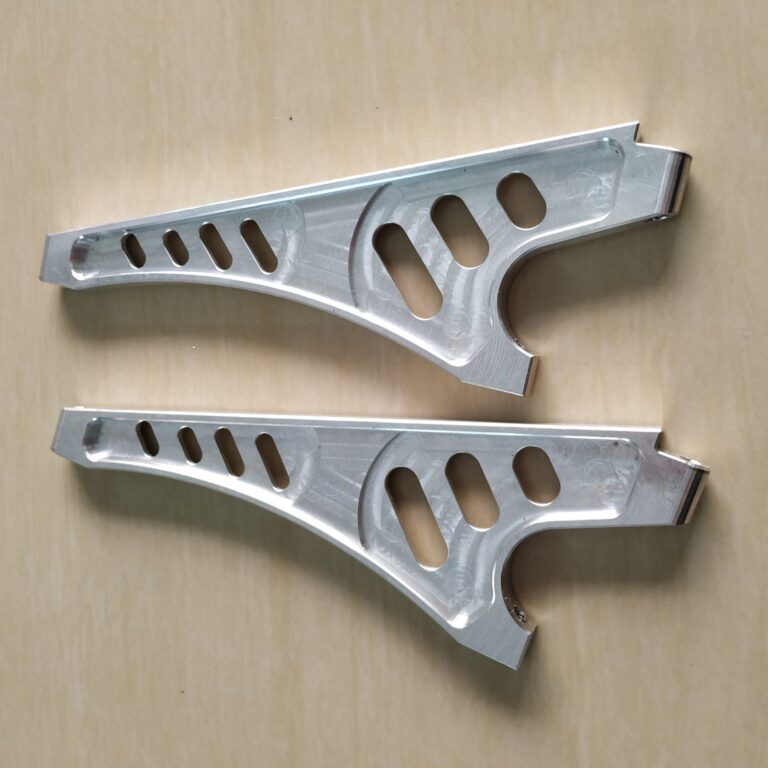
| Robotics | Joint housings, actuator mounts, leg saddles | Bearing bores, pair matching, anodising masking | Low to medium; ISO 9001 often preferred |
| Telecom | RF cavities, filter housings, heat sinks, waveguide flanges | Cavity depth, flatness, silver plating, masking | Medium; ISO 9001 and finish certificates |
| Consumer electronics | Enclosures, heat spreaders, buttons, wearable housings | Cosmetic yield, colour match, packing | Medium; ISO 9001, cosmetic limit sample |
| Industrial hardware | Brackets, mounts, fixtures, machine parts | Strength, flatness, finish, repeatability | Low; drawing and FAI often enough |
| Knives and EDC | Scales, clips, beads, pry bars | Surface finish, pair matching, anodising colour | Low; cosmetic sample is key |
| Automotive | Prototype and production brackets | PPAP, IATF, traceability | High; IATF/PPAP usually required |
| Medical | Instrument hardware, manifolds, fixtures | ISO 13485, cleaning, passivation, traceability | High; ISO 13485 and cleanroom may be required |
If your industry is in the high-certification row, do not shortlist a shop that cannot show the certificate. If your industry is in the low-certification row, focus on the process, the sample and the communication instead of paying for a QMS you do not need.
Where GY fits
GY Machining is a CNC machining supplier in Dalingshan, Dongguan. The company was founded in 2021 by a team machining since 2008; we have 36 employees, 32 machining centres (19 four-axis), 18 lathes (10 Swiss-type) and 6 sinker EDM machines. We quote in about 16 hours, have no MOQ, and ship to the US, UK, France, Australia, Germany, Switzerland and other markets.
We are a good fit for custom 3-axis/4-axis parts, turning, Swiss-type parts, robotics, telecom, consumer electronics, industrial hardware and EDC, from prototype to 100,000 pieces a year. We are not a fit for true 5-axis parts, cleanroom medical work, IATF/PPAP automotive programs or buyers who require ISO 9001. We will tell you that before you spend time on an audit.
If you want the full fact sheet, see GY Machining: company facts, capacity and certifications. If you want to compare us with another supplier, use the scorecard above and send both the same drawing.
FAQ
How many CNC machining manufacturers are there in China?
Thousands, from one-machine workshops to large contract manufacturers. The number is not useful; the useful question is which type fits your part, volume and certification requirement.
Are Chinese CNC machined parts good quality?
Quality depends on the supplier and the process, not the country. Ask for a first-article report, CMM data, material certificate and finish certificate, and run a paid sample on the production route.
How do I verify that a supplier is a real factory?
Ask for the business license, the factory address, a live video walk, the machine list and the name of the programmer. A storefront or a website is not proof.
Should I require ISO 9001?
If your customer or industry requires it, yes. If not, weigh the quality system, inspection reports and sample against the certificate. Do not accept a logo without a certificate number.
Is Alibaba a reliable way to find a supplier?
It is a directory, not a factory. Use it to discover names, then verify the factory, the machine list, the quality equipment and the sample. The platform does not audit every supplier for you.
How much should a sample cost?
It depends on the part. A paid sample should cover material, programming and machining; a free sample is often hand-finished and not representative. Pay for the sample and ask for the FAI.
What is a typical MOQ in China?
It varies. Many shops accept one part for a prototype and quote lower prices at 100, 1,000 or 10,000. Ask for the setup separately so you can see what changes with volume.
How long does production take?
A quote is usually 16 hours to a few days. Simple parts can be machined in 5–10 working days; complex parts with several setups take longer. Add finishing, inspection and shipping.
Can I visit the factory?
Yes, if you can travel. If not, ask for a live video walk of the floor, the machines and the measuring room. A recorded video can be old; a live call is harder to fake.
How do I compare a China quote with a local quote?
Compare landed cost: part price, freight, duty, clearance, inventory, inspection and the cost of a late batch. Ask for a DDP price if you want a like-for-like comparison.
What is a good first order with a new Chinese supplier?
A paid sample on the production route, then a pilot batch of 10–20% of the annual volume. Approve the FAI, the finish sample and the packaging before the balance.
What if I need ISO 9001, IATF or PPAP?
Choose a supplier that holds the certificate, or plan for certification. GY does not hold ISO 9001, IATF or PPAP; we will tell you before the RFQ rather than after the audit.
Related reading
- GY Machining: company facts, capacity and certifications
- CNC machining China: cost, lead time, quality and IP
- High-volume CNC machining China: capacity, cost and supplier checks
- 12 checks before you choose a CNC supplier
- Custom CNC parts from China: RFQ to delivery
- From 50 to 5,000 parts: how CNC unit price falls