
CNC Machining Aluminium
Aluminium is the default material for machined parts, and for good reasons: it is light, it is cheap, it cuts several times faster than stainless, and it takes an anodised finish that no other common metal can match. The decisions worth making are which alloy, and what the finish will do to your dimensions.
The alloys we machine most, and what each is for
Almost every aluminium part we quote is one of these three. If your drawing calls for something else we will machine it, but it is worth knowing what you gain and give up against 6061.
| Alloy | Best for | Compared with 6061 | Notes |
|---|---|---|---|
| 6061-T6 | General machined parts — housings, brackets, plates, manifolds | The reference | Good all-round strength, good corrosion resistance, anodises evenly and predictably. Cheapest and most available |
| 7075-T6 | Structural and high-stress parts where weight matters | Considerably stronger | Less corrosion resistant and more prone to stress-corrosion cracking. More expensive. Anodises darker and less evenly than 6061 |
| 5052 | Sheet and formed parts, marine environments | Weaker, more ductile | A sheet alloy. Excellent corrosion resistance and formability, but gummy in thin milled sections |
| 2024 | Aerospace-style structural parts | Stronger than 6061 | Poor corrosion resistance bare; usually needs a protective finish. Less commonly stocked |
| 6063 | Extrusions and decorative profiles | Weaker | Anodises to a brighter, cleaner finish than 6061 — which is exactly why 6061 and 6063 parts in the same assembly will not colour-match |
Fast to cut, and that is most of the story
Aluminium cuts at high spindle speeds with light cutting forces and clears chips easily, which is why it dominates prototype and low-volume work. A part that takes an hour in 316L can take a fraction of that in 6061, and on a production batch that difference is often larger than any design change you could make.
The two things that do cause trouble are both about movement rather than hardness. Thin walls deflect away from the cutter and come out tapered, and residual stress in rolled plate releases as material is removed, so a plate that was flat when it went on the machine can bow after it is unclamped. Both are solvable and both need planning rather than a better cutter. Why thin aluminium parts bend →
For parts that must stay flat, cast tooling plate such as MIC-6 is far more stable than ordinary rolled plate and usually cheaper than the scrap it prevents.
| At a glance | |
|---|---|
| Typical tolerance | ±0.002 mm (±0.0001 in) on machined features |
| Wall thickness | Comfortable down to about 1 mm, depending on wall height |
| Machinability | The best of the common structural metals |
| Standard finishes | Anodising Type II and III, bead blast, brush, powder coat |
| Certificates | EN 10204 3.1 on request |
The heat sink, and the machines cutting it
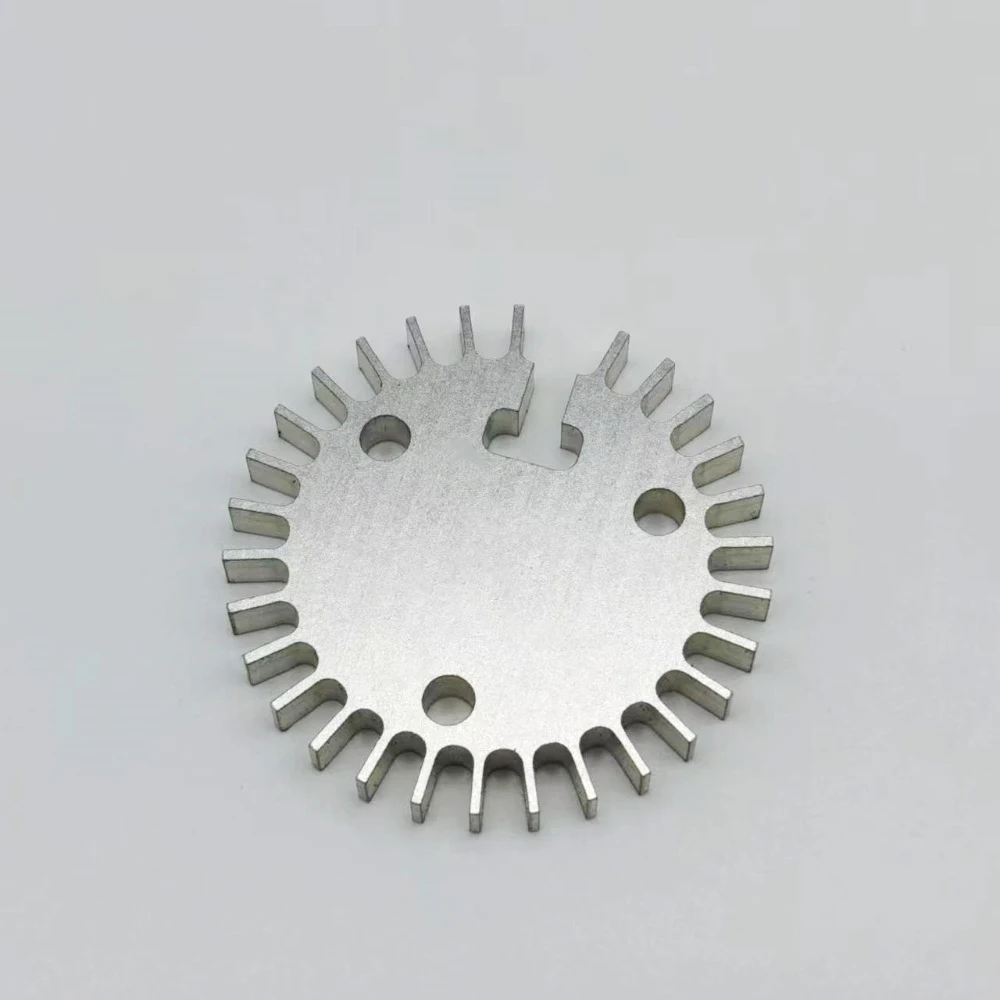
A heat sink for a portable fan, cut here in two operations — the blanks held on a vacuum fixture first, then the fins cut one at a time.
Four things worth deciding before you send the drawing
Say which alloy you can accept
If 6061 will do and the drawing says 7075, say so — the price and the lead time both improve. If the strength genuinely needs 7075, we will hold it.
Decide where the tolerance applies
Anodising grows the part by roughly half the coating thickness. Either the tolerance is before anodising and the drawing says so, or we machine undersize to suit. Anodising in detail →
Open internal corners where you can
An R0.5 internal corner forces a small cutter and a slow pass. Going to R1.5 or R2 often removes a tool change entirely and costs nothing in function.
Call out flatness as flatness
A thickness tolerance does not control bow. If the face has to be flat, say flat — that is what makes us plan a stress-relief sequence instead of just holding the thickness.
Finishes that work on aluminium
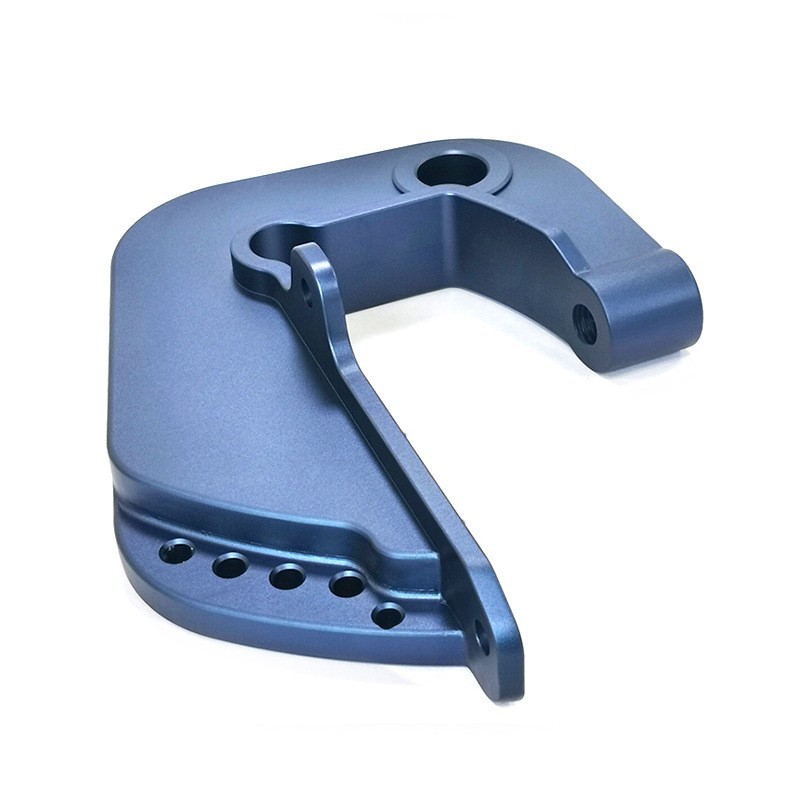
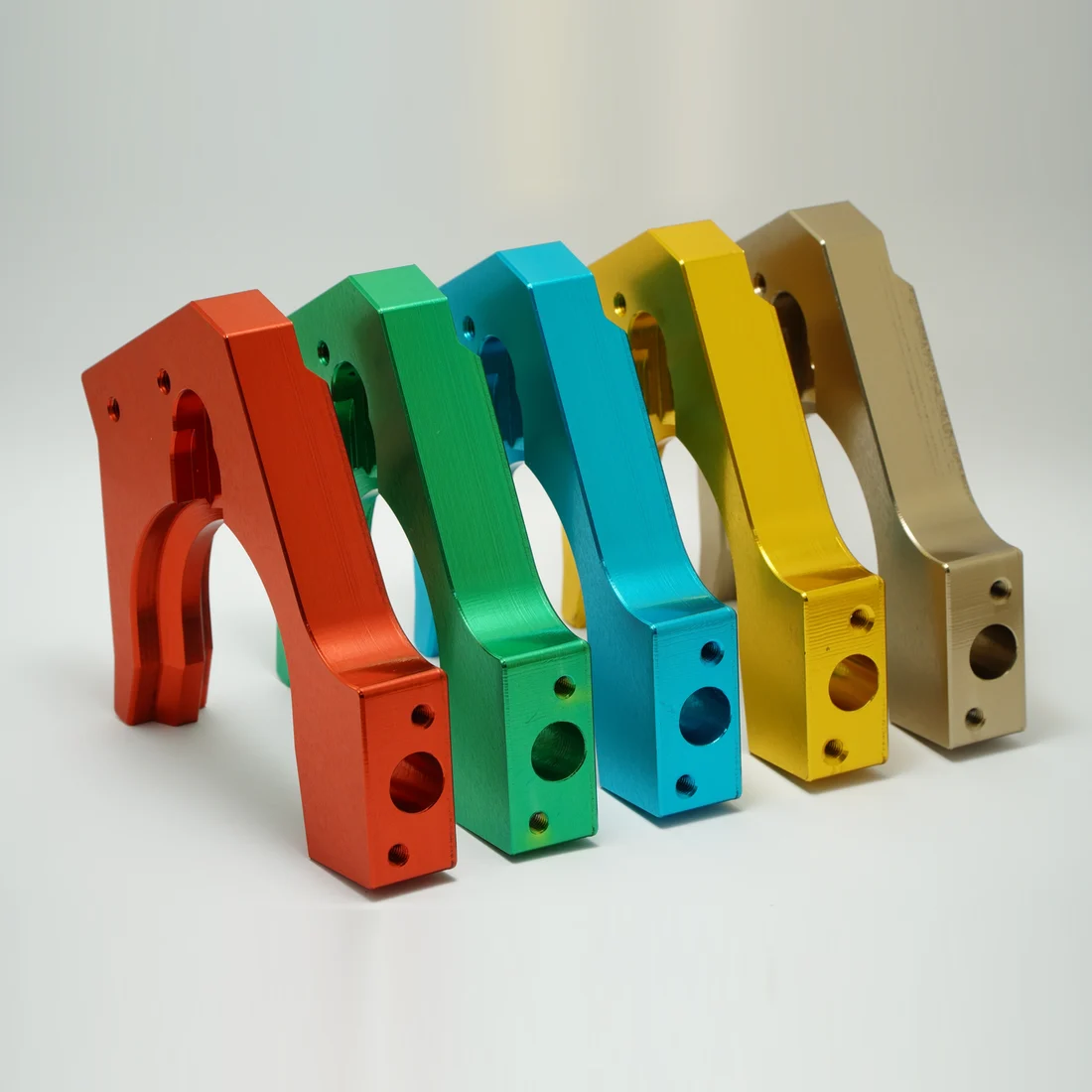
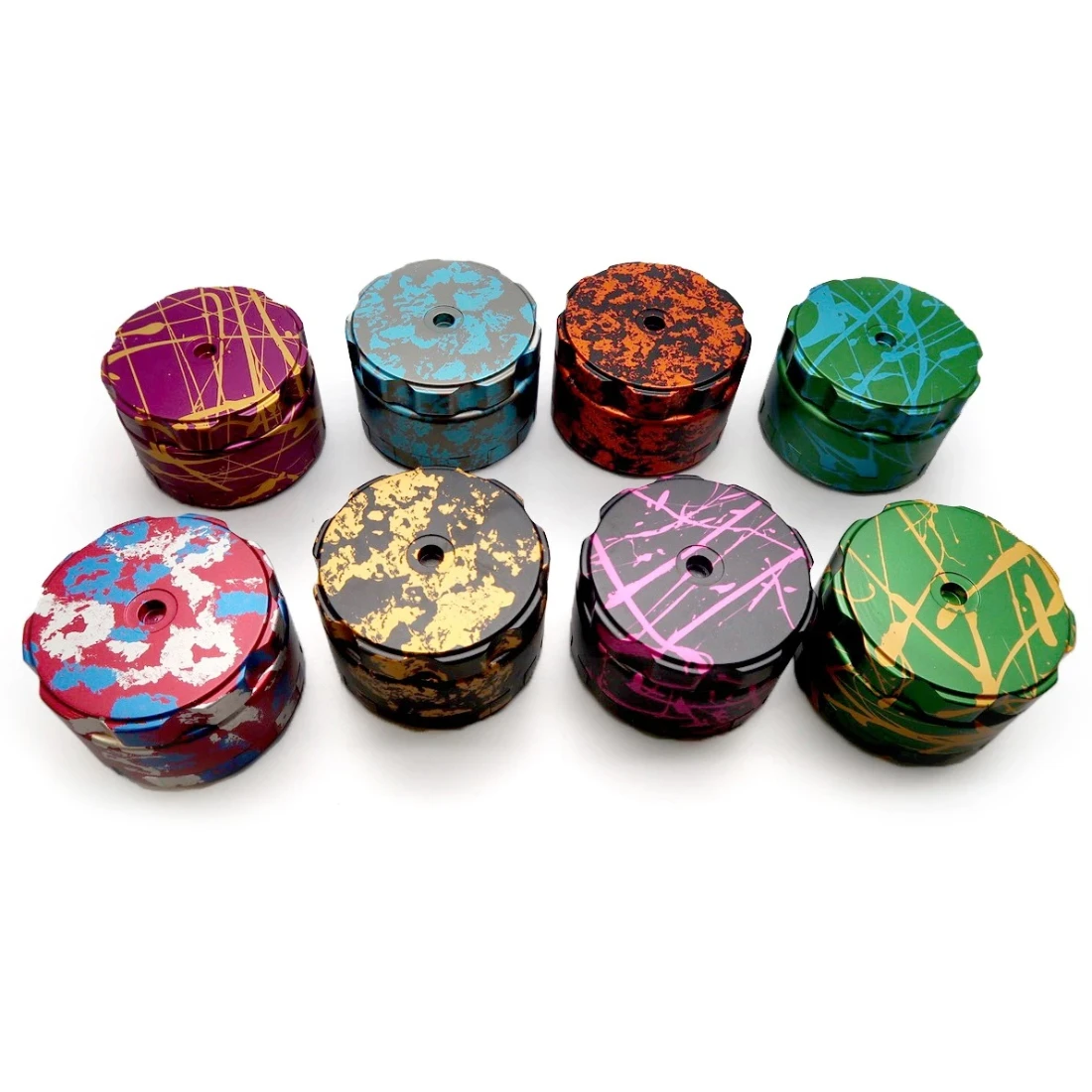
Aluminium takes the widest range of finishes of any material here, and anodising is the one that matters most: the oxide is grown out of the metal itself, so it does not chip off the way a coating does.
Anodising changes the size — say which features must not
Type II adds a couple of microns. Type III hard anodising grows roughly half its thickness outward, so a 50 µm coating puts about 25 µm on every surface, including the walls of a bore and the flanks of a thread. Mark the features that have to stay in tolerance and we will mask them or leave the allowance in the machining.
| Finish | What it does | Worth knowing |
|---|---|---|
| Type II anodising | Dyeable oxide layer — black, clear, and colours | Shade shifts a little between alloys and between batches. Match to an approved sample, not to a colour name |
| Type III hard anodising | Thick, hard, wear-resistant oxide | Half of it grows outward. Mask threads, bores and sliding fits |
| Bead blast | Even matt surface that hides tool marks | Usually the base before anodising. It sets how the colour reads |
| Brushing | Directional satin grain | Say which faces and which direction the grain runs |
| Buff polishing | Bright, close to mirror | Softens sharp edges slightly — not for a part with a knife edge |
| Powder coating | Thick opaque colour, tougher than paint | Builds far more than anodising. Threads and fits need masking |
| Tumbled | Deburrs and evens the surface | Rounds edges. Do not ask for it on a part that has to stay crisp |
| Chromate conversion | Corrosion coating that stays electrically conductive | Ask for it by name where the part is a ground path — anodising insulates |
Anodising, plating and powder coating are done at partner plants we have used for years. The parts come back here and are checked before they ship.
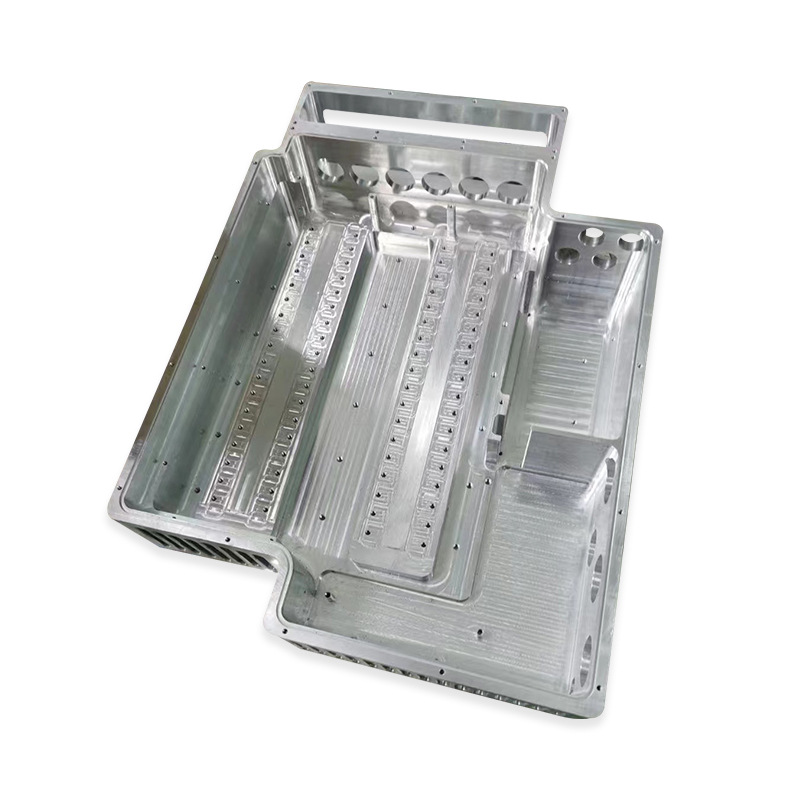
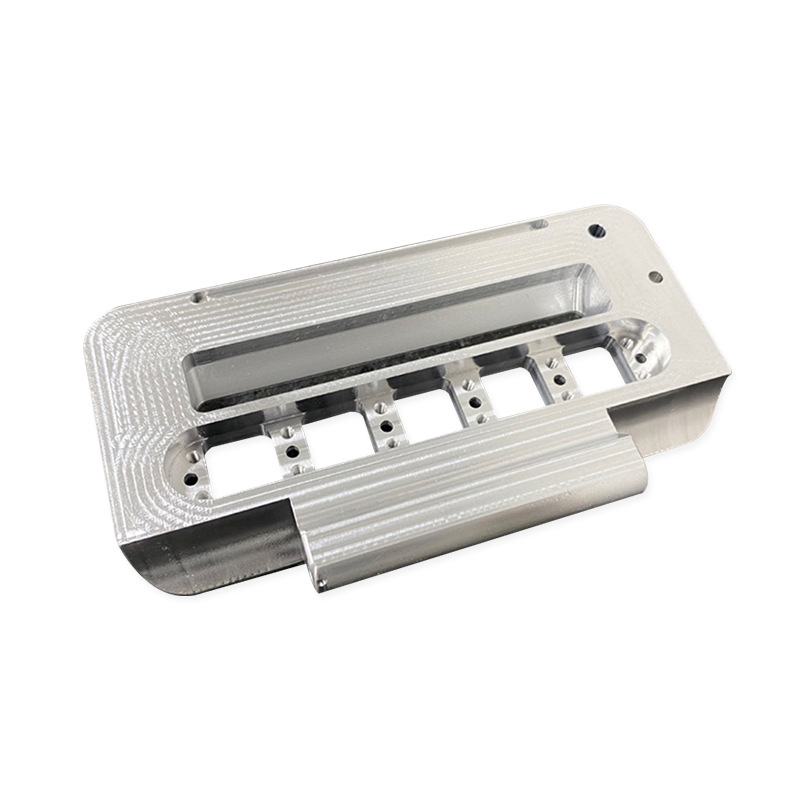
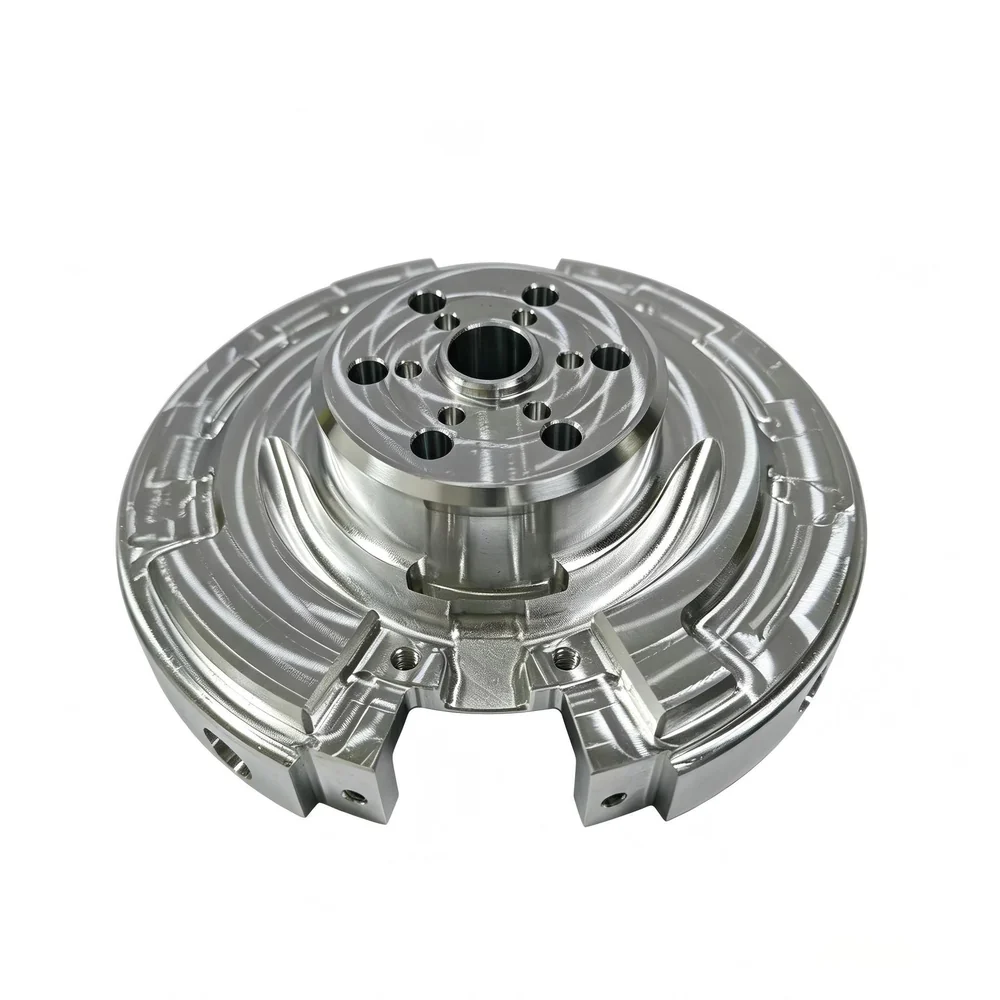
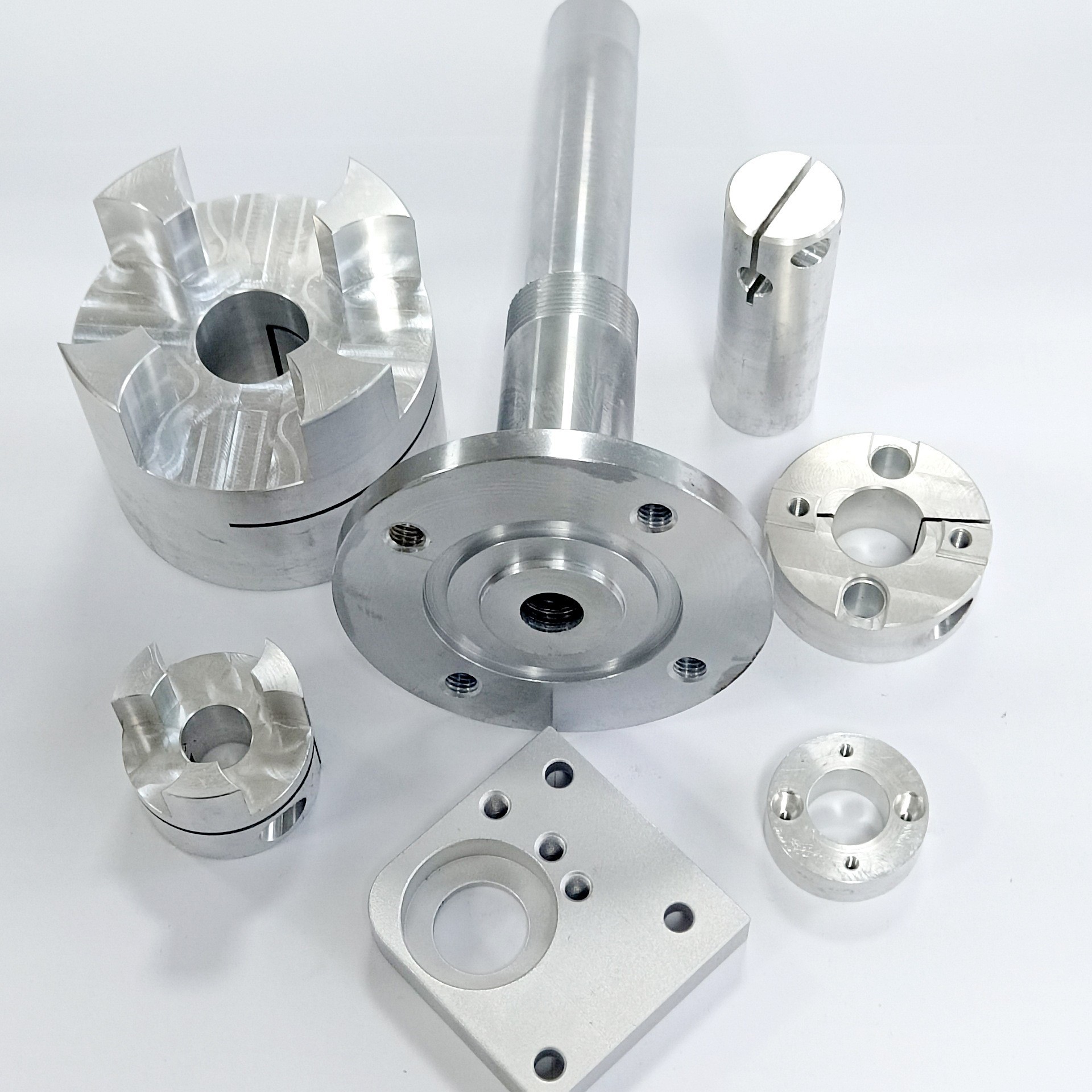
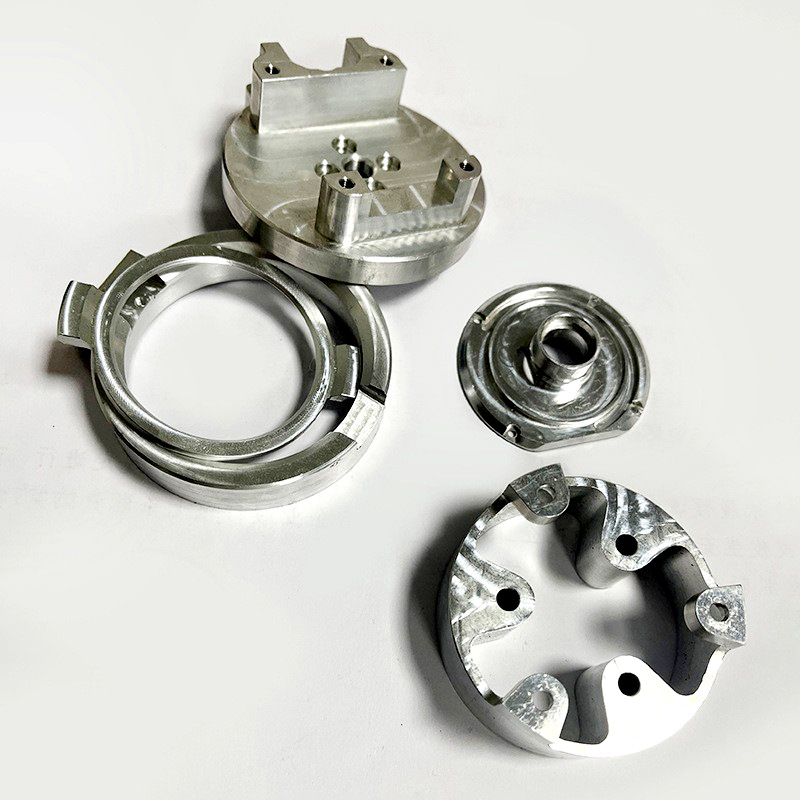
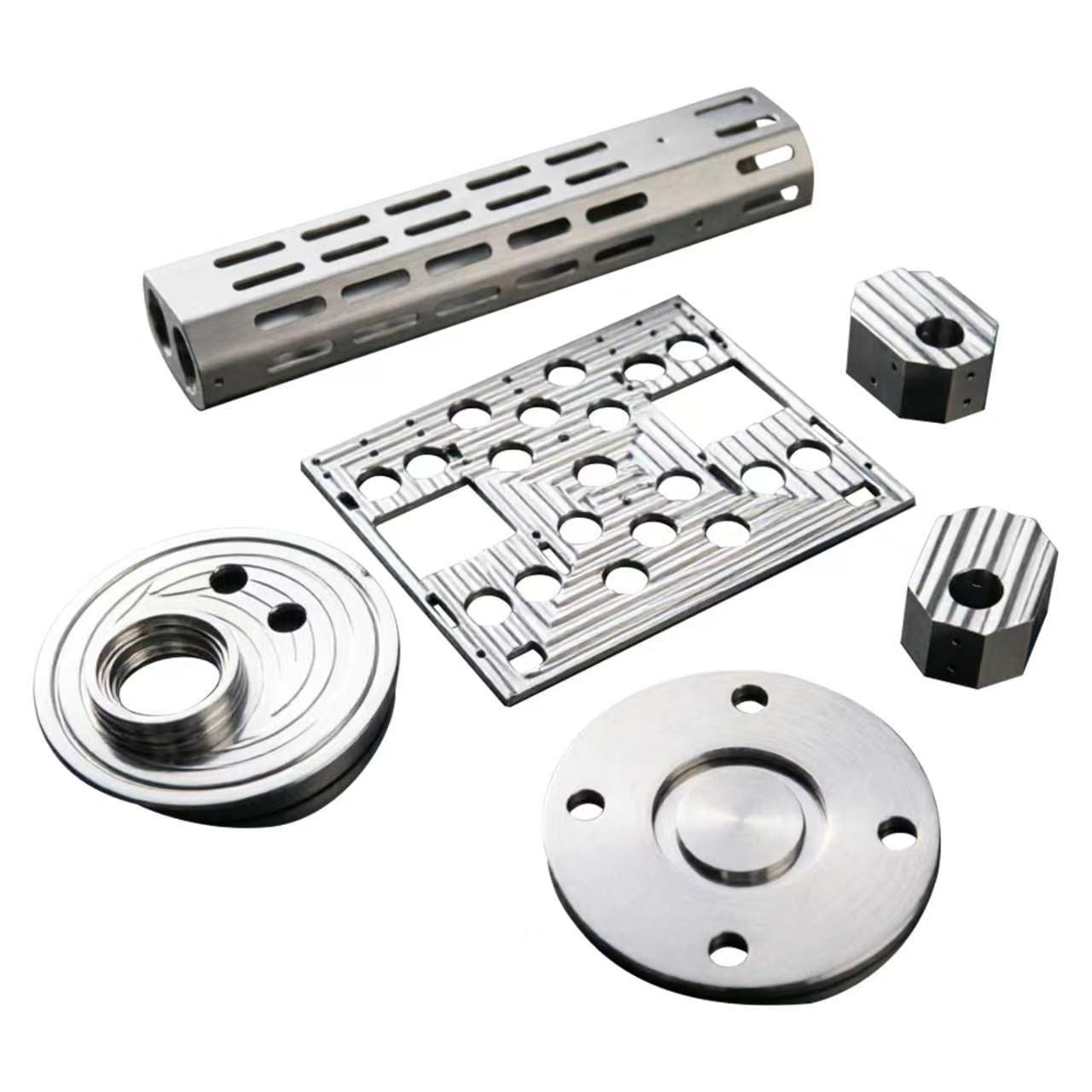
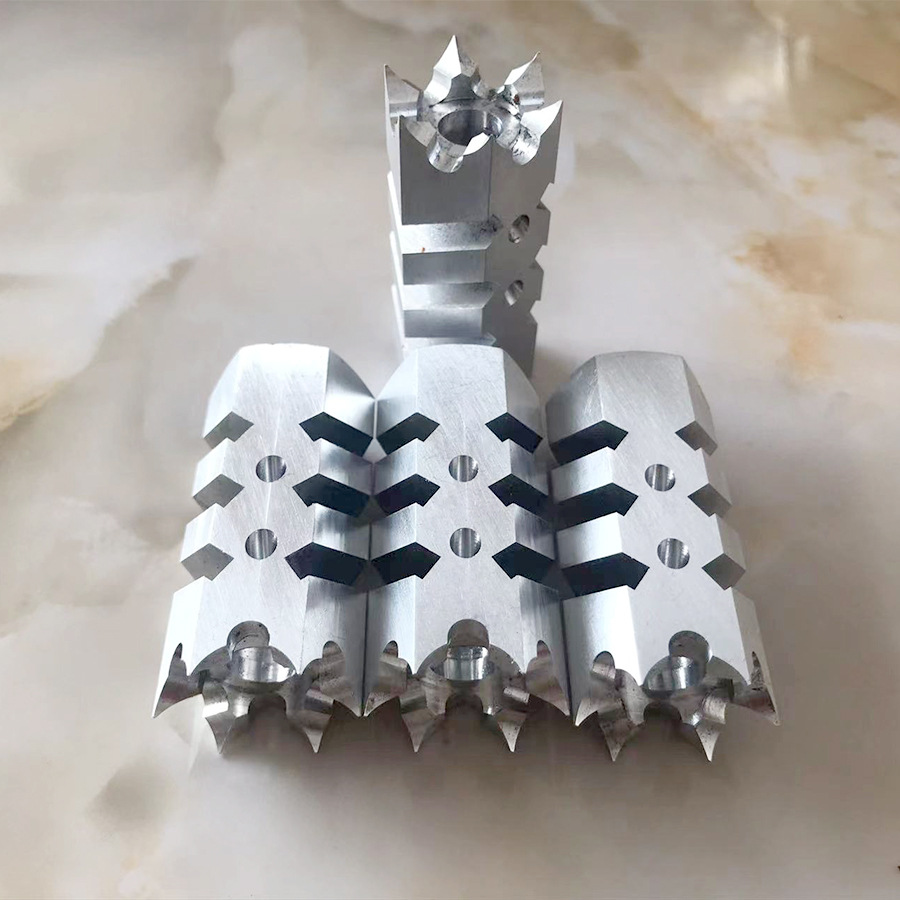
CNC machined aluminium parts
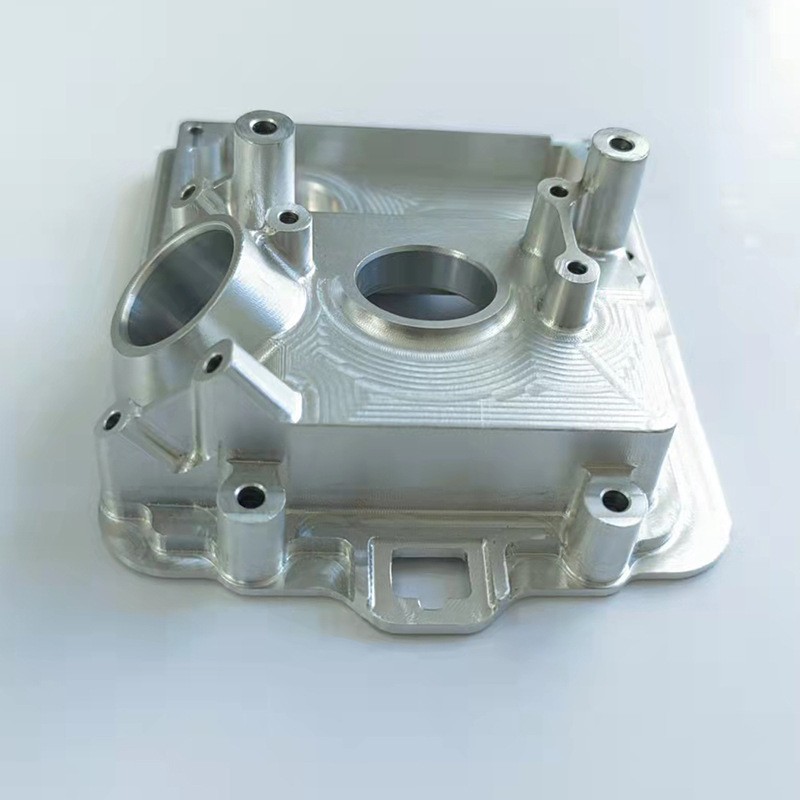
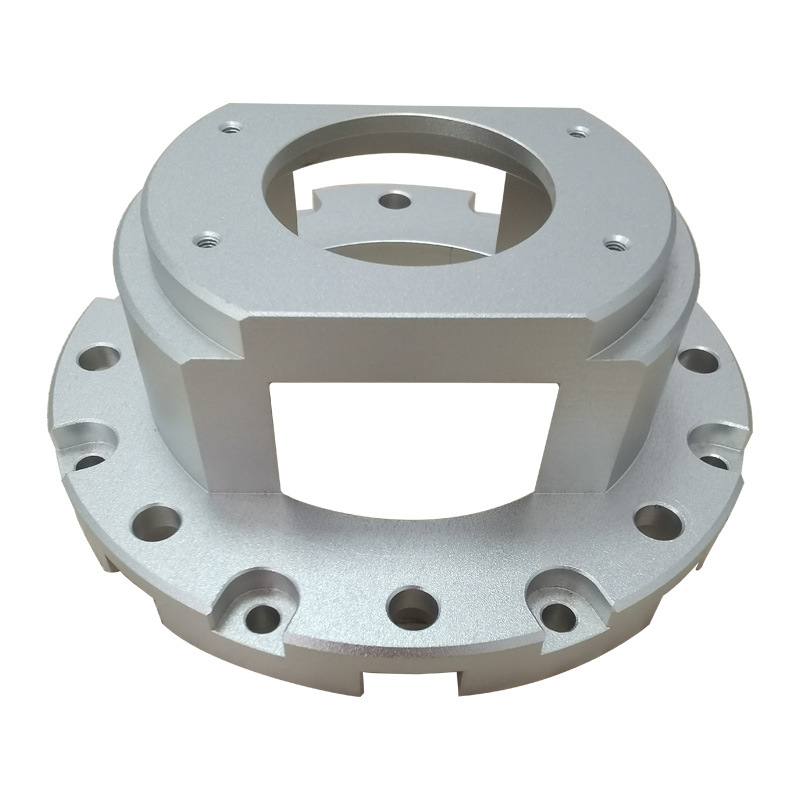
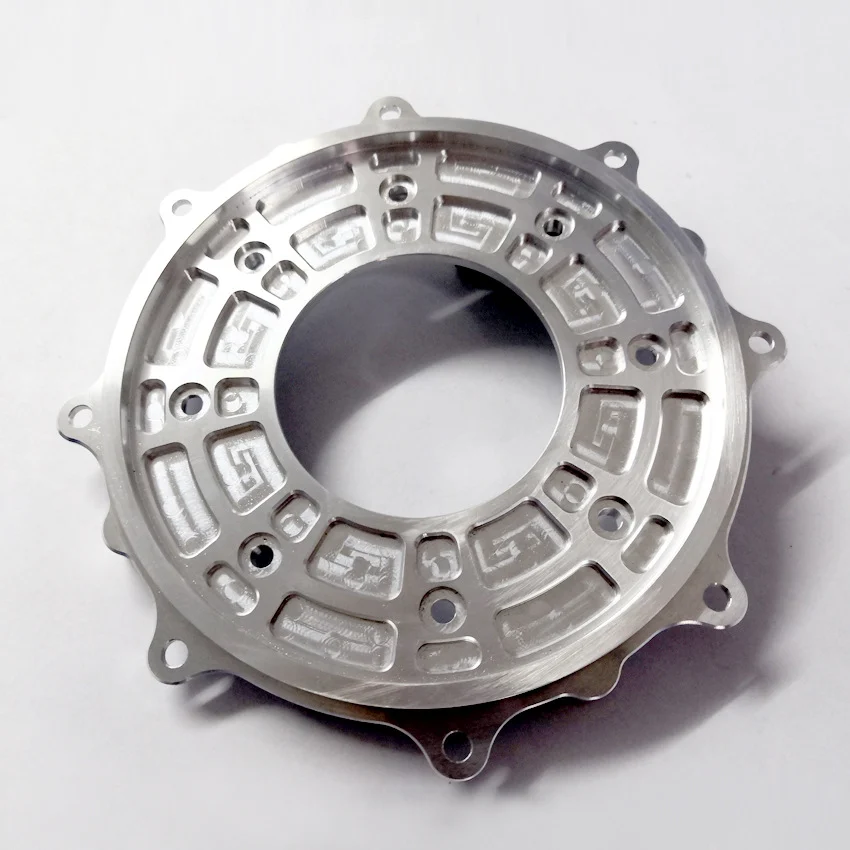
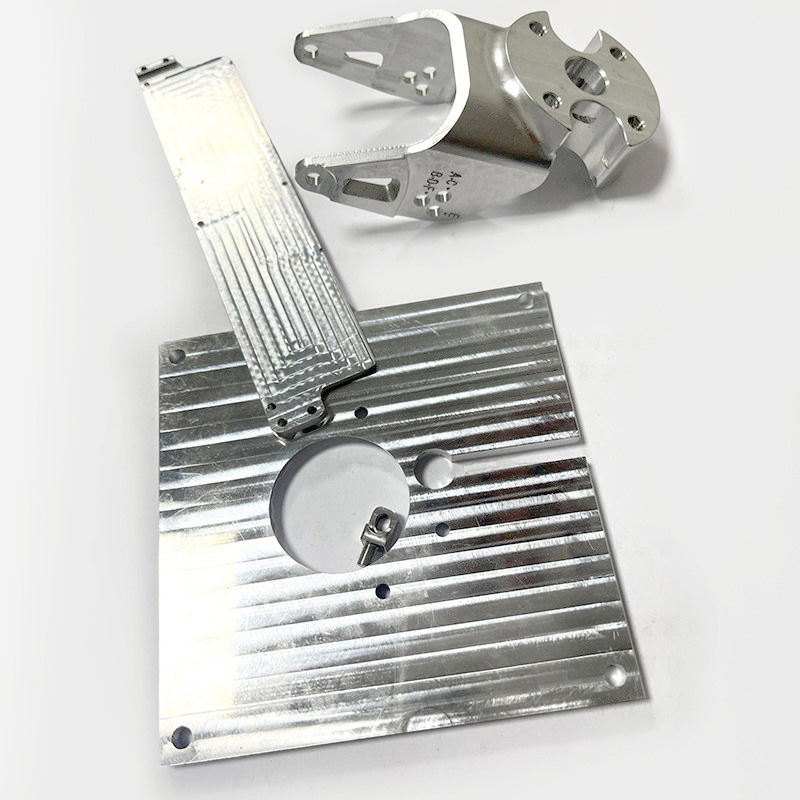
We do not publish customer parts or drawings. These came off our own machines in Dongguan — housings, heat sinks, bolt-circle plates, pocketed rings and turned work in 6061 and 7075, left as-machined or finished by bead blasting and anodising.
Aluminium being cut, on our floor
Four clips from the shop in Dongguan — flood-coolant milling, a part on the 4th axis, valve bodies in twin vises, and a round part being bored. No sound; press play.
Ready for a quote?
Send the drawing — price and lead time within 16 hours. STEP, IGES, X_T, DWG, DXF or PDF.
No minimum order.