
Process choice
Extrusion and CNC machining are not competitors at every quantity. Extrusion wins when the shape is constant and the volume is high enough to pay for a die; machining wins when the geometry changes, the tolerance is tight, or the quantity is low.
Quick answer
Low volume, tight tolerance, pockets or features that change along the part: machine it. High volume, constant cross-section, loose-to-moderate tolerance: extrude it, then machine the ends and critical features. The hybrid route — extruded blank plus CNC finishing — is often the cheapest way to get both.
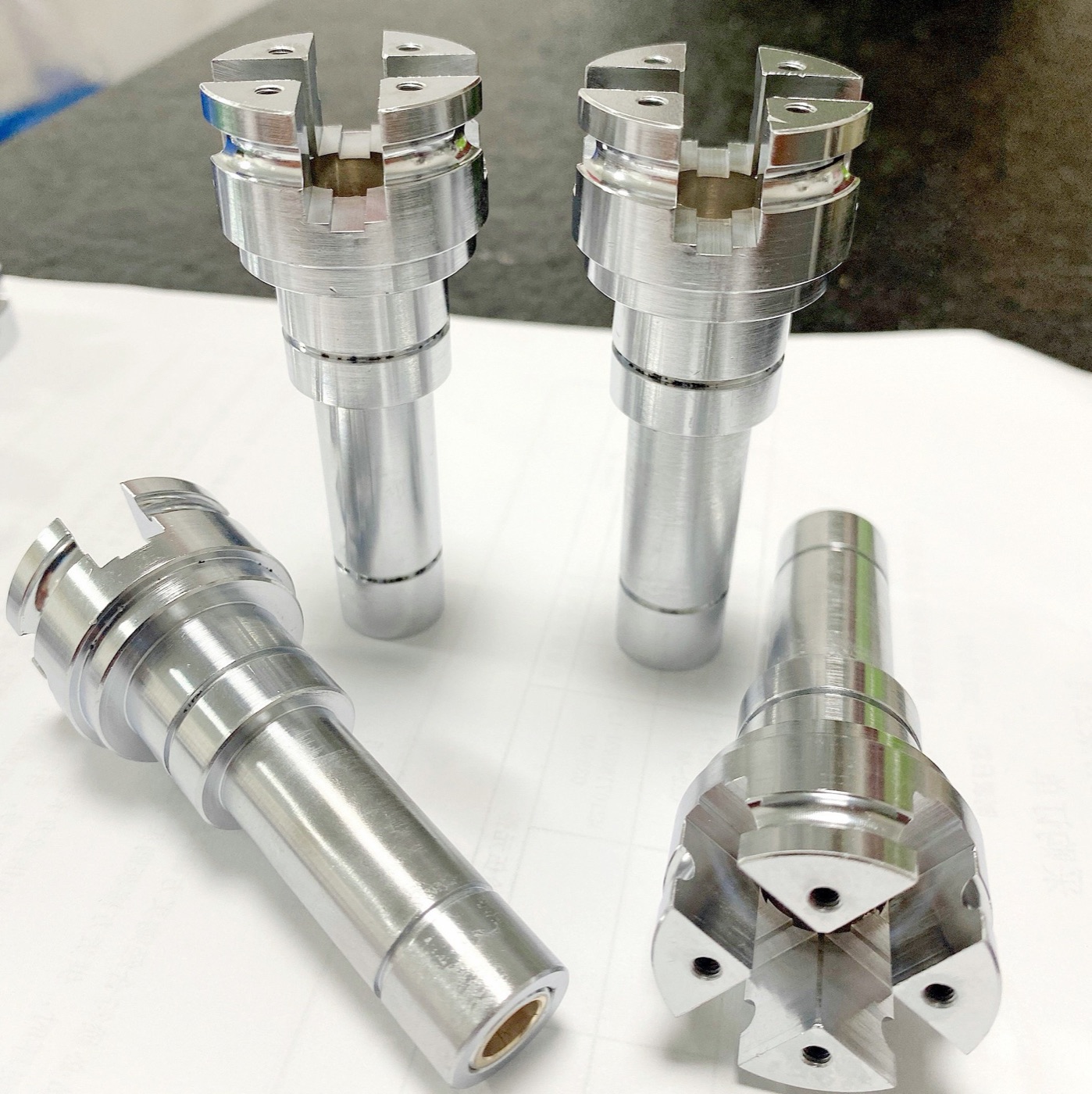
What extrusion does well
Extrusion pushes heated aluminium through a die to make a constant cross-section: a tube, a rail, a heat sink, a frame, a trim. The die cost is the entry ticket; once it is paid, the per-metre price is low and the length can be cut to order.
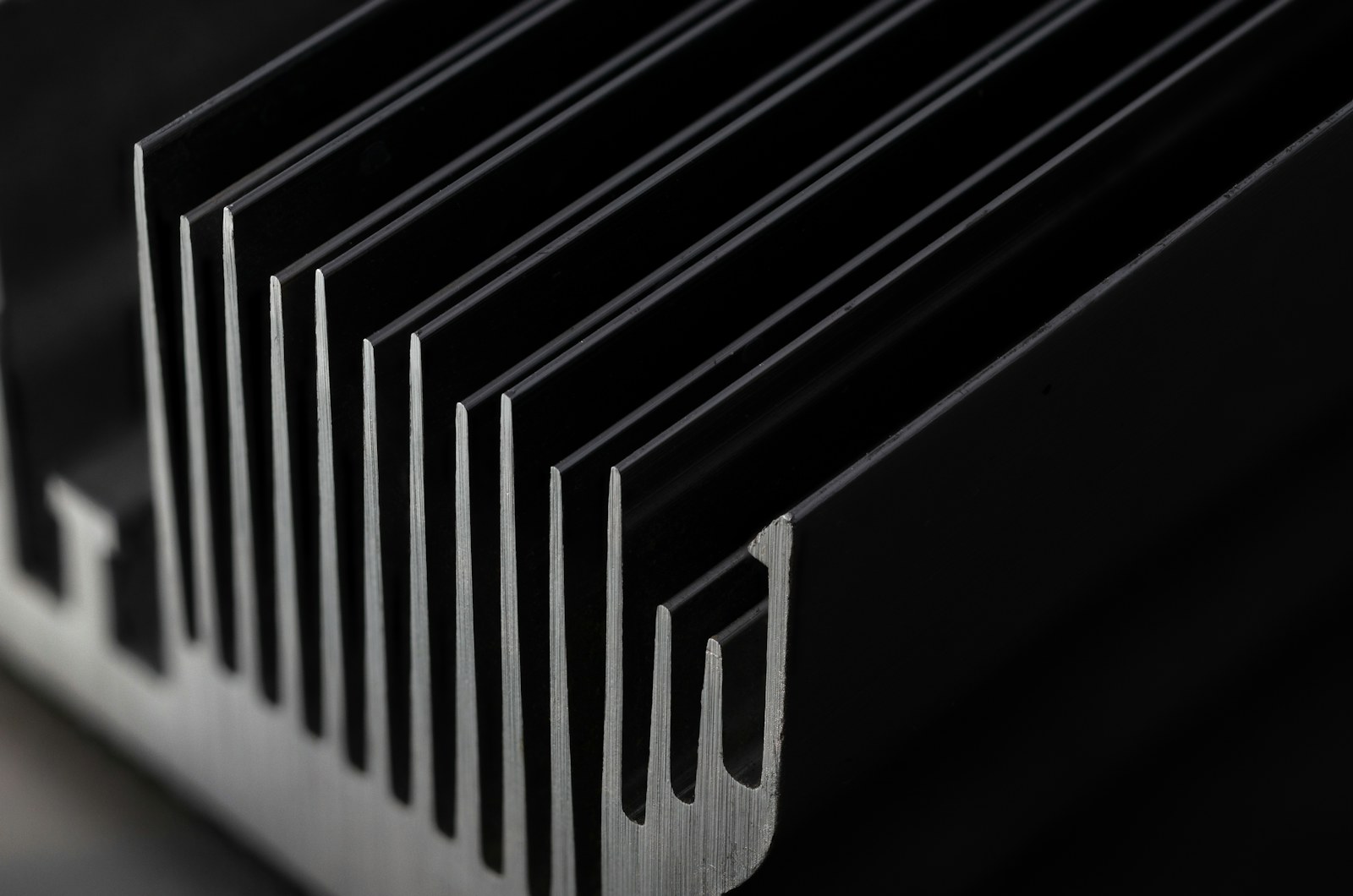
The heat sink above is an extruded profile: the fins come from the die, not from a milling cutter. That is the economic case for extrusion — a constant cross-section produced by the metre, with machining limited to the ends, mounting holes and any pocket.
It is the right process for a part whose cross-section does not change: a heat sink with straight fins, a frame profile, a mounting rail, a window frame. The tolerance is typically looser than machining, and the surface is usually milled or anodised after extrusion.
What CNC machining does well
Machining removes material to create a shape that changes in three dimensions: pockets, ribs, angled faces, bores, threads, contours. It holds tight tolerances and can produce a finished part from a plate or a bar in days, without a die.
It is the right process for prototypes, low-volume parts, complex geometry and any feature that cannot be extruded. The material cost is higher per part than an extrusion, but there is no tooling charge and the design can change without a new die.
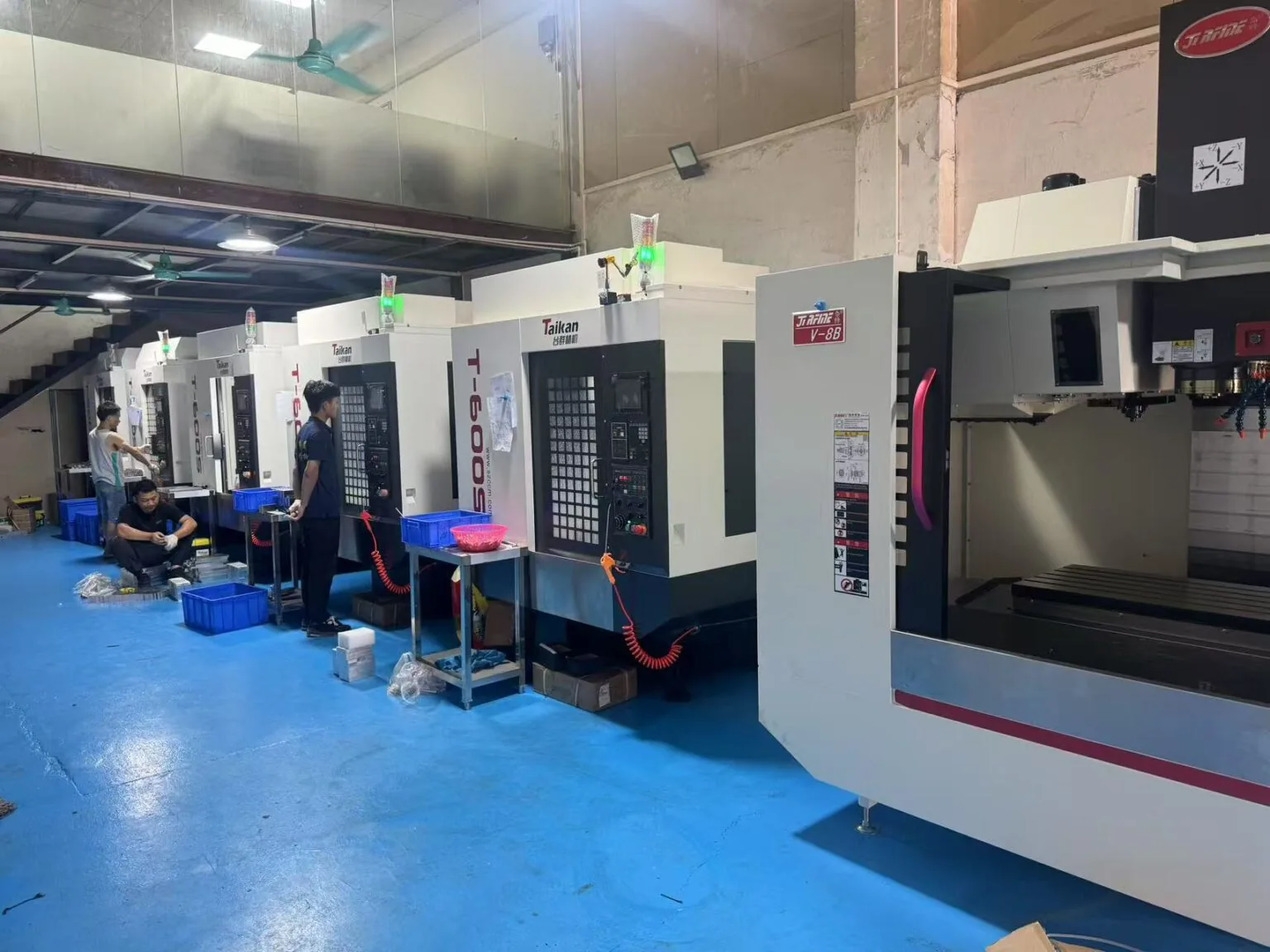
The machines above are where the 3D features are cut. A machined part can change shape in all three axes; an extrusion cannot. That is why a pocket, an angled port or a bored bearing seat moves the part into the machining column, even if the blank started as an extrusion.
Cost and volume
| Factor | Extrusion | CNC machining |
|---|---|---|
| Tooling | Die cost, often $1,000–$5,000+ | No die; fixture/programming only |
| Low volume | Die cost dominates | Setup dominates, but no die |
| High volume | Low per-metre cost | Cycle time dominates |
| Geometry | Constant cross-section | Any 3D shape |
| Tolerance | Moderate; machining after extrusion improves it | Tight, ±0.002 mm on critical features |
| Lead time | Die + extrusion + finishing, often weeks | Days for a prototype; 1–3 weeks for a batch |
| Design change | New die or a modification | Reprogram and re-fixture |
The break-even depends on the die cost and the annual volume. A $2,000 die spread over 10,000 parts is $0.20 per part; over 500 parts it is $4.00. That is why extrusion is rarely the right answer for a prototype or a low-volume run.
Constant cross-section vs 3D features
An extrusion is a constant cross-section: the die sets the profile, and the part is cut to length. A machined part changes shape in three dimensions. That is why a pocket, a step or a bored bearing seat moves the part into the machining column, even if the blank started as a near-net extrusion.
Tolerance and finish
Extruded profiles carry the die’s tolerance and the extrusion process variation. A machined surface can be held much tighter, but the extrusion’s straightness and twist can affect the final part. If the critical feature is a bore or a pocket, machine it after extrusion; do not rely on the extrusion for the fit.
Surface finish is another difference. An extrusion often has a visible die line and a matte surface; machining leaves tool marks. If the part is cosmetic, the finish and the grain direction should be specified on the drawing. If it will be anodised, say so before machining: the oxide layer adds a few microns per surface, and a tight bore or thread needs the pre-finish size adjusted.
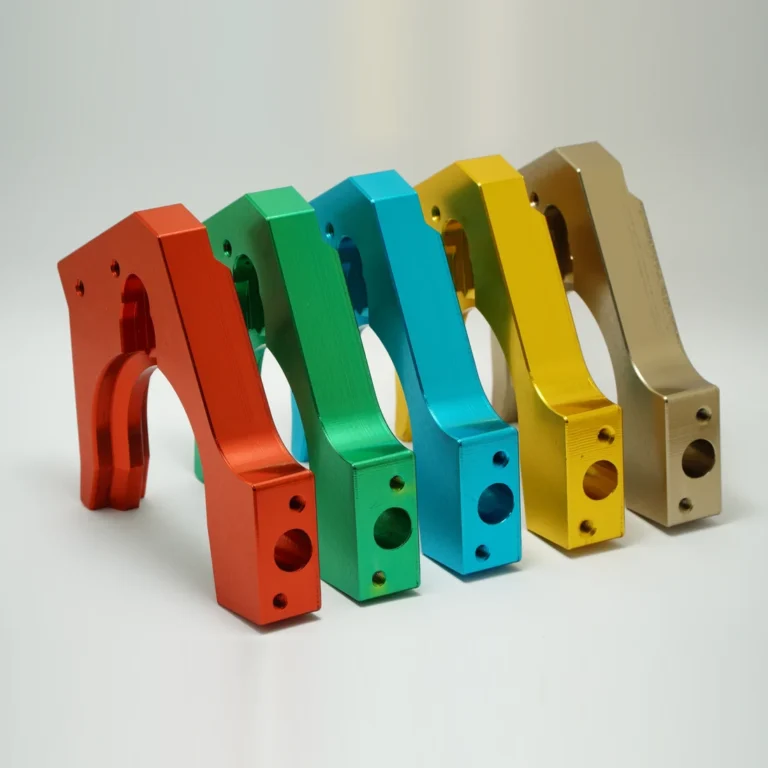
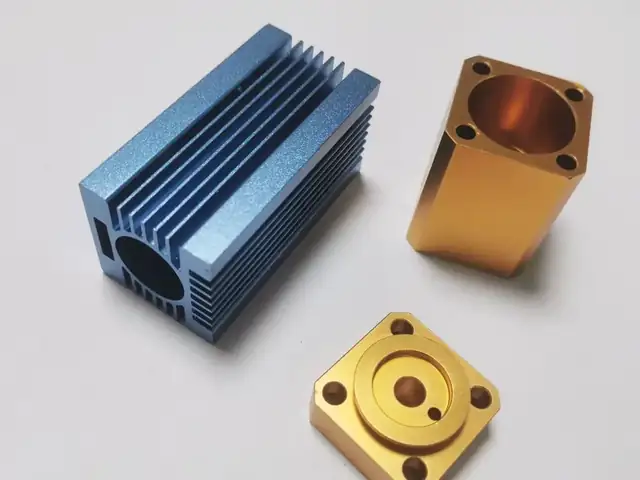
The parts above show what the finish step adds — and what it exposes. Anodising does not fill a scratch or hide a tool mark; it makes both more visible. If the part is cosmetic, agree the colour, the gloss level and the anodiser before the first cut.
The hybrid route
The most common production route is a hybrid: form a blank close to the final shape, then machine the ends, pockets, holes and critical faces. On a straight profile, extrusion supplies the constant cross-section cheaply; the machining supplies the features and the tolerance.
This works well for heat sinks, frames, rails and housings. A straight-fin heat sink can be extruded, cut oversize, stress-relieved if needed, and machined in a fixture. The die cost is amortised over the volume, and the machining time is shorter than cutting the whole part from plate.
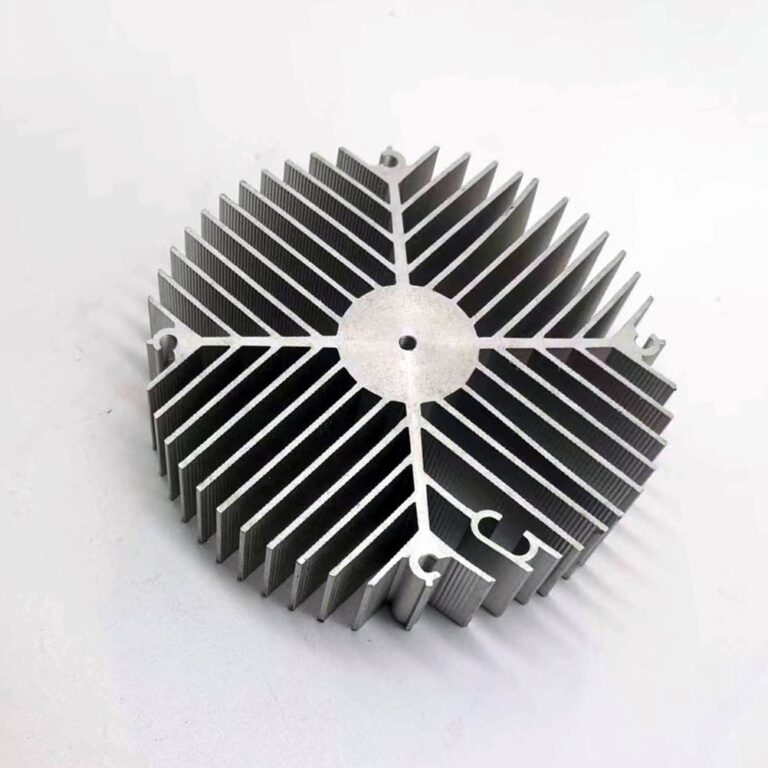
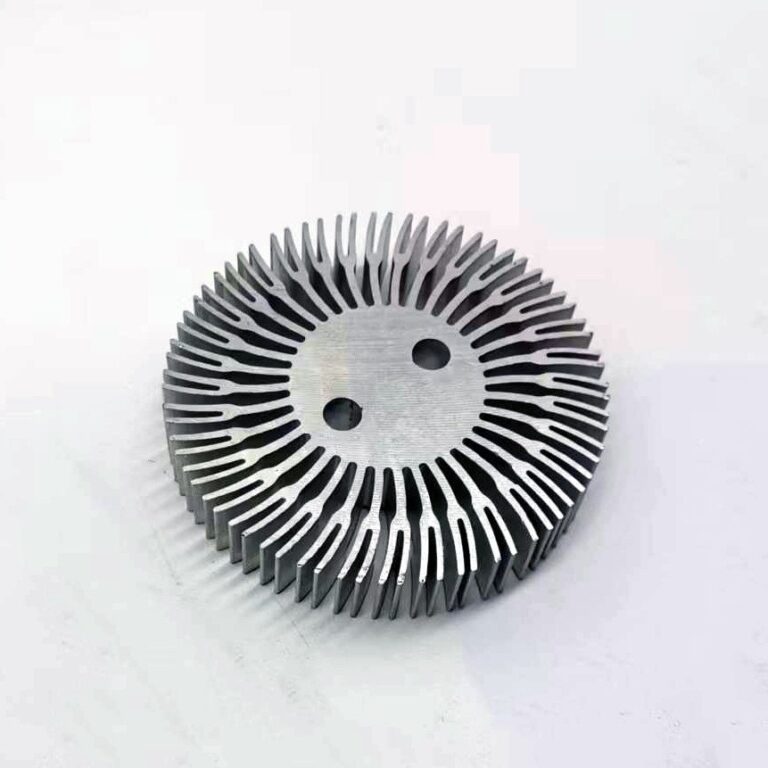
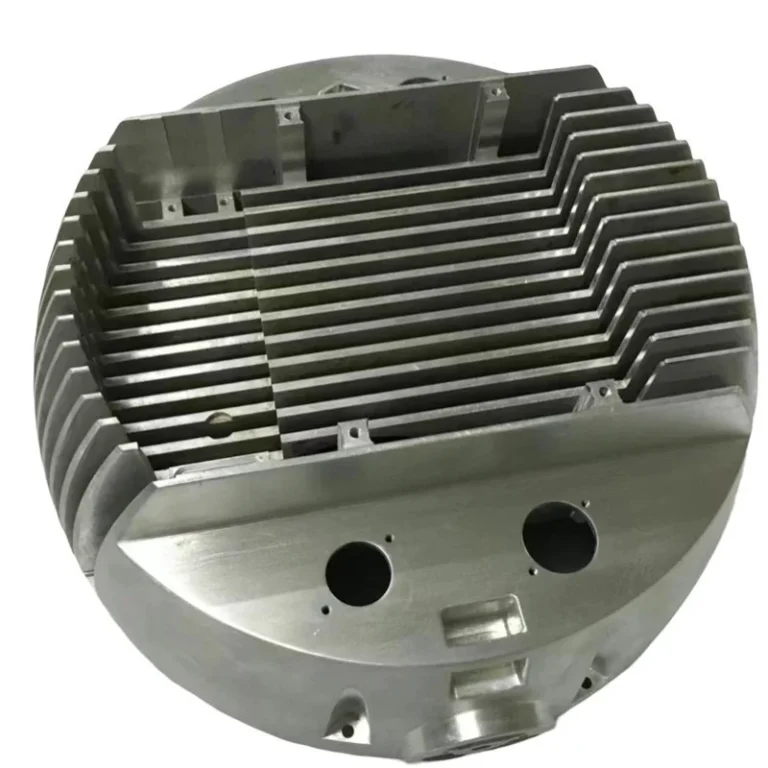
The two heat sinks show the division of labour. The fins are formed first; the hub face, centre bore and mounting holes are machined afterwards. On a straight profile that forming step is extrusion; on a radial sink it may be casting, forging or skiving. Either way, the forming step supplies the bulk of the shape and the machining supplies the fit.
A worked example
A 300 mm aluminium heat-sink housing, constant cross-section, with a milled pocket at each end and four tapped holes. At 50 pieces, machining from plate is the practical route: no die, and the design may still change. At 5,000 pieces, an extruded profile with machined ends is usually cheaper: the die is amortised, the material is closer to the final shape, and the machining time is shorter.
The decision is not “extrusion or machining” in the abstract. It is the annual volume, the die cost, the tolerance and the likelihood of a design change. Ask for both routes at your real volume.
Machining from plate: two examples
The two parts below started as solid 6061 plate. The pockets and slots remove weight without removing stiffness; the ribs follow the load path; the bores and mounting faces are machined in the same setup where possible. No die, no minimum order, and a design change is a new program rather than a new tool.
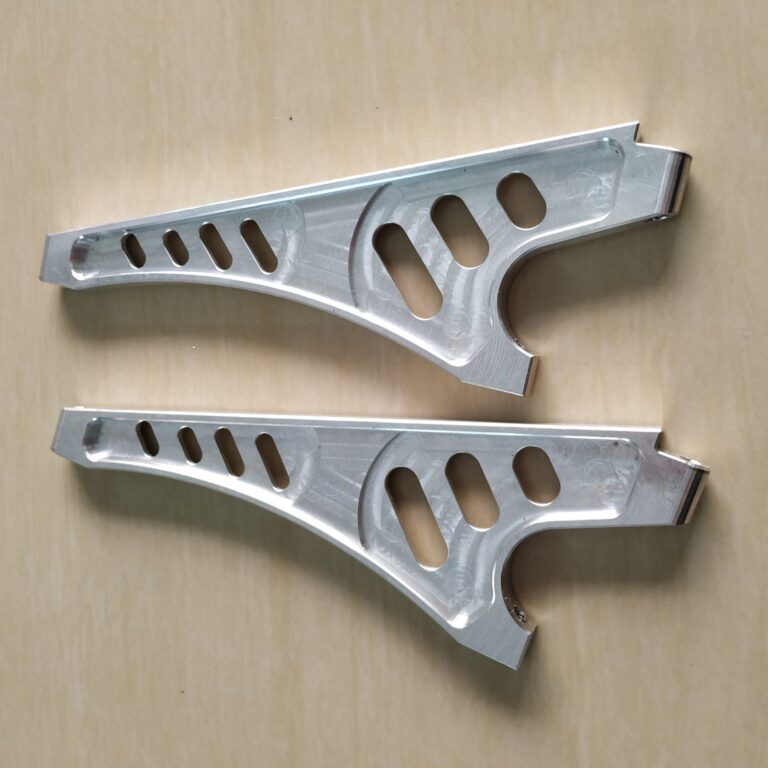
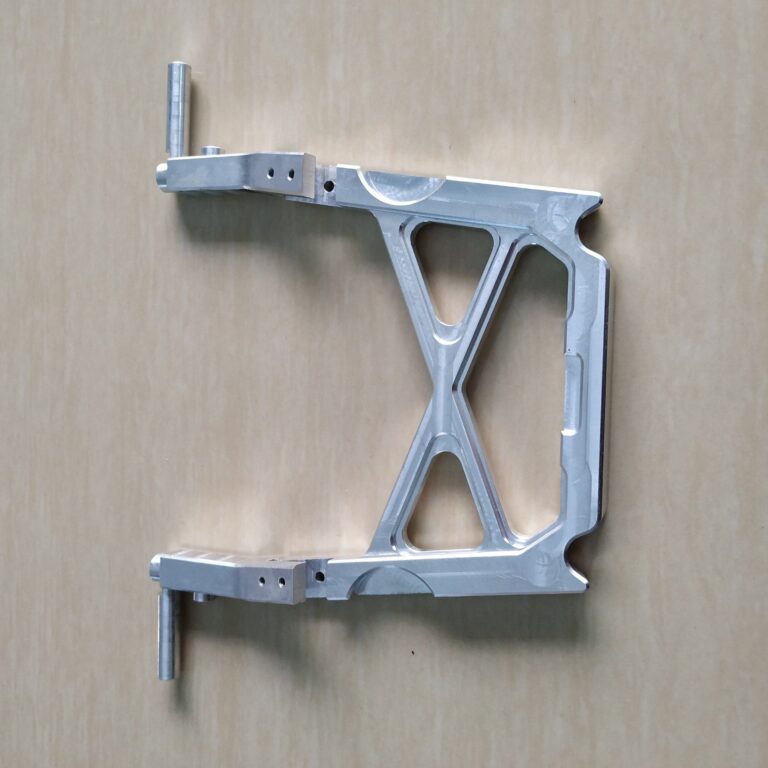
This is the route to use for prototypes and low-volume brackets. When the same profile repeats at high volume, extrusion takes over the constant section and CNC finishes the ends; the two photos above show what the machining half of that route can do.
The shop floor above is why the hybrid route is practical: the extrusion is sourced, the machining and inspection happen in one building, and the finishing is managed through a long-term partner. The customer gets one quote and one first article, not three suppliers arguing about the interface.
A cost model you can run
Extrusion economics are simple enough to model on one page. The total is the die cost, the material, the extrusion rate, the cut and finish, and the machining of the features the profile cannot form.
Die cost is fixed. A simple profile may be $1,000–$2,500; a complex hollow profile with tight tolerances can be $5,000 or more. Material is priced per kilogram, and the extrusion scrap rate matters: a profile with thin, unequal walls runs slower and scraps more. Extrusion rate is per metre; a simple profile runs fast, a complex one slow. Cutting and finishing add a fixed cost per length. Machining is only for the ends, holes, pockets and critical faces.
Example: a 1.2 kg/m profile, 0.4 m finished length, 5,000 pieces, $2,500 die, $4.20/kg, 8% scrap. Material is about $2.18 per part; the die is $0.50 per part at 5,000; extrusion and cut maybe $1.20; machining the ends and holes $2.50. Total around $6.38 before finishing. At 500 pieces, the die alone is $5.00 per part, and the same profile is closer to $11. The volume decides.
The model also shows where to focus. If the die is 40% of the part cost at low volume, the answer is machining, not a cheaper die. If material and scrap dominate at high volume, a better profile design — more uniform walls, a smaller envelope — saves more than a lower extrusion rate.
Alloys and tempers for extrusion
6063-T5/T6 is the default extrusion alloy. It has the best surface finish, takes anodising evenly and is easy to extrude. Its strength is lower than 6061, so it is used for frames, trims, heat sinks and covers rather than highly loaded brackets.
6061-T6 is the structural extrusion alloy. It is stronger and machines well, but it is harder to extrude and the surface is less forgiving. It is the choice for a load-bearing rail or a frame that will be machined after extrusion.
6005A-T6 is a middle ground: better strength than 6063, better extrudability than 6061. It is common in transport and structural profiles.
7075 is rarely extruded. Its alloying elements make it difficult to push through a die, and the properties that make it useful in aerospace plate do not survive the extrusion process in the same way. If you need 7075, machine it from plate.
5083 is a marine alloy with good corrosion resistance; it can be extruded in some profiles but is more often supplied as plate. For a wet environment, the alloy and the anodising or coating plan matter more than the extrusion rate.
Temper matters as much as alloy. T5 is cooled and artificially aged after extrusion; T6 is solution-treated and aged. T6 generally gives higher strength, but the quench can distort thin profiles. Ask for the temper on the certificate, not just the alloy.
Design rules for extruded profiles
- Keep walls uniform. Unequal walls cool at different rates and distort. A 2 mm wall beside a 6 mm wall is a straightness problem.
- Use generous corner radii. Sharp external corners wear the die; sharp internal corners create stress and are hard to fill.
- Avoid very thin walls. Below about 1 mm in aluminium, the extrusion is difficult and the tolerance suffers.
- Design the hollow section for the die. A simple hollow with a supporting mandrel is easier than a complex multi-cavity profile.
- Allow for twist and straightness. Extruded profiles are not straight to machining tolerances. If the part must be straight, specify the tolerance and plan a straightening or machining operation.
- Leave a machining allowance on critical faces. The extrusion supplies the shape; the machining supplies the fit.
- Plan the anodising. Die lines and extrusion marks show after anodising. If the part is cosmetic, specify the surface and the grain direction.
When machining still wins
Machining wins when the geometry changes in three dimensions, when the tolerance is tight, when the volume is low, or when the design is still moving. A prototype bracket with pockets, angled faces and a bored hole is a machining job, even if the production version will be extruded and machined.
It also wins when the material is not an extrusion alloy. A 7075 bracket, a titanium fitting or a PEEK insulator cannot be extruded into the final shape; it is machined from plate or bar.
And it wins on lead time. A die can take weeks; a machined prototype can ship in days. If the test date is fixed, the die is not the critical path — the machining is.
How GY quotes hybrid parts
For a hybrid part we quote the machining and manage the extrusion through a supplier, or machine from a customer-supplied extrusion. The quote separates the material, the extrusion, the machining, the finishing and the freight, so the customer can see which line moves the price.
We machine the ends, holes, pockets and critical faces on our 3- and 4-axis centres, inspect the first article on the CMM, and manage anodising through our finishing partner. If the extrusion is late or out of tolerance, we tell you before the machining starts, not after.
Send the profile drawing, the finished part drawing, the alloy and temper, the annual quantity and the critical features. We will tell you whether the profile can carry the tolerance or whether the feature should be machined.
Extrusion tolerances: what the die can and cannot hold
An extrusion is not a machined part. The die sets the cross-section, but the process adds variation: wall thickness changes, straightness, twist and surface marks. If the drawing applies a machining tolerance to an extruded surface, the quote will be wrong or the batch will be rejected.
| Feature | Typical extrusion tolerance | What to do |
|---|---|---|
| Profile dimension | ±0.2–0.5 mm, depending on size | Machine if tighter |
| Wall thickness | ±10% nominal | Design a uniform wall; machine critical faces |
| Straightness | 1–2 mm per metre, typical | Specify and inspect; straighten if needed |
| Twist | 1–2° per metre, typical | Machine the ends; check the assembly |
| Surface | Die lines, handling marks | Anodise or machine cosmetic faces |
| Length | ±1–2 mm cut tolerance | Machine the ends if length is critical |
The practical rule is to leave a machining allowance on every face that carries a tolerance. The extrusion supplies the shape and the material; the machining supplies the fit. If the part has a bore, a pocket or a flat sealing face, that feature is machined, not extruded.
Case study: a heat-sink housing at 50 and 5,000 pieces
The part is a 300 mm aluminium housing with straight fins, a milled pocket at each end and four tapped holes. At 50 pieces, machining from 6061 plate is the practical route: no die, and the design can still change. The machining time is longer, but the tooling cost is zero.
At 5,000 pieces, an extruded 6061-T6 profile with a machined pocket and tapped ends is usually cheaper. The die is amortised, the material is closer to the final shape, and the machining time is shorter. The extrusion tolerance is fine for the fin height; the pocket and the holes are machined after extrusion.
The break-even is not a fixed number. It depends on the die cost, the profile weight, the machining time and the finishing. Ask for both routes at your annual volume, not at the first order. A supplier who quotes only one route is not comparing the options for you.
A buyer’s checklist for extrusion vs machining
- Is the cross-section constant along the part?
- What is the annual volume, not just the first order?
- What is the die cost, and who owns the die?
- Which features can the extrusion hold, and which must be machined?
- What is the straightness and twist tolerance?
- How will the part be finished, and will the die lines show?
- What is the lead time for a die versus a machined prototype?
- Can the design change without a new die?
Common mistakes
- Choosing extrusion for a prototype. The die cost and lead time are hard to justify for a few parts.
- Specifying a tight tolerance on an extruded surface. The extrusion cannot hold it; machine the feature instead.
- Forgetting the die cost in the comparison. The per-metre price looks cheap until the tooling is included.
- Assuming the extrusion is straight. Straightness and twist can affect a long part; specify the tolerance and inspect.
- Not planning the finish. Die lines and machining marks show differently after anodising.
FAQ
Is extrusion cheaper than CNC machining?
At high volume with a constant cross-section, often yes. At low volume, the die cost usually makes machining cheaper.
Can I machine an extruded profile?
Yes. The hybrid route — extruded blank plus CNC finishing — is common for heat sinks, frames and housings.
What tolerance can extrusion hold?
Moderate profile tolerances. Tight features should be machined after extrusion, not formed by the die.
How long does an extrusion take?
Die making plus extrusion plus finishing can take weeks. Machining a prototype can take days.
Can extrusion replace a machined housing?
Only if the cross-section is constant and the volume justifies the die. A housing with pockets and ports is usually machined or hybrid.
What we see at GY on extrusion-to-machining projects
The profile tolerance is mistaken for a machining tolerance. The drawing applies ±0.1 mm to a face that the die cannot hold. The feature has to be machined, or the tolerance relaxed. Catching it before the die is ordered saves the project.
The die lines show after anodising. A cosmetic anodised part needs a surface specification and a sample. A die line that is invisible in bare aluminium can be obvious after a dark anodise.
The extrusion is not straight enough for the fixture. A long profile with 2 mm/m straightness may not sit flat in a machining fixture. Specify straightness and plan a straightening or a support.
The wall varies. Extrusion wall tolerance is typically ±10%. A thin wall that is 10% under may not clean up after machining; a wall that is 10% over may not fit.
Nobody owns the die. The die is a tooling asset. Decide whether the customer or the supplier owns it, and what happens if the project moves. A die that lives at the extruder is not portable unless the agreement says so.
The lead time is underestimated. Die making, trial extrusion, approval and production can take weeks. A machined prototype can be in the test before the die is finished.
A 10-point RFQ checklist for extrusion projects
- Profile drawing with tolerances and alloy/temper.
- Finished part drawing with machined features.
- Annual quantity and first-order quantity.
- Die cost and ownership.
- Straightness, twist and surface requirements.
- Anodising or coating, and which faces are cosmetic.
- Machining allowance on critical faces.
- Inspection: profile, straightness, machined features.
- Lead time for die, extrusion and finishing.
- Change plan: what happens if the design moves.

Related reading
- Finishing & process guide: anodising, EDM and hole-making
- Aluminium CNC machining service
- 6061 vs 7075 aluminium
- 12 DFM rules that cut machining cost
- How much does CNC machining cost in China?
- CNC Milling vs Turning: How to Choose (With Cost Examples)
- 3-Axis vs 4-Axis vs 5-Axis: What You Actually Need
- CNC machining services