
CNC Machining Acrylic (PMMA)
Acrylic is chosen when the part has to look clear. Optically it beats polycarbonate, it polishes to a glass-like edge, and it holds its clarity outdoors for years. What it does not do is survive impact or stress — it is a brittle material, and a machined acrylic part succeeds or fails on how the design treats that.
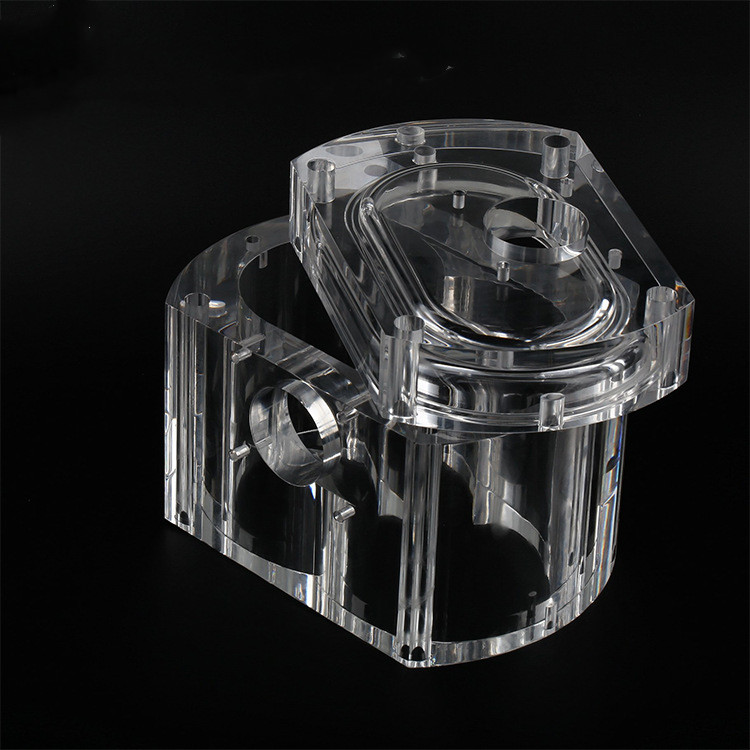
Cast against extruded
For machined parts this is the only choice that really matters, and cast wins on almost every count except price.
| Form | Best for | Notes |
|---|---|---|
| Cast acrylic (GS) | Machined parts, thick sections, polished edges | Higher molecular weight, machines and polishes far better, less prone to gumming and cracking |
| Extruded acrylic (XT) | Thin flat parts where cost dominates | Softer, melts more easily at the cutter, chips more at edges |
| UV-stabilised | Outdoor signage and covers | Acrylic is already good outdoors; stabilised grades are better again |
| Coloured and frosted | Diffusers, lenses, decorative panels | Available in a wide range of tints and light-transmission levels |
Easy to cut, easy to ruin
Acrylic cuts cleanly with sharp, high-rake, polished-flute tooling and high spindle speeds. Feed too slowly and it melts and re-welds behind the cutter; feed too aggressively and it chips at the edges. There is a window, and cast acrylic has a much wider one than extruded.
Drilling is where most acrylic parts crack. A standard metal drill grabs as it breaks through and splits the material; acrylic-specific drill geometry, a slow break-through and support underneath are what prevent it.
Edges can be flame polished or vapour polished to optical clarity. Both are separate operations and both belong in the quote — a machined edge is matte, not clear, and customers who expect glass are disappointed by a part that was never quoted to be polished.
| At a glance | |
|---|---|
| Service temperature | Around 80 °C |
| Optical clarity | Better than polycarbonate; excellent light transmission |
| Impact resistance | Low — this is the trade against polycarbonate |
| Weakness | Brittle; cracks around fasteners and at sharp features |
| Typical parts | Lenses, diffusers, display panels, sight glasses, signage, light guides |
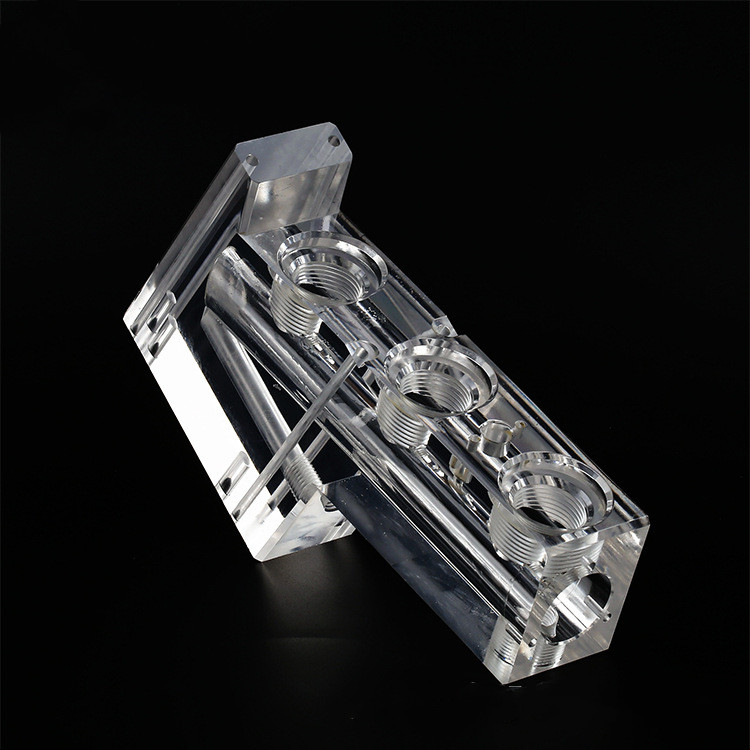
Three rules for machined acrylic
Say whether edges must be optically clear
Polishing is a separate operation. If the part needs it, it belongs on the drawing, not in a phone call after delivery.
Never clamp a bolt directly onto acrylic
Use a clearance hole, a washer and a shoulder or insert. A fastener torqued onto bare acrylic cracks it, if not immediately then in service.
Choose polycarbonate if anything can hit it
If the part is a guard rather than a window, impact matters more than clarity and polycarbonate is the right material.
Finishes that work on acrylic
Flame or vapour polishing for clear edges; protective film stays on until delivery wherever possible.
Finishing is done by partner shops we specify and inspect for — we do not run plating or coating tanks ourselves. How we handle finishing →
Send the clear part drawing
Send the drawing and the grade, or the drawing and a sentence about what the part has to survive. You get a price, a lead time, and an engineer’s note on anything that will fight the tolerances.