
Lead time
“16-hour quote” and “two-week production” are not the same kind of promise. One is a response time; the other is a calendar that starts when the drawing is approved, the material is released and the finishing slot is booked.
Quick answer
Ask for a date from drawing approval, with the material and finishing assumptions written down. A quote in 16 hours is normal; a production date of 7–15 working days is normal; a door-to-door order of 3–5 weeks is normal. If someone promises faster without explaining the material and the finishing, ask what is being left out.
What “16-hour quote” actually means
It means the drawing is read by an engineer and a price comes back within about one working day. It does not mean the part is scheduled, the material is ordered or the finishing plant has a slot. Those happen after you approve the quote.
A useful quote includes the price, the lead time from approval, the material, the finish, the inspection level and the Incoterm. If any of those are missing, the 16 hours bought you a number, not a plan.
The calendar, stage by stage
| Stage | Typical duration | What starts it | What can move it |
|---|---|---|---|
| Quote + DFM | 16 hours | Complete drawing and quantity | Missing callouts, material question |
| Material | 1–10 days | PO and material release | Non-stock grade, plate thickness, mill lead time |
| Machining | 5–10 working days | Material in hand, programme proven | Tight tolerance, thin walls, first-article rework |
| Finishing | 3–10 working days | Parts inspected and released | Anodising colour, batch minimum, partner queue |
| Final inspection | 1–2 days | Parts back from finishing | Report requirements, re-check of coated fits |
| Air freight | 3–6 business days | Shipment booked | Customs, remote address, DDP paperwork |
| Sea freight | 25–35 days | Container booked | Port congestion, sailing schedule |
Add the stages and a “two-week” machining job becomes a 4–6 week door-to-door order. That is not a failure; it is the calendar. The failure is quoting the machining stage and letting the customer hear “two weeks” for the whole order.
What moves the date
Material stock. 6061 plate in a common thickness is usually on the shelf. A 7075 plate in an odd thickness, a titanium bar in a small diameter, or a PEEK rod in a specific grade may need to be ordered. The mill lead time can be longer than the machining.
Finishing. Anodising is a batch process. A colour change, a batch minimum or a partner queue can add days. Hard anodising and plating add more. If the finish is critical, book the finishing slot when the PO is placed, not when the parts are ready.
Drawing questions. A missing tolerance, an undefined thread or a finish that cannot be reached creates a question. If the question waits for an answer for two days, the date moves by two days, even if the machine is free.
First-article rework. If the first article fails, the process is corrected and the part is re-made. A one-day rework is normal; a two-week rework means the process was not capable, and the date was optimistic.
Quantity. A prototype of 5 parts and a production run of 500 do not share a route. The fixture, the programme and the inspection plan change; the date changes with them.
Customs and freight. A missing document, a wrong HS code or a remote delivery address can add days at the border. DDP reduces the hand-offs but does not remove customs.
How to compress the calendar
- Send a complete drawing. STEP for geometry, PDF for tolerances, the quantity and the finish. One question round costs more than one extra file.
- Choose stock material. If the design allows 6061 instead of 7075, or a standard plate thickness, the material stage shrinks.
- Approve the first article fast. The batch cannot ship until someone signs. A one-day approval is a one-day saving.
- Split the order. Ship 10 parts by air to unblock assembly while the rest goes by sea. The freight cost is usually smaller than the delay.
- Book finishing early. Tell the supplier the finish and the colour at the quote stage so the partner slot is reserved.
- Use DDP for the first order. Fewer hand-offs, one invoice, less admin. Switch to FOB when you have a forwarder and a repeat route.
What a date should include
A date is only useful if it states its assumptions. “15 working days from drawing approval, material in stock, clear anodised, DDP to your postcode” is a date you can plan around. “2–3 weeks” is a range that hides the material, the finishing and the freight.
Ask for the assumptions in writing. If the material is not in stock, the date should say so. If the finish is a batch process, the date should say when the batch runs.
What GY does
We quote in about 16 hours, machine prototypes in 5–10 working days and production in 7–15 working days, depending on material, tolerance and finishing. We ship to 11 countries and quote EXW, FOB, DAP or DDP. For a first order we usually recommend DDP if your country is one we can serve directly, because it removes the forwarder decision from the critical path.
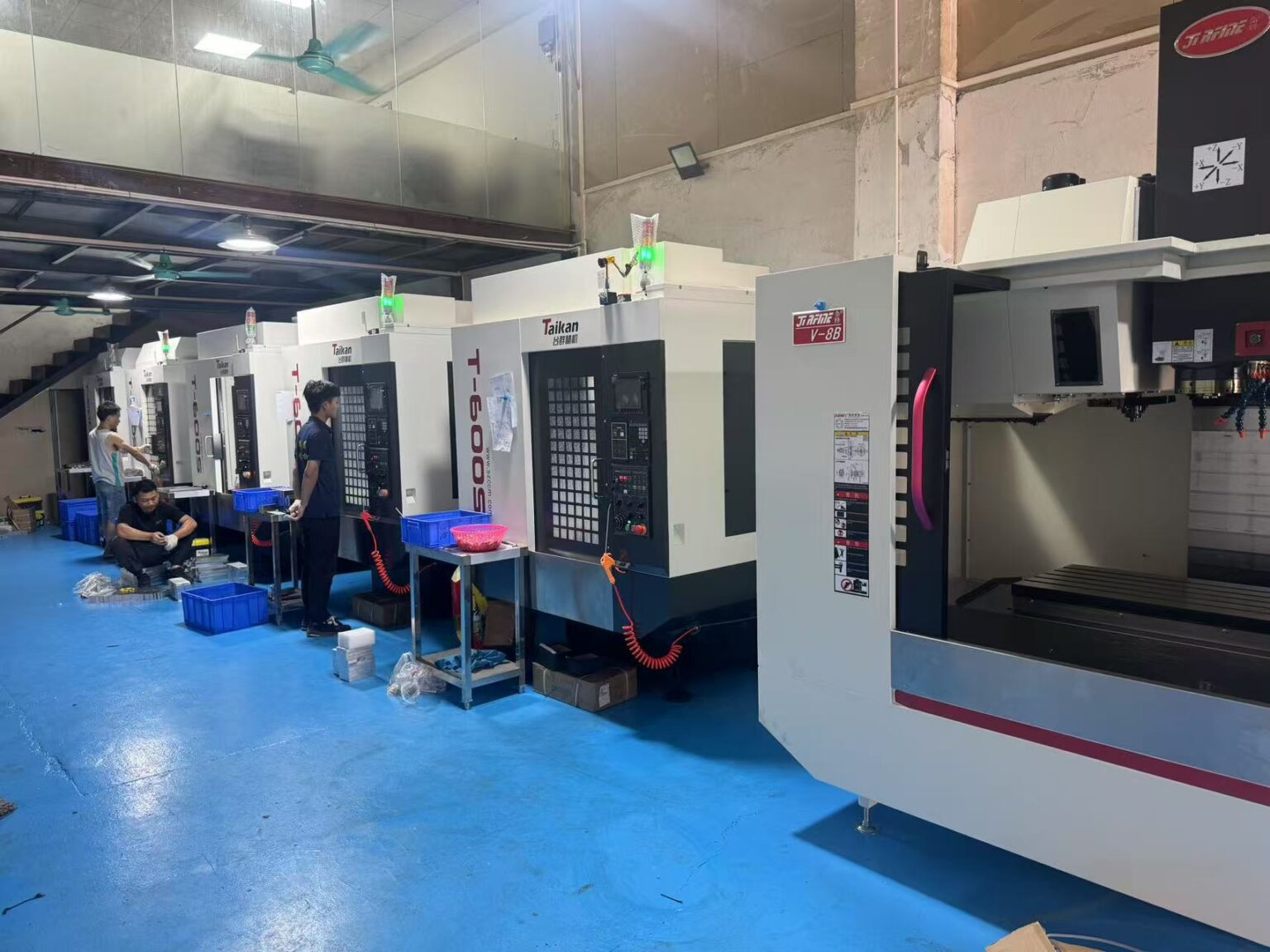
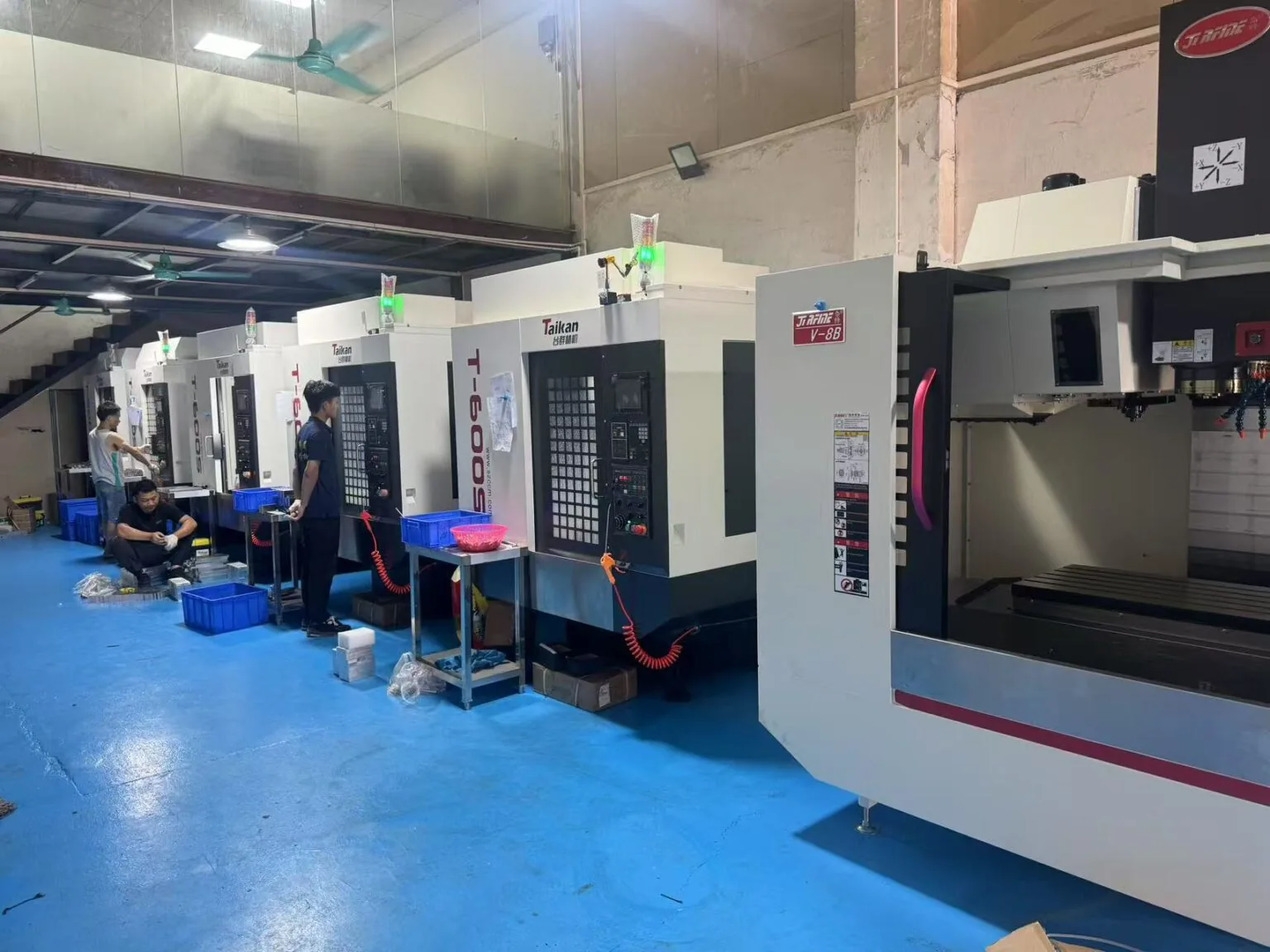
We are a 36-person shop in Dongguan with 32 machining centres (19 four-axis), 18 lathes (10 Swiss-type) and six sinker EDMs. Having turning, milling and EDM in one building removes the hand-offs between suppliers that usually add the invisible week.
Pain points we see
“Two weeks” that meant machining only. The customer planned assembly and the order arrived three weeks later. The quote was not wrong; the scope of the date was.
Material ordered after the PO. The shop quoted from a stock assumption that was not checked. The plate arrived ten days later and the date moved.
Anodising booked after machining. The finishing partner had a two-week queue. The parts sat on a shelf, finished in time for the ship date but not the assembly date.
Chinese New Year. A February order placed in January can lose two weeks to the holiday and the ramp-up. Plan the annual schedule around it, not the PO date.
Customs held the shipment for one document. A missing material certificate or a mismatch between the invoice and the packing list can add days at the border. Send the documents before the goods leave.
A four-week order, day by day
A 200-piece anodised aluminium bracket, DDP to the US. Drawing approved on a Monday. Here is where the four weeks went.
Days 1–2: material released. The 6061 plate was in stock, so no mill lead time. If it had been 7075 in an odd thickness, this stage could have been 7–10 days.
Days 2–4: programming and fixture. The first article was machined and measured on the CMM. One pocket was 0.03 mm shallow; the tool offset was corrected and the part re-measured the same day. The batch did not start until the report passed.
Days 4–10: production. Two setups per part, 200 pieces, with in-process checks every 20. The cycle time was predictable; the only variable was a tool change on day 7.
Days 10–16: anodising. The finishing slot had been booked at the PO stage, so the parts went into the rack on day 10. A colour change on the line added two days; the coupon was approved on day 12.
Days 16–18: final inspection and packing. The anodised bore was re-checked because the coating can change a fit. Photos and documents were sent before the shipment was booked.
Days 18–25: air freight and customs. DDP meant we handled the duty and brokerage; the customer’s only task was to receive the pallet.
The total was 25 days, not 14. The machining was 6 working days; the rest was material, finishing, inspection and freight. That is the honest calendar, and it is why we quote from drawing approval with the assumptions written down.
Bottom line
A lead time is a calendar, not a machining number. The machine may finish in a week; the order still needs material, finishing, inspection and freight. Ask for a date from drawing approval with the material and finishing assumptions, book the finishing slot at the PO stage, and add a customs buffer. A vague “2–3 weeks” is not a plan.
Common lead-time mistakes
- Reading “2–3 weeks” as the whole order. That is usually the machining stage. Material, finishing, inspection and freight add time.
- Not checking material stock. A non-stock grade or odd plate thickness can add more days than the machining.
- Booking finishing after machining. Anodising and plating are batch processes with queues. Book the slot at the PO stage.
- No customs buffer. A missing document or a remote postcode can add days at the border.
- Forgetting Chinese New Year. A February order placed in January can lose two weeks to the holiday and the ramp-up.
What a real date should state
- The start point: drawing approval, not the enquiry.
- Material assumption and stock status.
- Machining working days.
- Finishing process and booked slot.
- Inspection and documentation.
- Freight mode, Incoterm and customs buffer.
FAQ
How long does a CNC order from China take?
Quote in about 16 hours, prototype in 5–10 working days, production in 7–15 working days, then 3–6 days by air or 25–35 days by sea. Add material and finishing time for non-stock or coated parts.
Can you rush an order?
Sometimes. A rush usually means air freight, a material already in stock and a finishing slot that already exists. Tell us the date you need and we will say what is possible, not just quote a higher price.
Why does anodising add so much time?
Anodising is a batch process with racking, colour changes and a partner queue. A small batch can wait for a slot. Book the finish at the quote stage to reduce the wait.
Does DDP make delivery faster?
Not the transit itself, but it removes hand-offs and paperwork on your side. For a first order, that usually shortens the door-to-door time.
What date should I put in my project plan?
Use the supplier’s date from drawing approval, add the freight transit and a customs buffer, and keep the assumptions with the date. A range without assumptions is not a plan.
Related reading
Illustrative industry photo: Unsplash. Product photos: GY Machining.