
CNC Machining Torlon (PAI)
Polyamide-imide — Torlon is the name everyone uses — is the strongest unfilled thermoplastic that can be machined, and it keeps that strength to 260 °C. It runs as a bearing, seals as a ring, insulates at temperature and resists wear in compressors and aerospace assemblies. It is also a material with rules of its own: it needs a post-cure, it absorbs moisture, and the filled grades eat tools.
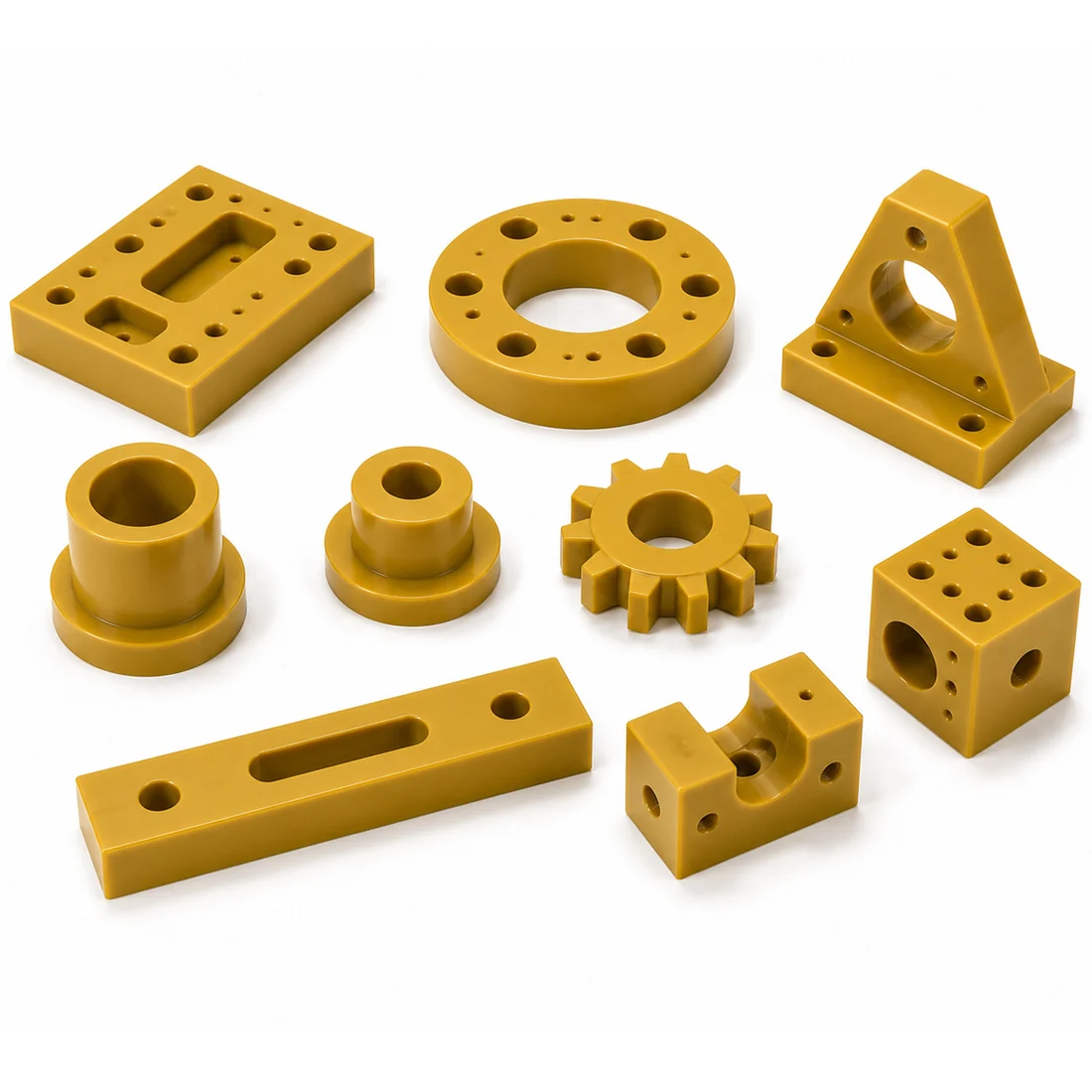
Grades and forms
Three grades cover most drawings. The bearing grades and the glass-filled grade look alike on paper and machine very differently.
| Form / grade | Best for | Notes |
|---|---|---|
| Torlon 4203 (unfilled) | Electrical and thermal insulators, structural parts, connectors | Highest impact strength and elongation; best dielectric; machines cleanest |
| Torlon 4301 (graphite + PTFE) | Bearings, thrust washers, seal rings, wear pads | The standard bearing grade: low friction, low wear, good creep resistance |
| Torlon 4275 / 4435 | Higher-load, higher-speed bearings | More graphite or PTFE for harder wear conditions |
| Torlon 5530 (30% glass) | Stiff structural parts at temperature | Highest stiffness and lowest expansion; abrasive, rougher finish |
| Rod, plate, tube | Turned parts from rod; rings from tube | Stock shapes are supplied fully cured, so parts machined from them need no post-cure |
Hard on tools, and it needs a post-cure
Torlon machines like a hard, abrasive plastic: rigid, no smearing, clean chips, a good finish from sharp carbide, and short tool life on the filled grades. It is dry-machined or run with a light coolant, at moderate speeds. Fine threads, thin walls and small bores all come out well.
What sets Torlon apart is the cure. Stock is cured by the supplier, but machining exposes new surfaces that have not reached full properties. The finished part goes through a post-cure at up to 260 °C over several days, which raises wear and chemical resistance and can move dimensions slightly. Tight-tolerance parts are rough-machined, cured, and then finished.
Torlon also absorbs moisture, and a part that has sat in humid air grows. Precision parts are conditioned and measured in a stated state and packed dry, exactly as with polyimide.
| At a glance | |
|---|---|
| Service temperature | Around 260 °C continuous |
| Strength | Highest tensile strength of any unfilled machinable thermoplastic |
| Wear | Bearing grades run dry against steel with very low wear |
| Weakness | Moisture absorption, needs post-cure, attacked by steam, strong alkalis and some amines; filled grades wear tooling |
| Typical parts | Bearings, bushings, thrust washers, seal and wear rings, valve seats, compressor and pump wear parts, high-temperature insulators, test-socket parts |
What unfilled PAI stock gives you
| Property | Typical value |
|---|---|
| Continuous service temperature | Around 260 °C |
| Short-term peak | 280–300 °C |
| Tensile strength | 150–180 MPa |
| Flexural strength | 220–260 MPa |
| Water absorption | About 0.3% in 24 h |
| Thermal expansion | A low coefficient for a thermoplastic, so parts hold size across a temperature swing |
| Volume resistivity | 1014–1016 Ω·cm |
| Dielectric strength | 20–25 kV/mm |
| Chemical resistance | Oils, fuels and most organic solvents; not for long-term contact with strong acids or alkalis |
| Machining | Turns, mills, drills and taps — suited to high-precision parts |
These are typical figures for unfilled PAI stock, not measurements taken on your part. Confirm them against the datasheet for the grade you specify — filled and bearing grades trade some of these numbers for stiffness and wear life.
Four rules for a Torlon part that performs
Tell us if it is a bearing
4301 and its relatives are the bearing grades; 4203 is not. The function decides the grade, and we will not guess.
Allow for the post-cure in the schedule
The cure runs for days. A part quoted without it is a part quoted without its full properties, so it is in our routing and in the lead time.
State the moisture condition for tight tolerances
Below ±0.025 mm, conditioning and measuring state have to be on the drawing or in the order.
Ask about stock before you fix the size
Torlon comes in set rod and plate sizes and the blank itself is expensive. A part designed to the next size down can cost a fraction of the same part drawn 5 mm over.
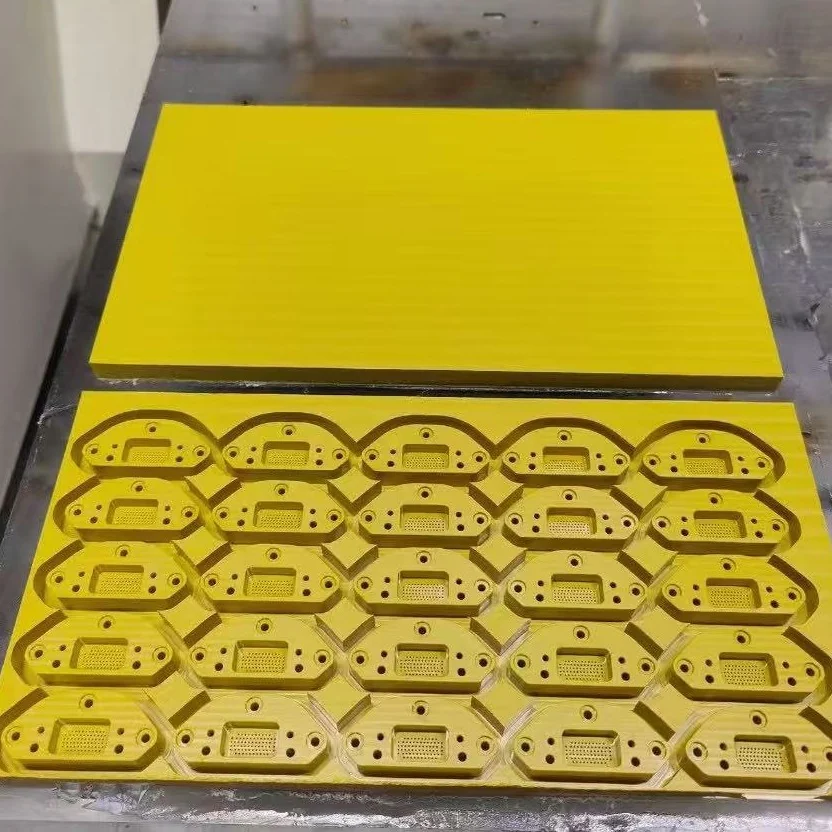
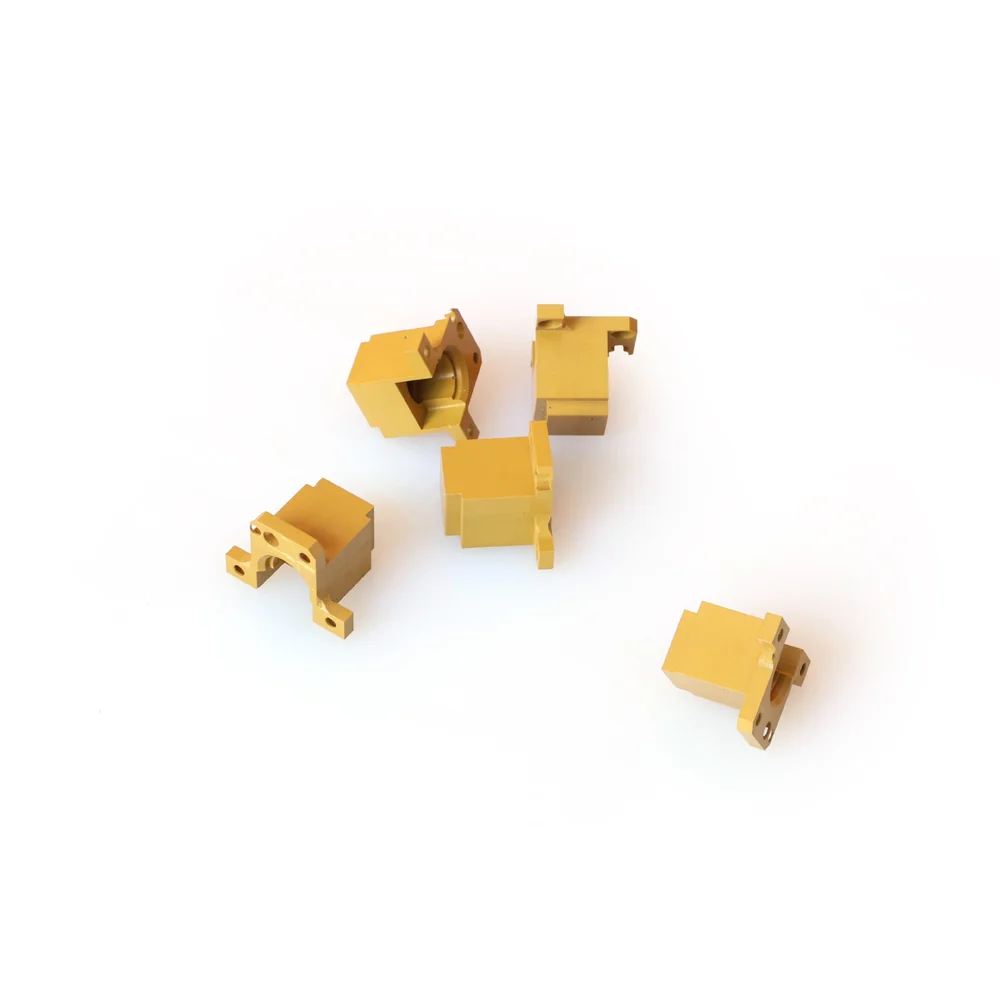
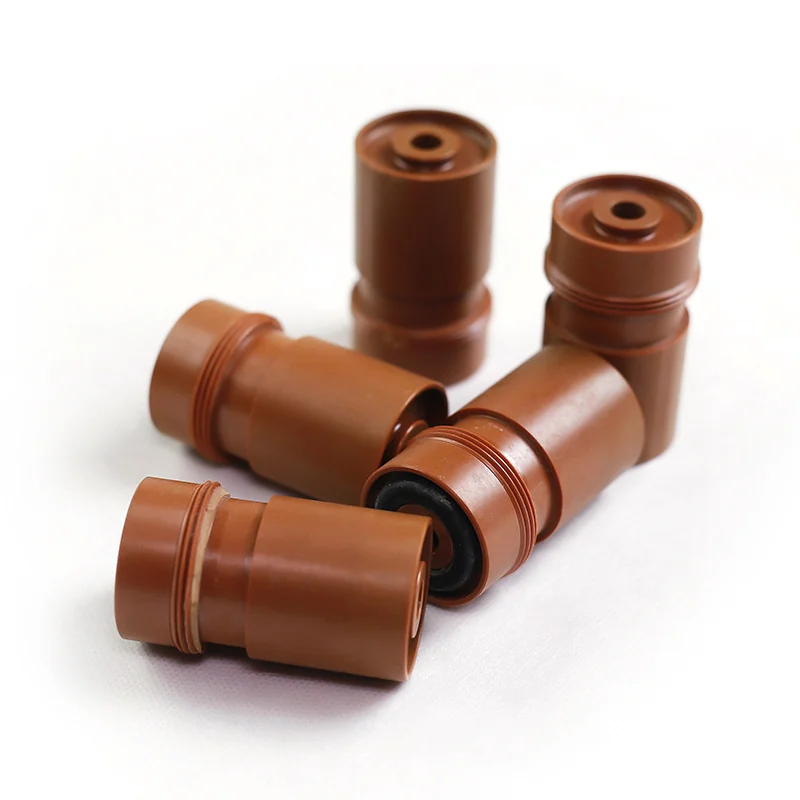
CNC machined PAI (Torlon) parts
Cut from solid PAI stock on our machines in Dongguan — not moulded. The plate shot is one job nested into a single piece of stock.
Ready for a quote?
Send the drawing — price and lead time within 16 hours. STEP, IGES, X_T, DWG, DXF or PDF.
No minimum order.