
CUSTOM G10 SCALES · DEVELOPMENT TO PRODUCTION
A G10 handle brings material, texture, color and fit together in a component the customer sees and touches every day.
At GY Machining, we help knife and EDC brands develop custom G10 handle scales, evaluate samples and prepare approved designs for repeat production. The work covers the visible surface and the interfaces that determine how the parts assemble.
This guide explains the decisions worth making before you order: the laminate, color reference, contour, texture, hardware, inspection and purchasing unit. It also shows how we turn sample feedback into a clear production definition.
In this guide Show contentsHide contents
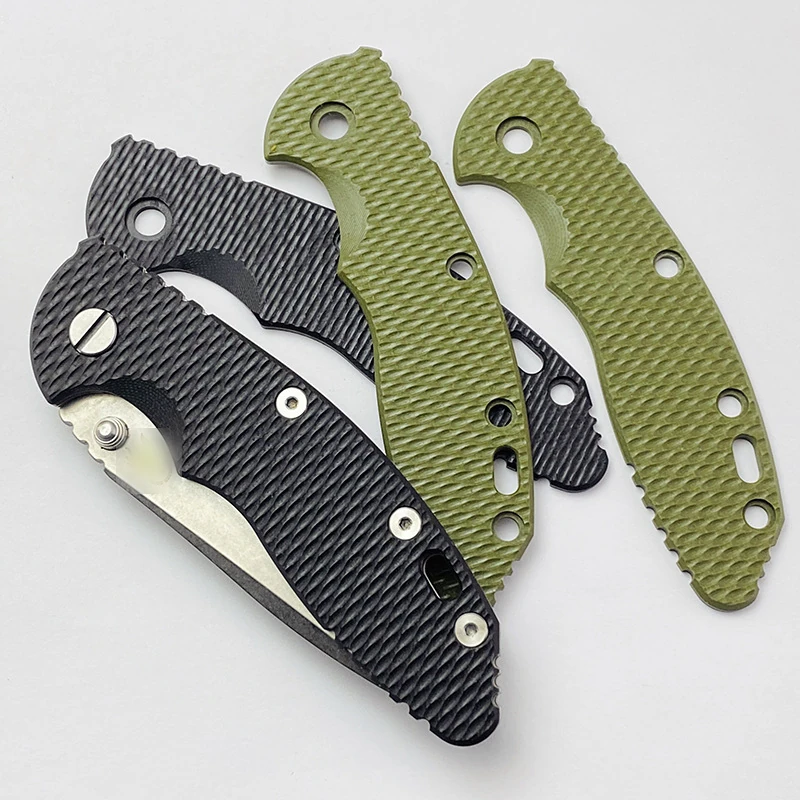
What is G10, and what does it mean for a knife handle?
G10 is a composite made from woven glass fabric and epoxy resin, consolidated into a rigid laminate. A machined handle scale starts as sheet or plate, with the contour, mounting features and surface details produced to the approved design.
The word scale describes one side of a handle. A complete order may require a left scale and a right scale, with different details on their inner faces. For purchasing, that distinction matters immediately: one piece and one pair are different quantities.
For a G10 project, we ask for the actual material specification as well as the familiar name. Decorative handle stock comes in different colors, layer arrangements, thicknesses and surface styles. The selected sheet becomes part of the appearance of the finished component.
G10 and FR-4 need separate identification
Both are glass-epoxy laminate families, but a G10 designation does not automatically establish FR-4 flame-retardant performance. Suppliers sometimes group them together in a catalog. The purchase specification should identify the material actually required and any supporting documentation.
For knife handles, our first discussion normally concerns the approved handle-grade material, color, thickness and finish. If the project also has an electrical, temperature or other engineering requirement, raise it before material is ordered. Our G10 machining page explains the broader material family.
Why brands choose G10 handle scales
G10 gives designers a rigid handle material that can carry a clear visual identity through color, contour and surface texture. Its established use in knife handles makes it a practical starting point for both new designs and replacement-scale programs.
Material properties still need to be considered alongside the finished shape. A comfortable handle depends on the full section, edge treatment, fastening arrangement and surface pattern. The material name alone does not define the experience in the customer’s hand.
| Design priority | What G10 offers | What the project must define |
|---|---|---|
| Distinctive appearance | Solid colors and layered color combinations | Approved stock, color reference and layer direction |
| Surface character | Machined contours and texture options | Pattern, transition areas and sample approval |
| Component consistency | A sheet-based starting material for CNC production | Finished thickness, interfaces and acceptance checks |
| Environmental suitability | A glass-epoxy material family with useful resistance properties | Selected grade and the actual service conditions |
We help connect these choices before the first sample is cut. A color decision can affect stock availability. A texture can affect machining time. A change to the contour can alter how much of a colored layer becomes visible. Reviewing them together makes the quotation and sample more useful.
G10, Micarta, carbon fiber or titanium?
Customers often compare several handle materials while developing the same product. We can discuss their manufacturing implications, then quote the material your team selects. The useful comparison includes the finished part, intended appearance and assembly requirements.
G10 uses glass reinforcement. Linen and canvas phenolic laminates commonly associated with Micarta use different fabric-and-resin constructions, giving another visual and surface character. Carbon-fiber laminates introduce a different reinforcement and appearance again. A decorative carbon-fiber layer over a G10 backing should be specified as that construction rather than described simply as solid carbon fiber.
Titanium is a metal option with its own machining and finishing route. If a project includes both titanium and G10 versions, each needs its own approved drawing, material and finish. Reusing an exterior outline is useful, but it does not settle every interface or manufacturing detail.
We recommend comparing physical samples with the intended hardware and liner arrangement. Review the assembled thickness, surface feel, appearance and quoted cost. That gives your team a stronger basis for selection than comparing unrelated catalog property figures.
Our knife and EDC manufacturing service supports G10 and metal components, so related parts can be discussed in the same enquiry.
Color, layered stock and the appearance of the machined edge
A color description such as black, tan or olive green is a useful beginning. For a production order, we also need to know which supplied material or approved sample establishes that color. Screen settings and lighting can make two similar materials appear closer than they are.
For multicolor G10, the layer arrangement deserves attention before machining. Contouring or chamfering can expose different layers along the edge. The resulting bands are part of the finished design, so the chosen stock and its orientation should be reviewed with the intended profile.
If two scales must look like a coordinated pair, tell us which aspects of the appearance matter: the visible face color, the sequence at the edge, the direction of the pattern or the overall impression when assembled. We can then discuss what can be controlled through material selection and manufacturing.
A new color request may also change the procurement plan. A machining order with no minimum quantity does not mean every custom laminate color is available as a single small blank. We check the actual stock options before confirming the sample or production order.
Once approved, retain a physical material or finished-part reference. It helps keep the next batch connected to the design your customer has already seen.
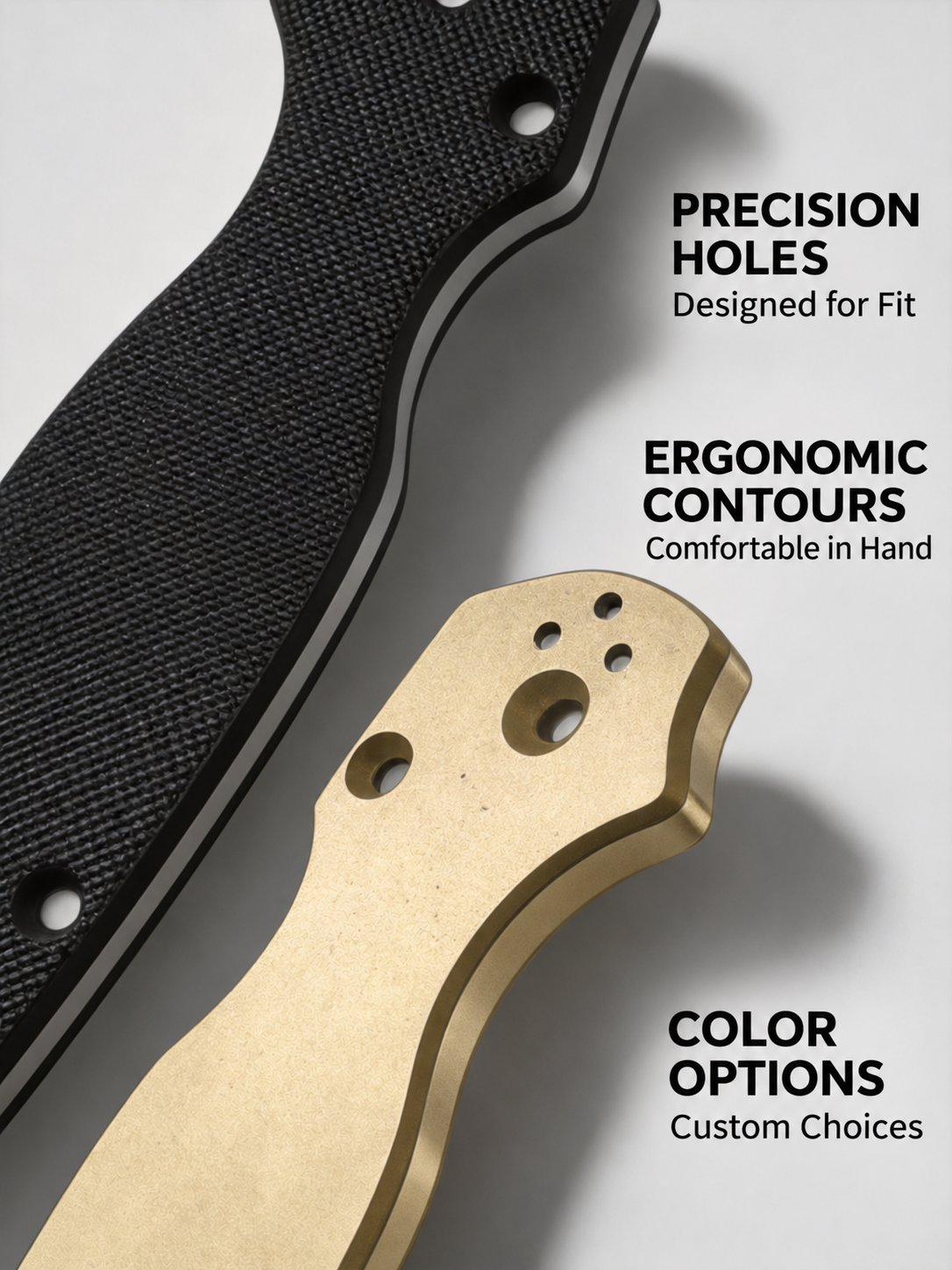
Contour and edge comfort: the details a photograph can miss
Handle comfort is best assessed on a physical sample. A rendering can show an attractive outline while leaving the feel of the edge, the transition around a screw recess or the thickness through the middle difficult to judge.
We review the proposed contour with the intended assembly in mind. Which surfaces will sit against the liner? Which edges will be exposed? Where should the outer texture stop? Which areas need a smoother transition for everyday handling and carrying?
Give edge treatment a clear definition
A drawing note saying “break sharp edges” leaves room for interpretation on a visible consumer component. If a particular chamfer or rounded transition is part of the design, show it in the model or drawing and identify any areas that must remain unchanged.
The customer can then assess the prototype for pressure points, visual consistency and contact with clothing or other equipment. Specific feedback is helpful: mark the area that feels abrupt and explain whether the concern is the outer shape, a texture ridge or the transition into a recess.
We bring the approved change back into the part definition. That gives production a shape to reproduce and gives inspection a clear reference for the visible edges.
Choosing a surface texture customers will want to use
A texture is both a visual feature and a surface the owner will touch repeatedly. We discuss the desired character early, because changing a pattern can alter the appearance, machining route and time required for the part.
A supplied peel-ply sheet surface and a texture machined into the finished face are different starting points. If you want the supplied sheet texture retained, identify that face and the operations allowed there. If the texture is CNC-machined, provide the proposed geometry or a reference that we can review together.
| Surface approach | Development question | Sample check |
|---|---|---|
| Smooth or lightly finished face | Which appearance and edge transitions are intended? | Feel, visible machining marks and cleaning |
| Retained sheet texture | Which supplied stock and visible face are approved? | Consistency with the material reference |
| Machined geometric texture | How should the pattern meet the outline and recesses? | Surface character and transitions at contact areas |
| Layer-revealing contour | Which stock construction and color order are required? | Appearance of exposed layers on a finished pair |
We encourage evaluation of more than the center of the face. Check the perimeter, the area around fasteners and any surface that repeatedly touches a pocket. If the sample needs a softer transition, record that change before the texture is released for the batch.
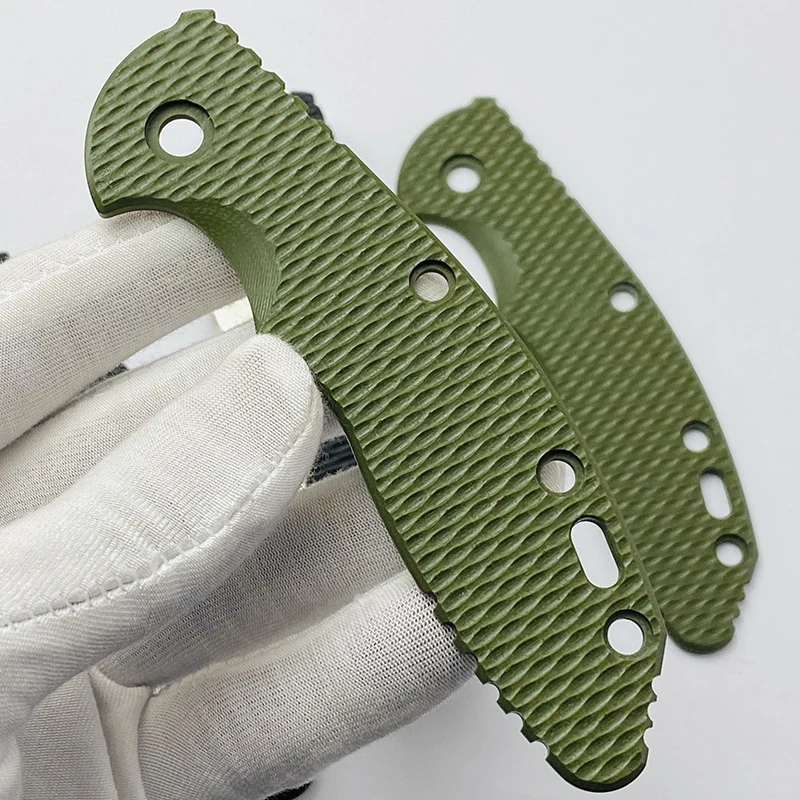
Hole placement, screw seats and the hardware supplied with the project
A handle scale can look correct and still require adjustment during assembly if its mounting features were defined around incomplete hardware information. We ask customers to provide the intended fasteners and mating details, or the corresponding drawings, while the sample is being developed.
The relevant information includes hole positions, the specified clearance or fit, the shape of the screw-head seat and the material thickness remaining around the feature. The acceptance requirements should be on the drawing rather than left to a photograph.
For a pocket clip or another attached component, include its mounting surface and hardware. A recess that appears flush in an isolated model may need another check with the actual screw head and surrounding part.
We also ask which surfaces locate the scale in the assembly and which features only provide fastening. That distinction helps us plan the important relationships and avoid applying demanding limits to features that do not need them.
During sample approval, use the intended mating components and record any adjustment required. If the hardware changes afterward, review the scale drawing at the same time. A new screw or clip can turn an apparently unchanged handle into a different assembly requirement.
Left and right scales need their own definitions
A left and right handle may share an exterior style while carrying different internal pockets, clip positions or fastening details. We ask for both sides as identified parts, even when much of the geometry is mirrored.
Label the visible and mating faces clearly. Include any liner, spacer or backing component that affects how the scale sits. If a decorative liner is part of the appearance, specify whether it is supplied separately, bonded to the scale or included only in the final assembly.
For an order sold as pairs, agree what one pair contains. It may mean two scales only, or two scales with selected hardware. State whether left and right pieces need to remain together through inspection, packing and delivery.
This is also where we discuss how parts will be identified without marking a cosmetic face. Separate bags, labeled trays or another agreed packing arrangement can make receiving and assembly easier.
Our quotation should use the same unit as your purchase order. If your customer needs a price per complete set, we define that set before comparing quantity breaks. It prevents a simple unit mismatch from changing the apparent cost of the project.
How we approach CNC machining for G10 scales
At GY Machining, G10 handle scales are machined from laminate stock. Our knife and EDC service includes black and colored G10, profiled scales, contours and milled texture. We review the exact design before confirming its manufacturing route.
The work begins with the stock and the faces that establish the finished thickness and assembly position. We plan how the component is supported through profiling, holes, recesses and surface machining. The order of those operations should preserve the important relationships on the drawing.
G10’s glass reinforcement makes tooling and edge condition part of the process review. Clean profiling matters particularly where a visible edge meets a thin section or a surface pattern. A part that meets its outline dimensions still needs an acceptable finished edge.
Machining debris is part of the process plan
Our G10 scale work uses wet machining. Material-specific handling, appropriate process controls and cleaning remain part of the job; the selected laminate supplier’s safety information belongs in that review. The finished customer component should be evaluated after the agreed cleaning and finishing steps.
For a recurring order, we review the machining route alongside tool condition and the required appearance. The goal is a repeatable scale that corresponds to the approved sample, including the details that are easy to overlook in a simple outline drawing.
Finishing G10: agree the surface you want to receive
The words “finished handle” need a shared meaning. They may describe a machined face with controlled tool marks, a refined smooth surface, a retained sheet texture or a patterned face with treated edges. Identify which one your product needs.
We discuss the visible areas and the acceptable surface character before the first batch. A face hidden against a liner may have different cosmetic requirements from the outside of the handle. The drawing and sample should make that distinction clear.
Texture, edge treatment and cleaning should be evaluated together. A sample photographed before its final surface work may give the wrong impression of the part that will be delivered. Approve the condition intended for shipment and assembly.
For a project containing G10 and metal parts, give each material its own finish specification. The anodizing instruction for a metal component does not describe the surface required on a neighboring G10 scale.
We also ask customers to identify any cosmetic face that needs additional protection in transit. A polished or textured consumer component can be dimensionally acceptable while carrying a handling mark that the brand does not want to present to its customer. That acceptance decision belongs in the release package.
From an idea or drawing to the first G10 sample
Some customers send a complete STEP model and controlled drawing. Others begin with a sketch, a physical handle or a new exterior pattern for an existing assembly. We first establish what information is available and what the sample is expected to prove.
A useful starting package shows the outer shape, target thickness, mounting details, material choice and surface reference. If a mating component controls the fit, include its drawing or a suitable sample. We can arrange an NDA before receiving the design information.
We review machining access, the important interfaces and any unclear feature. Proposed changes go back to your team for approval. A manufacturing suggestion becomes part of the sample only after the build definition is agreed.
For early development, it can be sensible to separate the decisions. One sample may establish the contour and fit; a texture sample may help select the surface character. When the two are combined, the final assembled sample still needs review. Your order should identify any temporary material, omitted finish or other approved departure.
We support prototypes without a machining minimum order quantity. Availability of the selected decorative stock is checked separately. Once the material and scope are settled, we confirm the quotation and the timing for that particular build.
How to review a handle sample and send useful feedback
Set up the sample review before the parts arrive. Have the intended hardware and mating components available, and identify the person who will approve the next version. That makes it easier to distinguish a drawing issue, an assembly issue and a cosmetic preference.
Start with identification. Confirm the part numbers, side, material and revision supplied. Check the scale on the intended assembly and record which features need adjustment. Review the assembled thickness and the transitions around the outer profile.
Then evaluate the surface. Examine the center texture, the perimeter, the recesses and the appearance of the pair together. Use a consistent lighting setup for color comparisons and keep the physical sample as the reference.
Specific feedback saves time. Instead of “make it smoother,” mark the area and describe the concern: a ridge near a fastener, an abrupt edge transition, a texture that extends too close to the perimeter or a surface that differs from the approved reference.
We connect those observations to a proposed update and confirm which revision will be made next. Your team then approves the revised model, drawing or finish reference. The sample becomes a useful development record when each decision has a clear destination in the production definition.
Why a pilot batch matters before a larger release
A single attractive sample is a milestone. A pilot quantity allows the customer to evaluate several pairs made through the intended route, including the material, machining, edge work, cleaning, inspection and packaging.
We discuss what the pilot needs to establish. For one project, the priority may be consistent assembly across several sets. For another, it may be the visual match between left and right scales or the appearance of a layered edge. The agreed checks should follow that priority.
Evaluate more than the best-looking pair in the box. Review the pilot against the same acceptance requirements that will apply to the production order, and record any recurring issue. A concern found in several pieces deserves a different discussion from an isolated cosmetic preference.
This stage also provides a practical opportunity to confirm the packing unit. If the product will be sold as a pair with hardware, inspect that complete delivery arrangement. Check the labels and confirm that the contents are easy to identify.
Before the larger release, close the remaining decisions about material, color, geometry, texture and inspection. We can then review the production quotation against the approved component rather than a moving collection of sample preferences.
Inspection: check the drawing and the approved appearance
For G10 scales, dimensional inspection and appearance approval support different parts of the same product. The inspection plan should cover the interfaces that control assembly, while the cosmetic reference establishes the surface the customer expects to see.
| Review area | Define before release | How the result is assessed |
|---|---|---|
| Material and color | Approved stock and reference | Identification and comparison with the agreed sample |
| Thickness and mating face | Drawing limits and inspection condition | Suitable dimensional measurement |
| Mounting features | Hole relationships and screw-seat requirements | Drawing checks and agreed mating-component evaluation |
| Outer profile | Released geometry and edge treatment | Profile and edge-condition checks |
| Texture and cosmetics | Approved surface, visible faces and acceptance criteria | Sample comparison and visual review |
| Set contents | Left/right parts, hardware and label requirements | Count and identification before packing |
Our inspection resources include CMM measurement and other suitable instruments. The method follows the feature and the agreed requirement. If you need a dimensional report, specify the features and format while requesting the quote.
We avoid applying a single headline tolerance to every part of a decorative scale. A locating feature, a clearance hole and a texture ridge do different jobs. Identify the requirements that matter so the inspection work has a clear purpose. See our quality and inspection information.
What we confirm before producing the order
A production release needs a definition that the buyer, programmer, machinist and inspector can all follow. We confirm the approved model and drawing revision, left and right part numbers, material stock, finish and required quantity.
The release also identifies the physical sample used for appearance approval. If that sample differs from the drawing in an approved way, update the documents or record the accepted departure clearly. Conflicting references create uncertainty at the point where the batch should be straightforward.
We confirm the unit of purchase and the contents of each set. The quotation should state whether hardware, decorative liners, additional inspection or special packing are included. Where several color variants share one design, identify the quantity of each variant separately.
The delivery plan should reflect the actual material and manufacturing route. Tell us whether a date means dispatch, arrival at your facility or availability for a product launch. We assess the job around that requirement and explain the information needed to confirm it.
When these details are settled, the approved sample is connected to an executable order. It gives both teams a practical baseline for production and for any later enquiry about the parts.
What drives the cost of custom G10 knife handles?
A quotation includes more than the small amount of material left in the finished scale. Programming, setup, stock procurement, machining time, edge work, inspection and packing all contribute to the order.
Material choice and use of the sheet
A common stock color and a special layered construction can have different availability and purchase requirements. The thickness and shape also affect how the blanks can be arranged in the supplied stock. We review those choices when comparing alternatives.
Contour and texture complexity
A plain face, a contoured surface and a detailed machined pattern require different work. The price should correspond to the approved surface rather than a photograph of a vaguely similar handle. If the design is still open, we can discuss manufacturing options for your team to evaluate.
Setup and repeat quantity
An early sample may include programming and setup development that are spread over very few pieces. A stable production design allows us to quote the expected release quantity more meaningfully. Provide the quantities you intend to buy, and state whether each number means pieces, pairs or complete kits.
Acceptance and delivery scope
Report requirements, individually protected cosmetic faces and set packing belong in the quote. Defining them at the beginning makes the price easier to compare and the final order easier to receive. Our CNC machining cost guide discusses the wider factors behind a custom-parts quotation.
Packing pairs and keeping repeat orders consistent
A finished pair should reach your assembly or packing team in a form they can identify and use. We discuss protection for visible faces, separation of parts and the labeling needed for different colors or revisions.
For a retail replacement-scale project, the agreed package may need a particular left/right combination and hardware list. For an OEM order, the customer may prefer bulk quantities separated by side. Define the arrangement that fits the next step in your operation.
Repeat orders start with confirmation of the current revision. Send the part number, finish or color variant, quantity and required delivery date even when the design has not changed. If you attach a newer model, identify the change rather than relying on the familiar filename.
We also review whether the approved material stock remains the intended choice. If availability requires another option, we raise it for approval. A similar color name does not automatically replace the reference used for the first release.
Keep the approved sample and order information available for comparison. A consistent reference helps both teams discuss a new batch in concrete terms and makes any later design change easier to control.
G10 scales for new products, replacement handles and EDC projects
New product development and replacement-scale work begin with different information. A new design may still be choosing the outer contour and fastening arrangement. A replacement project usually has an existing assembly that establishes the interfaces.
For replacement scales, identify the exact model, version and hardware configuration the design must fit. A visual resemblance or a shared product-family name is not enough to establish compatibility. Provide the controlled drawing or a representative assembly for the agreed evaluation.
We can review your own handle design, an authorized customization project or a component intended for an existing product. Make the intended scope clear so the manufacturing discussion starts with the correct geometry and references.
For a custom EDC line, customers may want coordinated appearance across more than one component. Share the intended color and surface relationship, while keeping the material specification for each item separate. A matching visual theme can involve different materials and production routes.
The same process applies across these programs: establish the intended component, make an identified sample, collect specific feedback and release an approved version for the next quantity. The customer receives a part developed around a defined application.
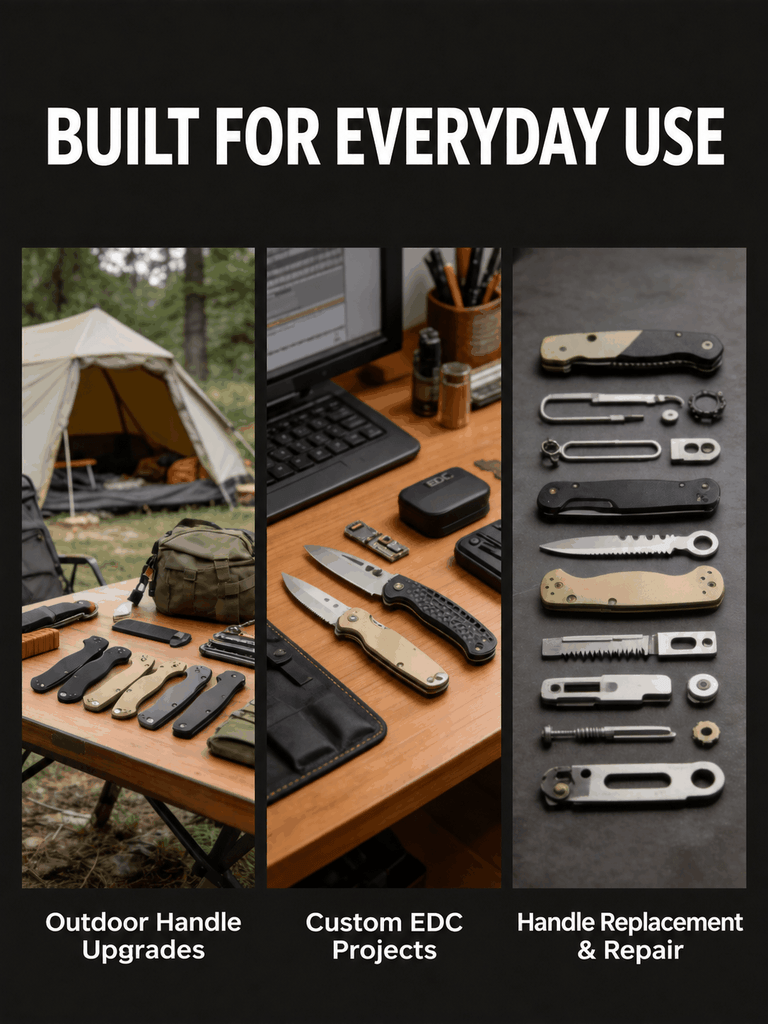
What to send for a useful G10 handle quotation
A concise, complete enquiry is more useful than a long description without the mating details. Send the files you have and identify what still needs to be decided.
- Part files: the 3D model and a 2D drawing with the relevant dimensions, part number and revision.
- Both sides: separate left and right definitions, with the visible and mating faces identified.
- Material: G10 stock, thickness, color and any required layer arrangement or supplier reference.
- Surface: the desired texture, edge treatment and a physical appearance reference if available.
- Mating parts: liner, hardware, clip or other information needed for the intended fit evaluation.
- Order unit: pieces, pairs or kits, with an exact description of the contents.
- Quantity: sample quantity, first production quantity and any expected repeat releases.
- Inspection and packing: report requirements, protected faces, labels and set arrangement.
- Timing: the required date and whether it means dispatch or arrival.
If the drawing is still being developed, tell us the purpose of the next sample. We can begin with a DFM review and identify the decisions needed to make the quotation more specific. Eileen coordinates the enquiry with the engineering and machining work.
Questions buyers ask about custom G10 scales
Can GY Machining make custom G10 knife handles?
Yes. We machine G10 handle scales from laminate stock, including profiles, mounting features, contours and surface patterns. Send both sides of the design, material requirements and quantities for review.
Can we begin with one prototype pair?
Yes. We support samples without a machining minimum order quantity. We separately check availability of your selected color, thickness and laminate construction before confirming the order.
Is G10 the same material as FR-4?
They are related glass-epoxy laminate families with different grade requirements. Identify the required material instead of treating the two names as automatically interchangeable. Any required performance or documentation should be stated in the enquiry.
Can we choose the texture and edge style?
We can review custom milled patterns, contours and edge treatments. Provide a model, drawing or reference, then approve a physical sample showing the surface and transitions intended for production.
Can you supply solid and multicolor G10?
We review available stock against the requested color and construction. Layered material needs a clear reference because machining can expose the color sequence. Special stock may carry supplier quantity or availability requirements.
Will the scales fit any knife with a similar outline?
Compatibility must be established for the intended model and version. The hole relationships, hardware, mating faces and other interfaces need review with the actual drawing or representative assembly.
Do you quote per piece or per pair?
We can quote in the purchasing unit your project needs. The quotation and order should state whether one unit contains a single scale, a left/right pair or a kit with specified additional items.
Can you provide dimensional inspection information?
Yes, for the checks agreed with the order. Identify the important dimensions, required report format and acceptance requirements while requesting the quotation. Appearance approval is also tied to the agreed sample.
Can the same project include metal components?
Our knife and EDC work includes components such as titanium scales, liners, clips and turned hardware. Send the combined scope so material, finishing, inspection and set requirements can be reviewed together.
How do we change an approved handle design?
Issue the updated model and drawing together, identify the earlier revision and explain the change. We review the effect on material, machining, surface work, inspection and any existing quantity before the next build.
How long does a custom G10 scale order take?
Timing depends on the selected stock, quantity, machining, sample approvals and delivery requirements. Send the current files and the date your project needs so we can assess that particular order.
Can you keep an unreleased handle design confidential?
We can arrange an NDA before the files are shared. Tell us which assembly information is needed for the review, and we can discuss a suitable enquiry package with your team.
Develop your next G10 handle with GY Machining
A well-defined G10 scale brings the material, appearance and assembly interfaces together in one approved component. We help customers work through those decisions, make samples that can be evaluated and prepare the agreed design for production.
Bring the current drawing, a physical reference or the next version your team wants to test. Tell us what is already fixed and what the sample needs to resolve. We will review the manufacturing questions with you.
Planning custom G10 knife handles?
Send both sides of the design, material and color requirements, the surface reference and your quantities. Specify whether you need pieces, pairs or complete sets.
Request a G10 handle review →Email Eileen: 1@gymachining.comExplore our G10 machining service, knife and EDC components, CNC milling and inspection process.