
CNC Machining G10 and Garolite
G10 is glass cloth laminated with epoxy under heat and pressure. It is stiff, electrically insulating, dimensionally stable and it does not care about moisture — which is why it ends up in switchgear, test fixtures, insulating spacers and, in the knife world, handle scales. It is also abrasive enough to destroy tooling, and that governs how it is cut.

Grades and related laminates
G10 is the common designation; FR-4 is the flame-retardant version that dominates electrical work. Micarta is the same idea with a different cloth.
| Material | Best for | Notes |
|---|---|---|
| G10 | General structural and insulating parts, knife scales | High strength, low moisture absorption, excellent electrical properties |
| FR-4 | Electrical and electronic parts needing a flame rating | G10 with flame-retardant resin — the standard for circuit board substrate |
| G11 | Higher temperature electrical parts | Retains strength better at elevated temperature than G10 |
| Canvas Micarta | Knife handles and grips | Cotton cloth rather than glass — warmer in the hand, far less abrasive to cut |
| Linen and paper Micarta | Decorative handle materials | Finer texture, traditional appearance |
The dust is the whole problem
G10 cuts predictably, holds its size and finishes well. What it does is eat cutters: the glass fibre is abrasive, tool life is a fraction of what the same cutter gives in aluminium, and that cost is real and shows up in the quote on any quantity.
The dust is the other half. Machining glass laminate produces fine abrasive dust that is both a health consideration and hard on the machine. We cut it flooded so the dust ends up in the liquid rather than in the air, and that changes how the job is set up rather than being an afterthought. See G10 being cut →
Feed rate matters more than in most materials. Push too hard and the laminate chips at the edges or delaminates between plies rather than cutting cleanly, so the profiling pass is deliberately not the fastest one the machine could run.
| At a glance | |
|---|---|
| Service temperature | Around 130 °C for G10; higher for G11 |
| Electrical | Excellent insulator, high dielectric strength |
| Moisture | Very low absorption — dimensionally stable in humid service |
| Machinability | Cuts well, but abrasive — tool life is the cost |
| Typical parts | Insulating spacers, terminal boards, test fixtures, knife scales, structural plates |
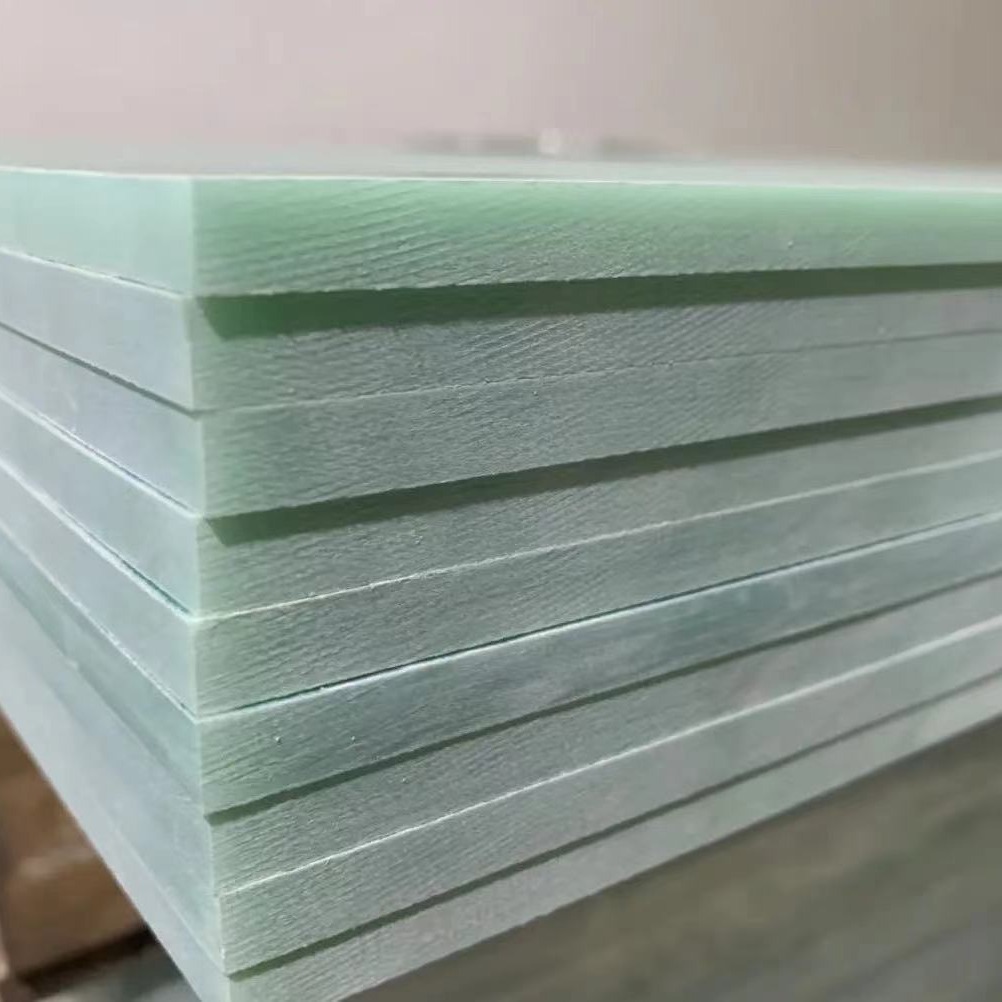
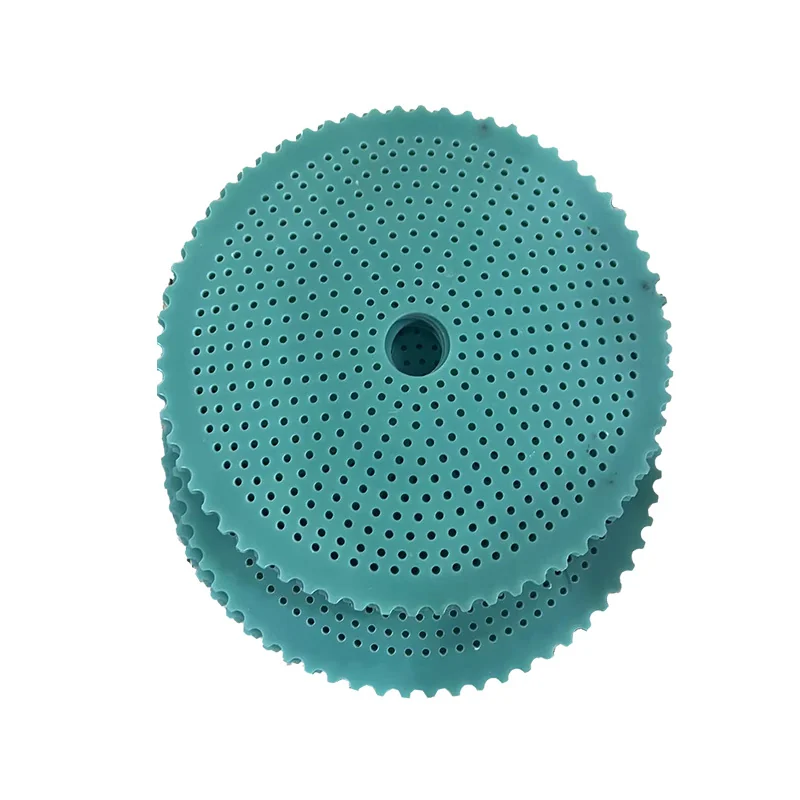
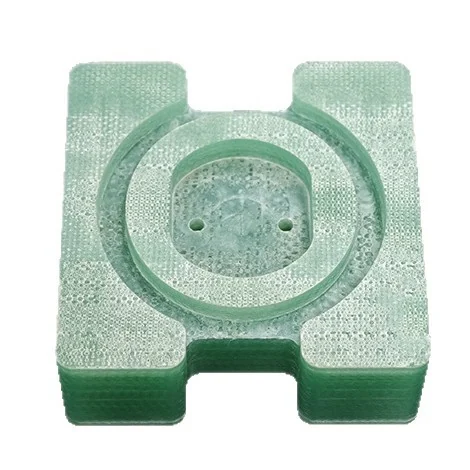
CNC machined Garolite G10 parts
Insulating spacers, terminal boards, test fixtures, knife scales and structural plates — cut from G10 sheet and plate, never moulded. Glass laminate is abrasive, so tooling is part of the price, and cut edges are broken before the parts ship.
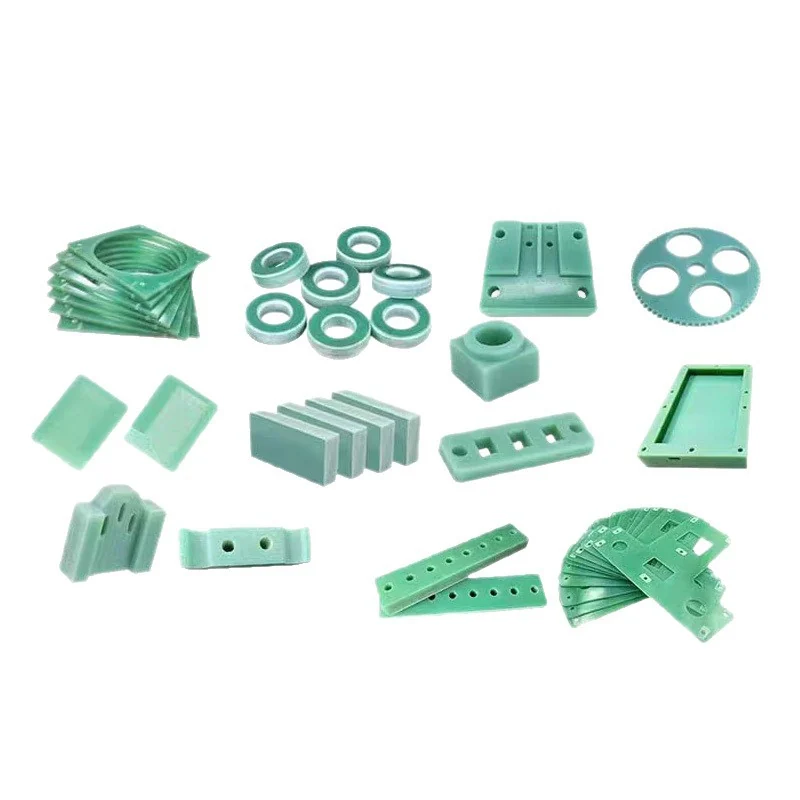
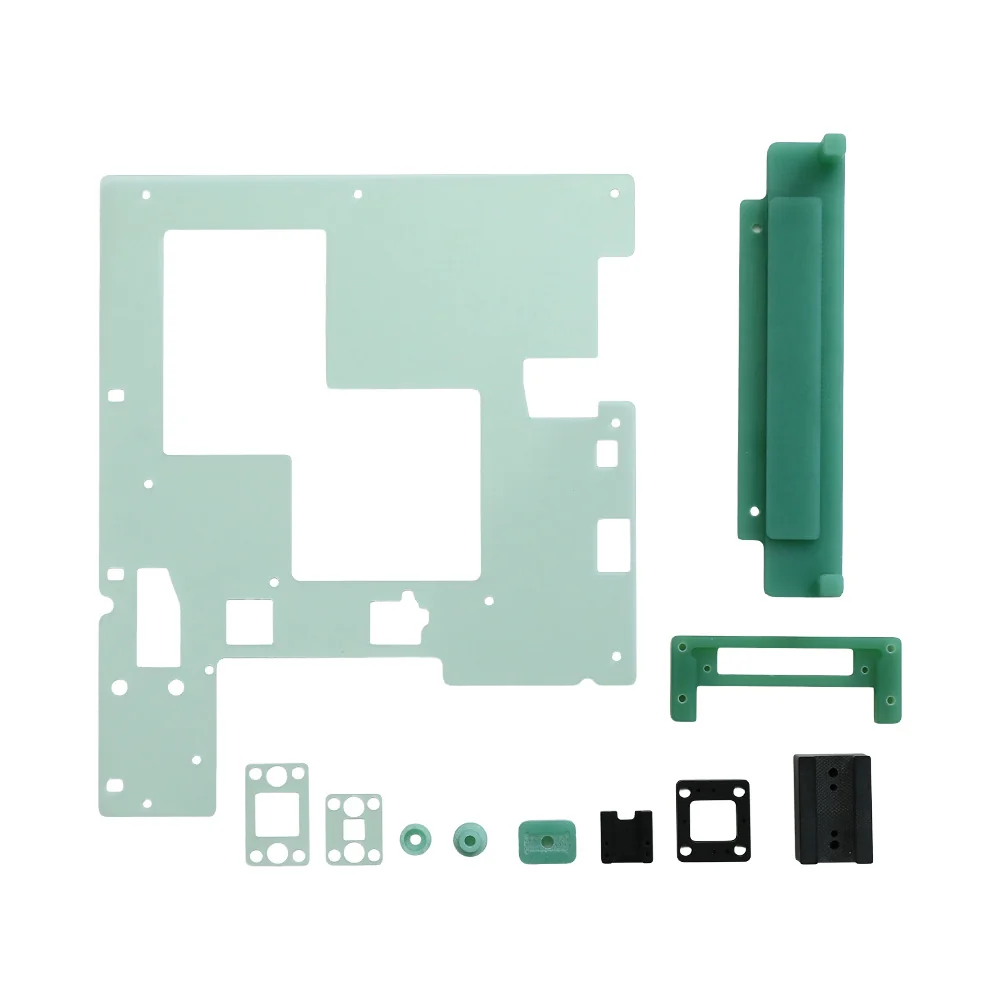
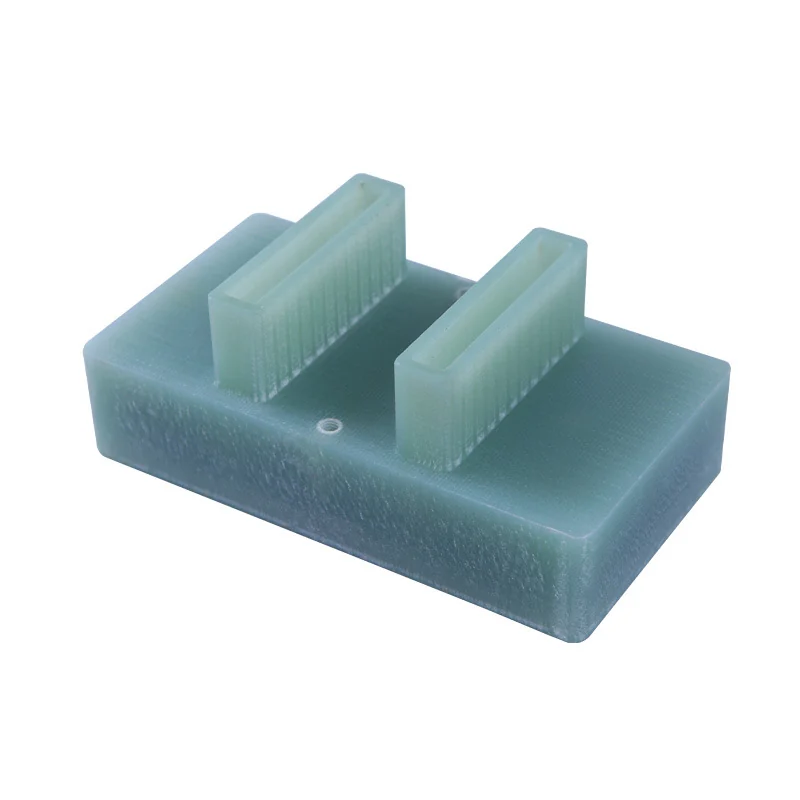
Four notes on G10 parts
Expect tooling cost in the quote
Glass laminate is abrasive and cutters are consumed. On a repeat order that cost is predictable; on a first order it is worth knowing why the price is what it is. How a machined price is built →
Break the edges
Machined G10 edges are sharp and can splinter. Unless the drawing says otherwise we break them, and on handle parts that edge treatment is part of the product.
Say if you need FR-4
If the part needs a flame rating, G10 and FR-4 are not interchangeable. Specify it, and we will source the right laminate.
Say if a machined edge has to hold off voltage
A cut edge exposes the glass weave, and the weave takes up moisture. A raw machined edge and a sealed one are not the same part, so tell us which one you need.
Ready for a quote?
Send the drawing — price and lead time within 16 hours. STEP, IGES, X_T, DWG, DXF or PDF.
No minimum order.