
Wire EDM Machining Services
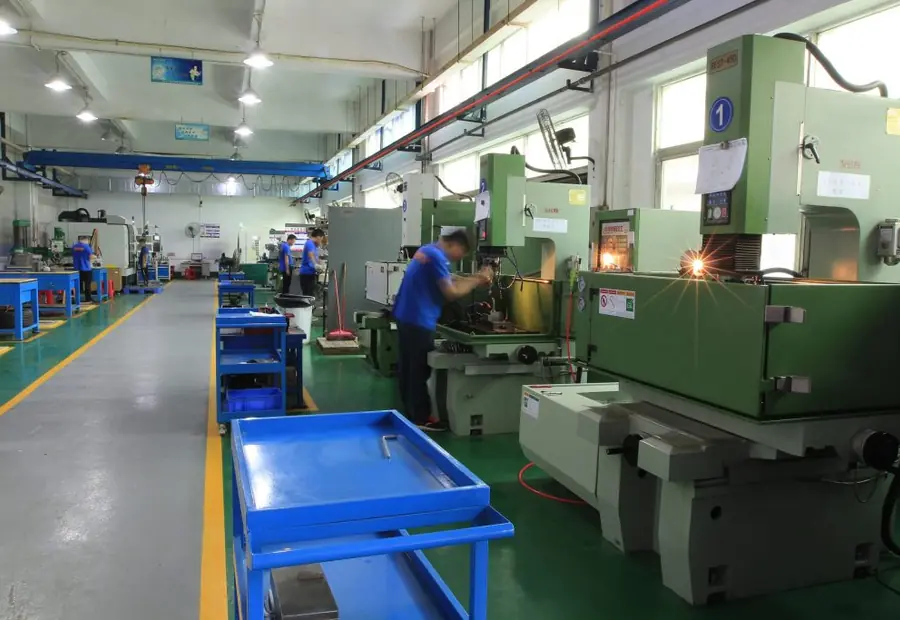
Six wire EDM machines for sharp internal corners, hardened tool steel, thin slots and profiles a milling cutter cannot reach. Cut in our own shop in Dongguan, measured before the run continues.
Cutting with a wire, not a cutter
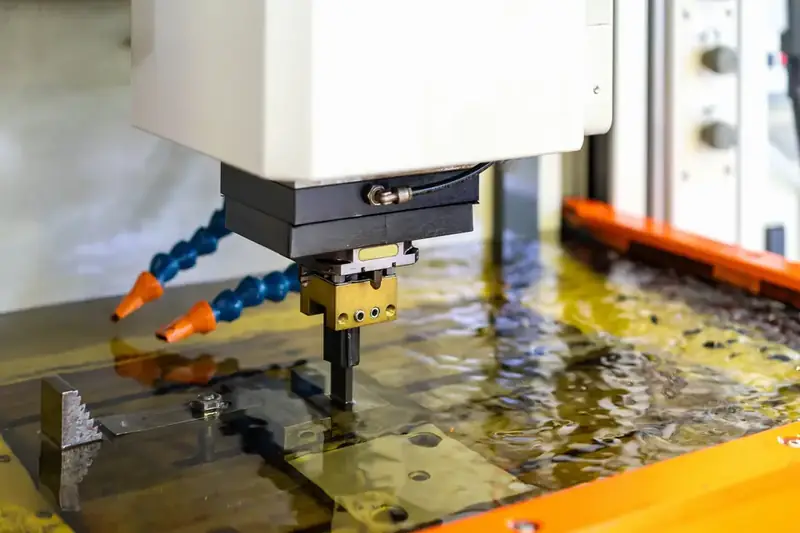
Wire EDM erodes material with a thin brass wire and an electrical spark, so there is no cutting force and no tool pressure on the part. Hardness does not matter — we cut hardened tool steel at 60 HRC the same way we cut annealed stock. That is why it is the right process for parts that have already been heat treated, for internal corners smaller than any end mill, and for thin, delicate profiles that would deflect under a milling cutter.
What we can cut
- Wire EDM machines6
- Max workpiece400 × 300 × 200 mm
- Achievable tolerance±0.005 mm
- Internal corner radiusFrom 0.1 mm
- Surface finishRa 0.8 – 1.6 µm
- Taper cuttingYes, up to 15°
- Material hardnessNo limit — cuts 60+ HRC
- Wire diameter0.15 / 0.20 / 0.25 mm
Tolerance depends on thickness, material and how many skim passes the drawing justifies. Tell us the critical dimensions and we will tell you what we can hold before you order.
What customers use our wire EDM for
Hardened punches and dies
Tool steel, D2, SKD11 and carbide cut after heat treatment, so nothing moves afterwards.
Sharp internal corners
Square pockets, keyways and slots with a corner radius no end mill can produce.
Thin profiles and lamination stacks
Fine features in thin plate that would deflect or burr under a cutter.
Gears, ratchets and cams
Profiles cut straight from plate, with the tooth form held to the drawing.
Extrusion and blanking dies
Land and relief cut in one setup, with taper where the drawing calls for it.
Rework and salvage
Opening a bore, adding a slot or removing a broken tap in a finished part.
Materials we cut on wire EDM
Any electrically conductive material. Hardness is irrelevant to the process, so heat-treated parts are normal work here.
Before you send the drawing
How tight a tolerance can wire EDM actually hold?
Can you cut a part that is already hardened?
Do I need a start hole?
What about the recast layer?
Often ordered together
Sinker EDM
Blind cavities, square internal features and keyways that a wire cannot reach because there is no through-path. Sinker EDM →
CNC Milling
Most EDM parts are milled first and finished on the wire. Both happen in this building. CNC milling →
Inspection
Every first article measured on the CMM before the rest of the run is cut. Quality and inspection →
Send the drawing. You will have a price and a lead time in 16 hours.
STEP, IGES, X_T, DWG, DXF or PDF. Metric or inch. No minimum order.