
Brushed and Satin Finishes
Brushing puts a directional grain on the surface: the satin look you see on appliance panels, watch cases and knife bolsters. It is a mechanical finish, it removes only a few microns, and its single most important property is the one people forget to specify — which way the grain runs.
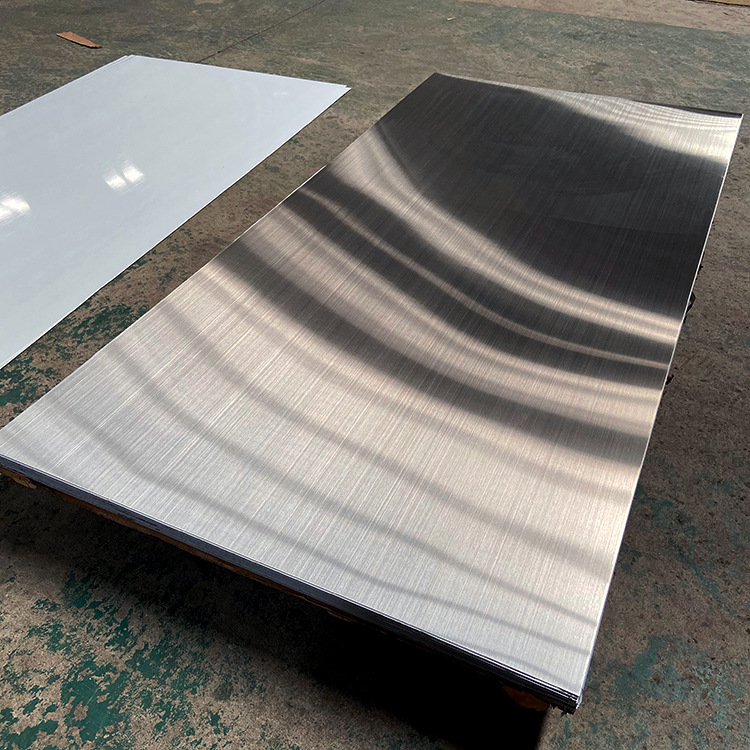
A grain, and a direction
An abrasive belt or wheel is drawn across the surface to leave fine parallel lines. Coarser abrasive gives a more obvious grain, finer abrasive a softer satin. It is a surface treatment rather than a coating: nothing is added, a few microns come off, and the part keeps its dimensions for any practical purpose.
Brushing is often a preparation step rather than a final one. A brushed aluminium part that is then clear anodised keeps the grain and gains corrosion resistance, which is the standard recipe for a front panel or a bezel.
The catch is direction. A brushed face has an orientation, and on an assembly where two brushed parts sit side by side, a grain that runs one way on one part and the other way on its neighbour looks like a mistake even when both parts are within tolerance. If the direction matters, it belongs on the drawing.
| At a glance | |
|---|---|
| Process type | Mechanical abrasive finishing |
| Materials | Aluminium, stainless, brass |
| Typical removal | A few microns — no practical dimensional effect |
| Appearance | Directional satin grain, coarse to fine |
| Often followed by | Clear or coloured anodising on aluminium |
| Key specification | Grain direction, and grain coarseness |
| Typical parts | Front panels, bezels, handles, bolsters, trim |
When it is the right finish, and when it is not
Choose it when
- —You want a premium satin look without a coating
- —Fingerprints and light scratches need to be less visible
- —The part is aluminium and will be clear anodised afterwards
- —Matching the look of an existing brushed component
Choose something else when
- —The part has complex contours — brushing suits flat and gently curved faces
- —A uniform non-directional look is wanted (blasting is better)
- —Very sharp edge definition must be preserved
- —The surface will be powder coated anyway
What we need on the drawing
Two specifications, one of which almost nobody remembers the first time.
Grain direction
Along the length, across the width, or radial. Mark it on the drawing with an arrow if the part sits in an assembly with other brushed faces.
Grain coarseness
Fine, medium or coarse, or a sample. Coarseness also changes how the part looks after anodising, so the two decisions belong together.
Which faces are brushed
Usually only the visible ones. Brushing every face costs money that the customer never sees.
Send the panel and the grain direction
Send the drawing with the finish you have in mind, or with none at all and a sentence about where the part lives. You get a price, a lead time, and a note on anything in the finish that will fight your tolerances.